Skip to content
CONNECT WITH US
https://moviestohistory.com/wp-content/uploads/2022/03/cropped-d3d0f4de5c874cf7a06b2f50e0bc7820-2-10.png

Movies To History.com

  • Home
  • About
  • Featured Film Blog
    • Film Critiques
    • Film Reviews
    • FIlm Recommendations
    • Video
  • Featured Television Blog
    • Television Critiques:
    • Television Reviews:
    • Television Recommendations:
    • Image
    • Video
  • Blog Posts
  • Contact Us
  • Subscribe
  • Oscar History
  • Top Ten List
Close Button

Film Critiques:

MARCH 2023:

Directed by Terry George, Written by Keir Pearson, and Terry George, Produced by Terry George, and A. Kitman Ho, Starring: Don Cheadle, Sophie Okonedo, Joaquin Phoenix, Nick Nolte, with Cinematography by Robert Fraisse, and Edited by Naomi Geraghty, with Music by Afro Celt Sound System, Rupert Gregson-Williams, Andrea Guerra, Production companies: United Artists, Lions Gate Films, Miracle Pictures, Seamus, The Industrial Development Corporation, Inside Track, Endgame Entertainment, and Distributed by MGM Distribution Co. (United States), Entertainment Film Distributors (United Kingdom), and Mikado Film (Italy) (2004)
Hotel Rwanda (2004)

NO VACANCY FOR TUTSI’S…

The Rwandan genocide, one of the darkest chapters in modern history, unfolded in the Spring of 1994, leading to the mass slaughter of approximately 800,000 people, primarily from the Tutsi ethnic group. The roots of this tragedy can be traced back to the colonial era when Belgium, the colonial power, favored the Tutsis, exacerbating ethnic tensions.

The skulls of victims from the Rwandan genocide are temporarily housed at the Gisozi Genocide Memorial in Kigali, Rwanda. The bones will either be interred or displayed behind smoked glass in a new memorial display which will be finished before the 10th anniversary of the genocide on April 7th. Photo Credit: Evelyn Hockstein/MCT/Tribune News Service via Getty Images
Rwandan Tutsi refugees waiting for the distribution of water in 1994. Photo Credit: Sebastião Salgado
Map and flag of Belgium. Photo Credit:: "World reference atlas"
Meeting between Belgian colonialist and Rwandan local. Phot Credit: Image source

The Rwandan genocide occurred between April 7 and July 15, 1994, during the Rwandan Civil War. During the period, that lasted 100 days, members of the Tutsi minority ethnic group, as well as some moderate Hutu and Twa, were killed by armed Hutu militias. The most widely accepted scholarly estimates are around 500,000 to 662,000 Tutsi deaths during that period. 

Origins of the genocide 1959 social revolution: Rwanda, under Belgian trusteeship since 1922, is the scene of attacks against the Tutsi ethnic group and their property by the Hutu ethnic majority. A government composed entirely of Tutsis is formed with Belgian support. 1962: The United Nations Trusteeship Council asks Belgium to grant independence to Rwanda. It will be proclaimed on July 1, 1962. 1963 – 1967: Exiled Tutsis attempt to return to Rwandan territory by force. They fail and their attempt triggers new attacks on their community. Nearly 20,000 Tutsis are massacred and another 300,000 flee the country. 1972 - 1973: Grégoire Kayibanda, elected in 1961 as the first president of independent Rwanda, launches an anti-Tutsi propaganda to create a Hutu support base around him. This campaign will cause more Tutsis to flee. Nevertheless, Kayibanda loses power after a military coup in 1973 led by Juvenal Habyarimana. 1975 - 1990: Habyarimana attracts western countries by portraying Rwanda as the Switzerland of Africa. Although he does not practice a clear policy of ethnic discrimination like his predecessor, only 10 percent of places in schools, universities, and jobs are granted to Tutsis. Oct. 1, 1990: The Rwandan Patriotic Front (FPR), founded in 1987 by Tutsis in exile, attacked the country's northern border from Uganda. Ten thousand Tutsis and political opponents are arrested in Kigali. A first Tutsi massacre is committed in Kibilira (in the Gisenyi prefecture, on the border with the Democratic Republic of Congo). Oct. 4, 1990: French, Belgian and Zairean [present day Democratic Republic of Congo] troops stationed in the territory intervene in order to evacuate the western nationals in the country (Operation Noroit). Unlike the Belgians, the French troops remain behind after the evacuation of the expatriates. The Rwandan civil war begins, with conflicts breaking out between the patriotic army of the FPR and the Rwandan Armed Forces (FAR) -- the government forces backed by France. 1992: In March, the Coalition for the Defense of the Republic (CDR), comprised of radical Hutus, is created. Hutus form armed militias (interahamwe militia). A new massacre of Tutsis is perpetrated in Bugesera. Despite negotiations under the Ashura agreements in June 1992 between the Hutu government, the democratic opposition, and the FPR, new massacres of Tutsis and moderate Hutus [Hutus who did not support the killings] are organized by pro-government interahamwe militias from August to December. 1993: On Aug. 4, in Arusha, Tanzania, peace and power-sharing agreements are signed with the supposition they will end the war. In Oct., the UN Security Council Resolution 872 creates UNAMIR (United Nations Assistance Mission in Rwanda), composed of 2,500 peacekeepers and military observers. Two months later, the French troops of Operation Noroit leave Rwanda, giving way to UNAMIR. April 6, 1994: An airplane carrying Rwandan President Juvenal Habyarimana and Burundian President Cyprien Ntaryamira is shot down while preparing to land in the capital Kigali. The plane crashes near the airport, leaving no survivors. The incident triggers a genocide against the Tutsis. Several moderate Hutu political figures are murdered only hours after the announcement of Habyarimana's death. Hutu militias set up checkpoints across the country and start slaughtering all those who are identified as Tutsis. Nearly 1 million victims in 100 days One million victims in 100 days means that almost 10,000 people were murdered daily for more than three months. April 6 - 7: The killing of Tutsis begin in Kigali and spreads to the whole country in a few hours. April 8: The Rwandan Patriotic Front (FPR) launches an offensive towards Kigali. April 9 – 16: Western nationals are evacuated. April 21: The UN reduces its peacekeeping force from 2,500 to 250 troops. April 30: The UN Security Council demands a cease-fire between the FAR and the FPR, but the latter is already limited to diplomatic and humanitarian actions. May 12: The number of civilian casualties is estimated at 200,000 although the UN presidency refuses to pronounce the word "genocide". May 17: The UN Security Council decrees an arms embargo on Rwanda. May 31: A UN Secretary-General's report estimates the number of victims to be between 250,000 and 500,000. June 8: The UN Security Council denounces the acts of genocide and extends the mandate of UNAMIR. June 23: France launches Operation Turquoise, French soldiers enter southwestern Rwanda to set up a humanitarian safe zone for refugees. July 4: The FPR takes control of the cities of Kigali and Butare. July 17: The FPR takes control of almost the entire country. A date that marks the end of the genocide. Over 800,000 Tutsis, and moderate Hutus who were opposed to the killings, were massacred in just over three months. Photo Credit: AA.com
The massacre site at the Rukara parish in Kabgayi, Rwanda, in April 1994. Photo Credit: Gilles Peress/Magnum Photos

The earliest inhabitants of what is now Rwanda were the Twa, a group of aboriginal pygmy hunter-gatherers who settled in the area between 8000 BC and 3000 BC and remain in Rwanda today. Between 700 BC and 1500 AD, a number of Bantu groups migrated into Rwanda and began to clear forest land for agriculture. Historians have several theories regarding the nature of the Bantu migrations: one theory is that the first settlers were Hutu, while the Tutsi migrated later and formed a distinct racial group, possibly of Cushitic origin. An alternative theory is that the migration was slow and steady from neighboring regions, with incoming groups bearing high genetic similarity to the established ones, and integrating into rather than conquering the existing society. Under this theory, the Hutu and Tutsi distinction arose later and was not a racial one, but principally a class or caste distinction in which the Tutsi herded cattle while the Hutu farmed the land. The Hutu, Tutsi, and Twa of Rwanda share a common language and are collectively known as the Banyarwanda.

Africa is such a beautiful, diverse continent. One of the things we love most in this journey is not only teaching others about our culture, but learning about other people and cultures. Today’s spotlight is on the Twa. Also known as the Batwa tribe, the Twa are thought to be descendants of the original inhabitants of the equatorial rainforest. Twa make up around one percent of the population of Rwanda, Uganda, the Democratic Republic of Congo, and Burundi, and overall, it is estimated that there are around 80,000 Twa people in Africa (source). The Twa live in or near agricultural villages. Some hunt for sustenance, while others are known to create and sell pottery. Hand making traditional pottery is a large part of Twa culture that has been practiced for generations. The Twa are also referred to as “the forgotten people” because their suffering from the Rwandan war and genocide has gone largely unrecognized. “Many Twa people were killed in the 1994 war and genocide. The Unrepresented Nations and Peoples Organization (UNPO) estimates that about 10,000 people, more than a third of the Twa population of Rwanda, were killed and that a similar number fled the country as refugees.” Twa maintain a rich and distinctive cultural tradition centered on songs, dance and music. They speak several different languages, depending on the country or region in which they find themselves (source). An egalitarian group, no one has authority over another and all are free to access forest resources as they wish. They show great respect for one another, and children are raised by the everyone in the group. Photo Credit: Google images
Pre-Colonial Rwanda-Urundi - 700 BCE CE: Bantu migrations into Rwanda/Burundi region. 2 Bantu groups, Hutu and Tutsi , lived together in region. by 1800: Kingdom of Rwanda (Tutsi) becomes dominant – Hutu (85%) forced to work for Tutsi élites (14%) Tutsi. Hutu. Photo Credit: Google Images
A Powerpoint slide explaining the origins of the Hutu, Tutsi, and Twa Ethnic Groups in the history of Rwanda. Photo Credit: Google Images
Ancestral Tutsi Tribes Men. Photo Credit: Google Images

In the early 1930s, Belgium introduced a permanent division of the population by classifying Rwandans into three ethnic (ethno-racial) groups, with the Hutu representing about 84% of the population, the Tutsi about 15%, and the Twa about 1%. Compulsory identity cards were issued labeling (under the heading for “ethnicity and race”) each individual as either Tutsi, Hutu, Twa, or Naturalized. While it had previously been possible for particularly wealthy Hutus to become honorary Tutsis, the identity cards prevented any further movement between the groups and made socio-economic groups into rigid ethnic groups. 

In 1929, Louis Joseph Postiaux, a Belgian colonial governor of Rwanda, summoned all traditional chiefs and community members ‘for a surprise meeting’. He told them, that ‘the Project’ he had been working on for three years had matured and had invited the chiefs to have a copy. Later in 1930, the community, including village chiefs, had acquired the 8-page booklet, referred to as “ibuku”, written in French and Flemish, the administrative languages used in Belgium’s East-Central Africa colonies. The booklet contained several details, but very importantly highlighting the community members’ ethnic belonging (Hutu, Tutsi or Twa). The ethnic groupings immediately replaced the vast clans. It was mandatory for every adult Rwandan of 18 years and above to possess an ID (Indangamuntu). “Failure to do so could attract a punishment from the colonial penal code: eight whips of the cane.” Prof. Gamariel Mbonimana, a historian told KT Press. However, after the collapse of the colonial regime in 1962, the republic governments maintained the ID’s, even after the departure of the colonizers, leaving Rwandans divided along ethnic lines, which facilitated segregation against Tutsi and denying them various services and rights. In the 1981, President Juvenal Habyarimana Introduced another ID, a four-page smaller card, but maintaining and loudly pronouncing the holder’s ethnicity. This bred an ethnically polarized society causing colossal political tensions, leading up to the quota system whereby the Hutu were allocated 90% of available opportunities in education and employment, while the Tutsi were allowed just 10%. Laurent Nkongori, now a lawyer with the Rwanda Human Rights Commission, almost lost his job of a human resource officer at Utexrwa, a textile company for allegedly breaking the rule. “The office of the president summoned me and said I was employing a bigger percentage of Tutsi, just because they had found some relatively tall workers in the company,” Nkongoli told KT Press. During the genocide in 1994, ID’s were used to identify Tutsi at roadblocks, work places and eventually massively murdering them. Photo Credit: Google Images

The ethnic identities of the Hutu and Tutsi were reshaped and mythologized by the colonizers.  Christian missionaries in Rwanda promoted the theory about the “Hamitic” origins of the kingdom, and referred to the distinctively Ethiopian features and hence, foreign origins, of the Tutsi “caste”. These mythologies provided the basis for anti-Tutsi propaganda in 1994.

Grégoire Kayibanda (C) President of the Republic and Premier of Rwanda, surrounded by (L-R) Pierre Ngunzu, Pierre Ngendandumwe, Burundi representative, Katinati, Gaspard Cyimana, Andre Dequae, Belgium Finance minister, Theo Lefevre, Paul-Henri Spaak, Belgium Premier, Maurice Brasseur, Belgium Trade minister and Otto Rusingizandekwe, on December 08, 1961, in Brussels. Grégoire Kayibanda (May 1, 1924-December 15, 1976) was the first elected President of the Republic of Rwanda. He was born in Tare, Rwanda, and came from the south of the country. He led Rwanda's struggle to become independent from Belgium and replaced the Tutsi monarch with a republic. Photo Credit: AFP via Getty Images

In 1990, the Rwandan Patriotic Front (RPF), a rebel group composed mostly of Tutsi refugees invaded northern Rwanda from their base in Uganda, initiating the Rwandan Civil War. Over the course of the next three years, neither side was able to gain a decisive advantage. In an effort to bring the war to a peaceful end, the Rwandan government led by Hutu president, Juvenal Habyarimana signed the Arusha Accords with the RPF on August 4, 1993. The catalyst of the genocide in Rwanda was the assassination of Rwandan President Juvenal Habyarimana on April 6, 1994. 

Paul Kagame (blue hat) leads the Rwandan Patriotic Front (RPF), a group of Rwandan exiles—primarily Tutsis—in an invasion of their native country, setting off a civil war. Photo credit: Newsweek
Arusha Accords: August 4, 1993 (L) President of Rwanda Juvenal Habyarimana (M) RPA commander Paul Kagame (R) Chairman of RPF ALxis Kenyarengwe All signed the Peace Accords to end the war and bring peace to Rwanda. The Accords were never fully implemented before the April 1994 plane crash that killed Habyarimana followed by the 100-day Genocide of Tutsi that ended when the ROF took power in July 1994. Photo Credit: Google Images
President of Rwanda Juvenal Habyarimana, Hutu backed by France - was on his way back to Rwanda when his plane was shot down. Photo Credit: Google Images
The plane carrying President of Rwanda Juvenal Habyarimana was shot down by a missile in April 1994, triggering the Rwandan genocide. Photo Credit: Google Images

The assassination of Rwandan President Juvenal Habyarimana created a power vacuum and ended the peace accords. It triggered a systematic, organized campaign of violence by the Hutu-led government against the Tutsi minority. The genocidal killings began the following day when the majority Hutu soldiers, police, and militia murdered key Tutsi and moderate Hutu military and political leaders. 

A Hutu man who did not support the genocide had been imprisoned in the concentration camp, starved and attacked with machetes. He managed to survive after he was freed and was placed in the care of the Red Cross, Rwanda, 1994. Photo Credit: James Nachtwey for TIME

The scale and brutality of the genocide caused shock worldwide, but no country intervened to forcefully stop the killings. Most of the victims were found killed in their own villages or towns, many by their neighbors and fellow villagers. Hutu gangs hunted down victims hiding in churches and school buildings. The militia’s weapons of choice were machetes and rifles. With an estimated 250,000 to 500,000 women raped during the genocide, sexual violence was prevalent. The RPF quickly resumed the civil war once the genocide started and captured all government territory, ending the genocide and forcing the government, and génocidaires into Zaire, which is now the Democratic Republic of the Congo. 

The Murambi Genocide Memorial is a tribute to around 45,000 Tutsis who took refuge in a school, where they were massacred by Hutu extremists. Photo Credit: Larry Towell/Magnum Photos
Unused Bullets and Machetes scattered in an area of the genocide in Rwanda. Photo Credit: Google Images

The genocide would have a lasting and profound effect. In 1996, the RPF-led Rwandan government launched an offensive into Zaire, home to exiled leaders of the former Rwandan government and many Hutu refugees, starting the First Congo War, and killing an estimated 200,000 people. Today Rwanda acknowledges two public holidays to mourn the genocide, and “genocide ideology” and “divisionism” are criminal offenses. Although the Constitution of Rwanda states more than 1 million people perished in the genocide, the real number killed is likely lower.   

Rwanda invades Zaire to overthrow authoritarian President Mobutu Sese Seko, who has been supporting the Hutus in the camps. Hundreds of thousands are killed. After the dictator flees, Laurent-Désiré Kabila, a rebel leader supported by Rwanda, Uganda, and Burundi, is named president, and the country is renamed the Democratic Republic of the Congo. Photo Credit: Newsweek
Rwanda invades its neighbor again, this time to depose Kabila, whom Kagame installed to replace Mobutu. The operation fails, but the Congo conflict develops, ultimately involving many African nations and costing millions of lives. Photo Credit: Newsweek
In this file photo taken on 18 July 1994, Rwandan refugees walk past the bodies of more than 100 of their compatriots, who were trampled in the then border town of Goma, eastern Zaire, on 17 July, as they fled the final offensive of the Rwandan Patriotic Front. Photo Credit: AFP/Pascal Guyot

The genocide is forever marked by gruesome acts of violence, but from that darkness came countless instances of heroism and survival.

Survivors of the death camp near Nyanza were in extremely poor condition when they were liberated by Tutsi rebel forces, Rwanda, 1994. Photo Credit: James Nachtwey for TIME
(L to R) Paul Rusesabagina, and Don Cheadle who plays Paul Rusesabagina in "Hotel Rwanda" behind the scenes talking while filming in 2003. Photo Credit: © 2004 United Artists. All rights reserved.

Paul Rusesabagina, a Hutu hotel manager, played a pivotal role during this horrific period. Rusesabagina managed the Hôtel des Mille Collines in Kigali, which sheltered over 1,200 Tutsi refugees. His story of courage and humanity amidst the chaos of the genocide became widely known. He used his position and influence to protect those seeking refuge, often at great personal risk.

Paul Rusesabagina - who is the hotel manager who single-handedly saved thousands of lives during the genocide in Rwanda. His role is immortalised in the film 'Hotel Rwanda'. Thursday 24th August 2006. Pictured during a visit to The Edinburgh International Book Festival. Edinburgh, UNESCO Inaugural City of Literature, Thursday 24th August 2006. Job : 16313 Ref: LHN Photo Credit: Lewis J Houghton/Avalon/Getty Images
The Hôtel des Mille Collines (French pronunciation: ​[otɛl de mil kɔlin]) (English: Hotel of the Thousand Hills) is a large hotel in Kigali, Rwanda. It became famous after 1,268 people took refuge inside the building during the Rwandan genocide of 1994. The story of the hotel and its manager at that time, Paul Rusesabagina, was later used as the basis of Terry George's film Hotel Rwanda in 2004. Photo Credit: Alamy Images

Rusesabagina‘s story gained international attention and was later adapted into the film titled Hotel Rwanda, released in 2004. The movie, directed by Terry George, with a screenplay co-written by George and Keir Pearson, and starring Don Cheadle as Paul Rusesabagina and Sophie Okonedo as Paul’s wife, Tatiana Rusesabagina offered a poignant portrayal of the genocide’s horrors and Rusesabagina’s efforts to save lives. The film sheds light on the broader tragedy while also honoring individual acts of heroism.

Paul Rusesabagina, who's story "Hotel Rwanda" is based on, signs the movie's poster for charity prior to the Q & A following the Variety Screening Series - "Hotel Rwanda" at the ArcLight Theater on December 6, 2004 in Hollywood, California. Photo Credit: Stephen Shugerman/Getty Images
Directed by Terry George, Written by Keir Pearson, and Terry George, Produced by Terry George, and A. Kitman Ho, Starring: Don Cheadle, Sophie Okonedo, Joaquin Phoenix, Nick Nolte, with Cinematography by Robert Fraisse, and Edited by Naomi Geraghty, with Music by Afro Celt Sound System, Rupert Gregson-Williams, Andrea Guerra, Production companies: United Artists, Lions Gate Films, Miracle Pictures, Seamus, The Industrial Development Corporation, Inside Track, Endgame Entertainment, and Distributed by MGM Distribution Co. (United States), Entertainment Film Distributors (United Kingdom), and Mikado Film (Italy) (2004)
Director Terry George arrives at the 3rd Annual Celebration of Artistic Freedom Honoring actor Martin Sheen and writer/director Tony George ("Hotel Rwanda") at Ago Restaurant. Photo Credit: Paul Mounce/Corbis via Getty Images
Keir Pearson, nominee Best Original Screenplay for "Hotel Rwanda" Photo Credit: Jeffrey Mayer/WireImage
Paul Rusesabagina and Tatiana Rusesabagina during 2004 Toronto International Film Festival for "Hotel Rwanda" Portraits at Intercontinental in Toronto, Ontario, Canada. Photo Credit: J. Vespa/WireImage
Don Cheadle as Paul Rusesabagina in "Hotel Rwanda" (2004) Photo Credit: © 2004 United Artists. All rights reserved.
Sophie Okonedo as Tatiana Rusesabagina in "Hotel Rwanda" (2004) Photo Credit: © 2004 United Artists. All rights reserved.
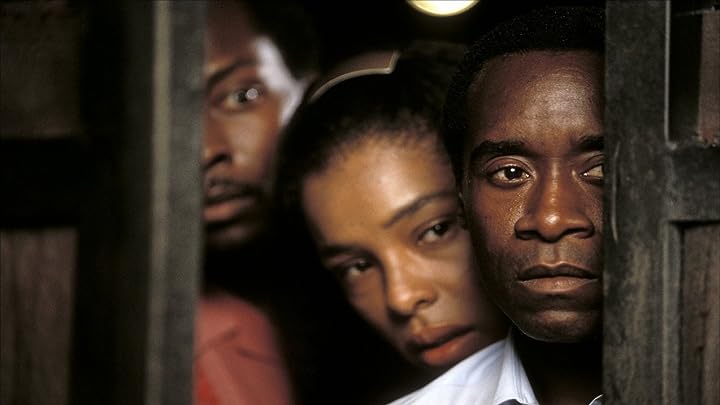
Don Cheadle, Antonio David Lyons, and Sophie Okonedo in "Hotel Rwanda" (2004) Photo Credit: © 2004 United Artists. All rights reserved.
Nick Nolte as Colonel Oliver in "Hotel Rwanda" (2004) Photo Credit: © 2004 United Artists. All rights reserved.
Don Cheadle, Mosa Kaiser, Sophie Okonedo, Ofentse Modiselle, and Mathabo Pieterson in "Hotel Rwanda" (2004) Photo Credit: © 2004 United Artists. All rights reserved.
Don Cheadle as Paul Rusesabagina in "Hotel Rwanda" (2004) Photo Credit: © 2004 United Artists. All rights reserved.
Don Cheadle, Desmond Dube, Harriet Lenabe, Rosie Motene, and Eugene Khumbanyiwa in "Hotel Rwanda"(2004) Photo Credit: © 2005 MGM. All Rights Reserved.

After the genocide, Rusesabagina faced a complex and controversial legacy. Some praised him as a hero, while others questioned his actions and motivations during and after the genocide. In later years, Rusesabagina became a vocal critic of the Rwandan government, which accused him of supporting rebel groups and arrested him in 2020.

"Hotel Rwanda" hero Paul Rusesabagina (C), wearing a mask, appears at the Kicukiro Primary court in Kigali, Rwanda, on September 14, 2020. - Paul Rusesabagina, whose actions during the genocide inspired the Oscar-nominated film "Hotel Rwanda", was charged on September 14, 2020, with terrorism and other serious crimes in his first court appearance in Kigali. Rwandan investigators announced last month the surprise arrest of Rusesabagina, a high-profile government critic who had been living abroad for years, to stand trial in his homeland for allegedly creating and sponsoring armed militias. Photo Credit: STRINGER/AFP via Getty Images
"Hotel Rwanda" hero Paul Rusesabagina (C) is handcuffed by a police officer after his pre-trial court session at the Kicukiro Primary court in Kigali, Rwanda, on September 14, 2020. - Paul Rusesabagina, whose actions during the genocide inspired the Oscar-nominated film "Hotel Rwanda", was charged on september 14, 2020, with terrorism and other serious crimes in his first court appearance in Kigali. Rwandan investigators announced last month the surprise arrest of Rusesabagina, a high-profile government critic who had been living abroad for years, to stand trial in his homeland for allegedly creating and sponsoring armed militias. Photo Credit: STRINGER/AFP via Getty Images

The Rwandan genocide, the story of Paul Rusesabagina, and the film Hotel Rwanda serve as important reminders of the capacity for both unspeakable cruelty and extraordinary bravery in times of conflict. It also highlights the complex moral and political issues surrounding such tragic events.

Directed by Terry George, Written by Keir Pearson, and Terry George, Produced by Terry George, and A. Kitman Ho, Starring: Don Cheadle, Sophie Okonedo, Joaquin Phoenix, Nick Nolte, with Cinematography by Robert Fraisse, and Edited by Naomi Geraghty, with Music by Afro Celt Sound System, Rupert Gregson-Williams, Andrea Guerra, Production companies: United Artists, Lions Gate Films, Miracle Pictures, Seamus, The Industrial Development Corporation, Inside Track, Endgame Entertainment, and Distributed by MGM Distribution Co. (United States), Entertainment Film Distributors (United Kingdom), and Mikado Film (Italy) (2004)

Share this:

  • Share on X (Opens in new window) X
  • Share on Facebook (Opens in new window) Facebook
  • Share on LinkedIn (Opens in new window) LinkedIn

Like this:

Like Loading…
Pages: 1 2 3 4 5 6 7 8 9 10 11 12 13 14 15 16 17 18 19

Leave a ReplyCancel reply

Archives

  • May 2026
  • April 2026
  • March 2026
  • February 2026
  • January 2026
  • December 2025
  • November 2025
  • October 2025
  • September 2025
  • August 2025
  • July 2025
  • June 2025
  • May 2025
  • April 2025
  • March 2025
  • February 2025
  • January 2025
  • December 2024
  • November 2024
  • October 2024
  • September 2024
  • August 2024
  • July 2024
  • June 2024
  • May 2024
  • April 2024
  • March 2024
  • February 2024
  • January 2024
  • December 2023
  • November 2023
  • October 2023
  • September 2023
  • August 2023
  • July 2023
  • June 2023
  • May 2023
  • April 2023
  • March 2023
  • February 2023
  • January 2023
  • December 2022
  • November 2022
  • October 2022
  • September 2022
  • August 2022
  • July 2022
  • June 2022
  • May 2022
  • April 2022
  • March 2022

Categories

  • Blog Posts
  • Critics Choice Awards
  • Emmy Awards
  • Featured Blog
  • Golden Globe Awards
  • In Memoriam
  • Oscar History
  • SAG Awards
  • Screen Actors Guild Awards
  • Television
  • The Actor Awards
  • Top Ten List

ABOUT US

PRIVACY POLICY

TERMS & CONDITIONS

DISCLAIMER

All Rights Reserved © Copyright 2021, MoviestoHistory.com By Themespride

Manage Cookie Consent
To provide the best experiences, we use technologies like cookies to store and/or access device information. Consenting to these technologies will allow us to process data such as browsing behavior or unique IDs on this site. Not consenting or withdrawing consent, may adversely affect certain features and functions.
Functional Always active
The technical storage or access is strictly necessary for the legitimate purpose of enabling the use of a specific service explicitly requested by the subscriber or user, or for the sole purpose of carrying out the transmission of a communication over an electronic communications network.
Preferences
The technical storage or access is necessary for the legitimate purpose of storing preferences that are not requested by the subscriber or user.
Statistics
The technical storage or access that is used exclusively for statistical purposes. The technical storage or access that is used exclusively for anonymous statistical purposes. Without a subpoena, voluntary compliance on the part of your Internet Service Provider, or additional records from a third party, information stored or retrieved for this purpose alone cannot usually be used to identify you.
Marketing
The technical storage or access is required to create user profiles to send advertising, or to track the user on a website or across several websites for similar marketing purposes.
  • Manage options
  • Manage services
  • Manage {vendor_count} vendors
  • Read more about these purposes
View preferences
  • {title}
  • {title}
  • {title}

Loading Comments...

    %d