Skip to content
CONNECT WITH US
https://moviestohistory.com/wp-content/uploads/2022/03/cropped-d3d0f4de5c874cf7a06b2f50e0bc7820-2-10.png

Movies To History.com

  • Home
  • About
  • Featured Film Blog
    • Film Critiques
    • Film Reviews
    • FIlm Recommendations
    • Video
  • Featured Television Blog
    • Television Critiques:
    • Television Reviews:
    • Television Recommendations:
    • Image
    • Video
  • Blog Posts
  • Contact Us
  • Subscribe
  • Oscar History
  • Top Ten List
Close Button

Film Critiques:

MARCH 2025:

Zero Dark Thirty, starring Jessica Chastain, Jason Clarke, Joel Edgerton, Jennifer Ehle, Mark Strong, Kyle Chandler, Édgar Ramírez, and James Gandolfini; directed by Kathryn Bigelow; written by Mark Boal and produced by Kathryn Bigelow, Mark Boal, and Megan Ellison for Columbia Pictures, First Light Productions, and Annapurna Pictures and distributed by Sony Pictures Releasing (the United States and Japan), and Panorama Media (International) (2012)
Zero Dark Thirty (2012)

Zero Dark Thirty and the Historical Reality of the Bin Laden Manhunt…

Kathryn Bigelow‘s Zero Dark Thirty (2012) offers a dramatized account of the decade-long manhunt for Osama bin Laden, the mastermind behind the September 11 attacks. The film combines documentary-style realism with Hollywood dramatization to tell the story of a determined CIA analyst, Maya, played by Jessica Chastain, whose persistent efforts ultimately lead to bin Laden’s location and death in Abbottabad, Pakistan. While the film was met with critical acclaim for its gritty realism and intense performances, it also sparked controversy regarding its portrayal of enhanced interrogation techniques and the accuracy of key events in the manhunt. This critique evaluates the film both as a cinematic work and as a representation of historical events, analyzing its depiction of the investigation, intelligence-gathering methods, and the final SEAL Team 6 raid.

Kathryn Bigelow directing "Zero Dark Thirty" (2012) Photo Credit: Annapurna Pictures
Zero Dark Thirty, starring Jessica Chastain, Jason Clarke, Joel Edgerton, Jennifer Ehle, Mark Strong, Kyle Chandler, Édgar Ramírez, and James Gandolfini; directed by Kathryn Bigelow; written by Mark Boal and produced by Kathryn Bigelow, Mark Boal, and Megan Ellison for Columbia Pictures, First Light Productions, and Annapurna Pictures and distributed by Sony Pictures Releasing (the United States and Japan), and Panorama Media (International) (2012)
The manhunt of Osama bin Laden in a scene from Zero Dark Thirty. Photo Credit: SONY Pictures (2012)
September 11, 2001 terrorist Osama bin Laden Photo Credit: AFP/Getty Images
The second tower of the World Trade Center bursts into flames after being hit by a hijacked airplane in New York in this September 11, 2001 file photograph. Al Qaeda leader Osama bin Laden was killed in a firefight with U.S. forces in Pakistan on May 1, 2011, ending a nearly 10-year worldwide hunt for the mastermind of the Sept. 11 attacks. The Brooklyn bridge is seen in the foreground. Photo Credit: Reuters/Sara K. Schwittek/Files
Jessica Chastain as Maya in "Zero Dark Thirty" (2012) Photo Credit: Annapurna Pictures
Aerial view of Osama bin Laden's compound in the pakistani city of Abbottabad made by the CIA.
Reda Kateb, Jessica Chastain and Jason Clarke in "Zero Dark Thirty" (2012) Photo Credit: Annapurna Pictures
Kyle Chandler, Jennifer Ehle, and Jessica Chastain as Maya in "Zero Dark Thirty" (2012) Photo Credit: Annapurna Pictures
Reda Kateb as Ammar in "Zero Dark Thirty" (2012) Photo Credit: Annapurna Pictures
Jessica Chastain as Maya in "Zero Dark Thirty" (2012) Photo Credit: Annapurna Pictures
The raid on Osama Bin Laden's compund in Islamabad, Pakistan by Seal Team 6 in a scene from Zero Dark Thirty. Photo Credit: SONY Pictures (2012)

The Manhunt for Osama bin Laden

The search for Osama bin Laden spanned nearly a decade, characterized by intelligence failures, bureaucratic hurdles, and strategic breakthroughs. After the 9/11 attacks, the United States launched Operation Enduring Freedom, toppling the Taliban regime in Afghanistan. Intelligence agencies worldwide worked to track bin Laden, but his elusive nature, shifting locations, and reliance on trusted couriers complicated efforts.

In this Oct. 7, 2001 file photo, President Bush poses for a photo in the Treaty Room of the White House in Washington after announcing airstrikes on Afghanistan. President Bush said he didn't care how Osama bin Laden was brought to justice. Just get him. That was back in 2001 when Bush used bravado to lead the nation past the shock of the attacks on the World Trade Center, Pentagon, and Pennsylvania. (AP Photo/ Hillery Smith Garrison, File)
Al-Qaeda Leader Osama Bin Laden. Photo Credit: Wikipedia Commons
Afghanistan War, international conflict in Afghanistan beginning in 2001 that was triggered by the September 11 attacks and consisted of three phases. The first phase—toppling the Taliban (the ultraconservative political and religious faction that ruled Afghanistan and provided sanctuary for al-Qaeda, perpetrators of the September 11 attacks)—was brief, lasting just two months. The second phase, from 2002 until 2008, was marked by a U.S. strategy of defeating the Taliban militarily and rebuilding core institutions of the Afghan state. The third phase, a turn to classic counterinsurgency doctrine, began in 2008 and accelerated with U.S. Pres. Barack Obama’s 2009 decision to temporarily increase the U.S. troop presence in Afghanistan. The larger force was used to implement a strategy of protecting the population from Taliban attacks and supporting efforts to reintegrate insurgents into Afghan society. The strategy came coupled with a timetable for the withdrawal of the foreign forces from Afghanistan; beginning in 2011, security responsibilities would be gradually handed over to the Afghan military and police. The new approach largely failed to achieve its aims. Insurgent attacks and civilian casualties remained stubbornly high, while many of the Afghan military and police units taking over security duties appeared to be ill-prepared to hold off the Taliban. By the time the U.S. and NATO combat mission formally ended in December 2014, the 13-year Afghanistan War had become the longest war ever fought by the United States. American military casualties included some 2,400 service members killed and some 20,700 others wounded.
The World Trade Center as it was attacked on September 11, 2001. Photo Credit: Associated Press
Doug Kanter, AFP | Osama bin Laden is seen on a poster at a US Justice Department press conference in 1999, in New York.
Tracking Osama bin Laden in "Zero Dark Thirty" (2012) Photo Credit: Annapurna Pictures

Crucial breakthroughs emerged in the mid-2000s when intelligence officers identified a key courier, Abu Ahmed al-Kuwaiti. Surveillance efforts eventually led to a fortified compound in Abbottabad, Pakistan, where bin Laden was believed to be hiding. On May 2, 2011, U.S. Navy SEAL Team 6 conducted Operation Neptune Spear, breaching the compound and killing bin Laden.

Jessica Chastain as Maya in "Zero Dark Thirty" (2012) Photo Credit: Annapurna Pictures
View of the compound, looking north from the south side of a wall turning slightly northeast
On May 2,[a] 2011, the United States conducted Operation Neptune Spear, in which SEAL Team Six shot and killed Osama bin Laden at his "Waziristan Haveli" in Abbottabad, Pakistan.[1] Bin Laden, who founded al-Qaeda and masterminded the September 11 attacks, had been the subject of a United States military manhunt since the beginning of the War in Afghanistan, but escaped to Pakistan—allegedly with Pakistani support—during or after the Battle of Tora Bora in December 2001. The mission was part of an effort led by the Central Intelligence Agency (CIA), with the Joint Special Operations Command (JSOC) coordinating the Special Mission Units involved in the raid. In addition to SEAL Team Six, participating units under JSOC included the 160th Special Operations Aviation Regiment (Airborne) and the CIA's Special Activities Division, which recruits heavily from among former JSOC Special Mission Units.[2][3] Approved by American president Barack Obama and involving two dozen Navy SEALs in two Black Hawks, Operation Neptune Spear was launched from about 120 miles (190 km) away, near the Afghan city of Jalalabad.[4][5] The raid took 40 minutes, and bin Laden was killed shortly before 1:00 a.m. Pakistan Standard Time[6][7] (20:00 UTC, May 1).[8] Three other men, including one of bin Laden's sons, and a woman in the compound were also killed. After the raid, the operatives returned to Afghanistan with bin Laden's corpse for identification and then flew over 850 miles (1,370 km) to the Arabian Sea, where he was buried in accordance with Islamic tradition.[9] Al-Qaeda confirmed bin Laden's death through posts made on militant websites on May 6, and vowed to avenge his killing.[10] Additionally, Pakistani militant organizations, including the Tehrik-i-Taliban, vowed retaliation against the United States and against Pakistan for failing to prevent the American raid.[11] The raid, which was supported by over 90% of the American public,[12][13] was also welcomed by the United Nations, the European Union, and NATO, as well as a large number of international organizations and governments.[14] However, it was condemned by two-thirds of the Pakistani public.[15] Legal and ethical aspects of the killing, such as the failure to capture him alive in spite of him being unarmed, were questioned by Amnesty International.[16] Also controversial was the decision to classify any photographic or DNA evidence of bin Laden's death.[17] There was widespread discontent among Pakistanis with regard to how effectively the country's defences were breached by the United States, and how the Pakistan Air Force failed to detect and intercept any incoming American aircraft.[18] After the killing of bin Laden, Pakistani prime minister Yusuf Raza Gilani formed a commission led by senior justice Javed Iqbal to investigate the circumstances of the assault.[19] The resulting Abbottabad Commission Report reported that the "collective failure" of Pakistan's military and intelligence agencies had enabled bin Laden to hide in the country for nine years. The report was classified by the Pakistani government but was later leaked to and published by Al Jazeera Media Network on July 8, 2013.
Ammar al-Baluchi or Amar Baloch; born Ali Abdul Aziz Ali on 29 August 1977) is a Pakistani (Balochi) citizen who has been in American custody at the Guantanamo Bay detention camp since 2006.[2] He was arrested in the Pakistani former capital city of Karachi in 2003 before being transferred;[3][4][5][6] the series of criminal charges against him include: "facilitating the 9/11 attackers, acting as a courier for Osama bin Laden and plotting to crash a plane packed with explosives into the U.S. consulate in Karachi."[7] He is a nephew of the Pakistani terrorist Khalid Sheikh Mohammed, who served as a senior official of al-Qaeda between the late 1980s and early 2000s; and a cousin of the Pakistani terrorist Ramzi Ahmed Yousef, who played a key role in the 1993 World Trade Center bombing, the Philippine Airlines Flight 434 bombing, and the high-profile Bojinka plot. American authorities have stated that al-Baluchi was a "key lieutenant" of his uncle Khalid Sheikh Mohammed during al-Qaeda's preparation for the 9/11 attacks,[8] and that he had told investigators that he had sought help in al-Qaeda's efforts to develop biological weapons to use against enemy forces and other targets.[9] al-Baluchi's ex-wife Aafia Siddiqui, a Pakistani cognitive neuroscientist, was arrested by Afghan police in Ghazni Province in 2008 and subsequently transferred to American custody at FMC Carswell, where she remains incarcerated on terrorism charges.[9][10] Siddiqui's family has denied that she was ever married to al-Baluchi, but the marriage has been attested by Pakistani and American intelligence personnel, Mohammed, and Siddiqui herself. Baluchi's detainee assessment memorandum by the U.S. Department of Defense, 8 December 2006 After being arrested in Karachi, al-Baluchi was transferred to Afghanistan and detained at the Salt Pit, a now-defunct CIA black site near Bagram Airfield. It has been reported that he was tortured extensively, being used as a "training prop" to teach enhanced interrogation techniques to new agents; trainees took turns shoving his head into a wall in sessions that lasted for hours, inflicting considerable brain damage. He was also doused with icy water and kept in stress positions, though these techniques ultimately failed to contribute to the acquisition of any useful intelligence.[11][2] In 2018, the United Nations released a public announcement stating that al-Baluchi's ongoing captivity "breaches human rights law" and called on American authorities to immediately end his arbitrary detention
The Naval Special Warfare Development Group (NSWDG), abbreviated as DEVGRU ("Development Group")[3][note 1] and unofficially known as SEAL Team Six,[5][6] is the United States Navy component of the Joint Special Operations Command (JSOC). The unit is often referred to within JSOC as Task Force Blue.[6] DEVGRU is administratively supported by the Naval Special Warfare Command and operationally commanded by JSOC. Most information concerning DEVGRU is designated as classified, and details of its activities are not usually commented on by either the United States Department of Defense or the White House.[7] Despite the official name changes and increase in size, "SEAL Team Six" remains the unit's widely recognized moniker. DEVGRU (along with its Army and Air Force counterparts, Delta Force, Intelligence Support Activity, the 75th Ranger Regiment's Regimental Reconnaissance Company and 24th Special Tactics Squadron), are the U.S. military's primary Tier 1 special mission units tasked with performing the most complex, classified, and dangerous missions directed by the President of the United States or the Secretary of Defense.[8] DEVGRU conducts various specialized missions such as counterterrorism, hostage rescue, special reconnaissance, and direct action (short-duration strikes or small-scale offensive actions), often against high-value targets.
The New York Times - Bin Laden Killed by US Forces in Pakistan, Obama Says, Declaring Justice Has Been Done. New York, Monday, May 2, 2011

Film Analysis: Narrative and Characterization

Zero Dark Thirty, starring Jessica Chastain, Jason Clarke, Joel Edgerton, Jennifer Ehle, Mark Strong, Kyle Chandler, Édgar Ramírez, and James Gandolfini; directed by Kathryn Bigelow; written by Mark Boal and produced by Kathryn Bigelow, Mark Boal, and Megan Ellison for Columbia Pictures, First Light Productions, and Annapurna Pictures and distributed by Sony Pictures Releasing (the United States and Japan), and Panorama Media (International) (2012)

1. Jessica Chastain’s Performance as Maya

Jessica Chastain’s portrayal of Maya provides an emotional anchor to the narrative. Maya’s single-minded dedication reflects the commitment of intelligence officers who pursued bin Laden. Chastain’s performance embodies quiet intensity, portraying Maya as meticulous, emotionally driven, and resilient. While Maya is a fictional character, her role amalgamates several real-life analysts, notably Alfreda Frances Bikowsky. By focusing on Maya’s personal journey, the film personalizes the bureaucratic complexities behind the manhunt.

Zero Dark Thirty, starring Jessica Chastain, Jason Clarke, Joel Edgerton, Jennifer Ehle, Mark Strong, Kyle Chandler, Édgar Ramírez, and James Gandolfini; directed by Kathryn Bigelow; written by Mark Boal and produced by Kathryn Bigelow, Mark Boal, and Megan Ellison for Columbia Pictures, First Light Productions, and Annapurna Pictures and distributed by Sony Pictures Releasing (the United States and Japan), and Panorama Media (International) (2012)
Jessica Chastain as CIA Intelligence Analyst, Maya Harris in a scene from Zero Dark Thirty. Photo Credit: SONY Pictures (2012)
Jessica Chastain as Maya in "Zero Dark Thirty" (2012) Photo Credit: Annapurna Pictures
Jessica Chastain and Mark Strong in "Zero Dark Thirty" (2012) Photo Credit: Annapurna Pictures
Jessica Chastain as Maya in "Zero Dark Thirty" (2012) Photo Credit: Annapurna Pictures
Alfreda Frances Bikowsky (born 1965) is a Central Intelligence Agency (CIA) officer who has headed the Bin Laden Issue Station and the Global Jihad unit. Bikowsky's identity is not publicly acknowledged by the CIA, but was deduced by independent investigative journalists in 2011.[2] In January 2014, the Washington Post named her and tied her to a pre-9/11 intelligence failure and the extraordinary rendition of Khalid El-Masri.[3] The Senate Intelligence Committee report on CIA torture, released in December 2014, showed that Bikowsky was not only a key part of the torture program but also one of its chief apologists, resulting in the media's giving her the moniker "The Unidentified Queen of Torture."
Jessica Chastain as Maya in "Zero Dark Thirty" (2012) Photo Credit: Annapurna Pictures

Maya’s character arc is marked by her evolution from a relatively inexperienced analyst to a hardened operative whose life becomes consumed by her pursuit of bin Laden. Early scenes depict her discomfort with the brutal interrogation tactics used by her colleague, Dan Fuller (Jason Clarke), but over time, Maya grows increasingly resolute, embracing an unwavering belief in her own analysis. Chastain’s performance captures Maya’s mounting frustration as leads dry up, friends are killed, and political resistance intensifies. By the film’s conclusion, Maya’s ambiguous expression—part relief, part emptiness—underscores the emotional toll of her decade-long mission.

Jessica Chastain as Maya in "Zero Dark Thirty" (2012) Photo Credit: Annapurna Pictures
Jason Clarke as Dan Fuller in "Zero Dark Thirty" (2012) Photo Credit: Annapurna Pictures
Jessica Chastain and Jason Clarke in "Zero Dark Thirty" (2012) Photo Credit: Annapurna Pictures
Jessica Chastain as Maya in "Zero Dark Thirty" (2012) Photo Credit: Annapurna Pictures
Jennifer Ehle as Jessica Karley in "Zero Dark Thirty" (2012) Photo Credit: Annapurna Pictures
Jessica Chastain as Maya in "Zero Dark Thirty" (2012) Photo Credit: Annapurna Pictures
Kyle Chandler and Mark Strong in "Zero Dark Thirty" (2012) Photo Credit: Annapurna Pictures
Jessica Chastain as Maya in "Zero Dark Thirty" (2012) Photo Credit: Annapurna Pictures

2. Supporting Characters and Their Roles

Jason Clarke’s portrayal of Dan Fuller offers a stark contrast to Maya. As a CIA interrogator/intellegience officer who oversees brutal methods in the film’s early scenes, Dan embodies the moral ambiguity of post-9/11 intelligence operations. His eventual departure from the field signifies the toll such tactics exact on agents themselves.

Jessica Chastain and Jason Clarke in "Zero Dark Thirty" (2012) Photo Credit: Annapurna Pictures
Jason Clarke as Dan Fuller in "Zero Dark Thirty" (2012) Photo Credit: Annapurna Pictures
Kyle Chandler, as Joseph Bradley, CIA Station Chief in Islamabad, and Jason Clarke, as Dan Fuller, a CIA Intelligence Officer, in a scene from Zero Dark Thirty. Photo Credit: SONY Pictures (2012)
Jason Clarke as Dan Fuller in "Zero Dark Thirty" (2012) Photo Credit: Annapurna Pictures
Jessica Chastain and Jason Clarke in "Zero Dark Thirty" (2012) Photo Credit: Annapurna Pictures
Jason Clarke as Dan Fuller in "Zero Dark Thirty" (2012) Photo Credit: Annapurna Pictures

Joel Edgerton, portraying Patrick Grayston, one of the SEAL Team 6 operatives, provides a grounded performance that emphasizes the uncertainty and tension surrounding the final raid. While his character lacks extensive development, his pragmatic perspective contrasts Maya’s emotional intensity, reinforcing the theme of professional detachment in military operations.

Joel Edgerton as Patrick Grayston in "Zero Dark Thirty" (2012) Photo Credit: Annapurna Pictures
The raid on Osama Bin Laden's compund in Islamabad, Pakistan by Seal Team 6 in a scene from Zero Dark Thirty. Photo Credit: SONY Pictures (2012)
Joel Edgerton as Patrick Grayston in "Zero Dark Thirty" (2012) Photo Credit: Annapurna Pictures
Chris Pratt and Joel Edgerton in "Zero Dark Thirty" (2012) Photo Credit: Annapurna Pictures
Joel Edgerton and Jessica Chastain in "Zero Dark Thirty" (2012) Photo Credit: Annapurna Pictures
Joel Edgerton as Patrick Grayston in "Zero Dark Thirty" (2012) Photo Credit: Annapurna Pictures

Other characters, such as Joseph Bradley (Kyle Chandler), a Islamabad CIA Station Chief, and George (Mark Strong), a high-level senior CIA supervisor, demonstrate the internal political struggles and pressures within the intelligence community. Their presence highlights bureaucratic challenges that hindered progress in the manhunt, illustrating the complex interplay between fieldwork and institutional oversight.

Kyle Chandler as Joseph Bradley in "Zero Dark Thirty" (2012) Photo Credit: Annapurna Pictures
Mark Strong as George in "Zero Dark Thirty" (2012) Photo Credit: Annapurna Pictures
Kyle Chandler, Mark Strong, and Harold Perrineau in "Zero Dark Thirty" (2012) Photo Credit: Annapurna Pictures
Kyle Chandler and Mark Strong in "Zero Dark Thirty" (2012) Photo Credit: Annapurna Pictures
Mark Strong, and Jessica Chastain in "Zero Dark Thirty" (2012) Photo Credit: Annapurna Pictures
Kyle Chandler as Joseph Bradley in "Zero Dark Thirty" (2012) Photo Credit: Annapurna Pictures
Mark Strong as George in "Zero Dark Thirty" (2012) Photo Credit: Annapurna Pictures

3. Portrayal of Enhanced Interrogation Techniques

One of the most contentious aspects of Zero Dark Thirty is its depiction of “enhanced interrogation techniques,” such as waterboarding. The film suggests that these methods contributed significantly to obtaining information about bin Laden’s location. This claim was criticized by numerous officials and intelligence experts, who argued that the crucial intelligence was acquired through traditional methods. The Senate Intelligence Committee’s report on CIA torture confirmed that coercive methods did not yield critical intelligence on bin Laden’s whereabouts. While the film stops short of endorsing these tactics, its narrative ambiguity invites debate about their efficacy.
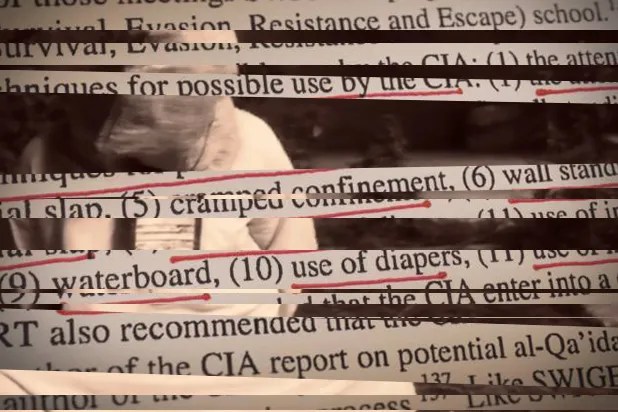
Zero Dark Thirty, starring Jessica Chastain, Jason Clarke, Joel Edgerton, Jennifer Ehle, Mark Strong, Kyle Chandler, Édgar Ramírez, and James Gandolfini; directed by Kathryn Bigelow; written by Mark Boal and produced by Kathryn Bigelow, Mark Boal, and Megan Ellison for Columbia Pictures, First Light Productions, and Annapurna Pictures and distributed by Sony Pictures Releasing (the United States and Japan), and Panorama Media (International) (2012)
One of the most contentious aspects of Zero Dark Thirty is its depiction of "enhanced interrogation techniques," such as waterboarding. The film suggests that these methods contributed significantly to obtaining information about bin Laden’s location. This claim was criticized by numerous officials and intelligence experts, who argued that the crucial intelligence was acquired through traditional methods. The Senate Intelligence Committee's report on CIA torture confirmed that coercive methods did not yield critical intelligence on bin Laden’s whereabouts. While the film stops short of endorsing these tactics, its narrative ambiguity invites debate about their efficacy.
Al-Qaeda Leader Osama Bin Laden. Photo Credit: Wikipedia Commons
The Committee Study of the Central Intelligence Agency's Detention and Interrogation Program[1] is a report compiled by the bipartisan United States Senate Select Committee on Intelligence (SSCI) about the Central Intelligence Agency (CIA)'s Detention and Interrogation Program and its use of torture during interrogation in U.S. government communiqués on detainees in CIA custody. The report covers CIA activities before, during, and after the "War on Terror." The initial report was approved on December 13, 2012, by a vote of 9–6, with seven Democrats, one independent, and one Republican voting in favor of the report and six Republicans voting in opposition.[2][3] The more-than 6,700-page report (including 38,000 footnotes)[4] details the history of the CIA's Detention and Interrogation Program and the Committee's 20 findings and conclusions. On December 9, 2014, the SSCI released a 525-page portion that consisted of key findings and an executive summary of the full report. It took more than five years to complete.[5][6] The full unredacted report remains classified.[7][8][9] The report details actions by CIA officials, including torturing prisoners, providing misleading or false information about classified CIA programs to the president, Department of Justice, Congress, and the media, impeding government oversight and internal criticism, and mismanaging the program. It also revealed the existence of previously unknown detainees, that more detainees were subjected to "enhanced interrogation techniques" (widely understood to be a euphemism for torture) than was previously disclosed, and that more techniques were used without Department of Justice approval. It concluded that the use of enhanced interrogation techniques did not yield unique intelligence that saved lives (as the CIA claimed), nor was it useful in gaining cooperation from detainees, and that the program damaged the United States' international standing.[1] Some people, including some CIA officials and U.S. Republicans, disputed the report's conclusions and said it provided an incomplete picture of the program. Others criticized the publishing of the report, citing its potential for damage to the U.S. and the contentious history of its development. Former Republican presidential nominee John McCain praised the release of the report. Upon the report’s release, then-President Barack Obama stated, "One of the strengths that makes America exceptional is our willingness to openly confront our past, face our imperfections, make changes and do better."[10] In the wake of the release of the report's executive summary, a large number of individuals and organizations called for the prosecution of the CIA and government officials who perpetrated, approved, or provided legal cover for the torture of detainees;[11][12][13][14][15] however, prosecutions are considered unlikely.[16] The U.S. has also passed legislation, sponsored by Senators McCain and Dianne Feinstein, to prevent U.S. agencies from using many of the torture techniques described in the report.[17] The 2019 film The Report covers the decade-long time period that led to the final creation and publication of the report.
Official portrait, 2004 Dianne Emiel Feinstein (née Goldman; June 22, 1933 – September 29, 2023) was an American politician who served as a United States senator from California from 1992 until her death in 2023. A member of the Democratic Party, she served as mayor of San Francisco from 1978 to 1988.
Official portrait, 2009 John Sidney McCain III (August 29, 1936 – August 25, 2018) was an American statesman and naval officer who represented the state of Arizona in Congress for over 35 years, first as a Representative from 1983 to 1987, and then as a U.S. senator from 1987 until his death in 2018. He was the Republican Party's nominee in the 2008 U.S. presidential election.
Official portrait, c. 1990s Carl Milton Levin (June 28, 1934 – July 29, 2021) was an American attorney and politician who served as a United States senator from Michigan from 1979 to 2015. A member of the Democratic Party, he was the chair of the Senate Armed Services Committee from 2001 to 2003 and again from 2007 to 2015.
One of the most contentious aspects of Zero Dark Thirty is its depiction of "enhanced interrogation techniques," such as waterboarding. The film suggests that these methods contributed significantly to obtaining information about bin Laden’s location. This claim was criticized by numerous officials and intelligence experts, who argued that the crucial intelligence was acquired through traditional methods. The Senate Intelligence Committee's report on CIA torture confirmed that coercive methods did not yield critical intelligence on bin Laden’s whereabouts. While the film stops short of endorsing these tactics, its narrative ambiguity invites debate about their efficacy.
Senator Dianne Feinstein, Chair of the Intelligence Committee, lays out the Senate Intelligence Committee Report on CIA Torture on the Senate Floor.
Jason Clarke as Dan Fuller in "Zero Dark Thirty" (2012) Photo Credit: Annapurna Pictures
Jessica Chastain and Jason Clarke in "Zero Dark Thirty" (2012) Photo Credit: Annapurna Pictures

The film’s decision to begin with a visceral torture sequence establishes a tone of discomfort, challenging audiences to reckon with the ethical complexities of counterterrorism operations. Maya’s transformation from a reluctant observer of torture to an emotionally hardened operative underscores how prolonged exposure to violence shapes individuals.

Jason Clarke as Dan Fuller in "Zero Dark Thirty" (2012) Photo Credit: Annapurna Pictures
Reda Kateb as Ammar in "Zero Dark Thirty" (2012) Photo Credit: Annapurna Pictures
Reda Kateb, Jessica Chastain and Jason Clarke in "Zero Dark Thirty" (2012) Photo Credit: Annapurna Pictures
Jessica Chastain as Maya in "Zero Dark Thirty" (2012) Photo Credit: Annapurna Pictures

4. Depiction of Intelligence-Gathering

The film excels in portraying the painstaking nature of intelligence analysis. Scenes of Maya poring over files, tracking leads, and navigating political tensions provide insight into the strategic challenges faced by the CIA. The emphasis on small breakthroughs—identifying al-Kuwaiti’s cell phone, connecting him to the Abbottabad compound—accurately reflects the complexity of piecing together fragmented data. However, the film condenses years of effort into a streamlined narrative, sometimes oversimplifying key moments.

The manhunt of Osama bin Laden in a scene from Zero Dark Thirty. Photo Credit: SONY Pictures (2012)
Jessica Chastain as Maya in "Zero Dark Thirty" (2012) Photo Credit: Annapurna Pictures
Kyle Chandler, Jennifer Ehle, and Jessica Chastain as Maya in "Zero Dark Thirty" (2012) Photo Credit: Annapurna Pictures
Jessica Chastain as Maya in "Zero Dark Thirty" (2012) Photo Credit: Annapurna Pictures
Tracking Osama bin Laden in "Zero Dark Thirty" (2012) Photo Credit: Annapurna Pictures
Jessica Chastain as Maya in "Zero Dark Thirty" (2012) Photo Credit: Annapurna Pictures
Osama Bin Laden's compund in Islamabad, Pakistan in Zero Dark Thirty. Photo Credit: SONY Pictures (2012)
Jessica Chastain as Maya in "Zero Dark Thirty" (2012) Photo Credit: Annapurna Pictures

5. Operation Neptune Spear: The Abbottabad Raid

The film’s final act meticulously recreates the SEAL Team 6 raid on bin Laden’s compound. Filmed in near-real-time with minimal dialogue, the sequence captures the tension, precision, and uncertainty faced by the operatives. The raid’s authenticity, from the MH-60 Black Hawk’s crash landing to the methodical room-by-room sweep, demonstrates Bigelow’s commitment to realism. Yet, the absence of Pakistani military response—a significant concern during the actual mission—is notably understated in the film.


Political Implications

Zero Dark Thirty generated significant debate regarding its political message and the broader implications of U.S. counterterrorism policies. The film’s depiction of torture, coupled with its ambiguous stance on the efficacy of enhanced interrogation, led some critics to argue that it risked endorsing controversial practices. By presenting these methods as part of the CIA’s investigative process, Bigelow’s film inadvertently contributed to public misconceptions about the role of torture in intelligence gathering.

Zero Dark Thirty, starring Jessica Chastain, Jason Clarke, Joel Edgerton, Jennifer Ehle, Mark Strong, Kyle Chandler, Édgar Ramírez, and James Gandolfini; directed by Kathryn Bigelow; written by Mark Boal and produced by Kathryn Bigelow, Mark Boal, and Megan Ellison for Columbia Pictures, First Light Productions, and Annapurna Pictures and distributed by Sony Pictures Releasing (the United States and Japan), and Panorama Media (International) (2012)
Protesters outside of the "Zero Dark Thirty" Washington, DC Premiere at The Newseum on January 8, 2013 in Washington, DC. Photo by Paul Morigi/WireImage
Reda Kateb as Ammar in "Zero Dark Thirty" (2012) Photo Credit: Annapurna Pictures
Kathryn Bigelow directing "Zero Dark Thirty" (2012) Photo Credit: Annapurna Pictures

Furthermore, the film largely omits the diplomatic fallout following bin Laden’s death. The discovery of bin Laden in Abbottabad strained U.S.-Pakistan relations, raising questions about Pakistan’s potential complicity or incompetence in harboring the world’s most-wanted terrorist. These complexities are minimized in the film, which prioritizes the perspective of U.S. intelligence and military personnel.

Furthermore, the film largely omits the diplomatic fallout following bin Laden’s death. The discovery of bin Laden in Abbottabad strained U.S.-Pakistan relations, raising questions about Pakistan’s potential complicity or incompetence in harboring the world’s most-wanted terrorist. These complexities are minimized in the film, which prioritizes the perspective of U.S. intelligence and military personnel.
Pakistani media personnel and local residents gather outside the hideout of Al-Qaeda leader Osama bin Laden following his death by US Special Forces in a ground operation in Abbottabad on May 3, 2011. The bullet-riddled Pakistani villa that hid Osama bin Laden from the world was put under police control, as media sought to glimpse the debris left by the US raid that killed him. Bin Laden's hideout had been kept under tight army control after the dramatic raid by US special forces late May 1, 2011 in the affluent suburbs of Abbottabad, a garrison city 50 kilometres (30 miles) north of Islamabad. Photo credit should read AAMIR QURESHI/AFP/Getty Images
Composite illustration by Samiah Bilal
A newspaper stand displays magazines and posters bearing the pictures of al Qaeda leader Osama bin Laden and U.S. President Barack Obama (bottom L) in Karachi May 9, 2011 Athar Hussain/Courtesy Reuters
Hillary Clinton speaks during a news conference at the US embassy in Islamabad after meeting Pakistan's leaders. Photograph: Aamir Qureshi/AFP/Getty Images
14 January 2011 - Washington, D.C. - President Barack Obama meets with President Asif Ali Zardari of Pakistan in the Oval Office of the White House. Photo by Kristoffer Tripplaar
Jessica Chastain and James Gandolfini in "Zero Dark Thirty" (2012) Photo Credit: Annapurna Pictures
Chris Pratt and Joel Edgerton in "Zero Dark Thirty" (2012) Photo Credit: Annapurna Pictures

Cinematic Techniques and Visual Style

Bigelow’s direction emphasizes realism, employing handheld cameras, muted colors, and minimal musical scoring to create a documentary-like aesthetic. This grounded approach immerses viewers in the tension of the investigation and the climactic raid. The film’s use of diegetic sound—radio chatter, footsteps, and distant gunfire—heightens the authenticity of key scenes.

Kathryn Bigelow directing "Zero Dark Thirty" (2012) Photo Credit: Annapurna Pictures
Cinematographer Greig Fraser in "Zero Dark Thirty" (2012) Photo Credit: Jonathon Olley
Music by Alexandre Desplat Jessica Chastain as Maya in "Zero Dark Thirty" (2012) Photo Credit: Annapurna Pictures
Zero Dark Thirty, starring Jessica Chastain, Jason Clarke, Joel Edgerton, Jennifer Ehle, Mark Strong, Kyle Chandler, Édgar Ramírez, and James Gandolfini; directed by Kathryn Bigelow; written by Mark Boal and produced by Kathryn Bigelow, Mark Boal, and Megan Ellison for Columbia Pictures, First Light Productions, and Annapurna Pictures and distributed by Sony Pictures Releasing (the United States and Japan), and Panorama Media (International) (2012)
Martin Delaney, Stephen Dillane, and John Schwab in "Zero Dark Thirty" (2012) Photo Credit: Annapurna Pictures
Jessica Chastain as Maya in "Zero Dark Thirty" (2012) Photo Credit: Annapurna Pictures
The raid on Osama Bin Laden's compund in Islamabad, Pakistan by Seal Team 6 in a scene from Zero Dark Thirty. Photo Credit: SONY Pictures (2012)
Kathryn Bigelow directing Jennifer Ehle in "Zero Dark Thirty" (2012) Photo Credit: Annapurna Pictures
Kathryn Bigelow and Mark Boal directing "Zero Dark Thirty" (2012) Photo Credit: Annapurna Pictures

The film’s deliberate pacing, shifting between procedural investigation and moments of violence, mirrors the uncertainty faced by intelligence operatives. By withholding dramatic flourishes, Bigelow crafts a narrative that feels immediate and unsettling, forcing viewers to grapple with the ethical and emotional costs of counterterrorism efforts.

Jennifer Ehle as Jessica Karley in "Zero Dark Thirty" (2012) Photo Credit: Annapurna Pictures

A Balanced Appraisal

Zero Dark Thirty stands as a powerful thriller and a testament to the dedication of intelligence professionals. While its dramatized elements and controversial portrayal of torture invite criticism, the film successfully captures the complexity and moral ambiguity surrounding the hunt for Osama bin Laden. Its portrayal of Maya as a determined investigator provides an emotional throughline, while its depiction of the raid underscores the precision and risk faced by special forces. Ultimately, the film’s greatest strength lies in its ability to engage viewers with a complex narrative that raises vital questions about security, ethics, and the costs of pursuing justice.

Zero Dark Thirty, starring Jessica Chastain, Jason Clarke, Joel Edgerton, Jennifer Ehle, Mark Strong, Kyle Chandler, Édgar Ramírez, and James Gandolfini; directed by Kathryn Bigelow; written by Mark Boal and produced by Kathryn Bigelow, Mark Boal, and Megan Ellison for Columbia Pictures, First Light Productions, and Annapurna Pictures and distributed by Sony Pictures Releasing (the United States and Japan), and Panorama Media (International) (2012)

Zero Dark Thirty is available now with a subscription to Peacock…

Share this:

  • Share on X (Opens in new window) X
  • Share on Facebook (Opens in new window) Facebook
  • Share on LinkedIn (Opens in new window) LinkedIn

Like this:

Like Loading...
Pages: 1 2 3 4 5 6 7 8 9 10 11 12 13 14 15 16 17 18 19 20 21 22 23 24 25 26 27

Archives

  • May 2026
  • April 2026
  • March 2026
  • February 2026
  • January 2026
  • December 2025
  • November 2025
  • October 2025
  • September 2025
  • August 2025
  • July 2025
  • June 2025
  • May 2025
  • April 2025
  • March 2025
  • February 2025
  • January 2025
  • December 2024
  • November 2024
  • October 2024
  • September 2024
  • August 2024
  • July 2024
  • June 2024
  • May 2024
  • April 2024
  • March 2024
  • February 2024
  • January 2024
  • December 2023
  • November 2023
  • October 2023
  • September 2023
  • August 2023
  • July 2023
  • June 2023
  • May 2023
  • April 2023
  • March 2023
  • February 2023
  • January 2023
  • December 2022
  • November 2022
  • October 2022
  • September 2022
  • August 2022
  • July 2022
  • June 2022
  • May 2022
  • April 2022
  • March 2022

Categories

  • Blog Posts
  • Critics Choice Awards
  • Emmy Awards
  • Featured Blog
  • Golden Globe Awards
  • In Memoriam
  • Oscar History
  • SAG Awards
  • Screen Actors Guild Awards
  • Television
  • The Actor Awards
  • Top Ten List

ABOUT US

PRIVACY POLICY

TERMS & CONDITIONS

DISCLAIMER

All Rights Reserved © Copyright 2021, MoviestoHistory.com By Themespride

Manage Cookie Consent
To provide the best experiences, we use technologies like cookies to store and/or access device information. Consenting to these technologies will allow us to process data such as browsing behavior or unique IDs on this site. Not consenting or withdrawing consent, may adversely affect certain features and functions.
Functional Always active
The technical storage or access is strictly necessary for the legitimate purpose of enabling the use of a specific service explicitly requested by the subscriber or user, or for the sole purpose of carrying out the transmission of a communication over an electronic communications network.
Preferences
The technical storage or access is necessary for the legitimate purpose of storing preferences that are not requested by the subscriber or user.
Statistics
The technical storage or access that is used exclusively for statistical purposes. The technical storage or access that is used exclusively for anonymous statistical purposes. Without a subpoena, voluntary compliance on the part of your Internet Service Provider, or additional records from a third party, information stored or retrieved for this purpose alone cannot usually be used to identify you.
Marketing
The technical storage or access is required to create user profiles to send advertising, or to track the user on a website or across several websites for similar marketing purposes.
  • Manage options
  • Manage services
  • Manage {vendor_count} vendors
  • Read more about these purposes
View preferences
  • {title}
  • {title}
  • {title}
 

Loading Comments...
 

    %d