Skip to content
CONNECT WITH US
https://moviestohistory.com/wp-content/uploads/2022/03/cropped-d3d0f4de5c874cf7a06b2f50e0bc7820-2-10.png

Movies To History.com

  • Home
  • About
  • Featured Film Blog
    • Film Critiques
    • Film Reviews
    • FIlm Recommendations
    • Video
  • Featured Television Blog
    • Television Critiques:
    • Television Reviews:
    • Television Recommendations:
    • Image
    • Video
  • Blog Posts
  • Contact Us
  • Subscribe
  • Oscar History
  • Top Ten List
Close Button

Film Recommendations:

DECEMBER 2022:

Directed by Norman Jewison, Screenplay by Armyan Bernstein, and Dan Gordon, Based on "Lazarus and the Hurricane" 1991 novel by Sam Chaiton, and Terry Swinton, and "The Sixteenth Round" 1974 novel by Rubin Carter, Produced by Norman Jewison, Armyan Bernstein, and John Ketcham, Starring: Denzel Washington, John Hannah, Deborah Kara Unger, Liev Schreiber, Vicellous Reon Shannon, David Paymer, Dan Hedaya, Harris Yulin, Rod Steiger, with Cinematography by Roger Deakins, Edited by Stephen Rivkin, with Music by Christopher Young, Production companies: Universal Pictures, Beacon Pictures, and Azoff Films, Distributed by Universal Pictures (United States), Buena Vista International (International) (1999)
The Hurricane (1999)

“Hate put me in PRISON, love’s gonna bust me out”

– Rubin “Hurricane” Carter

FROM BOXER TO BOOKS…

The Hurricane was released in 1999 and starred Denzel Washington and was inspired by the events of two books centered around the boxing career, murder trials, the convictions along with appeals, and the eventual release by Habeas Corpus of Rubin “Hurricane” Carter. So, for this recommendation, I will discuss the two books that the 1999 film directed by Norman Jewison was adapted from, The Sixteenth Round: From Number 1 Contender to Number 45472, which is the autobiography written by Rubin Carter and published in 1974 from prison; as well as Lazarus and the Hurricane: The Untold Story of the Freeing of Rubin “Hurricane” Carter, written by Sam Chaiton with Terry Swinton and published in 1991. While the film took many liberties with the story of Rubin Carter for entertainment value, the film screenplay written by Armyan Bernstein and Dan Gordon is based on the information in these two books.

Directed by Norman Jewison, Screenplay by Armyan Bernstein, and Dan Gordon, Based on "Lazarus and the Hurricane" 1991 novel
by Sam Chaiton, and Terry Swinton, and "The Sixteenth Round" 1974 novel by Rubin Carter, Produced by Norman Jewison, Armyan Bernstein, and John Ketcham, Starring: Denzel Washington, John Hannah, Deborah Kara Unger, Liev Schreiber, Vicellous Reon Shannon, David Paymer, Dan Hedaya, Harris Yulin, Rod Steiger, with Cinematography by Roger Deakins, Edited by Stephen Rivkin, with Music by	Christopher Young, Production companies: Universal Pictures, Beacon Pictures, and Azoff Films, Distributed by Universal Pictures (United States), Buena Vista International (International) (1999)
Denzel Washington during "Hurricane" Los Angeles Premiere at Mann Village Theatre in Westwood, California, United States. 

Photo Credit: SGranitz/WireImage
Denzel Washington as Rubin "The Hurricane" Carter. Photo Credit: Universal Pictures 1999
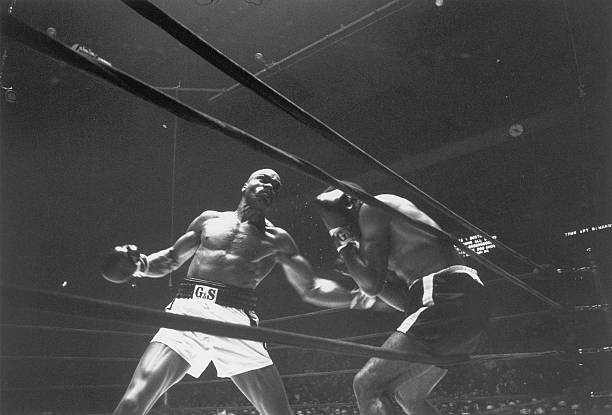
UNITED STATES - MAY 25: Rubin "Hurricane" Carter (dark trunks) vs. George Benton (light trunks) during action in the tenth round. Hurricane won the split decision at Madison Square Garden., Photo Credit: Charles Hoff/NY Daily News Archive via Getty Images
The Morning News Front Page headline with the verdict in the 1976 retrial of Rubin Carter and John Artis. Photo Credit: Google Images
Former middleweight boxer Rubin "Hurricane" Carter gestures while speaking from prison where he serves time for a triple murder conviction. Rahway State Prison, Rahway, New Jersey. | Location: Rahway State Prison, Rahway, New Jersey, USA. Photo Credit: Getty Images
A definition of the court petition, writ of habeas corpus. Photo Credit: Google Images
Former middleweight boxing contender Rubin "Hurricane" Carter waves and celebrates on the street after receiving his release from the New Jersey prison system in New York City after his conviction was overturned. Carter and John Artis were convicted in two jury trials of killing three people in a bar on June 17, 1966. New York, November 29, 1985. Photo Credit: Getty Images
After his release from prison in September 1961, Rubin Carter became a professional boxer. At 5 ft 8 in (1.73 m), Carter was shorter than the average middleweight, but he fought all of his professional career at 155–160 lb (70–72.6 kg). His aggressive style and punching power (resulting in many early-round knockouts) drew attention, establishing him as a crowd favorite and earning him the nickname "Hurricane". After he defeated a number of middleweight contenders—such as Florentino Fernandez, Holley Mims, Gomeo Brennan, and George Benton—the boxing world took notice. The Ring first listed him as one of its "Top 10" middleweight contenders in July 1963. At the end of 1965, they ranked him as the number five middleweight. Photo Credit: Wikipedia Commons
Director Norman Jewison directing Denzel Washington in "The Hurricane" about Rubin "Hurricane" Carter and his wrongful conviction.  

Photo Credit: Getty Images
Rubin "Hurricane" Carter was riding a wave of success. The survivor of a difficult youth, he rose to become a top contender for the middleweight boxing crown. But his career crashed to a halt on May 26, 1967, when he and another man were found guilty of the murder of three white people and sentenced to three consecutive life terms. Written from prison and first published in 1974, The Sixteenth Round chronicles Hurricane's journey from the ring to solitary confinement. The book was his cry for help to the public, an attempt to set the record straight and force a new trial. Bob Dylan wrote his classic anthem "Hurricane" about his struggle, and Muhammad Ali and thousands of others took up his cause. The power of Carter's voice, as well as his ironic humor, makes this an eloquent, soul-stirring account of a remarkable life. Originally Published: January 1, 1974 by Viking Press
Boxer Rubin "Hurricane" Carter, who was arrested and imprisoned along with John Artis for a bar room murder in 1966. He was released in 1985 when a judge finally decreed that the arrest and conviction had been based on racial prejudice and not on facts. Photo Credit: Getty Images
This remarkable true story begins in a Brooklyn ghetto when a group of Canadians meets Lesra (Lazarus), an illiterate black teenager who wins their hearts. They end up bringing him to Toronto to help with his education, and while learning to read, Lesra finds a copy of Rubin "Hurricane" Carter's The Sixteenth Round. It was a book destined to change Lesra's life forever, and the lives of his adopted family. Rubin Carter, the subject of Bob Dylan's song "Hurricane," was a number one middleweight boxing contender who had been wrongfully imprisoned after a white jury found him guilty of the murder of three whites in 1966. A huge public outcry followed the publication of The Sixteenth Round in 1974, culminating in a retrial, which was a virtual reenactment of the original travesty, with Carter receiving the same triple life sentence. Moved by Lesra's passion, his adopted Canadian family contacted Carter and reinvigorated the legal battle. The inspiring relationship that ensued forms the heart of Lazarus and the Hurricane--a riveting legal drama, fast-paced murder investigation, and above all, a moving account of hope, humanity, and the indomitability of the human spirit. Originally Published: January 1, 1991 by Penguin Group USA
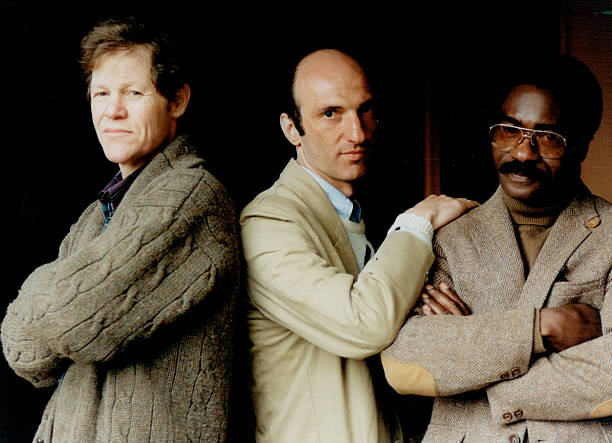
Terry Swinton, left, and Sam Chaiton in a portrait for a feature. Taken in their home. 

Photo Credit: Ken Faught/Toronto Star via Getty Images
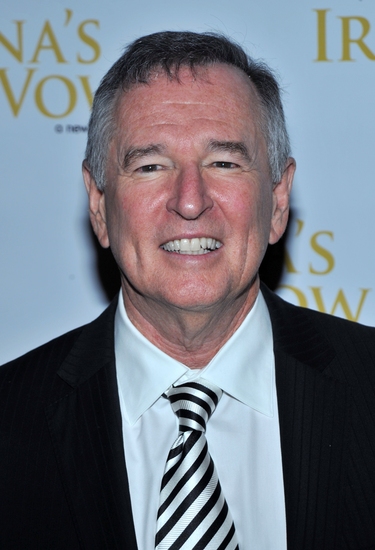
Barry "Armyan" Bernstein (born August 12, 1947) is an American film/television producer, director and screenwriter. He is the co-founder and chairman of the film/television company Beacon Pictures.

Photo Credit: Wikipedia Commons
Dan Gordon was born May 5, 1947 U.S. Nationality Israeli, American
Occupations	
Screenwriter television writer television producer television director film producer novelist playwright film director soldier
Dan Gordon (Hebrew: דן גורדון; born May 5, 1947) is an Israeli-American screenwriter, television writer, television producer, television director, film producer, novelist, playwright, film director, and reserve duty captain in the Israel Defense Forces.

As a screenwriter, he has written films including Wyatt Earp, Passenger 57, Murder in the First, and The Hurricane, and developed the story for Rambo: Last Blood. He has been the producer, screenwriter and story editor for over 200 hours of television, including Highway to Heaven, Highlander, and Soldier of Fortune, Inc. He has also written stage adaptations of Terms of Endearment and Rain Man, and novels based on his screenplays as well as his own experiences fighting in the Gaza War.

Photo Credit: Google Images

The Sixteenth Round: From Number 1 Contender to Number 45472

Written by Rubin “Hurricane” Carter


Rubin “Hurricane” Carter’s autobiography, titled The Sixteenth Round: From Number 1 Contender to Number 45472, is a compelling and controversial account of his life, focusing primarily on his wrongful conviction for triple murder and subsequent quest for justice. While the book provides a powerful narrative that sheds light on the flaws of the criminal justice system, it is not without its criticisms. One notable strength of Carter’s autobiography is his ability to vividly convey the injustices he endured throughout his life. His description of growing up in a racially divided America and the challenges he faced as a young African American boxer in a predominately white sport is both captivating and thought-provoking. Carter effectively highlights the racial biases that permeated his arrest, trial, and imprisonment, shedding light on the systematic issues that led to his wrongful conviction. Moreover, Carter’s account of his time in prison is emotionally charged, detailing the hardships he endured and the resilience he displayed in the face of injustice. His narrative powerfully portrays the dehumanizing aspects of incarceration and the transformative impact it had on his perspective.

American middleweight boxer Rubin Hurricane Carter of New Jersey, USA, sports a hooded top as he poses before his fight with Harry Scott at the Royal Albert Hall. March 1965. Photo Credit: Malcolm MacNeill/Daily Mirror/Mirrorpix via Getty Images
Rubin "Hurricane" Carter was riding a wave of success. The survivor of a difficult youth, he rose to become a top contender for the middleweight boxing crown. But his career crashed to a halt on May 26, 1967, when he and another man were found guilty of the murder of three white people and sentenced to three consecutive life terms.
            Written from prison and first published in 1974, The Sixteenth Round chronicles Hurricane's journey from the ring to solitary confinement. The book was his cry for help to the public, an attempt to set the record straight and force a new trial. Bob Dylan wrote his classic anthem "Hurricane" about his struggle, and Muhammad Ali and thousands of others took up his cause. The power of Carter's voice, as well as his ironic humor, makes this an eloquent, soul-stirring account of a remarkable life.

Originally Published: January 1, 1974 by Viking Press
The Herald News article announcing the guilty verdict for Rubin Carter and John Artis. Photo Credit: Google Images
Police motorcyclist patrol the sidewalks of the streets of Birmingham, Alabama, to prevent new gatherings, on May, 09, 1963, after violent demonstrations for civil rights. In the sixties, Birmingham, Alabama, was a major centre of civil rights activities. In 1963, the American civil rights association Southern Christian Leadership Conference (SCLC) organized here nonviolent protests in an attempt to draw attention to the unequal treatment that African Americans endured in this southern city, one of the most racially segregated US cities. A series of clashes between young black students and white municipal authorities, ultimately led to the municipal authorities reforming the city's discriminatory laws, but also the Civil Rights Act of 1964.

Photo Credit: -/AFP via Getty Images
(Original Caption) Pittsburgh, Pennsylvania: A jubilant Rubin "Hurricane" Carter displays his brute strength as he shows the hand he sued to knock Emile Griffith through the ropes for a T-KO in 2 min. and 13 seconds of the first round. Photo Credit: Getty Images
Rubin "Hurricane" Carter incarcerated in 1974.

Photo Credit: Google Images

However, some critics argue that Carter’s autobiography lacks balance and objectivity. While it is important to acknowledge the profound injustices he suffered, there are instances where the narrative appears one-sided. Carter portrays himself as an unwavering victim of a corrupt system, which may overshadow the complexities of the case and the perspectives of those involved. Additionally, some readers have expressed concerns about the accuracy of certain events portrayed in the book. Autobiographies often rely on personal recollections, which can be influenced by time, emotion, and personal bias. In the case of Carter’s autobiography, there have been claims that certain facts and timelines may have been distorted or selectively presented to fit his narrative. Furthermore, some critics argue that Carter’s autobiography lacks a broader examination of his life beyond the wrongful conviction. While it is understandable that the focus is on the most significant event that shaped his life, delving into the other aspects of his personal and professional experiences could have provided a more comprehensive understanding of his character and motivations.

Middleweight Boxing: Rubin Hurricane Carter after losing fight vs Dick Tiger at Madison Square Garden, New York, NY 5/20/1965 Photo Credit: Herb Scharfman/Sports Illustrated via Getty Images
Former middleweight boxer Rubin ‘Hurricane' Carter (left) and John Artis are shown during their arraignment Dec. 16 at the county courthouse here on charges of murder and assault with intent to kill. They are accused of having killed three people at a bar on June 17th. Photo Credit: Getty Images
(Original Caption) Former boxer Rubin "Hurricane" Carter flashes big grin on arrival at court to appeal for new trial, October 29th. Carter's lawyers were prepared to present "a lot of new material" in connection with his conviction in 1967 of murdering three persons in a Paterson, N.J. bar. Photo Credit: Getty Images
(Original Quote) Rahway State Prison in New Jersey, where 50 to 150 inmates hold warden Hugh Verkcevich hostage. Photo Credit: Getty Images
Middleweight Boxing: Rubin Hurricane Carter in action vs Luis Manuel Rodriguez at Madison Square Garden, New York, NY 2/12/1965 Photo Credit: Tony Triolo/Sports Illustrated via Getty Images
Rubin Carter in his military photo from 1954. Photo Credit: Google Images

In conclusion, Rubin “Hurricane” Carter’s The Sixteenth Round: From Number 1 Contender to Number 45472 offers a compelling account of his struggles, particularly his wrongful conviction and subsequent fight for justice. The book succeeds in shedding light on the flaws of the criminal justice system and the racial biases that plagued his case. However, it is not without its criticisms, including potential boas, selective storytelling, and a lack of broader exploration. Despite these criticisms, Carter’s autobiography remains an important and thought-provoking contribution to the discussion on race, justice, and the power of resilience in the face of adversity.

Former middleweight world champion contender, Rubin The Hurricane Carter, photographed in Sydney before a fund-raising dinner for JusticeWA in Perth. Photo Credit: Edwina Pickles/Sydney Morning Herald/Fairfax Media via Getty Images

Lazarus and the Hurricane: The Untold Story of the Freeing of Rubin “Hurricane” Carter

Written by Sam Chaiton and Terry Swinton


Lazarus and the Hurricane: The Untold Story of the Freeing of Rubin “Hurricane” Carter by Sam Chaiton and Terry Swinton is a thought-provoking and poignant account that delves into the wrongful conviction of Rubin “Hurricane” Carter and the transformative power of friendship. While the book offers a compelling narrative that highlights the flaws of the criminal justice system, it also presents certain limitations and perspectives that warrant discussion. One notable strength of Lazarus and the Hurricane is the authors’ meticulous research and their ability to weave together the stories of Rubin Carter, John Artis, and Lesra Martin. The book brings attention to the racial biases, legal misconduct, and systematic flaws that led to Carter’s wrongful conviction and his subsequent journey toward exoneration. The authors’ dedication to uncovering the truth and their commitment to justice shine through in their detailed examination of the case.

This remarkable true story begins in a Brooklyn ghetto when a group of Canadians meets Lesra (Lazarus), an illiterate black teenager who wins their hearts. They end up bringing him to Toronto to help with his education, and while learning to read, Lesra finds a copy of Rubin "Hurricane" Carter's The Sixteenth Round. It was a book destined to change Lesra's life forever, and the lives of his adopted family. Rubin Carter, the subject of Bob Dylan's song "Hurricane," was a number one middleweight boxing contender who had been wrongfully imprisoned after a white jury found him guilty of the murder of three whites in 1966. A huge public outcry followed the publication of The Sixteenth Round in 1974, culminating in a retrial, which was a virtual reenactment of the original travesty, with Carter receiving the same triple life sentence. Moved by Lesra's passion, his adopted Canadian family contacted Carter and reinvigorated the legal battle. The inspiring relationship that ensued forms the heart of Lazarus and the Hurricane--a riveting legal drama, fast-paced murder investigation, and above all, a moving account of hope, humanity, and the indomitability of the human spirit. Originally Published: January 1, 1991 by Penguin Group USA
The story of Rubin Hurricane Carter, right, the New Jersey boxer sent to prison for 18 years on rigged charges, has been told by two Canadians who helped free him: Terry Swinton, left, and Sam Chaiton. in their new book "Lazarus and the Hurricane: The Untold story of Freeing Rubin "Hurricane" Carter. Photo Credit: Peter Power/Toronto Star via Getty Images
(Original Caption) Paterson, New Jersey: Rubin "Hurricane" Carter (photo left), leaves the Passaic County courthouse at lunchtime on 12/2. In the photo at right co-defendant John Artis leaves the courthouse. Carter and Artis are on trial for the 1966 murders of three people in a Paterson bar. Both were previously found guilty but won a new trial after several witnesses changed their stories. Photo Credit: Getty Images
Lesra Martin (born April 11, 1963) is an American-Canadian lawyer, motivational speaker and writer. He is perhaps best known for helping to bring about the release of former boxer Rubin "The Hurricane" Carter.

Photo Credit: National Speakers Bureau
The New York Times article discussing Rubin Carter and John Artis will get a new trial in the 1966 Murder case. Photo Credit: Google Images
The New York Times article discussing the testimony of Alfred Bello, who was supposedly paid by Paterson Police to identify Rubin Carter at the Lafayette Bar and Grill on the night of the murders. Photo Credit: The New York Times
The New York Times article discussing the recantation of testimony in Rubin Carter's 1967 trial by witnesses Alfred Bello and Patricia Valentine. Photo Credit: Google Images
The New York Times article discussing the discrepancies over the bullets recovered from Ruin Carter's Dodge. Photo Credit: The New York Times
Appeal to petition of writ of habeas corpus. Photo Credit: Google Images
Breaking a self-imposed 12-year silence, former boxer Rubin "Hurricane" Carter says he was not bitter about serving 119 years in prison for a triple murder conviction that was ultimately overturned. Carter, 50, agreed to speak out for the first time since 1976 after a Passaic County judge signed an order on Friday dismissing three murder indictments that had haunted the exfighter for 23 years. Looking fit and relaxed, Carter held his coming-out press conference at the Plaza Hotel, where he told reporters. "If I have learned anything in my life, it's that bitterness consumers the vessel that contains it." Photo Credit: Harry Hamburg/NY Daily News via Getty Images

Moreover, the book places a significant emphasis on the role of friendship and the power of human connection. The relationship between Carter and Lesra Martin, a young man who becomes captivated by Carter’s story, serves as a compelling thread throughout the narrative. It underscores the impact that compassion, education, and personal growth can have on individuals who find themselves trapped in the grip of injustice. However, critics argue that Lazarus and the Hurricane may be overly sympathetic towards Rubin Carter and his co-defendant John Artis, potentially overlooking certain complexities and ambiguities surrounding the case. While the book provides a detailed exploration of their experiences, it may not offer a completely balanced perspective, failing to thoroughly address alternative viewpoints or doubts raised by the prosecution. Additionally, some readers have expressed concerns about the storytelling style employed in the book. The narrative often blends fact and fiction, incorporating fictionalized elements and reconstructed dialogues. While this technique aims to bring the story to life, it may blur the line between reality and artistic license, potentially raising questions about the book’s accuracy and reliability as a non-fiction book. Furthermore, Lazarus and the Hurricane could benefit from a deeper exploration of the broader implications and social impact of Carter’s case. While it effectively portrays the personal struggles and triumphs of those involved, a more in-depth examination of the racial dynamics, legal reforms, and public discourse sparked by the case could have enriched the book’s social and historical context.

Lesra Martin and Rubin Carter circa 2000s. Photo Credit: Google Images
John Artis and Rubin Carter outside the courthouse in 1967. Photo Credit: Google Images
(Original Caption) Heavyweight champion Muhammad Ali takes time out from training for the Joe Frazier fight to address a rally in Newark here, which is designed to gain a new trial for ex-fighter Hurricane Carter, "the only innocent Hurricane" according to Ali's shirt. Carter is serving a life sentence for murder. Just to Ali's left is Mrs. Carolyn Kelley, a leader of the Free Carter Organization in New Jersey in 1975. Photo Credit: Getty Images
George Lois's campaign for Rubin Carter to to protest in the name of a retrial that featured celebrities like Muhammad Ali. Photo Credit: Google Images
Former heavyweight boxing champion Muhammad Ali and musician Bob Dylan are photographed backstage after "Night of the Hurricane" final night of Rolling Thunder Revue Tour in Madison Square Garden on December 8, 1975 in New York City. Photo Credit: Ken Regan/Camera 5/Contour by Getty Images
Musician Bob Dylan is photographed visiting Rubin 'Hurricane' Carter at New Jersey's Clinton State Prison during the Rolling Thunder Revue on December 7, 1975 in Clinton, New Jersey. Photo Credit: Ken Regan/Camera 5 via Contour by Getty Images.
A view of the sleeve cover photograph of rock singer and songwriter Bob Dylan's 45 RPM single 'Hurricane,' showing boxer Rubin 'Hurricane' Carter in a fighting stance Photo Credit: Blank Archives/Getty Images
A button promoting 'Night of the Hurricane!,' a benefit concert by The Rolling Thunder Revue (featuring Bob Dylan, Joan Baez, Joni Mitchell and Allen Ginsberg) to force a retrial for boxer Rubin 'Hurricane' Carter, that was held in Madison Square Garden, New York City, December 8, 1975. Carter had been imprisoned since 1966 for the murder of three people in a Patterson, New Jersey barroom. A second trial took place between 1975 and 1976 before Carter was finally released in 1985. Photo Credit: Blank Archives/Getty Images
George Lois (centre, in a Hurricane campaign t-shirt) and co-organizer Paul Sapounakis talk Bob Dylan into writing the protest song, Hurricane in 1975. Photo Credit: Google Images
American singer-songwriter, musician and activist, Joan Baez, and American singer-songwriter, multi-instrumentalist and author, Bob Dylan, perform in Madison Square Garden during his Rolling Thunder Revue's "Night of the Hurricane," a benefit concert for boxer Rubin Carter, on December 8, 1975, in New York, NY. Photo Credit: Icon and Image/Getty Images
(Original Caption) Entertainers Joni Mitchell, Richie Havens, Joan Baez, Jack Elliott, and Bob Dylan perform at a Madison Square Garden benefit concert for Rubin "Hurricane" Carter, former middleweight boxer serving life imprisonment for a triple murder he swears he did not commit. Photo Credit: Google Images
(Original Caption) Former middleweight boxer Rubin "Hurricane" Carter greets popular singer Bob Dylan (left) after Dylan and singers Joan Baez and Joni Mitchell and Roberta Flack presented a benefit concert at New Jersey's Clinton State Prison where Carter is serving a life sentence for a 1966 triple murder in Paterson, NJ. Carter has launched a publicity campaign urging support for a retrial after key witnesses in the original trial recanted their testimony. Photo Credit: Getty Images

In conclusion, Lazarus and the Hurricane presents a compelling narrative that sheds light on the injustice faced by Rubin Carter, John Artis, and Lesra Martin, highlighting the flaws of the criminal justice system. It emphasizes the transformative power of friendship and the pursuit of truth. However, the book’s potential bias, storytelling techniques, and lack of a broader societal examination warrant critical consideration. Despite these limitations, Lazarus and the Hurricane remains an engaging and significant exploration of the human spirit, resilience, and the quest for justice.

Rubin "Hurricane" Carter, a professional boxer who was unjustly convicted of a triple murder in New Jersey and served two decades in prison, gestures before receiving an honorary degree at York University, Friday, Oct. 14, 2005, in Toronto. Carter was portrayed by actor Denzel Washington in the 1999 movie, "The Hurricane". Man at left is unidentified. Photo Credit: AP Photo/CP,Nathan Denette

Both The Sixteenth Round: From Number 1 Contender to Number 45472, and Lazarus and the Hurricane: The Untold Story of the Freeing of Rubin “Hurricane” Carter are available to purchase in any bookstore or online retail store and you can find it to rent in most libraries, then you can read both of the books before you decide to rent the film that was adapted from the books, but don’t forget to watch The Hurricane starring Denzel Washington when you catch up on your reading!

Directed by Norman Jewison, Screenplay by Armyan Bernstein, and Dan Gordon, Based on "Lazarus and the Hurricane" 1991 novel by Sam Chaiton, and Terry Swinton, and "The Sixteenth Round" 1974 novel by Rubin Carter, Produced by Norman Jewison, Armyan Bernstein, and John Ketcham, Starring: Denzel Washington, John Hannah, Deborah Kara Unger, Liev Schreiber, Vicellous Reon Shannon, David Paymer, Dan Hedaya, Harris Yulin, Rod Steiger, with Cinematography by Roger Deakins, Edited by Stephen Rivkin, with Music by Christopher Young, Production companies: Universal Pictures, Beacon Pictures, and Azoff Films, Distributed by Universal Pictures (United States), Buena Vista International (International) (1999)

The Hurricane is available now for rent and streaming on all digital platforms.

Share this:

  • Share on X (Opens in new window) X
  • Share on Facebook (Opens in new window) Facebook
  • Share on LinkedIn (Opens in new window) LinkedIn

Like this:

Like Loading…
Pages: 1 2 3 4 5 6 7 8 9 10 11 12 13 14 15 16 17 18 19

Leave a ReplyCancel reply

Archives

  • May 2026
  • April 2026
  • March 2026
  • February 2026
  • January 2026
  • December 2025
  • November 2025
  • October 2025
  • September 2025
  • August 2025
  • July 2025
  • June 2025
  • May 2025
  • April 2025
  • March 2025
  • February 2025
  • January 2025
  • December 2024
  • November 2024
  • October 2024
  • September 2024
  • August 2024
  • July 2024
  • June 2024
  • May 2024
  • April 2024
  • March 2024
  • February 2024
  • January 2024
  • December 2023
  • November 2023
  • October 2023
  • September 2023
  • August 2023
  • July 2023
  • June 2023
  • May 2023
  • April 2023
  • March 2023
  • February 2023
  • January 2023
  • December 2022
  • November 2022
  • October 2022
  • September 2022
  • August 2022
  • July 2022
  • June 2022
  • May 2022
  • April 2022
  • March 2022

Categories

  • Blog Posts
  • Critics Choice Awards
  • Emmy Awards
  • Featured Blog
  • Golden Globe Awards
  • In Memoriam
  • Oscar History
  • SAG Awards
  • Screen Actors Guild Awards
  • Television
  • The Actor Awards
  • Top Ten List

ABOUT US

PRIVACY POLICY

TERMS & CONDITIONS

DISCLAIMER

All Rights Reserved © Copyright 2021, MoviestoHistory.com By Themespride

Manage Cookie Consent
To provide the best experiences, we use technologies like cookies to store and/or access device information. Consenting to these technologies will allow us to process data such as browsing behavior or unique IDs on this site. Not consenting or withdrawing consent, may adversely affect certain features and functions.
Functional Always active
The technical storage or access is strictly necessary for the legitimate purpose of enabling the use of a specific service explicitly requested by the subscriber or user, or for the sole purpose of carrying out the transmission of a communication over an electronic communications network.
Preferences
The technical storage or access is necessary for the legitimate purpose of storing preferences that are not requested by the subscriber or user.
Statistics
The technical storage or access that is used exclusively for statistical purposes. The technical storage or access that is used exclusively for anonymous statistical purposes. Without a subpoena, voluntary compliance on the part of your Internet Service Provider, or additional records from a third party, information stored or retrieved for this purpose alone cannot usually be used to identify you.
Marketing
The technical storage or access is required to create user profiles to send advertising, or to track the user on a website or across several websites for similar marketing purposes.
  • Manage options
  • Manage services
  • Manage {vendor_count} vendors
  • Read more about these purposes
View preferences
  • {title}
  • {title}
  • {title}

Loading Comments...

    %d