Skip to content
CONNECT WITH US
https://moviestohistory.com/wp-content/uploads/2022/03/cropped-d3d0f4de5c874cf7a06b2f50e0bc7820-2-10.png

Movies To History.com

  • Home
  • About
  • Featured Film Blog
    • Film Critiques
    • Film Reviews
    • FIlm Recommendations
    • Video
  • Featured Television Blog
    • Television Critiques:
    • Television Reviews:
    • Television Recommendations:
    • Image
    • Video
  • Blog Posts
  • Contact Us
  • Subscribe
  • Oscar History
  • Top Ten List
Close Button

Film Recommendations:

SEPTEMBER 2022:

"Where the Crawdads Sing"; directed by Olivia Newman with screenplay by Lucy Alibar based on the book of the same name by Delia Owens; starring Daisy Edgar-Jones, Taylor John Smith, Harris Dickinson, Michael Hyatt, Sterling Macer, Jr., Jojo Regina, Garret Dillahunt, Ahna O'Reilly, and David Strathairn; produced by Reece Witherspoon and Lauren Neustadter for Columbia Pictures, Hello Sunshine, 3000 Pictures, HarperCollins Publishers and TSG Entertainment and distributed by SONY Pictures Releasing. (2022)
Where the Crawdads Sing (2022)

THE REAL MARSHLAND OF NORTH CAROLINA…

The Great Dismal Swamp stretches the Coastal Plain Region across Northeastern North Carolina into Southeastern Virginia, between Elizabeth City, North Carolina, and Norfolk, Virginia. It is located in the northern North Carolina counties of Gates, Pasquotank, and Camden, and is located in parts of the southern Virginia independent cities of Chesapeake and Suffolk. The swamp is one of the largest natural areas in the Eastern United States, with over 100,000 acres protected by state and federal preserves. Some estimates place the actual size of the original swamp at over one million acres. The current size of the Great Dismal Swamp is around 750 square miles or 480,000 acres.

The Great Dismal Swamp Location in North Carolina is provided by Island Life NC. (2022)
The Great Dismal Swamp National Wildlife Refuge. Photo Credit: United States Fish and Wildlife Service.
Sunlight illuminates steam in the Great Dismal Swamp National Wildlife Refuge on March 15, 2022 near South Mills, NC. The refuge, which straddles the NC and VA border, is the largest remnant of a forested swamp that once covered more the a million acres. Hopefully what we are doing here can make it easier to continue living here, Eric Soderholm, a wetland restoration specialist for The Nature Conservancy, said. This is a no regrets strategy. Peat takes thousands of years to build up in these wetlands, sequestering carbon, mercury and nitrogen that is released again as the peat is exposed. Rewetting and preserving the swamp is an attempt to turn the area back into a carbon sink, rather than a source of carbon release. (Photo by Carolyn Van Houten/The Washington Post via Getty Images)
The North American Coastal Plain bio spot covers more than 800,000 square miles from Flordia to Maine. Map Credit: Ecosystems Partnership Fund
Northeastern North Carolina. Map Credit: North Carolina Department of Commerce
Southeastern Virginia. Map Credit: harbor heights.net
Elizabeth City is a city in Pasquotank County, North Carolina, United States. As of the 2020 census, it had a population of 18,629. Elizabeth City is the county seat and largest city of Pasquotank County. It is the cultural, economic and educational hub of the sixteen-county Historic Albemarle region of northeastern North Carolina. Photo Credit: Wikipedia Commons
Norfolk is an independent city in the Commonwealth of Virginia in the United States. Incorporated in 1705, it had a population of 238,005 at the 2020 census, making it the third-most populous city in Virginia after neighboring Virginia Beach and Chesapeake, and the 94th-largest city in the nation. Clockwise from top: Downtown Norfolk skyline as viewed from across the Elizabeth River, USS Wisconsin battleship museum, Ocean View Pier, The Tide light rail, ships at Naval Station Norfolk, historic homes in Ghent. Photo Credit: Wikipedia Commons
Gates County is a small, rural county located in the northeastern portion of the U.S. state of North Carolina, on the border with Virginia. As of the 2020 Census, the population was 10,478. Its county seat is Gatesville. Gates County is included in the Virginia Beach-Norfolk-Newport News, VA-NC Metropolitan Statistical Area. It is part of the Albemarle Sound area of the Inner Banks. Photo Credit: Wikipedia Commons
Pasquotank County is a county located in the U.S. state of North Carolina. As of the 2020 Census, the population was 40,568. Its county seat is Elizabeth City. The county was originally created as Pasquotank Precinct and gained county status in 1739. Pasquotank County is part of the Elizabeth City, NC Micropolitan Statistical Area, which is also included in the Virginia Beach-Norfolk, VA-NC Combined Statistical Area. Photo Credit: Wikipedia Commons
Camden County is a county located in the U.S. State of North Carolina. As of the 2020 census, the population was 10,335, making it the fourth-least populous county in North Carolina. Its county seat is Camden. Camden County is part of the Elizabeth City, NC Micropolitan Statistical Area, which is also included in the Virginia Beach-Norfolk, VA-NC Combined Statistical Area. Photo Credit: Wikipedia Commons
Chesapeake is an independent city in the Commonwealth of Virginia. At the 2020 census, the population was 249,422, it is the second-most populous independent city in Virginia, tenth-largest in the Mid-Atlantic, and the 90th most populous city in the United States. Photo Credit: Wikipedia Commons
Suffolk is an independent city in the Commonwealth of Virginia, and as such has no county. As of the 2020 census, the population was 94,324. It is the 9th most populous city in Virginia and the largest city in Virginia by boundary land area as well as the 14th largest in the country. Photo Credit: Wikipedia Commons

THE NATURAL FLOW OF THINGS…

Lake Drummond, a natural lake with 3,100 acres, is located in the heart of the swamp. Lake Drummond is a circular body of water and is one of only two naturally occurring freshwater lakes in Virginia. Along the Great Dismal Swamp’s eastern edge runs the Dismal Swamp Canal. The canal stretches 22 miles long and was completed in 1805 to provide a pathway for trade between Chesapeake Bay, Virginia, and the Albemarle Sound in North Carolina. The largest water supply for the Great Dismal Canal is through Lake Drummond. The origin of Lake Drummond is not entirely clear as there is no apparent network of natural streams emptying into the lake.

The Great Dismal Swamp in North Carolina. Photo Credit: Island Life NC (2022)
Sign for Lake Drummond located at The Great Dismal Swamp. Photo Credit: gohikevirginia.com
A panoramic image of Lake Drummond located in The Great Dismal Swamp. Photo Credit: Wikipedia Commons
Lake Drummond is one of only two natural freshwater lakes in Virginia. Photo Credit: Wikipedia Commons
Southeast Virginia, showing Lake Drummond and Union Camp holding ponds to west (at City of Franklin, near Blackwater River)
Source: NASA, Stennis Space Center
The path of the Dismal Swamp Canal. Photo Credit: Wikipedia Commons
Map of the Dismal Swamp Canal, drawn by civil engineer D. S. Walton, 1867. Photo Credit: Wikipedia Commons
A sailboat on the Great Dismal Swamp Canal. Photo Credit: Wikipedia Commons
Deep Creek Lock, located in Deep Creek, Virginia, separates the salt water of Deep Creek from the fresh water of Dismal Swamp Canal. Photo Credit: Wikipedia Commons

PAPERED CONSERVATION…

In the mid-20th century, conservation groups across the United States began demanding the preservation of the remaining Great Dismal Swamp and the restoration of its wetlands after it was understood to be critical habitat for a wide variety of birds, animals, plants, and other living things. The area is along the Atlantic Flyway of migrating species. The Great Dismal Swamp National Wildlife Refuge was officially created in 1973 when the Union Camp Corporation, a paper company based in Franklin, Virginia, donated 49,100 acres of land to The Nature Conservancy after centuries of logging and other human activities began to devastate the swamp’s ecosystems. The following year the land property was transferred to the U.S. Fish and Wildlife Service.

Forested wetland within the Great Dismal Swamp. Photo Credit: Wikipedia Commons
The Atlantic Flyway is a major north-south flyway for migratory birds in North America. The route generally starts in Greenland, then follows the Atlantic coast of Canada, then south down the Atlantic Coast of the United States to the tropical areas of South America and the Caribbean. Every year, migratory birds travel up and down this route following food sources, heading to breeding grounds, or traveling to overwintering sites. Photo Credit: Wikipedia Commons
Photograph of Lake Drummond, Great Dismal Swamp National Wildlife Refuge, Virginia. Photo Credit: Wikipedia Commons
Map showing the location of Great Dismal Swamp National Wildlife Refuge. Photo Credit: Wikipedia Commons
Sketch map of the Great Dismal Swamp in 1807. Photo Credit: Wikipedia Commons
Washington Ditch in the Great Dismal Swamp National Wildlife Refuge in 2016. Photo Credit: Wikipedia Commons
Union Camp Corporation was an American pulp and paper company and a private owner of timberland in the United States. In 1999 it was acquired by International Paper.
Franklin is the southwesternmost independent city in Hampton Roads, Commonwealth of Virginia. As of the 2020 census, the population was 8,180. The Bureau of Economic Analysis combines the city of Franklin with Southampton County for statistical purposes.
The Nature Conservancy
The Nature Conservancy Headquarters in Arlington, VA (2022)
Seal of the U.S. Fish and Wildlife Service
Flag of the U.S. Fish and Wildlife Service

CONGRESSIONAL REFUGE…

The refuge was officially established through the U.S. Congress with the Dismal Swamp Act of 1974, and today consists of over 167 square miles and almost 107,000 acres of forested wetlands, including the 3,100-acre Lake Drummond at its center. Outside the boundaries of the refuge, the state of North Carolina has preserved and protected additional portions of the swamp through the establishment of the Dismal Swamp State Park. The park protects 22 square miles of forested wetland. A 45,611-acre remnant of the original swamp was declared a National Natural Landmark by the National Park Service in 1973 and was in recognition of its combination of geological and ecological features.

Unofficial Seal of the United States Congress
A Picture of Lake Drummond in the Great Dismal Swamp. Photo Credit: Wikipedia Commons
Map showing the location of Great Dismal Swamp National Wildlife Refuge. Photo Credit: Wikipedia Commons
An Entrance sign for Dismal Swamp State Park. Photo Credit: Wikipedia Commons
State park entrance bridge on the Dismal Swamp Canal. Photo Credit: Wikipedia Commons
The Atlantic white cedar is an evergreen found at Dismal Swamp State Park. Photo Credit: Wikipedia Commons
The National Park Service (NPS) is an agency of the United States federal government within the U.S. Department of the Interior that manages all national parks, most national monuments, and other natural, historical, and recreational properties with various title designations.[3] The U.S. Congress created the agency on August 25, 1916, through the National Park Service Organic Act.[4] It is headquartered in Washington, D.C., within the main headquarters of the Department of the Interior.

HISTORICAL REFUGE…

But despite the appearance of the swamp as an untouched, primordial landscape, the swamp has a long and complex history of human settlement and exploitation. The swamp was a refuge for The Great Dismal Swamp Maroons between 1700 and the 1860s. The swamp was also a refuge for enslaved people escaping the Southern states, before the American Civil War, as well as Native Americans who were escaping colonial expansion. Archeological evidence suggests that varying cultures of humans have inhabited the swamp for over 13,000 years. The Powhatan empire extended to the northern edge of the Great Dismal Swamp around the time of the settling of Jamestown, displacing the Chesapeake tribe residing there before. Prior to the maroons inhabiting the swamp, it was inhabited by the Algonquian-speaking Native Americans of coastal tribes in 1650.

Depiction of African Americans fleeing into The Great Dismal Swamp. Photo Credit: Island Life NC (2022)
Fugitive Slaves in the Dismal Swamp, 1888, by David Edward Cronin. Photo Credit: Wikipedia Commons
Osman, a maroon in Great Dismal Swamp. Image by David Hunter Strother in Harper's New Monthly Magazine, 1856. Photo Credit: Wikipedia Commons
(L-R) The Battle of Gettysburg, Union Captain John Tidball's artillery, Confederate prisoners, Ironclad USS Atlanta Ruins of Richmond, Virginia, and the Battle of Franklin. Photo Credit: Wikipedia Commons
The pith helmet, an icon of colonialism in tropical lands. This one was used by the Kingdom of Madagascar, inspired by those used by the Second French colonial empire. Photo Credit: Wikipedia Commons
Map of the British Empire (as of 1910). Photo Credit: Wikipedia Commons
1541: Spanish Conquistadors founding Santiago de Chile. Photo Credit: Wikipedia Commons
Powhatan, detail of map published by English colonizer John Smith (1612) Photo Credit: Wikipedia Commons
Whitaker (left, in white vestments) as portrayed in Baptism of Pocahontas, 1840, by John Gadsby Chapman. Photo Credit: Wikipedia Commons
The ruined tower of the 17th century Jamestown Church; the nave was reconstructed in 1907 on the original foundations. Photo Credit: Wikipedia Commons
Location of Jamestown in eastern Virginia. Photo Credit: Wikipedia Commons
Jamestown Indians. Photo Credit: Wikipedia Commons
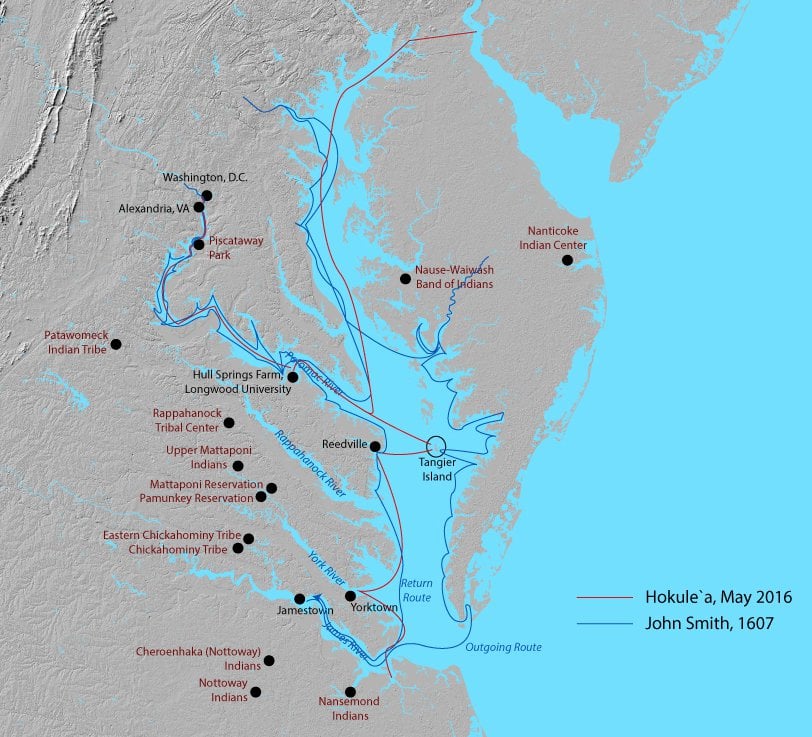
Map showing the 1607 voyage of John Smith, the May 2016 voyage of Hōkūleʻa with ports visited, and the location of contemporary Indian tribes. Photo Credit: RDK Herman
Marking where the Chesapeake Indians were poisoned. Photo Credit: RDK Herman
Pre-contact distribution of Algonquian languages spoken by the Native Americans before colonialism. Photo Credit: Wikipedia Commons

NATIVE REFUGE…

We know Native American communities fled to the Swamp for refuge from the colonial frontier, based on archeological findings. Along with the Native American communities that fled, there were multiple populations of Africans and African Americans that took refuge in the Swamp in early American History, many of them there as a result of fleeing slavery due to the Atlantic slave trade, these communities of Africans and African Americans are known as the Great Dismal Swamp Maroons. By the year 1860, these Great Dismal Swamp Maroons consisted of thousands of escaped Black refugee slaves. The runaway refugees were able to find shelter, community, and society in the swamp that wasn’t available to them freely in the world outside the swamp. Today the presence of these communities is commemorated in the recently-added Underground Railroad Education Pavilion located on a trail near the Great Dismal Swamp National Wildlife Refuge headquarters in Suffolk, Virginia.

A painting titled, "The Great Dismal Swamp" Photo Credit: Wikipedia Commons
David Edward Cronin, “Fugitive Slaves in the Dismal Swamp, Virginia," Photo Credit: Library Company of Philadelphia.
African American Slaves living in the swamp fled slavery. Photo Credit: Wikipedia Commons
A painting depicting the lives of maroons who fled to the swamp for freedom. Photo Credit: Wikipedia Commons
Stowage of a British slave ship, Brookes (1788) Photo Credit: Wikipedia Commons
Reproduction of a handbill advertising a slave auction in Charleston, South Carolina, in 1769. Photo Credit: Wikipedia Commons
Fugitive slave Gordon during his 1863 medical examination in a Union camp. Photo Credit: Wikipedia Commons
A painting depicting the Slave Trade. Photo Credit: Wikipedia Commons
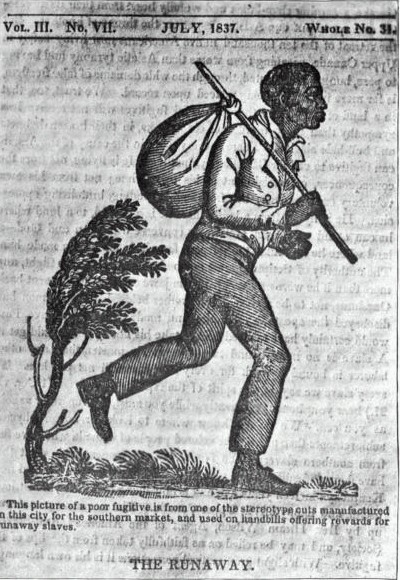
Runaway slave poster. Photo Credit: Wikipedia Commons
Eastman Johnson's A Ride for Liberty – The Fugitive Slaves, 1863, Photo Credit: Brooklyn Museum.
Underground Railroad Pavilion path. Photo Credit: Corey Richtberg 2020
Suffolk is an independent city in the Commonwealth of Virginia, and as such has no county. As of the 2020 census, the population was 94,324. It is the 9th most populous city in Virginia and the largest city in Virginia by boundary land area as well as the 14th largest in the country. Photo Credit: Wikipedia Commons

A DISMAL HISTORY TO REFUGE…

The first enslaved Africans brought to the British Colonies in Virginia in 1619 arrived on the frigate White Lion, it was a British privateer ship flying under a Dutch flag. It carried approximately 20 Africans, coming from present-day Angola, and had been seized by its crew from a Portuguese slave ship, the Sāo Joāo Bautista. At the time they arrived the enslaved Africans in British North America were legally deemed to be indentured servants, due to slave laws not being passed until a year later, in 1641 in Massachusetts and in 1661 in Virginia. They were entitled to freedom with the passage of a certain period of time, as servants, and they were also allowed to purchase their freedom. Other servants would gain their freedom by converting to Christianity, this was due to the English at the time not enslaving Christians. It was slave labor efforts that would drain and log the Great Dismal Swamp during the 18th and 19th centuries. The people who escaped slavery and lived in freedom within the swamp became known as maroons or outliers. Excavations have revealed island communities existed until the Civil War.

A replica of the White Lion sits in Hampton History Museum. Photo Credit: Janet Roach of 13News Now
A 1901 illustration of the landing of the first Africans in Virginia. The White Lion is seen anchored in the background. Photo Credit: Wikipedia Commons
A painting depicting the first enslaved Africans arriving in Jamestown and setting the stage for slavery in America. Photo Credit: History.com
A marker at Fort Monroe notes the arrival of the first Africans in Virginia. Photo Credit: Virginia Department of Historic Resources
Detail of a tapestry depicting the São João. Photo Credit: Wikipedia Commons
16th-century tapestry depicting the São João Baptista and the rest of the Christian fleet heading to Goletta. Photo Credit: Wikipedia Commons
The São João Baptista (on the left of the image), opening fire in the conquest of Tunis. Photo Credit: Wikipedia Commons
The slave law passage fo the Massachusetts law of 1641. Photo Credit: Twitter
Virginia Slave Laws of 1661 and 1662. Photo Credit: SlidePlayer.com

A SWAMP OF NAMING RIGHTS…

When the Europeans arrived in the area, the swamp immediately became an object of fascination. In 1665, William Drummond, the first governor of North Carolina, was the first European recorded as discovering the swamp’s lake, which was subsequently named after him. In 1728, William Byrd II, while trying to establish a boundary between Virginia and North Carolina colonies, lead a land survey and made many observations of the swamp and due to none of them being favorable he is credited with naming it the Dismal Swamp. Settlers at the time did not appreciate the importance of the wetlands and their estimated 2,000 square miles.

Sir William Berkeley, who had William Drummond executed was the longest-serving governor of Virginia (1641–1652, 1660–1677), is the subject of this oil painting by Harriotte L. T. Montague. This work was based on a painting executed in England by Sir Peter Lely, a prominent portraitist in the seventeenth-century court.
William Byrd II (March 28, 1674 – August 26, 1744) was an American planter, lawyer, surveyor, author, and a man of letters. Born in Colonial Virginia, he was educated in London, where he practiced law. Upon his father's death, he returned to Virginia in 1705. He was a member of the Virginia Governor's Council from 1709 to 1744. He was the London agent for the House of Burgesses in the 1720s. Byrd's life showed aspects of both British colonial gentry and an emerging American identity. Photo Credit: Wikipedia Commons

PRESIDENTIAL REFUGE…

In 1763, George Washington visited the area on a dedicated mission to transform the swamp into something other than a swamp. He and the others who visited founded the Dismal Swamp Company with the intent of draining the swamp and clearing it for settlement. When it proved impossible to drain the swamp the company found it more profitable to use the company to harvest timber from the swamp. Harvesting the timber would lead to the creation of the Great Dismal Swamp Canal to transport the logs from the deep forests of the swamp. The Great Dismal Swamp Canal was authorized in 1787 by Virginia and then North Carolina followed in 1790. Construction began on the canal in 1793 and was completed in 1805. The timber was able to be harvested from deep in the forest through the canal built, as well as a railroad constructed through part of the swamp in 1830. With the construction of the Albemarle and Chesapeake Canal completed in 1858, the canal began to deteriorate. So, in 1929, the United States Government bought the Great Dismal Swamp Canal and began to repair and improve it. Like the Albemarle and Chesapeake Canal, it is part of the Atlantic Intracoastal Waterway and the Great Dismal Swamp Canal is now the oldest operating artificial waterway in the country.

George Washington, portrait painting by Constable-Hamilton, 1794. From the New York Public Library. (Photo by Smith Collection/Gado/Getty Images).
Engraving depicting George Washington resting with his horse, on his expedition into the Great Dismal Swamp, in the hope of draining the area for settlement, at Lake Drummond, Virginia, 1763. Engraved by S V Huni from the original by M Neven. (Photo by Kean Collection/Getty Images)
The Marker for "Washington Ditch" in the Great Dismal Swamp at the Suffolk, Va entrance to the refuge. Photo Credit: Erin Hollaway Palmer
Today, The Great Dismal Swamp is a refuge for the native flora and fauna. The site also has much historical background as the sign this sign at the Washington Ditch points out. Note the use of the Camp Manufacturing Company logo at the top of the marker. Photo Credit: Clyde Parker
A photo of the Camp Manufacturing Company locomotive used in the Dismal Swamp around 1915. Trains were used to transport harvested trees in the swamp to the Franklin Mill. Photo Credit: Clyde Parker
A drawing depicting the use of The Dismal Swamp Canal in the 1790s to early 1800s. Photo Credit: Library of Congress
A drawing depicting the use of a barge in The Dismal Swamp Canal in the 1790s to early 1800s. Photo Credit: Library of Congress
The Albemarle and Chesapeake Canal was built by a corporation in 1856-1860 to afford inland navigation between the Chesapeake Bay and the Albemarle Sound. It is really two canals, thirty miles (50 km) apart, one eight and one-half miles (13.7 km) long, connecting the Elizabeth River with the North Landing River in Virginia, and the other five and one-half miles (8.9 km) long, connecting the Currituck Sound with the North River in North Carolina. Photo Credit: Wikipedia Commons
Great Bridge, Bridge, in Chesapeake, Va., was completed in 2004 and crosses the Albemarle and Chesapeake Canal. Built by the U.S. Army Corps of Engineers, it is the first fully hydraulically operated bridge in Virginia. Photo Credit: Wikipedia Commons
The Intracoastal Waterway (ICW) is a 3,000-mile (4,800 km) inland waterway along the Atlantic and Gulf of Mexico coasts of the United States, running from Massachusetts southward along the Atlantic Seaboard and around the southern tip of Florida, then following the Gulf Coast to Brownsville, Texas. Some sections of the waterway consist of natural inlets, saltwater rivers, bays, and sounds, while others are artificial canals. It provides a navigable route along its length without many of the hazards of travel on the open sea. Photo Credit: Wilderness Classroom
A section of the Intracoastal Waterway in Pamlico County, North Carolina, is crossed by the Hobucken Bridge. Photo Credit: Wikipedia Commons

DISMALLY BEAUTIFUL HISTORY…

The swamp is both beautiful and dangerous at the same time. The waterways and islands can easily get you lost in their stunning wildness, and you are surrounded by dangerous animals and also dangerous geography. The water can often be deeper than the mirrored reflection in the water and almost impossible to climb out of if you underestimate its depth and strength. With a long and complex history and the danger that can take your life in a number of ways in the swamp, it is no wonder that so many people are not familiar with the history of the swamp itself. But the swamp, much like history itself, is a stunningly beautiful and murky journey that can be dangerous the further in you go. But unlike history, which is better understood when read in a book, the history of the Great Dismal Swamp is better understood when you see it in person and can see the place of refuge that it once was so many thousands of years ago.

Great Dismal Swamp, North Carolina. Image shot 2010. Photo Credit: Alamy

REFUGE OF THE NOW…

The Great Dismal Swamp lies wholly within the Middle Atlantic coastal forests ecoregion. The swamp contains a wide range of plant and animal species and the tree species found in the refuge, support the fauna within. The species of trees include the Bald cypress, tupelo, maple, Atlantic white cypress, and pine. In a survey of the refuge taken from 1973 to 1976, some 334 plants from over 100 plant families were found to be exiting within the refuge. The swamp is home to many mammals, including black bears, bobcats, otters, and weasels, as well as over 70 species of reptile and amphibian. There are 213 bird species that can be seen in the swamp throughout the year, including 96 nesting species; birders are common in the swamp within the prime birding months of April through June. The swamp was once home to American alligators, the swamp today only receives occasional vagrants from North Carolina to the south. Lake Drummond at the center of the swamp attracts fishermen, sightseers, and boaters. There is no camping allowed on the refuge.

A map of the Great Dismal Swamp National Wildlife Refuge. Photo Credit: Leanne Abraham/NPR
Approximate area of the Middle Atlantic coastal forests ecoregion. Photo Credit: Wikipedia Commons
Taxodium distichum (bald cypress, swamp cypress; French: cyprès chauve; cipre in Louisiana) is a deciduous conifer in the family Cupressaceae. It is native to the southeastern United States. Hardy and tough, this tree adapts to a wide range of soil types, whether wet, salty, dry, or swampy. It is noted for the russet-red fall color of its lacy needles. Bald cypress forest in a central Mississippi lake. Photo Credit: Wikipedia Commons
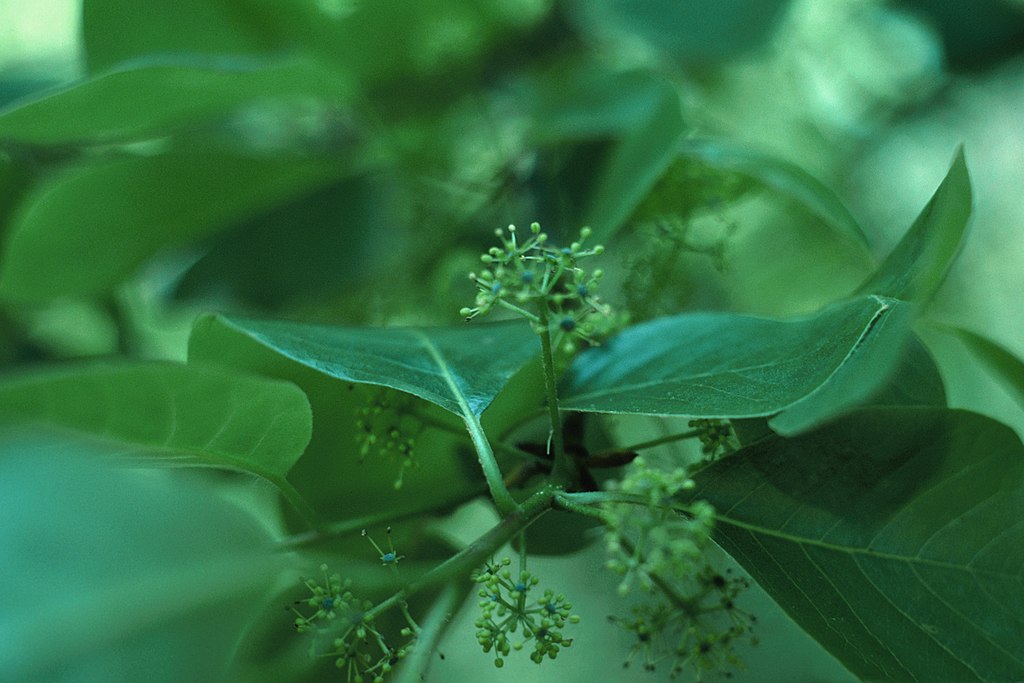
Tupelo /ˈtuːpɪloʊ/, genus Nyssa /ˈnɪsə/, is a small genus of deciduous trees with alternate, simple leaves. It is sometimes included in the subfamily Nyssoideae of the dogwood family, Cornaceae, but is placed by other authorities in the family Nyssaceae. In the APG IV system, it is placed in Nyssaceae. Photo Credit: Wikipedia Commons
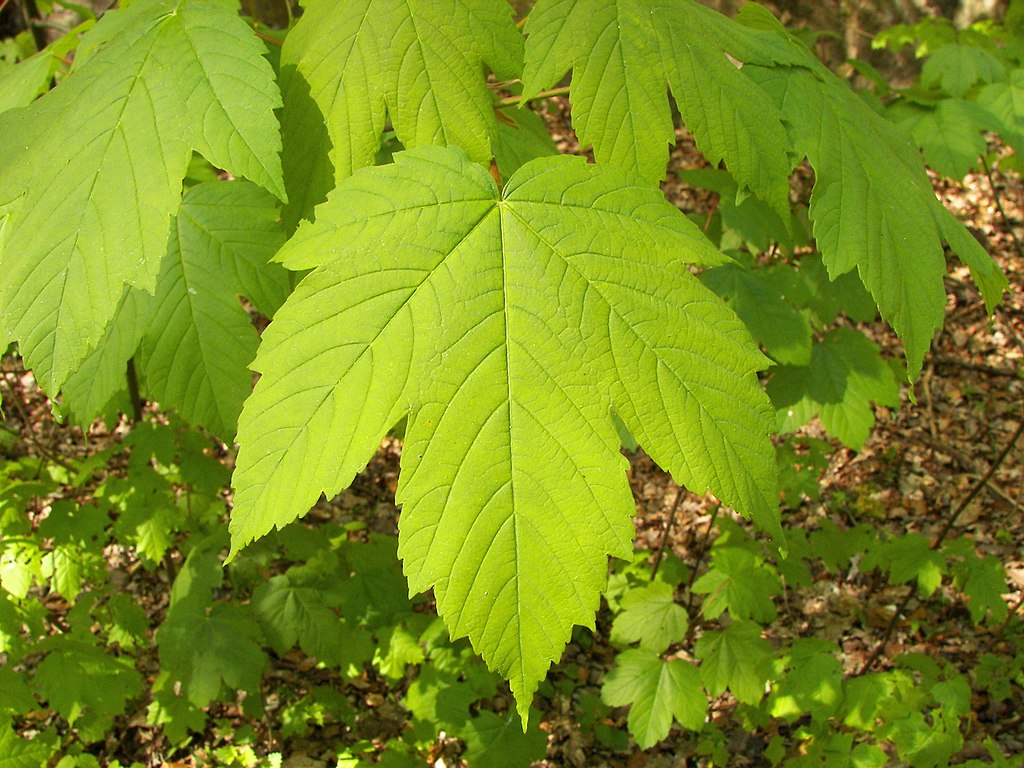
Acer (/ˈeɪsər/) is a genus of trees and shrubs commonly known as maples. The genus is placed in the family Sapindaceae. There are approximately 132 species, most of which are native to Asia, with a number also appearing in Europe, northern Africa, and North America. Only one species, Acer laurinum, extends to the Southern Hemisphere. The type species of the genus is the sycamore maple, Acer pseudoplatanus, the most common maple species in Europe. Maples usually have easily recognizable palmate leaves (Acer negundo is an exception) and distinctive winged fruits. The closest relatives of the maples are the horse chestnuts. Maple syrup is made from the sap of some maple species. It is one of the most common genera of trees in Asia. Photo Credit: Wikipedia Commons
Chamaecyparis thyoides (Atlantic white cedar, Atlantic white cypress, southern white cedar, whitecedar, or false-cypress), a species of Cupressaceae, is native to the Atlantic coast of North America and is found from southern Maine to Georgia and along the Gulf of Mexico coast from Florida to Mississippi. It is one of two species of Chamaecyparis found in North America. C. thyoides resides on the East Coast and C. lawsoniana can be found on the West Coast. There are two geographically isolated subspecies, treated by some botanists as distinct species, by others at just varietal rank: Chamaecyparis thyoides thyoides and Chamaecyparis thyoides henryae (H.L.Li) E.Murray (syn. Chamaecyparis thyoides subsp. henryae (H.L.Li) Little; Chamaecyparis henryae H.L.Li) The species grows in forested wetlands where they tend to dominate the canopy. =The trees are associated with a wide variety of other wetland species because of their wide north-south range. = The remaining populations are now found mostly in remote locations that would be difficult to harvest, so its popularity as a source of lumber has decreased. Photo Credit: Wikipedia Commons
A pine is any conifer tree or shrub in the genus Pinus (/ˈpiːnuːs/) of the family Pinaceae. Pinus is the sole genus in the subfamily Pinoideae. The World Flora Online created by the Royal Botanic Gardens, Kew and Missouri Botanical Garden accepts 187 species names of pines as current, together with more synonyms. The American Conifer Society (ACS) and the Royal Horticultural Society accept 121 species. Pines are commonly found in the Northern Hemisphere. Pine may also refer to the lumber derived from pine trees; it is one of the more extensively used types of lumber. The pine family is the largest conifer family and there are currently 818 named cultivars (or trinomials) recognized by the ACS. Photo Credit: Wikipedia Commons
Mammals (from Latin mamma 'breast') are a group of vertebrate animals constituting the class Mammalia (/məˈmeɪli.ə/), characterized by the presence of mammary glands which in females produce milk for feeding (nursing) their young, a neocortex (a region of the brain), fur or hair, and three middle ear bones. These characteristics distinguish them from reptiles (including birds) from which they diverged in the Carboniferous, over 300 million years ago. Around 6,400 extant species of mammals have been described divided into 29 orders. The largest orders, in terms of number of species, are the rodents, bats, and Eulipotyphla (hedgehogs, moles, shrews, and others). The next three are the Primates (including humans, apes, monkeys, and others), the Artiodactyla (cetaceans and even-toed ungulates), and the Carnivora (cats, dogs, seals, and others). Photo Credit: Wikipedia Commons
The American black bear (Ursus americanus), also called simply a black bear or sometimes a baribal, is a medium-sized bear endemic to North America. It is the continent's smallest and most widely distributed bear species. American black bears are omnivores, with their diets varying greatly depending on season and location. They typically live in largely forested areas, but will leave forests in search of food, and are sometimes attracted to human communities due to the immediate availability of food. Photo Credit: Wikipedia Commons
The bobcat (Lynx rufus), also known as the red lynx, is a medium-sized cat native to North America. It ranges from southern Canada through most of the contiguous United States to Oaxaca in Mexico. It is listed as Least Concern on the IUCN Red List since 2002, due to its wide distribution and large population. Although it has been hunted extensively both for sport and fur, populations have proven stable, though declining in some areas. Photo Credit: Wikipedia Commons
Otters are carnivorous mammals in the subfamily Lutrinae. The 13 extant otter species are all semiaquatic, aquatic, or marine, with diets based on fish and invertebrates. Lutrinae is a branch of the Mustelidae family, which also includes weasels, badgers, mink, and wolverines, among other animals. Photo Credit: Wikipedia Commons
Weasels /ˈwiːzəlz/ are mammals of the genus Mustela of the family Mustelidae. The genus Mustela includes the least weasels, polecats, stoats, ferrets and European mink. Members of this genus are small, active predators, with long and slender bodies and short legs. The family Mustelidae, or mustelids (which also includes badgers, otters, and wolverines), is often referred to as the "weasel family". In the UK, the term "weasel" usually refers to the smallest species, the least weasel (M. nivalis), the smallest carnivoran species. Photo Credit: Wikipedia Commons
Reptiles, as most commonly defined are the animals in the class Reptilia (/rɛpˈtɪliə/ rep-TIL-ee), a paraphyletic grouping comprising all sauropsids except birds. Living reptiles comprise turtles, crocodilians, squamates (lizards and snakes) and rhynchocephalians (tuatara). As of March 2022, the Reptile Database includes about 11,700 species. In the traditional Linnaean classification system, birds are considered a separate class to reptiles. However, crocodilians are more closely related to birds than they are to other living reptiles, and so modern cladistic classification systems include birds within Reptilia, redefining the term as a clade. Other cladistic definitions abandon the term reptile altogether in favor of the clade Sauropsida, which refers to all amniotes more closely related to modern reptiles than to mammals. The study of the traditional reptile orders, historically combined with that of modern amphibians, is called herpetology. Photo Credit: Wikipedia Commons
Amphibians are four-limbed and ectothermic vertebrates of the class Amphibia. All living amphibians belong to the group Lissamphibia. They inhabit a wide variety of habitats, with most species living within terrestrial, fossorial, arboreal or freshwater aquatic ecosystems. Thus amphibians typically start out as larvae living in water, but some species have developed behavioural adaptations to bypass this. Photo Credit: Wikipedia Commons
Birds are a group of warm-blooded vertebrates constituting the class Aves (/ˈeɪviːz/), characterised by feathers, toothless beaked jaws, the laying of hard-shelled eggs, a high metabolic rate, a four-chambered heart, and a strong yet lightweight skeleton. Birds live worldwide and range in size from the 5.5 cm (2.2 in) bee hummingbird to the 2.8 m (9 ft 2 in) ostrich. There are about ten thousand living species, more than half of which are passerine, or "perching" birds. Birds have wings whose development varies according to species; the only known groups without wings are the extinct moa and elephant birds. Wings, which are modified forelimbs, gave birds the ability to fly, although further evolution has led to the loss of flight in some birds, including ratites, penguins, and diverse endemic island species. The digestive and respiratory systems of birds are also uniquely adapted for flight. Some bird species of aquatic environments, particularly seabirds and some waterbirds, have further evolved for swimming. Photo Credit: Wikipedia Commons
The American alligator (Alligator mississippiensis), sometimes referred to colloquially as a gator or common alligator, is a large crocodilian reptile native to the Southeastern United States. It is one of the two extant species in the genus Alligator, and is larger than the only other living alligator species, the Chinese alligator. Photo Credit: Wikipedia Commons
Map of the Great Dismal Swamp National Wildlife Refuge (the Swamp) showing the area in Block C1 and the current network of ditches. Photo Credit: USGS
Where the Crawdads Sing; directed by Olivia Newman with screenplay by Lucy Alibar based on the book of the same name by Delia Owens; starring Daisy Edgar-Jones, Taylor John Smith, Harris Dickinson, Michael Hyatt, Sterling Macer, Jr., Jojo Regina, Garret Dillahunt, Ahna O'Reilly, and David Strathairn; produced by Reece Witherspoon and Lauren Neustadter for Columbia Pictures, Hello Sunshine, 3000 Pictures, HarperCollins Publishers and TSG Entertainment and distributed by SONY Pictures Releasing. (2022)

Where the Crawdads Sing is available to stream on Netflix now…

Share this:

  • Share on X (Opens in new window) X
  • Share on Facebook (Opens in new window) Facebook
  • Share on LinkedIn (Opens in new window) LinkedIn

Like this:

Like Loading…
Pages: 1 2 3 4 5 6 7 8 9 10 11 12 13 14 15 16 17 18 19

Leave a ReplyCancel reply

Archives

  • June 2026
  • May 2026
  • April 2026
  • March 2026
  • February 2026
  • January 2026
  • December 2025
  • November 2025
  • October 2025
  • September 2025
  • August 2025
  • July 2025
  • June 2025
  • May 2025
  • April 2025
  • March 2025
  • February 2025
  • January 2025
  • December 2024
  • November 2024
  • October 2024
  • September 2024
  • August 2024
  • July 2024
  • June 2024
  • May 2024
  • April 2024
  • March 2024
  • February 2024
  • January 2024
  • December 2023
  • November 2023
  • October 2023
  • September 2023
  • August 2023
  • July 2023
  • June 2023
  • May 2023
  • April 2023
  • March 2023
  • February 2023
  • January 2023
  • December 2022
  • November 2022
  • October 2022
  • September 2022
  • August 2022
  • July 2022
  • June 2022
  • May 2022
  • April 2022
  • March 2022

Categories

  • Blog Posts
  • Critics Choice Awards
  • Emmy Awards
  • Featured Blog
  • Golden Globe Awards
  • In Memoriam
  • Oscar History
  • SAG Awards
  • Screen Actors Guild Awards
  • Television
  • The Actor Awards
  • Top Ten List

ABOUT US

PRIVACY POLICY

TERMS & CONDITIONS

DISCLAIMER

All Rights Reserved © Copyright 2021, MoviestoHistory.com By Themespride

Manage Cookie Consent
To provide the best experiences, we use technologies like cookies to store and/or access device information. Consenting to these technologies will allow us to process data such as browsing behavior or unique IDs on this site. Not consenting or withdrawing consent, may adversely affect certain features and functions.
Functional Always active
The technical storage or access is strictly necessary for the legitimate purpose of enabling the use of a specific service explicitly requested by the subscriber or user, or for the sole purpose of carrying out the transmission of a communication over an electronic communications network.
Preferences
The technical storage or access is necessary for the legitimate purpose of storing preferences that are not requested by the subscriber or user.
Statistics
The technical storage or access that is used exclusively for statistical purposes. The technical storage or access that is used exclusively for anonymous statistical purposes. Without a subpoena, voluntary compliance on the part of your Internet Service Provider, or additional records from a third party, information stored or retrieved for this purpose alone cannot usually be used to identify you.
Marketing
The technical storage or access is required to create user profiles to send advertising, or to track the user on a website or across several websites for similar marketing purposes.
  • Manage options
  • Manage services
  • Manage {vendor_count} vendors
  • Read more about these purposes
View preferences
  • {title}
  • {title}
  • {title}

Loading Comments...

    %d