

The American Film Institute (AFI) presented the 50th AFI Life Achievement Award to Francis Ford Coppola on April 26th, 2025, at a Gala Tribute in Hollywood. The Afi Life Achievement Award: A Tribute To Francis Ford Coppola premiered on Turner Classic Movies (TCM) on July 31st at 8:00 p.m. ET / 5:00 p.m. PT. The show previously premiered on TNT on June 18, 2025.


The televised special celebrated the career of the storied director and featured tributes from co-stars and friends Robert De Niro, Adam Driver, Harrison Ford, Morgan Freeman, Ron Howard, Diane Lane, Spike Lee, and Al Pacino. Steven Spielberg proclaimed The Godfather to be the “greatest American film ever made,” while De Niro teased Coppola about being cast in the sequel and not the original. A founding AFI trustee, Francis Ford Coppola recieved the AFI Life Achievement Award at a ceremony at the Dolby Theatre bringing together legendary actors from the yesteryears of cinema, including Ford who became emotional when reflecting on his role in the 1974 film, The Conversation.


While walking the red carpet before the celebration recognizing the Apocalypse Now director Coppola felt he had reached a full circle moment in his decades long career with AFI, saying:

When I was a kid there was the Oscars and that was it. Now they’re going to have an award show for the best award show, but this is a little different because it’s a personal recognition of the people that you’ve known all your life and your colleagues over many years, so it’s like a homecoming in a way.
Coppola was seated between Spielberg and longtime friend and colleague George Lucas, as the celebratory gala of actors and fellow filmakers praised his long historical film career. Morgan Freeman joked about Coppola’s historic film budgets and productions saying: Dreamer of dreams on a dime, teller of tales that cost and lost millions. But tonight, fuck the bankers and the bank.


Lucas, who was the reciepent of the 33rd AFI Life Acievement Award presented the award to Coppola, the Star Wars director has known Coppola for decades and the duo cofounded their own production company, American Zoetrope in 1969. While refelecting on the pairs partnership back then when presenting Coppola with the AFI Life Acievement Award, Lucas said: You rounded up a bunch of young film students, gathered us together. We moved to San Francisco, hoping to beat the system. And we did. Like the filmmakers from the dawn of the art form, we had no rules. We wrote them, and you were holding the pen.


The celebration concluded with attendees of the tribute recieving an exclusive commorative tribute book about Coppola’s career. Guests were also introduced to the new tribute site chronicling Kidman’s career at americanfilminstitute.my.canva.site. The event raised over $2.5 million, and all proceeds from the AFI Life Achievement Award support the American Film Institute as a nonprofit organization, as well as AFI’s non-profit education programs. To donate to AFI, visit AFI.com.

In honor of Francis Ford Coppola‘s AFI Life Achievement Award, Movies to History takes you through his decades long artistry as a filmmaker in this blog posting, as we honor his recieving the highest honor for a career in film by the American Film Institute. So come along with me as we tribute the most loved American director responsible for creating groundbreaking works of art in the canon of American film.

Early Life to 1956…
Francis Ford Coppola was born on April 7, 1939, in Detroit, Michigan, born into a life of music and movies to his first-generation Italian American parents, Italia Coppola (née Pennino; 1912–2004) and Carmine Coppola (1910–1991). Coppola’s maternal grandfather, and namesake Francesco Pennino, was a songwriter, movie theater owner and early importer of Italian films. His paternal grandfather, Agostino Coppola, with the machine he built — the Vitaphone — used to create
The Jazz Singer. The second of three children, he had an older brother, August, who is also actor Nicolas Cage‘s father, and a younger sister, actress Talia Shire, who is also the mother of actor Jason Schwartzman. The Coppola family relocated to Queens, New York when Francis was 2 years old, and after his Julliard-trained father was selected for the NBC Symphony as first chair flautist under famed conductor Arturo Toscanini.


![Italia Coppola (Italian: [iˈtaːlja ˈkɔppola]; née Pennino [penˈniːno]; December 12, 1912 – January 21, 2004) was the matriarch of the Coppola family.[2] She appeared in three non-speaking roles in her son Francis Ford Coppola's films, One from the Heart, The Godfather Part II, and The Godfather Part III.[3] She was known for her Italian cooking and published a cookbook called Mama Coppola's Pasta Book in 2000.[4][5] Francis Ford Coppola named his 1998 Edizione Pennino zinfandel after her family's name and Italian heritage, and her nickname "Mammarella" is the name of her pasta and sauce line made by him.](https://i0.wp.com/moviestohistory.com/wp-content/uploads/2025/09/Italia-Coppola-.jpg?ssl=1)
![Carmine Valentino Coppola (Italian: [ˈkarmine ˈkɔppola]; June 11, 1910 – April 26, 1991) was an American composer, flautist, pianist, and songwriter who contributed original music to the films The Godfather, The Godfather Part II, Apocalypse Now, The Outsiders, The Black Stallion, and The Godfather Part III. He is the father of film director Francis Ford Coppola.[2] In the course of his career, he won both the Academy Award for Best Original Score and the Golden Globe Award for Best Original Score, with BAFTA Award for Best Film Music and Grammy Award for Best Score Soundtrack for Visual Media nominations.](https://i0.wp.com/moviestohistory.com/wp-content/uploads/2025/09/Carmine-Coppola-.jpg?ssl=1)


It was Coppola’s mother, Italia who both inspired and nutured Francis’ creativity, as well as his brother August’s, who went on to earn his doctorate in comparative literature and work in academia as a champion of the arts, and his younger sister Talia, who famously portrayed Connie Corleone in her brothers film, The Godfather, and its sequels and was nominated for the Academy Award for Best Supporting Actress for her performance in The Godfather Part II (1974). At age 9, Francis contracted Polio and for over a year was confined to his bed where he experimented with puppetry – inventing stories and conversations, while also recording dialouge and sound on a tape recorder that he would attempt to edit to his family’s home movies. Having fully regained his health, Francis began making 8mm movies, which he marked as a way to bring together his two interests – technical elements and gadgets, as well as plays, puppets, theater and musical comedy.
Francis Ford Coppola said of his mother, Italia:

“In a family of artists, she brought the magic to our family’s creativity.”
– Francis Ford Coppola on his mother, Italia
americanfilminstitute.my.canva.site
Coppola’s Directorial Debut in 1956…
At just 17 years old, Francis Ford Coppola marked his directorial debut with No Cigar, it was a 16mm short film made for only a few hundred dollars, and was shot in the basement of his home and starred his uncle Clarence. Coppola would then follow in his uncle August’s footsteps and attend his alma mater Hofstra University from 1955 to 1960, where he would earn a B.A. in theater arts. In his first year at Hofstra, Coppola directed a play that earned him recognition among students. Soon after he was elected president of both the musical comedy organization, Kaleidoscopians, and the drama group, the Green Wig, Coppola eventually merged the two groups into the Spectrum Players – which still exists today. While refecting his time at the university, Coppola said, “It was a magical time at Hofstra.“


Francis Ford Coppola on being a theater major:

“The theater was the center of my life.”
– Francis Ford Coppola on attending Hofstra
americanfilminstitute.my.canva.site
Mastering the Art of Filmmaking…
After graduating from Hofstra, Coppola enrolled in UCLA’s School of Film, Theater, and Television to earn his MFA in Film, and studied directing under trailblazing filmmaker Dorothy Arzner, who went on to inspire Coppola in more ways than one. He recalled years later in an interview with AFI that he had considered leaving film school, tired of being lonely, living alone with no girlfriend and being miserable. He mentioned this to Arzner convinced him to stick it out in film school because she saw something in him. Coppola went on to win the coveted Samuel Goldwyn Award at UCLA for his screenplay Pilma Pilma. His early roles in the film industry would include screenwriter at Seven Arts and an apprenticeship with the legendary Roger Corman – a relationship that would prove pivotal in his professional and personal life.


Dorthy Arzner’s advice to Francis Ford Coppola on leaving film school:

“You’ll make it. I’ve been around, and I know.”
– Dorothy Arzner
Coppola’s Feature Directorial Debut in 1963…
Coppola learned the art of filmmaking from his early years working for Roger Corman saying: “There is nothing about the practical matter of making movies I didn’t learn by being his assistant.” It was under the financial backing of Corman that Francis wrote and directed his first feature, Dementia 13, a horror thriller film that Coppola shot on location in Ireland. His debut feature film production would also be his meetcute for Francis and his future wife, Eleanor Neil, marking both a pivotal moment in both his career and personal life. Eleanor worked on the production as the assistant art director, she was a talented artist and a UCLA graduate with an applied design degree. Francis and Eleanor married in 1963 in a small wedding in Las Vegas and welcomed son Gian-Carlo “Gio” to the family, and two years later, his brother, Roman was born, and sister, Sofia, was born seven years later.

![Directed by Francis Ford Coppola Written by Francis Ford Coppola Produced by Roger Corman Starring William Campbell Luana Anders Bart Patton Mary Mitchell Patrick Magee Eithne Dunne Cinematography Charles Hannawalt Edited by Stuart O'Brien[1] Morton Tubor Music by Ronald Stein Production companies The Filmgroup Garrick Ltd.[1] Distributed by American International Pictures (US)](https://i0.wp.com/moviestohistory.com/wp-content/uploads/2025/09/Screenshot-2025-09-09-at-11.49.59-PM.png?ssl=1)


Eleanor Coppola on meeting Francis Ford Coppola on the set of Dementia 13...

“I was a freelance designer and had gotten a job on the production as the assistant to his art director. I fell in love with Francis.”
– Eleanor Coppola on meeting
Francis on DEMENTIA 13
For Francis’ next feature, he wrote and directed You’re a Big Boy Now, a comedy based on a novel by David Benedictus. The film would mark Coppola’s first major studio project and went on to also mark his first appearance at the Cannes Film Festival, where You’re a Big Boy Now would become the only American entry at the 1967 Cannes Film Festival, and the film also went on to earn a Best Supporting Actress Oscar nomination for Geraldine Page. Francis submitted the film as his thesis project to complete his MFA at UCLA.


![The 20th Cannes Film Festival took place from 27 April to 12 May 1967.[4] Italian filmmaker Alessandro Blasetti served as jury president for the main competition. The Grand Prix du Festival International du Film, then the fetival's main prize, was awarded to Blowup by Michelangelo Antonioni.[2] The festival opened with I Killed Rasputin by Robert Hossein, and closed with Batouk by Jean Jacques Manigot.[](https://i0.wp.com/moviestohistory.com/wp-content/uploads/2025/09/1967-Canne-Film-Festival-.jpg?ssl=1)

Coppola’s next feature would be another pivotal moment in both his personal and professional life, with Finian’s Rainbow in 1968, Francis Ford Coppola met a young production assistant named George Lucas on the set of the film. Coppola offered Lucas a job on his next film, The Rain People, after being impressed by Lucas’ talent. Their collaboration would go on to shape the future of cinema.


Francis Ford Coppola on meeting George Lucas on the set of Finian’s Rainbow in 1968:

“We were the only people on the set under 40 or 50. We had both been to film school, and we both had beards.”
– Francis Ford Coppola on
first meeting George Lucas
A Collaboration through a Zoetrope…
In 1969, Francis Ford Coppola co-founded American Zoetrope in San Francisco with George Lucas, and named the company after a zoetrope gifted to Coppola by Danish filmaker Mogens Skot-Hansen in the 1960’s. Lucas told AFI in an interview, “He didn’t like the idea of going back and working in Hollywood. Easy Rider had come out. There seemed to be a possibility that avant-garde, youth-oriented films could make it in the world. So we decided to make an alternative studio in San Francisco called American Zoetrope.” The studio became a haven for young filmmakers.


Francis Ford Coppola on the founding of American Zoetrope:

“Zoetrope was a film company with a theater culture.”
– Francis Ford Coppola
americanfilminstitute.my.canva.site
Together, Francis and Lucas initiated and nourished the careers of talents such as Carroll Ballard and John Milius, and actors Al Pacino, Robert De Niro, James Caan, John Cazale, Harrison Ford, Richard Dreyfuss, Frederic Forrest, Teri Garr, Diane Keaton, Robert Duvall, Matt Dillon and Diane Lane. To date, American Zoetrope-produced films have received 16 Academy Awards and 70 nominations, with four included on AFI’s list of the top 100 greatest American films (American Graffiti, The Godfather, Apocalypse Now And The Godfather Part II).


The cross-country road trip drama The Rain People was the first film to be released from American Zoetrope, spanning the production’s shooting locations across several U.S. states, which inspired Coppola and Lucas to rethink Hollywood’s stronghold on filmmaking. This revelation led them to relocate to Northern California, and ultimately changing the indie film landscape.
George Lucas on American Zoetrope:
![The cross-country road trip drama THE RAIN PEOPLE was the first film to be released from American Zoetrope. The film’s shooting locations spanned several U.S. states, which inspired Coppola and George Lucas to rethink Hollywood’s grip on filmmaking. “We ended up in Ogallala, Nebraska, in a warehouse,” Lucas recalled to AFI. “There’s no reason you have to be [in Los Angeles]. You can make movies anywhere in the world.” This revelation led them to relocate to Northern California, ultimately changing the indie film landscape.](https://i0.wp.com/moviestohistory.com/wp-content/uploads/2025/09/Screenshot-2025-09-10-at-4.14.45-AM.png?resize=525%2C361&ssl=1)
“We ended up in Ogallala, Nebraska, in a warehouse, there’s no reason you have to be [in Los Angeles]. You can make movies anywhere in the world.”
-George Lucas to AFI
americanfilminstitute.my.canva.site
Coppola’s First Academy Award…
With the unorthodoxy of American Zoetrope also came Francis Ford Coppola‘s unorthodox screenplay for Patton in 1970, Coppola co-wrote the screenplay for Franklin J. Schaffner‘s film with Edmund H. North and earned his first Academy Award, winning for Best Original Screenplay. A year later, Coppola would then encourage George Lucas to expand his student short, Electronic Labyrinth: Thx 1138 4Eb, into the feature-length THX 1138, it would be Lucas’ directorial debut. But it would be his next film project that catapluted the young filmmaker into the cinematic pantheon with the trailblazing film The Godfather. With Coppola’s visonary direction anchored to the film, a script co-written by The Godfather author Mario Puzo, a brillant cast that included Marlon Brando, and AFI Life Achievement Award honorees Al Pacino and Diane Keaton, as well as Gordon Willis‘ daring use of chiaroscuro, and Nina Rota‘s unforgettable score, The Godfather redefined cinematic storytelling. Coppola and Puzo won the Academy Award for Best Adapted Screenplay, while Brando won the Academy Award for Best Actor in a Leading Role, and The Godfather won the Academy Award for Best Picture. The Godfather would also feature a cameo of Francis and Eleanor’s infant daughter, Sofia, who would go on to follow in her fathers footsteps as a director.


![Giovanni "Nino" Rota Rinaldi (/ˈroʊtə/; Italian: [dʒoˈvanni ˈniːno ˈrɔːta riˈnaldi]; 3 December 1911 – 10 April 1979)[1] was an Italian composer, pianist, conductor and academic who is best known for his film scores, notably for the films of Federico Fellini and Luchino Visconti. He also composed the music for two of Franco Zeffirelli's Shakespeare screen adaptations, and for the first two installments of Francis Ford Coppola's The Godfather trilogy, earning the Academy Award for Best Original Score for The Godfather Part II (1974).[2] During his long career, Rota was an extraordinarily prolific composer, especially of music for the cinema. He wrote more than 150 scores for Italian and international productions from the 1930s until his death in 1979 – an average of three scores each year over a 46-year period, and in his most productive period from the late 1940s to the mid-1950s he wrote as many as ten scores every year, and sometimes more, with a remarkable thirteen film scores to his credit in 1954. Alongside this great body of film work, he composed ten operas, five ballets and dozens of other orchestral, choral and chamber works, the best known being his string concerto. He also composed the music for many theatre productions by Visconti, Zeffirelli and Eduardo De Filippo[3] as well as maintaining a long teaching career at the Liceo Musicale in Bari, Italy, where he was the director for almost 30 years.](https://i0.wp.com/moviestohistory.com/wp-content/uploads/2025/09/Nina-Rota-.webp?ssl=1)
![Giovanni "Nino" Rota Rinaldi (/ˈroʊtə/; Italian: [dʒoˈvanni ˈniːno ˈrɔːta riˈnaldi]; 3 December 1911 – 10 April 1979)[1] was an Italian composer, pianist, conductor and academic who is best known for his film scores, notably for the films of Federico Fellini and Luchino Visconti. He also composed the music for two of Franco Zeffirelli's Shakespeare screen adaptations, and for the first two installments of Francis Ford Coppola's The Godfather trilogy, earning the Academy Award for Best Original Score for The Godfather Part II (1974).](https://i0.wp.com/moviestohistory.com/wp-content/uploads/2025/09/The-Godfather-Score-.jpg?ssl=1)


Al Pacino on Francis Ford Coppola:

“Francis is a trailblazer who breaks rules – all of them, all the time.”
– Al Pacino
Francis would follow the success of The Godfather, with American Graffiti in 1973, where Coppola served as a producer on the George Lucas film. He had encouraged Lucas to create a more personal and commercially appealing story in his film art, the result was Lucas drawing deeply on his teenage years in Modesto, California, to create the genre-defining coming-of-age film. American Graffiti earned five Academy Award nominations, including Best Director and Best Original Screenplay, and the film became a cult classic for film viewers.


With the success of The Godfather, Coppola’s next project was the Neo-noir thriller The Conversation, starring Gene Hackman and John Cazale. Francis had set his sights on writing, directing and producing the smaller, more understated and introspective project due to the massive blockbuster The Godfather had become, he sought a film that reminded him more of his roots as a filmmaker, and not a film that reminded him of the massive success he had become overnight.


Francis wouldn’t be away from the Corleone family long, Coppola would direct and release The Godfather Part II in 1974, expanding on the story of the Corleone crime family, adding Robert De Niro as the young Don Corleone in flashbacks, to the returning cast of Al Pacino, John Cazale and Diane Keaton, and futher cementing Coppola’s influence on American cinema with the sequel masterpiece. The film woudl go on to win six Academy Awards, including Best Picture, Best Director, and Best Adapted Screenplay for Francis and for Francis’ father, Carmine; Best Music.


Francis Ford Coppola on directing a sequel to his most successful film, The Godfather:

“When I heard it I said, at first, my god, to do a sequel to The Godfather is a sure-fire way to fail and blow everything I was lucky enough to get up to that point. And then I went home and I thought about it, and I realized that because it maybe was such an easy way to fail, which was probably the best reason to try to tackle what seems so impossible. And I’m really happy I did.”
– Francis Ford Coppola
With enough to celebrate in his career so far, it was time for a few drinks. Francis and Eleanor began their foray into winemaking, purchasing over 1,500 acres in Napa Valley. This venture into winemaking would ultimately become the seperate and successful business, Francis Ford Coppola Winery with wines named after his mother, Eleanor, Sofia, and Francis’ granddaughter, Gia. The winery would be financed with the successful income made off of The Godfather.


The most intense filmaking experience had yet to come for Coppola, even with all of the drama that came with the production of the original The Godfather, but alas, the time was now. Francis Ford Coppola would serve as director, writer, producer, and composer for Apocalypse Now in 1979, and it would prove to be a troubled production, all of which was documented by Eleanor who turned the behind-the-scenes footage into the Emmy winning documantary Hearts of Darkness: A Filmaker’s Apocalypse, but the intensity would prove a bountiful experience garnering the film eight Academy Award nominations and won two.


Martin Sheen on Francis Ford Coppola directing Apocalypse Now:

“We had Francis Ford Coppola, who was the best director alive and at the height of his power and skill. If any one person is to be credited with the success of that film it was Francis.”
– Martin Sheen, from the AFI Archive
americanfilminstitute.my.canva.site
By the end of the decade, Francis Ford Coppola had racked up a remarkable career with his collective film art resulting in two Palme d’Or Awards at Cannes, 12 Academy Award nominations, and five Academy Awards, making the period arguably the most successful decade any filmmaker has ever had. With that successful decade, marked American Zeotrope moving to Los Angeles in 1979 to establish a presence in Hollywood where Coppola purchased the former Hollywood General Studios, naming it Zoetrope Studios. The studio housed a sprawling 10.5 acre lot with nine sound stages, 34 editing rooms, projection rooms, a special-effects lab and bungalows.


![The Palme d'Or (French pronunciation: [palm(ə) dɔʁ]; English: Golden Palm) is the highest prize awarded to the director of the Best Feature Film of the Official Competition at the Cannes Film Festival.[1] It was introduced in 1955 by the festival's organizing committee.[1] Previously, from 1939 to 1954, the festival's highest prize was the Grand Prix du Festival International du Film.[1] In 1964, the Palme d'Or was replaced again by the Grand Prix, before being reintroduced in 1975.[1] The Palme d'Or is widely considered one of the film industry's most prestigious awards.](https://i0.wp.com/moviestohistory.com/wp-content/uploads/2025/04/Palme-DOr-Trophy-1024x570.jpg?ssl=1)

Francis Ford Coppola on American Zoetrope moving to Los Angeles:

“I’m trying to create a film studio that really makes sense – not a place where lawyers and businessmen make deals with independent artists, but a family or a large repertory company engaged in making movies.”
– Francis Ford Coppola
Coppola’s Exploratory Era…
Over the next twenty years, Franics explored the art of film and storytelling across genres, with films like One from the Heart (1982) where Coppola served as director and writer, a visually stunning musical and romantic drama starring Frederic Forrest and Teri Garr as a couple at a crossroads in their relationship. Coopola would next direct an adaption of the beloved 1967 young adult novel written by S.E. Hinton, The Outsiders. Francis decided to bring it to the big screen after the students and faculty of Lone Star School in Fresno, CA, wrote a letter to Coppola urging him to direct The Outsiders. The cast of the film famously featured a talented cast of young, up-and-coming actors that included Tom Cruise, Matt Dillon, Emilio Estevez, C. Thomas Howell, Diane Lane, Rob Lowe, Ralph Macchio and Patrick Swayze. In 1983, came Coppola’s film dedicated to his brother August, and featured Augusts’ son, Nicolas Cage, Rumble Fish. The film starred Matt Dillon, and Mickey Rourke, it was filmed back-to-back with The Outsiders, and once again partnered Coppola with S.E. Hinton to adpat her novel. Francis Ford Coppola directed, co-wrote, and executive produced the black-and-white art house film.


![The Outsiders is a coming-of-age novel by S. E. Hinton published in 1967 by Viking Press. The book details the conflict between two rival gangs of White Americans divided by their socioeconomic status: the working-class "greasers"[1] and the upper-middle-class "Socs" (pronounced /ˈsoʊʃɪz/ SOH-shiz—short for Socials). The story is told in first-person perspective by teenage protagonist Ponyboy Curtis, and takes place in Tulsa, Oklahoma, in 1965,[2] although this is never explicitly stated in the book. Hinton began writing the novel when she was 15 and wrote the bulk of it when she was 16 and a junior in high school.[3] She was 18 when the book was published.[2] She released the work using her initials rather than her feminine given names (Susan Eloise) so that her gender would not lead male book reviewers to dismiss the work.[4] A film adaptation was directed in 1983 by Francis Ford Coppola, and a short-lived television series appeared in 1990, picking up where the movie left off. A dramatic stage adaptation was written by Christopher Sergel and published in 1990. A Tony Award-winning stage musical adaptation of the same name premiered in San Diego in 2023 then on Broadway in 2024.[5][6] Another film adaptation, this time based on the musical, is in the works as of 2025.](https://i0.wp.com/moviestohistory.com/wp-content/uploads/2025/09/The-Outsiders-Book.jpg?ssl=1)


Matt Dillon on Francis Ford Coppola directing him in The Outsiders:

“It’s a very familial atmosphere, working with him. He’s just got such great energy and there was this
sense that anything could happen.”– Matt Dillon
In 1984 came The Cotton Club, Coppola directed and co-wrote the script with William Kennedy that tapped once again into Francis’ musical side where he added a side of crime and explored the 1920s jazz scene in Harlem. The film starred Richard Gere, Gregory Hines, Diane Lane, Lonette McKee, Bob Hoskins, James Remar, Nicolas Cage, and Laurence Fishburne. In 1986, Coppola directed the critically acclaimed box office hit Peggy Sue Got Married, starring Kathleen Turner, as the unhappily married Peggy Sue who gets a chance to relive her life when she wakes up back in high school. In 1987, Francis would work again with James Caan in Gardens of Stone. Caan who first met Coppola when they were undergrads at Hofstra University and later worked with him on The Godfather died in 2022, Francis reflected on theor long friendship after his death saying: “Jimmy was someone who stretched through my life longer and closer than any motion picture figure I’ve ever known.”


Nicolas Cage on direction from his uncle Francis Ford Coppola:

“I love working with Francis. His philosophy is that if you’re going to gamble, then gamble with everything you’ve got. He loves taking chances and so do I. And his talent is tremendous.”
– Nicolas Cage
americanfilminstitute.my.canva.site
Tucker: The Man and his Dream (1988) was a story that Francis originally discovered of automobile entrprenuer Preston Tucker as a UCLA film student, Coppola would later aquire the rights to Tucker’s story and even bought one of his cars. In the 1980s, Coppola’s son Gio drove his dad’s Tucker car in the Independence Day parade, and George Lucas who was at the parade, inquired about Francis’ passion project and decided to produce and finance the film starring Jeff Bridges as Preston Tucker. The film also co-starred Lloyd Bridges, Martin Landau, and Joan Allen and the film was ultimately dedicated to Gio. New York Stories (1989) was an anthology shaped by personal and creative collaborations, for Coppola directed his entry segment “Life Without Zoe,” and co-wrote the script with daughter Sofia, the film stars his sister Talia Shire and his father Carmine Coppola scored the film. In 1990, Francis Ford Coppola would once again revisit the home of the Corleone family with the final entry in The Godfather, with the trilogy The Godfather Coda: The Death of Michael Corleone. Coppola produced, wrote and directed the trilogy film that reunited Al Pacino, Diane Keaton, and Talia Shire, while introducing Andy García, Eli Wallach, Joe Montegna, Bridget Fonda, George Hamilton and Sofia Coppola. The film was a commercial success and earned seven Academy Award nominations, including Best Picture, Best Director, and Best Supporting Actor for García.


![Directed by Woody Allen Francis Ford Coppola Martin Scorsese Written by Richard Price Francis Ford Coppola Sofia Coppola Woody Allen Produced by Jack Rollins Charles H. Joffe Robert Greenhut Barbara De Fina Fred Roos Fred Fuchs Starring Woody Allen Rosanna Arquette Mia Farrow Giancarlo Giannini Julie Kavner Nick Nolte Talia Shire Cinematography Néstor Almendros Vittorio Storaro Sven Nykvist Edited by Thelma Schoonmaker Barry Malkin Susan E. Morse Music by Carmine Coppola Kid Creole and the Coconuts Production companies Touchstone Pictures Silver Screen Partners IV American Zoetrope[a] Distributed by Buena Vista Pictures Distribution](https://i0.wp.com/moviestohistory.com/wp-content/uploads/2025/09/New-York-Stories--689x1024.jpg?ssl=1)


Francis Ford Coppola on returning to The Godfather a third time:

“When you meet people who enjoy the process of working together…they come to be part of your family.”
— Francis Ford Coppola
americanfilminstitute.my.canva.site
It would be star Winona Ryder that inspired Coppola’s next project, Bram Stoker’s Dracula (1992), when Ryder brought the attention of the script to the producer during a meeting in 1991. Francis, intrigued by the idea of exploring another genre with a classic story to tell, quickly signed on to direct the film. Bram Stoker’s Dracula featured a cast that included Ryder, Gary Oldman, Keanu Reeves and Anthony Hopkins, the film would become one of the highest-grossing films of 1992. Jack (1996) would be another exploration Coppola took alongside the late Robin Williams, Williams portrayed Jack Powell, the 10-year-old boy who, due to a rare medical condition, physically ages four times faster than a typical human. The film also starred Diane Lane, Jennifer Lopez, Brian Kerwin, and Fran Drescher. In 1997, Coppola wrote the screenplay for the adaption of the bestselling novel, John Grisham’s The Rainmaker, Francis directed a young Matt Damon and Claire Danes in the film, it also co-starred Danny DeVito.


Matt Damon on Francis Ford Coppola:

“Working with Francis was unbelievable. He loves actors.”
— Matt Damon
americanfilminstitute.my.canva.site
Continued Creativity…
Francis continued his mother’s tradition of inspiring and encouraging creativity in his children, producing Sofia Coppola‘s directorial debut The Virgin Suicides (1999), the film garnered critical acclaim and set Sofia on a path to becoming an award-winning director after premiering at Cannes that year. Coppola would also executive produce CQ (2001), his son Roman’s first feature film. The film was seen as a playful homage to the movies of the ’60s and Roman’s memories of Francis, George Lucas and their colleagues. In 2003, Francis Ford Coppola would also serve as executive producer on Sofia’s second feature-length film Lost in Translation. Sofia Coppola would go on to make Oscar history, after being nominated for an Academy Award for Best Director, making her the first American woman to be nominated. She wpuld also make history for being the first woman ever nominated for writing, directing and producing in the same year.


Producing Art…
In 2010, Francis Ford Coppola was again honored by the Academy of Motion Picture Arts and Sciences, when he recieved the prestigious Irving G. Thalberg Memorial Award. In his acceptance speech Coppola took value in the moment explaining what the award meant to him: “The fact that this is the Thalberg Award…the significance is not lost on me. Because this is an award for producing. This is not about my own writing and my own filmmaking, but this is about the talent that I came to really value.”


Back in the Chair…
After spending a decade away from the director’s chair, Francis decided to reimagine once again the film art he was making, and went with a new approach, one that allowed Coppola to focus on the experimental narraitve techniques and producing projects independently. This new approach brought about Youth without Youth (2007), Tetro (2009), and Twixt (2011). Deeply autobiographical, Tetro is a dramatic black-and-white portrait of two estranged brothers navigating family secrets, sibling rivalry and their own creative ambitions – marking Coppola’s first original screenplay since The Conversation. The final film in Coppola’s low-budget independent trilogy, this gothic horror murder mystery stars Val Kilmer, Bruce Dern, Elle Fanning and Ben Chaplin and features two unique 3-D sequences. These films became a trilogy of deeply personal films to Francis Ford Coppola.

![Directed by Francis Ford Coppola Screenplay by Francis Ford Coppola Based on Youth Without Youth by Mircea Eliade Produced by Francis Ford Coppola Starring Tim Roth Bruno Ganz Alexandra Maria Lara André Hennicke Marcel Iureș Adrian Pintea Cinematography Mihai Mălaimare Jr. Edited by Walter Murch Music by Osvaldo Golijov Production company American Zoetrope Distributed by Sony Pictures Classics (United States) MediaPro Entertainment (Romania)[1] Pathé Distribution (France) BiM Distribuzione (Italy) Sony Pictures Releasing (Germany)[2]](https://i0.wp.com/moviestohistory.com/wp-content/uploads/2025/09/Youth-Without-Youth--683x1024.jpg?ssl=1)


Francis Ford Coppola returned to the directors chair in 2024, with Megalopolis. The film is a Roman epic set in an imagined modern America, Megalopolis is an innovative epic that explores themes of societial structure, the necessity of working together and embracing new visions for the future. The film features an all-star cast including Adam Driver, Giancarlo Esposito, Nathalie Emmanuel, Laurence Fishburne, Dustin Hoffman, and Aubrey Plaza. The film made its world premiere to a 10-minute standing ovation at the 2024 Cannes Film Festival and was released theatrically and in IMAX globally.

![Directed by Francis Ford Coppola Written by Francis Ford Coppola Produced by Barry Hirsch Fred Roos Michael Bederman Francis Ford Coppola Starring Adam Driver Giancarlo Esposito Nathalie Emmanuel Aubrey Plaza Shia LaBeouf Jon Voight Laurence Fishburne Kathryn Hunter Dustin Hoffman Cinematography Mihai Mălaimare Jr. Edited by Cam McLauchlin Glen Scantlebury Music by Osvaldo Golijov Production companies American Zoetrope Caesar Film LLC[1]: 43 Distributed by Lionsgate Films](https://i0.wp.com/moviestohistory.com/wp-content/uploads/2025/09/MEgalopolis--691x1024.jpg?ssl=1)


“I think the biggest thrill in life is to have a dream or imagine something and then get to see it be real. There’s nothing like that.”– Francis Ford Coppola
americanfilminstitute.my.canva.site

Discover more from Movies To History.com
Subscribe to get the latest posts sent to your email.
Related Posts
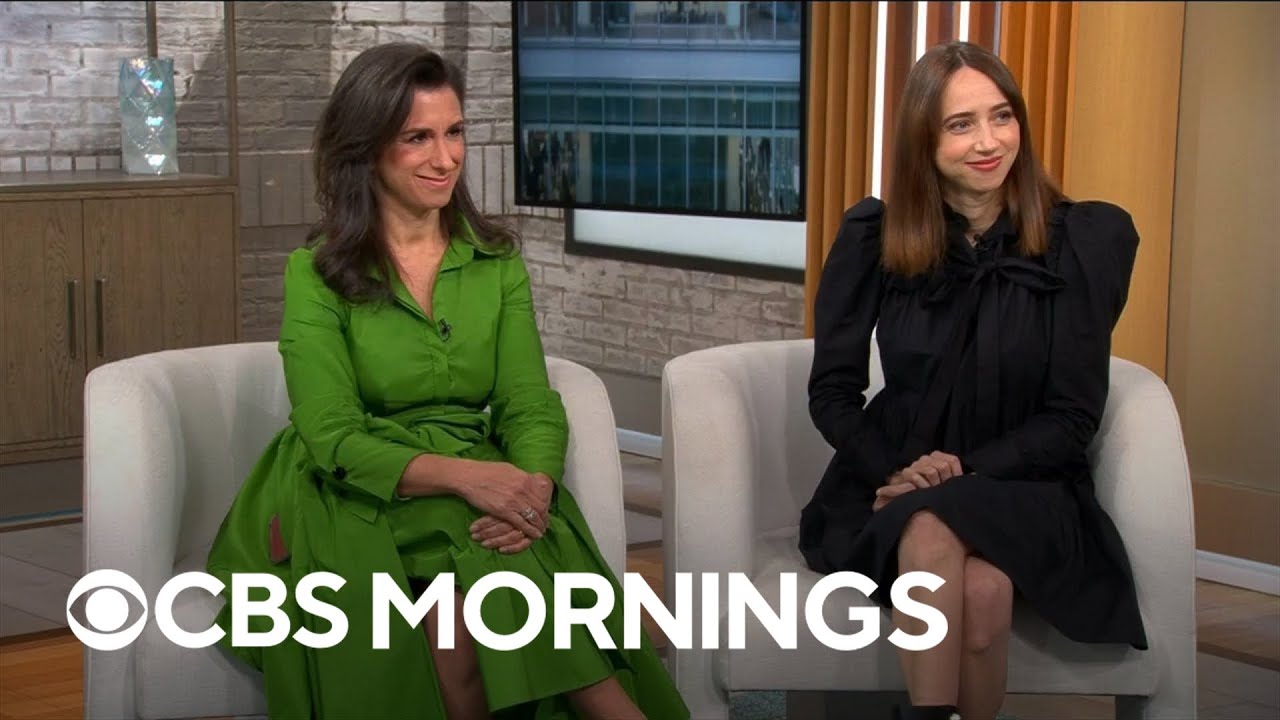
‘She Said’ – Interview:
CBS Mornings - Inside the Stirring Drama She Said... In an interview on CBS Mornings, celebrated anchor Gayle King had the distinct privilege of sitting down with two prominent figures in the world of journalism…
![The 32nd Actor Awards (formerly known as the Screen Actors Guild Awards), honoring the best achievements in film and television performances for the year 2025, were presented on March 1, 2026, at the Shrine Auditorium and Expo Hall in Los Angeles, California. For the third year in a row, the ceremony streamed live on Netflix, starting at 8:00 p.m. EST / 5:00 p.m. PST.[1][2][3] Actress Kristen Bell hosted the ceremony for the third time, after previously hosting in 2018 and 2025.[a] Nominations were announced by Janelle James and Connor Storrie on January 7, 2026.[9][10][11] Harrison Ford was announced as the 2025 SAG-AFTRA Life Achievement Award recipient on December 18, 2025.[12]](https://moviestohistory.com/wp-content/uploads/2026/03/32nd-Annual-Actor-Awards-Header-1.jpeg)
The 32nd Annual Actor Awards – The 2026 Nominees:
One Rebrand After Another... The nominations for the 2026 Screen Actors Guild Awards, now rebranded as the Actor Awards, were announced on January 7, 2026. One Battle After Another leads this years film Actor Awards…

My Top Ten Paul Giamatti Movies:
To commemorate the Featured Television Blog for the month of April, John Adams, I have gathered My Top Ten Paul Giamatti Movies! If you're looking for the best movies featuring Paul Giamatti, you've come to…