

Accuracy Meter
| Category | Rating |
|---|---|
| Historical Events | 100% |
| Character Portrayals | 98% |
| Costumes & Setting | 99% |
| Social Context | 100% |
| Dramatic Embellishment | Minimal |
Overall Historical Accuracy
★★★★★ (98%)
When Steve McQueen’s 12 Years a Slave premiered in 2013, audiences and critics alike recognized that they were witnessing something profoundly different from previous Hollywood depictions of slavery. The film refused sentimentality. It offered no triumphant rebellion, no comforting moral simplifications, and no fictional heroes riding to the rescue. Instead, it presented slavery as it truly was: a violent economic system built upon the systematic destruction of human dignity.

![Directed by Steve McQueen Screenplay by John Ridley Based on Twelve Years a Slave by Solomon Northup Produced by Brad Pitt Dede Gardner Jeremy Kleiner Bill Pohlad Steve McQueen Arnon Milchan Anthony Katagas Starring Chiwetel Ejiofor Michael Fassbender Benedict Cumberbatch Paul Dano Paul Giamatti Lupita Nyong'o Sarah Paulson Brad Pitt Alfre Woodard Cinematography Sean Bobbitt Edited by Joe Walker Music by Hans Zimmer Production companies Regency Enterprises[1] River Road Entertainment[1] Plan B Entertainment[1] Film4[1] Distributed by Fox Searchlight Pictures (United States and Canada)[1] Entertainment One (United Kingdom)[2] Summit Entertainment (International)[3][2]](https://i0.wp.com/moviestohistory.com/wp-content/uploads/2025/07/12-Years-a-Slave--690x1024.jpg?ssl=1)


Based on Solomon Northup’s 1853 autobiography, Twelve Years a Slave, the film follows the true story of a free Black husband, father, and accomplished violinist from New York who was kidnapped, sold into slavery, and forced to endure twelve years of captivity on Louisiana plantations before reclaiming his freedom.


Its unflinching realism earned the film widespread acclaim and ultimately the Academy Award for Best Picture, becoming the first Best Picture winner produced by Brad Pitt’s Plan B Entertainment and the first film directed by Steve McQueen to receive the honor.


For historians, however, the film represents something even more significant. It is one of the rare historical dramas where the overwhelming majority of what audiences witness actually happened.

While most Hollywood films compress timelines, invent composite characters, and reshape history for dramatic convenience, 12 Years a Slave draws directly from one of the most detailed first-person accounts of American slavery ever published. The result is a film that serves not only as cinema but as historical testimony.
So just how accurate is Steve McQueen’s masterpiece? The answer is astonishing.

The True Story
Solomon Northup Before His Kidnapping

Hollywood often introduces historical figures at the moment their lives become extraordinary. The reality is that Solomon Northup’s ordinary life is precisely what makes his story so devastating.

Born in 1807 in Minerva, New York, Solomon was the son of Mintus Northup, an emancipated enslaved man. His father understood the value of education and ensured that Solomon learned to read and write, opportunities denied to millions of enslaved people throughout the South.

By adulthood, Solomon had become an accomplished violinist whose musical ability earned him respect throughout Saratoga Springs. He married Anne Hampton, and together they raised three children while building a stable middle-class life.

He worked. He owned property. He paid taxes. He traveled freely. He voted. He participated in civic society.

In many respects, Solomon embodied the promise of freedom that existed for some free Black Americans in the North despite persistent racism and legal discrimination.
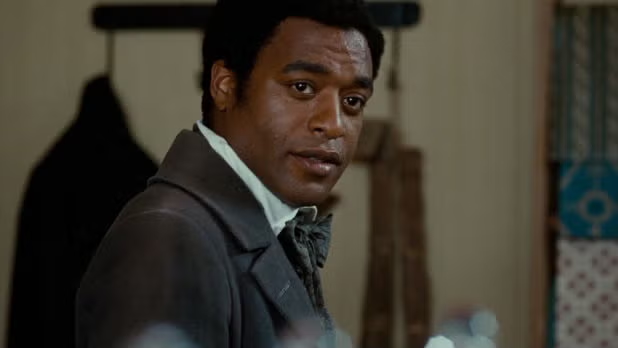
Steve McQueen intentionally spends only a short amount of screen time depicting this life, but those scenes establish an essential truth: slavery did not simply steal Solomon’s labor.

It stole his identity. His citizenship. His family. His name. His future.

The Historical Kidnapping Networks
Freedom Was Never Completely Secure

Perhaps the film’s most disturbing revelation is that Solomon’s kidnapping was not an isolated crime. It was part of a larger criminal enterprise.

Throughout the 1830s and 1840s, organized kidnapping rings operated across northern states and border regions, targeting free Black Americans for sale into the Deep South.

The domestic slave trade had become enormously profitable after Congress prohibited the international slave trade in 1808. Demand for labor on cotton and sugar plantations continued to rise. Kidnapping became another source of supply.

Professional traffickers forged ownership papers, bribed officials, collaborated with corrupt jailers, and relied upon racist assumptions that Black individuals claiming freedom were lying.

Entire families disappeared. Children vanished from city streets. Sailors returning to port never came home. Musicians, laborers, cooks, and servants found themselves transported hundreds of miles south before anyone realized they were missing.

Washington, D.C.—the nation’s capital—became one of the country’s largest slave markets. Within sight of the Capitol dome stood slave pens where human beings awaited shipment south.

The film accurately depicts these facilities, reminding audiences that slavery was not confined to distant plantations but existed at the very center of American political life.

Hollywood vs. History
Comparing the Film to Northup’s Memoir

One of the greatest strengths of John Ridley’s screenplay is its remarkable fidelity to Solomon Northup’s own words. Entire conversations originate directly from the memoir.
Descriptions of punishments, labor conditions, transportation, auctions, architecture, and plantation routines closely mirror Northup’s published account. Even scenes that some viewers assume must have been invented for dramatic effect are historically documented.

The prolonged hanging sequence—in which Solomon remains suspended from a tree while daily plantation life continues around him—is described in Northup’s memoir.

The terrifying indifference of those walking past him illustrates one of slavery’s defining characteristics: violence became ordinary. Steve McQueen enhances these moments through lengthy uninterrupted takes that force audiences to confront suffering without cinematic escape.

Rather than sensationalizing brutality, the film refuses to sanitize it. Historians have repeatedly praised this decision because slavery itself offered no convenient editing.
The horror was continuous.

Louisiana Plantation Life in the 1840s
By the time Solomon arrived in Louisiana, he entered one of the wealthiest—and deadliest—agricultural economies in the world. Cotton and sugar generated enormous profits that depended entirely upon enslaved labor.

Plantation schedules revolved around maximizing production. Workers rose before sunrise. Field labor continued under intense heat until darkness. Cotton picking quotas determined punishment. Sugar cultivation demanded even harsher physical exertion. Poor harvests often resulted in beatings regardless of circumstances.
The film accurately portrays the relentless pace of work.

Unlike romanticized depictions of plantation life common in twentieth-century cinema, McQueen shows slavery as industrial exploitation. Every minute of every day was organized around extracting labor. Enslaved people were simultaneously workers, financial assets, and legally recognized property.

The camera’s attention to worn clothing, crude cabins, muddy roads, primitive tools, and exhausting physical labor reflects archaeological and documentary evidence from antebellum Louisiana plantations.


Edwin Epps and William Ford
Two Masters, Two Faces of Slavery

One misconception about slavery is that cruelty depended solely upon individual personalities. 12 Years a Slave rejects that idea.

William Ford, portrayed by Benedict Cumberbatch, appears comparatively compassionate. He recognizes Solomon’s intelligence. He allows him opportunities to improve transportation systems on the plantation. He occasionally displays empathy. Yet Ford still owns human beings. He profits from forced labor.


He ultimately sells Solomon to protect his own financial interests. His kindness never challenges the institution itself. Ford represents paternalistic slavery—less openly violent but fundamentally dependent upon human ownership.

Edwin Epps, portrayed with terrifying intensity by Michael Fassbender, represents another reality. Historical records indicate that Epps was indeed notorious for brutality. Northup described repeated drunken beatings, arbitrary punishments, and psychological abuse.
The film reproduces many incidents directly from the memoir.


Fassbender’s performance never portrays Epps as merely insane. Instead, he embodies the logical outcome of absolute power exercised without accountability. The system encouraged men like Epps. It rewarded violence when violence increased production.
That truth makes the character even more frightening.

Daily Labor Realities Under Slavery
One of the film’s greatest achievements is its portrayal of ordinary labor. Historical films often emphasize spectacular moments. Battles. Political speeches. Escapes. 12 Years a Slave instead dedicates enormous attention to repetitive agricultural work. Cotton picking dominates daily existence.

Hands bleed. Backs ache. Heat becomes unbearable. Small mistakes invite punishment. Women perform the same exhausting labor while simultaneously facing sexual exploitation. Children begin work at young ages.
The repetitive rhythm of labor becomes another form of control.

Northup’s memoir devotes extensive passages to work routines, harvest quotas, food distribution, and seasonal demands. The film faithfully reflects those descriptions. Rather than functioning merely as background scenery, labor itself becomes the story. Slavery was an economic institution before it was anything else.
The violence existed to maximize production.

Family Separation
One of Slavery’s Greatest Weapons

Few scenes in 12 Years a Slave are more emotionally devastating than Eliza’s separation from her children. Some viewers assume this storyline was exaggerated.
In reality, family separation was among slavery’s defining characteristics.

Spouses belonged to different owners. Children could be sold independently. Parents possessed no legal rights over their own families. Economic necessity frequently overruled emotional bonds.
Auction records reveal thousands of documented family separations throughout the nineteenth century.

Formerly enslaved people later described this trauma as more painful than physical punishment. Northup himself repeatedly reflects upon his wife and children, sustaining hope through memories of home. Steve McQueen emphasizes these moments through silence rather than dialogue. The absence of reunion intensifies the emotional devastation.
Family remained slavery’s greatest vulnerability because memory itself resisted ownership.

Violence and Psychological Terror
Many discussions of slavery focus exclusively upon physical violence. 12 Years a Slave correctly emphasizes psychological terror. Enslaved individuals never knew when punishment might occur.

Rules changed without warning. Kindness could become cruelty in seconds. Owners intentionally cultivated uncertainty. Fear encouraged obedience more efficiently than constant force.

Patsey’s repeated abuse exemplifies this reality. She is simultaneously the plantation’s most productive worker and its most frequent victim. Her excellence offers no protection.
Instead, it provokes jealousy and obsession.

Historians have documented sexual violence against enslaved women as widespread and systemic. McQueen refuses to sensationalize these assaults. Instead, he presents them as another ordinary function of power.
The film’s emotional restraint makes its violence more historically authentic.

Literacy and Identity
One of the central themes of both the memoir and the film is literacy. Solomon’s ability to read and write becomes both his greatest advantage and greatest danger. Slaveholders feared literacy because writing created evidence. Letters could expose crimes. Reading encouraged independent thought. Communication fostered resistance.
Throughout the South, laws prohibited teaching enslaved people to read.

Violations sometimes carried severe penalties. The film accurately depicts Solomon secretly composing letters seeking rescue. His desperate search for trustworthy assistance reflects the extraordinary risks involved. Every written word represented both hope and possible execution.
Literacy becomes symbolic of identity itself. As long as Solomon can remember who he is—and communicate it—his captors never completely own him.
The Rescue of Solomon Northup
Unlike many cinematic rescues, Solomon’s liberation occurred through legal persistence rather than armed confrontation. Samuel Bass, the Canadian carpenter portrayed by Brad Pitt, did indeed oppose slavery and agreed to mail letters north on Solomon’s behalf.
Those letters reached friends in New York.

Attorney Henry B. Northup, related to the family that had once enslaved Solomon’s father, secured legal authorization from New York’s governor to retrieve him. After extensive investigation, Solomon was identified and released in January 1853.

His reunion with his family occurred after twelve years of absence. His children had become adults. He had become a grandfather. The film reproduces this reunion with remarkable restraint. No triumphant music can erase twelve stolen years.
The silence speaks more powerfully than celebration.

Historical Liberties Taken for Dramatic Effect
Although 12 Years a Slave ranks among the most historically accurate films ever produced, it still makes several modest cinematic adjustments.

Certain timelines are compressed. Minor individuals are omitted. Conversations are occasionally condensed. Some plantation events occur in different chronological order. The screenplay simplifies legal procedures surrounding Solomon’s rescue to maintain narrative momentum. Several supporting characters receive less development than they do in the memoir.
Yet these changes never alter the essential historical truth.

The institution of slavery, Solomon’s kidnapping, his labor under Ford and Epps, Patsey’s abuse, the rescue effort, and the broader social context remain overwhelmingly faithful to the historical record. Unlike many historical dramas, the film changes details without changing history.
That distinction is crucial.

Why the Film Matters
Historical films shape public memory. For millions of viewers, 12 Years a Slave serves as their most sustained engagement with the lived reality of American slavery. Its commitment to authenticity therefore carries enormous educational value.
![Directed by Steve McQueen Screenplay by John Ridley Based on Twelve Years a Slave by Solomon Northup Produced by Brad Pitt Dede Gardner Jeremy Kleiner Bill Pohlad Steve McQueen Arnon Milchan Anthony Katagas Starring Chiwetel Ejiofor Michael Fassbender Benedict Cumberbatch Paul Dano Paul Giamatti Lupita Nyong'o Sarah Paulson Brad Pitt Alfre Woodard Cinematography Sean Bobbitt Edited by Joe Walker Music by Hans Zimmer Production companies Regency Enterprises[1] River Road Entertainment[1] Plan B Entertainment[1] Film4[1] Distributed by Fox Searchlight Pictures (United States and Canada)[1] Entertainment One (United Kingdom)[2] Summit Entertainment (International)[3][2]](https://i0.wp.com/moviestohistory.com/wp-content/uploads/2026/06/12-years-banner.jpg?resize=525%2C213&ssl=1)
Rather than presenting slavery as an unfortunate regional custom, the film exposes it as an organized economic system sustained by law, politics, religion, commerce, and violence.

It reminds audiences that slavery did not survive because of a handful of cruel men. It survived because an entire society normalized human ownership. That lesson remains deeply relevant today as Americans continue debating how slavery should be remembered, taught, and represented.

By centering the voice of Solomon Northup himself, Steve McQueen ensures that the story belongs not to those who profited from slavery but to one who survived it.

Final Verdict
Hollywood vs. History
Many historical dramas ask audiences to overlook inaccuracies for the sake of entertainment. 12 Years a Slave asks audiences to confront history instead.
![Directed by Steve McQueen Screenplay by John Ridley Based on Twelve Years a Slave by Solomon Northup Produced by Brad Pitt Dede Gardner Jeremy Kleiner Bill Pohlad Steve McQueen Arnon Milchan Anthony Katagas Starring Chiwetel Ejiofor Michael Fassbender Benedict Cumberbatch Paul Dano Paul Giamatti Lupita Nyong'o Sarah Paulson Brad Pitt Alfre Woodard Cinematography Sean Bobbitt Edited by Joe Walker Music by Hans Zimmer Production companies Regency Enterprises[1] River Road Entertainment[1] Plan B Entertainment[1] Film4[1] Distributed by Fox Searchlight Pictures (United States and Canada)[1] Entertainment One (United Kingdom)[2] Summit Entertainment (International)[3][2]](https://i0.wp.com/moviestohistory.com/wp-content/uploads/2026/06/MV5BMzM2YjJjOWUtYTVlNi00YzM5LTgyNGItZjAzNmI2NmQ2MzExXkEyXkFqcGc%40._V1_QL75_UX1050_.jpg?resize=525%2C219&ssl=1)
Its fidelity to Solomon Northup’s memoir, careful recreation of antebellum Louisiana, historically grounded character portrayals, and refusal to sentimentalize slavery distinguish it as one of the finest historical films ever produced.
![Directed by Steve McQueen Screenplay by John Ridley Based on Twelve Years a Slave by Solomon Northup Produced by Brad Pitt Dede Gardner Jeremy Kleiner Bill Pohlad Steve McQueen Arnon Milchan Anthony Katagas Starring Chiwetel Ejiofor Michael Fassbender Benedict Cumberbatch Paul Dano Paul Giamatti Lupita Nyong'o Sarah Paulson Brad Pitt Alfre Woodard Cinematography Sean Bobbitt Edited by Joe Walker Music by Hans Zimmer Production companies Regency Enterprises[1] River Road Entertainment[1] Plan B Entertainment[1] Film4[1] Distributed by Fox Searchlight Pictures (United States and Canada)[1] Entertainment One (United Kingdom)[2] Summit Entertainment (International)[3][2]](https://i0.wp.com/moviestohistory.com/wp-content/uploads/2026/06/Screenshot-2026-06-16-at-9.28.09-PM.png?resize=525%2C315&ssl=1)
The few liberties taken serve narrative clarity rather than ideological revision. The result is a film that functions as both extraordinary cinema and invaluable historical education.
For MoviesToHistory.com’s Accuracy Meter, 12 Years a Slave earns one of the highest scores ever awarded.
![Directed by Steve McQueen Screenplay by John Ridley Based on Twelve Years a Slave by Solomon Northup Produced by Brad Pitt Dede Gardner Jeremy Kleiner Bill Pohlad Steve McQueen Arnon Milchan Anthony Katagas Starring Chiwetel Ejiofor Michael Fassbender Benedict Cumberbatch Paul Dano Paul Giamatti Lupita Nyong'o Sarah Paulson Brad Pitt Alfre Woodard Cinematography Sean Bobbitt Edited by Joe Walker Music by Hans Zimmer Production companies Regency Enterprises[1] River Road Entertainment[1] Plan B Entertainment[1] Film4[1] Distributed by Fox Searchlight Pictures (United States and Canada)[1] Entertainment One (United Kingdom)[2] Summit Entertainment (International)[3][2]](https://i0.wp.com/moviestohistory.com/wp-content/uploads/2025/07/12-Years-a-Slave-.jpg?resize=525%2C779&ssl=1)
Final Accuracy Meter
- Historical Events: ★★★★★ (100%)
- Character Portrayals: ★★★★★ (98%)
- Costumes & Setting: ★★★★★ (99%)
- Social Context: ★★★★★ (100%)
- Dramatic Embellishment: Minimal
Overall Historical Accuracy
★★★★★ (98%)
More than a decade after its release, 12 Years a Slave remains the benchmark against which all cinematic portrayals of American slavery should be measured. It demonstrates that historical fidelity and compelling storytelling are not opposing goals—they are, at their best, inseparable. Through Solomon Northup’s extraordinary testimony and Steve McQueen’s uncompromising vision, the film preserves one of the most important personal narratives in American history and challenges every generation to remember what twelve stolen years truly meant.
![Directed by Steve McQueen Screenplay by John Ridley Based on Twelve Years a Slave by Solomon Northup Produced by Brad Pitt Dede Gardner Jeremy Kleiner Bill Pohlad Steve McQueen Arnon Milchan Anthony Katagas Starring Chiwetel Ejiofor Michael Fassbender Benedict Cumberbatch Paul Dano Paul Giamatti Lupita Nyong'o Sarah Paulson Brad Pitt Alfre Woodard Cinematography Sean Bobbitt Edited by Joe Walker Music by Hans Zimmer Production companies Regency Enterprises[1] River Road Entertainment[1] Plan B Entertainment[1] Film4[1] Distributed by Fox Searchlight Pictures (United States and Canada)[1] Entertainment One (United Kingdom)[2] Summit Entertainment (International)[3][2]](https://i0.wp.com/moviestohistory.com/wp-content/uploads/2026/06/IMG_1285.jpg?resize=525%2C296&ssl=1)
12 Years a Slave is available now with a subscription to Hulu…

Discover more from Movies To History.com
Subscribe to get the latest posts sent to your email.
Related Posts
‘The Looming Tower’ – Official Trailer:
The Looming Series... The Looming Tower is a television miniseries, based on Lawrence Wright's 2006 book of the same name, which premiered on Hulu on February 28, 2018. The 10-episode drama series was created and executive produced by Dan Futterman, Alex Gibney,…
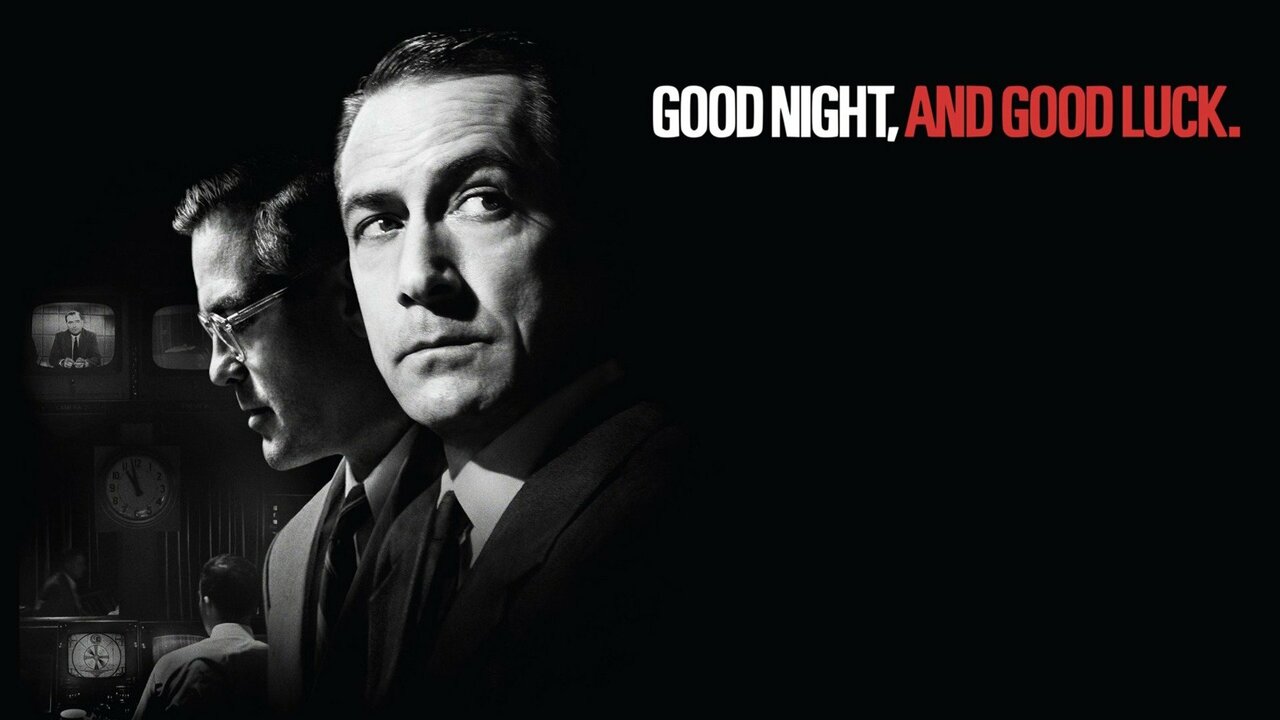
‘Good Night, and Good Luck.’ – Official Trailer:
See It Now... Good Night, and Good Luck (promoted as good night, and good luck.) is a 2005 historical drama film about American television news directed by George Clooney, with the movie starring David Strathairn, Patricia Clarkson, Jeff Daniels, Robert Downey Jr., and Frank Langella as well as…

‘Anora’ – Interview –
Cast of Anora, Best Picture Oscar Winner, talks about working with Sean Baker... Mikey Madison, Yura Borisov, Mark Eydelshteyn and Karren Karagulian talk about trusting and working with director Sean Baker for Anora, Academy Award…