
AUGUST 2025:

A Courtroom Drama with History’s Weight…
Aaron Sorkin’s The Trial of the Chicago 7 (2020) is a gripping historical legal drama that dramatizes one of the most infamous trials in American history. While the film is stocked with Sorkin’s signature sharp dialogue and features a powerhouse ensemble cast, its deeper resonance lies in how it reintroduces us to the defendants as they originally stood before the court — not as seven, but as eight.


Before the world knew them as the “Chicago Seven,” they were the “Chicago Eight.” Among them was Bobby Seale, co-founder of the Black Panther Party, whose trial was severed after an ordeal that shocked the nation and left an indelible mark on the history of civil liberties in America. This film recommendation focuses on Seale’s story, the controversy of his courtroom treatment, and how his severance transformed the trial into the legend it became.


From Protest to Prosecution
The 1968 Democratic National Convention in Chicago was supposed to be a stage-managed showcase for the Democratic Party. Instead, it became a flashpoint of dissent against the Vietnam War.


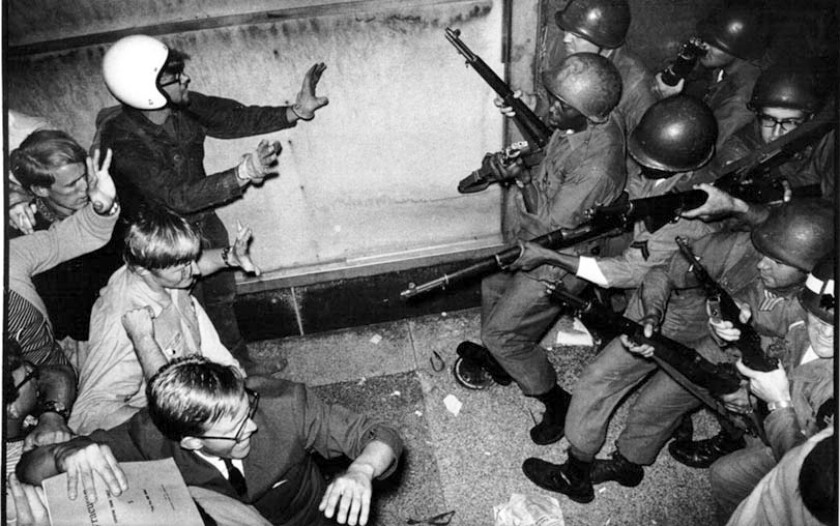
Thousands of demonstrators — young, angry, and politically diverse — flooded Chicago to protest U.S. policy. Mayor Richard J. Daley responded with overwhelming police force. What unfolded was a series of violent clashes broadcast on national television, leaving an image of chaos that the government was eager to blame on activists rather than law enforcement.


When Richard Nixon entered the White House in 1969, his Justice Department seized on the moment to crack down on antiwar radicals. Federal prosecutors indicted eight men under the newly strengthened Anti-Riot Act, accusing them of conspiracy and crossing state lines to incite violence.


The Chicago Eight

The eight defendants came from across the spectrum of American protest movements:
- Abbie Hoffman (Sacha Baron Cohen), the counterculture prankster and co-founder of the Yippies.


- Jerry Rubin (Jeremy Strong), fellow Yippie and theatrical provocateur.


- Tom Hayden (Eddie Redmayne), co-founder of Students for a Democratic Society (SDS), representing serious New Left politics.


- Rennie Davis (Alex Sharp), Hayden’s ally in SDS, committed to strategy over spectacle.


- David Dellinger (John Carroll Lynch), a long-time pacifist and leader of the National Mobilization Committee to End the War in Vietnam (MOBE).


- John Froines (Daniel Flaherty) and Lee Weiner (Noah Robbins), minor figures swept up more to make a point than because of evidence.


- Bobby Seale (Yahya Abdul-Mateen II), co-founder of the Black Panther Party, whose inclusion was the most glaring stretch of all.


Seale had little connection to the organizing of the Chicago protests. He spent only a few hours in the city to give a speech. Yet prosecutors lumped him in with the others, broadening the trial’s scope to target not just the antiwar left but also the Black radical movement.

Bobby Seale, the “Eighth Defendant”
Seale’s presence made the Chicago Eight unique. He was not a Yippie prankster, nor an SDS organizer. He was a Black revolutionary, and his inclusion reflected the government’s desire to link the Panthers to violent unrest.

The problem was that Seale did not have adequate legal representation. His lawyer, Charles Garry, was hospitalized and could not attend. Seale demanded to either represent himself or postpone until Garry recovered — requests firmly denied by Judge Julius Hoffman (played by Frank Langella with icy authoritarianism).


Thus began Seale’s harrowing ordeal. Day after day, he stood in court without counsel, repeatedly asserting his constitutional rights, only to be shouted down by a judge intent on silencing him.
A Courtroom Outrage
The tension came to a head in October 1969. When Seale continued to demand fair treatment, Judge Hoffman ordered marshals to restrain him. In front of the jury, the press, and his co-defendants, Seale was bound and gagged in the courtroom.


For four days, he sat in chains, muffled and humiliated. The sight was horrifying — evoking imagery of slavery and raising profound questions about whether the American justice system was capable of fairness for Black defendants. Even newspapers critical of the Panthers condemned the act as barbaric.


Sorkin’s film portrays this moment with raw intensity. Yahya Abdul-Mateen II’s performance makes it clear that Seale’s silencing was not just legal misconduct but a moral atrocity. His defiance, even while shackled, gives the film some of its most haunting power.
Severance and the Birth of the Chicago Seven
The outrage could not be contained. On November 5, 1969, Judge Hoffman declared a mistrial in Seale’s case and severed him from the proceedings.

Thus, the Chicago Eight became the Chicago Seven.

Seale’s charges were eventually dropped, but the damage was done. His treatment laid bare the political motivations behind the trial, demonstrating that it was less about enforcing law than about silencing opposition movements — especially Black ones.

Why Seale’s Story Matters in the Film
Sorkin’s decision to include Bobby Seale’s ordeal is essential. Without it, the film might risk being a familiar tale of white student radicals clashing with the system. Seale’s presence expands the lens, forcing the audience to confront the intersection of race, justice, and state power.

In contrast to the theatrical antics of Abbie Hoffman or the strategic patience of Tom Hayden, Seale embodies raw injustice. His courtroom struggle does not lend itself to humor or clever wordplay. It is stark, brutal, and unforgettable.


The severance of his trial also functions narratively: it changes the dynamic, reducing the defendants to seven while leaving the audience unsettled by the knowledge that the eighth was effectively erased through judicial violence.

The Aftermath for Bobby Seale
After the severance, Seale faced other prosecutions, most notably the New Haven trial related to the murder of suspected Panther informant Alex Rackley. That case, too, ended in controversy, mistrials, and acquittals.


But the Chicago trial remained his most infamous encounter with the justice system. The image of Seale bound and gagged became iconic in the movement, appearing in posters and writings as proof of systemic racism.

Seale went on to write memoirs (Seize the Time and A Lonely Rage), lecture widely, and remain active in community work. His later life has been marked less by militancy than by reflection, but his courtroom ordeal continues to define his historical legacy.

![Seize The Time: The Story of The Black Panther Party and Huey P. Newton is a 1970 book by political activist Bobby Seale. It was recorded in San Francisco County Jail between November 1969 and March 1970, by Arthur Goldberg, a reporter for the San Francisco Bay Guardian. An advocacy book on the cause and principles of the Black Panther Party, Seize The Time is considered a staple in Black Power literature.[1][2][3] Seize the Time is a first-person narrative written from the perspective of Bobby Seale who recounts the story of the Black Panthers through conversational style prose. Reissued by Black Classic Press in 1991,[4] the book begins with an introduction written by Seale wherein he provides an overview of the Black Panther Party, as well as calls for people to become activists in the fight for equality.](https://i0.wp.com/moviestohistory.com/wp-content/uploads/2025/08/Seize-the-Time.jpg?ssl=1)

The Controversy and Its Legacy
The gagging of Bobby Seale has become one of the most notorious moments in American judicial history. It represented:

- A violation of civil liberties: Seale was denied the right to counsel and the right to represent himself.
- A racial humiliation: The imagery of a Black man in shackles in a U.S. courtroom could not be divorced from America’s history of slavery.
- Political theater: The entire prosecution was meant to chill dissent by making an example of radicals, and Seale’s treatment showed the lengths to which the system would go.

In many ways, the severance of Seale’s trial delegitimized the entire case. Even critics of the Seven acknowledged that the court had crossed a line that could not be excused.

Why You Should Watch The Trial of the Chicago 7
This film is essential viewing, not only for its entertainment value but for its historical and political significance.
The Cast Brings History Alive
Sacha Baron Cohen’s Abbie Hoffman captures countercultural wit; Eddie Redmayne’s Tom Hayden embodies reformist zeal; Mark Rylance as William Kunstler delivers quiet, simmering outrage. Yet it is Yahya Abdul-Mateen II’s Bobby Seale who anchors the moral weight of the story.


It Restores the Chicago Eight to Memory
Too often, history books and pop culture shorthand remember only the Chicago Seven. This film corrects that erasure, reminding us that Seale was there, and his treatment cannot be forgotten.

It Connects the Past to the Present
Released in 2020 amidst Black Lives Matter protests and widespread debate about systemic racism, the film underscores how little has changed. The suppression of protest, the racialized abuse of defendants, and the manipulation of the courts remain urgent issues.

It Exposes Judicial Abuse of Power
Judge Julius Hoffman is portrayed not as a neutral arbiter but as an antagonist — proof that the courtroom itself can be corrupted by prejudice and politics.

Real History vs. The Trial of the Chicago 7
Bobby Seale’s Role

In History: Bobby Seale had little connection to the planning of the Chicago protests. He was in Chicago briefly to give a speech, not to conspire with the other defendants. His indictment was transparently political, meant to expand the trial’s scope and link the Black Panther Party to antiwar radicals.
![Huey Newton[r], founder of the Black Panther Party, sits with Bobby Seale at party headquarters in San Francisco. Photo by © Ted Streshinsky/CORBIS/Corbis via Getty Images](https://i0.wp.com/moviestohistory.com/wp-content/uploads/2025/08/gettyimages-576843010-612x612-1.jpg?resize=525%2C347&ssl=1)
In the Film: Aaron Sorkin’s screenplay makes this point clear, with Seale (Yahya Abdul-Mateen II) repeatedly insisting he doesn’t know the other defendants. The film dramatizes his outsider status effectively, using his isolation to heighten the injustice of his inclusion.

Lack of Legal Representation

In History: Seale’s lawyer, Charles Garry, was hospitalized for gallbladder surgery. Seale asked to either represent himself or delay the trial until Garry’s recovery. Judge Julius Hoffman denied both requests, a violation of his constitutional rights.

In the Film: This is portrayed with near-documentary accuracy. Seale’s repeated objections in court, his pleas for counsel, and Judge Hoffman’s refusal are all included, underscoring the systemic injustice he endured.
Shackling and Gagging
In History: In October 1969, after weeks of conflict, Judge Hoffman ordered marshals to bind and gag Bobby Seale in the courtroom. He remained shackled and gagged for several days — an act widely condemned by the press, politicians, and civil liberties groups.
In the Film: Sorkin condenses this into one searing sequence. Abdul-Mateen’s performance captures the humiliation and horror, while the reactions of the jury and other defendants emphasize its historic cruelty. The film does not linger for days on this episode, but the power of the imagery speaks volumes.

Severance of the Trial

In History: On November 5, 1969, Judge Hoffman declared a mistrial in Seale’s case, severing him from the proceedings. This left the “Chicago Seven.” His charges were eventually dropped, though Seale continued to face other prosecutions in the years ahead.
In the Film: The severance is depicted accurately. Sorkin uses it as a narrative pivot, transforming the Chicago Eight into the Chicago Seven and underlining the cost of Seale’s ordeal.

The Broader Verdicts

In History: The Chicago Seven were acquitted of conspiracy but convicted of crossing state lines with intent to incite a riot. Those convictions were overturned on appeal in 1972, largely due to the judge’s bias and misconduct during the trial.

In the Film: Sorkin dramatizes the trial’s conclusion with heightened theatricality, particularly Tom Hayden’s courtroom speech, which is more polished and emotional than the historical record. While not strictly accurate, it provides a satisfying dramatic climax.
Final Note on Accuracy
Sorkin’s film is not a documentary, but when it comes to Bobby Seale’s ordeal, it sticks closer to history than some of its more dramatized moments. The shackling and gagging of Seale, while condensed in the film, remains true to the historical record and ensures that audiences cannot forget the trial’s most notorious injustice.
In this sense, The Trial of the Chicago 7 succeeds not only as entertainment but as historical memory, restoring the Chicago Eight to the public consciousness and forcing viewers to confront the painful reality of what happened to Bobby Seale in Judge Hoffman’s courtroom.

Remember the Eight
Aaron Sorkin’s The Trial of the Chicago 7 is more than just a dramatization of history — it is a reminder of how fragile justice can be when courts are weaponized against political dissent. The severed trial of Bobby Seale ensures that the story is not merely about youthful white radicals but also about the brutal silencing of Black voices in America.

By forcing us to reckon with the image of a man bound and gagged in a U.S. courtroom, the film insists we remember that they were once the Chicago Eight, and that the eighth man’s ordeal revealed the trial’s true nature.

For its historical power, emotional depth, and searing relevance, I strongly recommend The Trial of the Chicago 7. It is not only one of the most engaging films of recent years — it is also one of the most necessary.

The Trial of the Chicago 7 is available now with a subscription to Netflix…