Skip to content
CONNECT WITH US
https://moviestohistory.com/wp-content/uploads/2022/03/cropped-d3d0f4de5c874cf7a06b2f50e0bc7820-2-10.png

Movies To History.com

  • Home
  • About
  • Featured Film Blog
    • Film Critiques
    • Film Reviews
    • FIlm Recommendations
    • Video
  • Featured Television Blog
    • Television Critiques:
    • Television Reviews:
    • Television Recommendations:
    • Image
    • Video
  • Blog Posts
  • Contact Us
  • Subscribe
  • Oscar History
  • Top Ten List
Close Button

Film Recommendations:

JUNE 2024:

The Big Short; directed by Adam McKay; screenplay by Charles Randolph and Adam McKay; based on The Big Short by Michael Lewis; starring Christian Bale, Steve Carell, Ryan Gosling, and Brad Pitt; produced by Brad Pitt, Dede Gardner, Jeremy Kleiner, and Arnon Milchan for Regency Enterprises and Plan B Entertainment and distributed by Paramount Pictures. (2015)
The Big Short (2015)

The Big Short on America…

The Big Short, directed by Adam McKay and co-written by McKay and Charles Randolph, is an extraordinary biographical crime comedy-drama that masterfully brings the complexities of the 2007-2008 financial crisis to the big screen. Based on Michael Lewis‘s 2010 book The Big Short: Inside the Doomsday Machine, the film unravels the intricacies of the United States housing bubble and the subsequent economic meltdown. The star-studded cast, including Christian Bale, Steve Carell, Ryan Gosling, and Brad Pitt, delivers captivating performances that illuminate the human and systemic failings leading to one of the most significant financial collapses in history.

The Big Short; directed by Adam McKay; screenplay by Charles Randolph and Adam McKay; based on The Big Short by Michael Lewis; starring Christian Bale, Steve Carell, Ryan Gosling, and Brad Pitt; produced by Brad Pitt, Dede Gardner, Jeremy Kleiner, and Arnon Milchan for Regency Enterprises and Plan B Entertainment and distributed by Paramount Pictures. (2015)
Adam McKay directing Steve Carell in "The Big Short" (2015) Photo Credit: Paramount Pictures
Director and screenwriter Adam McKay attends the "The Big Short" New York premiere at Ziegfeld Theater on November 23, 2015 in New York City. Photo by Andrew H Walker/Variety/Penske Media via Getty Images
Screenwriter Charles Randolph attends the "The Big Short" New York premiere at Ziegfeld Theater on November 23, 2015 in New York City. Photo by Jim Spellman/WireImage
The 2007–2008 financial crisis, or the global financial crisis (GFC), was the most severe worldwide economic crisis since the Great Depression. Predatory lending in the form of subprime mortgages targeting low-income homebuyers, excessive risk-taking by global financial institutions, a continuous buildup of toxic assets within banks, and the bursting of the United States housing bubble culminated in a "perfect storm", which led to the Great Recession. Mortgage-backed securities (MBS) tied to American real estate, as well as a vast web of derivatives linked to those MBS, collapsed in value. Financial institutions worldwide suffered severe damage, reaching a climax with the bankruptcy of Lehman Brothers on September 15, 2008, and a subsequent international banking crisis. The preconditioning for the financial crisis was complex and multi-causal. Almost two decades prior, the U.S. Congress had passed legislation encouraging financing for affordable housing. However, in 1999, parts of the Glass-Steagall legislation, which had been adopted in 1933, were repealed, permitting financial institutions to commingle their commercial (risk-averse) and proprietary trading (risk-taking) operations. Arguably the largest contributor to the conditions necessary for financial collapse was the rapid development in predatory financial products which targeted low-income, low-information homebuyers who largely belonged to racial minorities. This market development went unattended by regulators and thus caught the U.S. government by surprise. After the onset of the crisis, governments deployed massive bail-outs of financial institutions and other palliative monetary and fiscal policies to prevent a collapse of the global financial system. In the U.S., the October 3, $800 billion Emergency Economic Stabilization Act of 2008 failed to slow the economic free-fall, but the similarly-sized American Recovery and Reinvestment Act of 2009, which included a substantial payroll tax credit, saw economic indicators reverse and stabilize less than a month after its February 17 enactment. The crisis sparked the Great Recession which resulted in increases in unemployment and suicide, and decreases in institutional trust and fertility, among other metrics. The recession was a significant precondition for the European debt crisis. In 2010, the Dodd–Frank Wall Street Reform and Consumer Protection Act was enacted in the US as a response to the crisis to "promote the financial stability of the United States". The Basel III capital and liquidity standards were also adopted by countries around the world. Photo Credit: Google Images
Michael Monroe Lewis (born October 15, 1960) is an American author and financial journalist. He has also been a contributing editor to Vanity Fair since 2009, writing mostly on business, finance, and economics. He is known for his nonfiction work, particularly his coverage of financial crises and behavioral finance. Lewis was born in New Orleans and attended Princeton University, from which he graduated with a degree in art history. After attending the London School of Economics, he began a career on Wall Street during the 1980s as a bond salesman at Salomon Brothers. The experience prompted him to write his first book, Liar's Poker (1989). Fourteen years later, Lewis wrote Moneyball: The Art of Winning an Unfair Game (2003), in which he investigated the success of Billy Beane and the Oakland Athletics. His 2006 book The Blind Side: Evolution of a Game was his first to be adapted into a film, The Blind Side (2009). In 2010, he released The Big Short: Inside the Doomsday Machine. The film adaptation of Moneyball was released in 2011, followed by The Big Short in 2015. Lewis's books have won two Los Angeles Times Book Prizes and several have reached number one on the New York Times Bestsellers Lists, including his most recent book, Going Infinite. Photo Credit: Wikipedia Commons
"The Big Short: Inside the Doomsday Machine" is a nonfiction book by Michael Lewis about the build-up of the United States housing bubble during the 2000s. It was released on March 15, 2010, by W. W. Norton & Company. It spent 28 weeks on The New York Times best-seller list, and was the basis for the 2015 film of the same name. Photo Credit: Google Images
The 2000s United States housing bubble or house price boom or 2000s housing cycle was a sharp run up and subsequent collapse of house asset prices affecting over half of the U.S. states. In many regions a real estate bubble, it was the impetus for the subprime mortgage crisis. Housing prices peaked in early 2006, started to decline in 2006 and 2007, and reached new lows in 2011. On December 30, 2008, the Case–Shiller home price index reported the largest price drop in its history. The credit crisis resulting from the bursting of the housing bubble is an important cause of the Great Recession in the United States. Increased foreclosure rates in 2006–2007 among U.S. homeowners led to a crisis in August 2008 for the subprime, Alt-A, collateralized debt obligation (CDO), mortgage, credit, hedge fund, and foreign bank markets. In October 2007, Henry Paulson, the U.S. Secretary of the Treasury, called the bursting housing bubble "the most significant risk to our economy". A bubble had the potential to affect not only on home valuations, but also mortgage markets, home builders, real estate, home supply retail outlets, Wall Street hedge funds held by large institutional investors, and foreign banks, increasing the risk of a nationwide recession. Concerns about the impact of the collapsing housing and credit markets on the larger U.S. economy caused President George W. Bush and the Chairman of the Federal Reserve Ben Bernanke to announce a limited bailout of the U.S. housing market for homeowners who were unable to pay their mortgage debts. In 2008 alone, the United States government allocated over $900 billion (~$1.25 trillion in 2023) to special loans and rescues related to the U.S. housing bubble. This was shared between the public sector and the private sector. Because of the large market share of Federal National Mortgage Association (Fannie Mae) and the Federal Home Loan Mortgage Corporation (Freddie Mac) (both of which are government-sponsored enterprises) as well as the Federal Housing Administration, they received a substantial share of government support, even though their mortgages were more conservatively underwritten and actually performed better than those of the private sector. Photo Credit: Wikipedia Commons
Christian Bale as Michael Burry in "The Big Short" (2015) Photo Credit: Paramount Pictures
Steve Carell as Mark Baum in "The Big Short" (2015) Photo Credit: Paramount Pictures
Ryan Gosling as Jared Vennett in "The Big Short" (2015) Photo Credit: Paramount Pictures
Brad Pitt as Ben Rickert in "The Big Short" (2015) Photo Credit: Paramount Pictures

Extensive Explanation of the 2007-2008 Financial Crisis


The 2007–2008 financial crisis, or the global financial crisis (GFC), was the most severe worldwide economic crisis since the Great Depression. Predatory lending in the form of subprime mortgages targeting low-income homebuyers, excessive risk-taking by global financial institutions, a continuous buildup of toxic assets within banks, and the bursting of the United States housing bubble culminated in a "perfect storm", which led to the Great Recession. Mortgage-backed securities (MBS) tied to American real estate, as well as a vast web of derivatives linked to those MBS, collapsed in value. Financial institutions worldwide suffered severe damage, reaching a climax with the bankruptcy of Lehman Brothers on September 15, 2008, and a subsequent international banking crisis. The preconditioning for the financial crisis was complex and multi-causal. Almost two decades prior, the U.S. Congress had passed legislation encouraging financing for affordable housing. However, in 1999, parts of the Glass-Steagall legislation, which had been adopted in 1933, were repealed, permitting financial institutions to commingle their commercial (risk-averse) and proprietary trading (risk-taking) operations. Arguably the largest contributor to the conditions necessary for financial collapse was the rapid development in predatory financial products which targeted low-income, low-information homebuyers who largely belonged to racial minorities. This market development went unattended by regulators and thus caught the U.S. government by surprise. After the onset of the crisis, governments deployed massive bail-outs of financial institutions and other palliative monetary and fiscal policies to prevent a collapse of the global financial system. In the U.S., the October 3, $800 billion Emergency Economic Stabilization Act of 2008 failed to slow the economic free-fall, but the similarly-sized American Recovery and Reinvestment Act of 2009, which included a substantial payroll tax credit, saw economic indicators reverse and stabilize less than a month after its February 17 enactment. The crisis sparked the Great Recession which resulted in increases in unemployment and suicide, and decreases in institutional trust and fertility, among other metrics. The recession was a significant precondition for the European debt crisis. In 2010, the Dodd–Frank Wall Street Reform and Consumer Protection Act was enacted in the US as a response to the crisis to "promote the financial stability of the United States". The Basel III capital and liquidity standards were also adopted by countries around the world. Photo Credit: Google Images

The United States Housing Bubble

The 2000s United States housing bubble or house price boom or 2000s housing cycle was a sharp run up and subsequent collapse of house asset prices affecting over half of the U.S. states. In many regions a real estate bubble, it was the impetus for the subprime mortgage crisis. Housing prices peaked in early 2006, started to decline in 2006 and 2007, and reached new lows in 2011. On December 30, 2008, the Case–Shiller home price index reported the largest price drop in its history. The credit crisis resulting from the bursting of the housing bubble is an important cause of the Great Recession in the United States. Increased foreclosure rates in 2006–2007 among U.S. homeowners led to a crisis in August 2008 for the subprime, Alt-A, collateralized debt obligation (CDO), mortgage, credit, hedge fund, and foreign bank markets. In October 2007, Henry Paulson, the U.S. Secretary of the Treasury, called the bursting housing bubble "the most significant risk to our economy". A bubble had the potential to affect not only on home valuations, but also mortgage markets, home builders, real estate, home supply retail outlets, Wall Street hedge funds held by large institutional investors, and foreign banks, increasing the risk of a nationwide recession. Concerns about the impact of the collapsing housing and credit markets on the larger U.S. economy caused President George W. Bush and the Chairman of the Federal Reserve Ben Bernanke to announce a limited bailout of the U.S. housing market for homeowners who were unable to pay their mortgage debts. In 2008 alone, the United States government allocated over $900 billion (~$1.25 trillion in 2023) to special loans and rescues related to the U.S. housing bubble. This was shared between the public sector and the private sector. Because of the large market share of Federal National Mortgage Association (Fannie Mae) and the Federal Home Loan Mortgage Corporation (Freddie Mac) (both of which are government-sponsored enterprises) as well as the Federal Housing Administration, they received a substantial share of government support, even though their mortgages were more conservatively underwritten and actually performed better than those of the private sector. Photo Credit: Wikipedia Commons

The roots of the 2007-2008 financial crisis can be traced back to the early 2000s when the United States experienced a housing boom. Several factors contributed to this bubble:

The 2000s United States housing bubble or house price boom or 2000s housing cycle was a sharp run up and subsequent collapse of house asset prices affecting over half of the U.S. states. In many regions a real estate bubble, it was the impetus for the subprime mortgage crisis. Housing prices peaked in early 2006, started to decline in 2006 and 2007, and reached new lows in 2011. On December 30, 2008, the Case–Shiller home price index reported the largest price drop in its history. The credit crisis resulting from the bursting of the housing bubble is an important cause of the Great Recession in the United States. Increased foreclosure rates in 2006–2007 among U.S. homeowners led to a crisis in August 2008 for the subprime, Alt-A, collateralized debt obligation (CDO), mortgage, credit, hedge fund, and foreign bank markets. In October 2007, Henry Paulson, the U.S. Secretary of the Treasury, called the bursting housing bubble "the most significant risk to our economy". A bubble had the potential to affect not only on home valuations, but also mortgage markets, home builders, real estate, home supply retail outlets, Wall Street hedge funds held by large institutional investors, and foreign banks, increasing the risk of a nationwide recession. Concerns about the impact of the collapsing housing and credit markets on the larger U.S. economy caused President George W. Bush and the Chairman of the Federal Reserve Ben Bernanke to announce a limited bailout of the U.S. housing market for homeowners who were unable to pay their mortgage debts. In 2008 alone, the United States government allocated over $900 billion (~$1.25 trillion in 2023) to special loans and rescues related to the U.S. housing bubble. This was shared between the public sector and the private sector. Because of the large market share of Federal National Mortgage Association (Fannie Mae) and the Federal Home Loan Mortgage Corporation (Freddie Mac) (both of which are government-sponsored enterprises) as well as the Federal Housing Administration, they received a substantial share of government support, even though their mortgages were more conservatively underwritten and actually performed better than those of the private sector. Photo Credit: Wikipedia Commons

Low Interest Rates: The Federal Reserve kept interest rates low to stimulate the economy after the dot-com bubble burst and the 9/11 attacks. Low borrowing costs made mortgages more accessible.
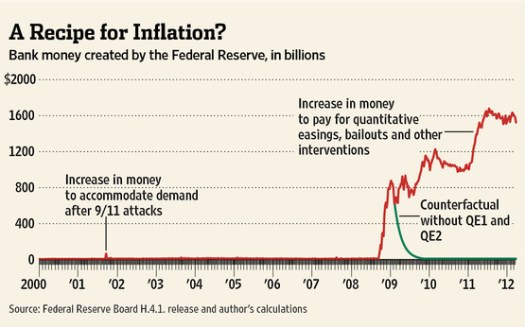
The Fed’s mistake of slowing money growth at the onset of the Great Depression is well-known. And from the mid-1960s through the ’70s, the Fed intervened with discretionary go-stop changes in money growth that led to frequent recessions, high unemployment, low economic growth, and high inflation. In contrast, through much of the 1980s and ’90s and into the past decade the Fed ran a more predictable, rules-based policy with a clear price-stability goal. This eventually led to lower unemployment, lower interest rates, longer expansions, and stronger economic growth. Unfortunately the Fed has returned to its discretionary, unpredictable ways, and the results are not good. Starting in 2003-05, it held interest rates too low for too long and thereby encouraged excessive risk-taking and the housing boom. It then overshot the needed increase in interest rates, which worsened the bust. Now, with inflation and the economy picking up, the Fed is again veering into “too low for too long” territory. Policy indicators suggest the need for higher interest rates, while the Fed signals a zero rate through 2014. Photo Credit: AEI.org

Subprime Mortgages: Banks and mortgage lenders issued a significant number of subprime mortgages to borrowers with poor credit histories. These loans often came with adjustable rates that would increase dramatically after an initial period.

In finance, subprime lending (also referred to as near-prime, subpar, non-prime, and second-chance lending) is the provision of loans to people in the United States who may have difficulty maintaining the repayment schedule. Historically, subprime borrowers were defined as having FICO scores below 600, although this threshold has varied over time. These loans are characterized by higher interest rates, poor quality collateral, and less favorable terms in order to compensate for higher credit risk. During the early to mid-2000s, many subprime loans were packaged into mortgage-backed securities (MBS) and ultimately defaulted, contributing to the financial crisis of 2007–2008. Photo Credit: Investopedia

Speculative Investments: Many investors saw real estate as a safe and profitable investment. This speculative buying drove up home prices even further.

Let’s go back to the Shiller graph (now updated to 2018 with some slight corrections since 2017 post). Over the entire 20th century real home prices averaged an index value just under 100 (and over the the entire second half of the 20th century were only slightly higher at 112). Over the entire 20th century, housing prices never once rose above 131, the 1989 peak. But beginning around 2000 house prices seemed to reach for an entirely new equilibrium. In fact, even given the financial crisis, prices since 2000 fell below the 20th century peak for only a few months in late 2011. Real prices today are now back to 2004 levels and rising. As I predicted in 2008, prices never returned to their long-run 20th century levels. Photo Credit: Marginalrevolution.com

These factors created a highly leveraged and fragile financial system. Banks and financial institutions bundled these risky mortgages into mortgage-backed securities (MBS) and sold them to investors worldwide, spreading the risk throughout the global financial system.

Mortgage-Backed Securities. MBS deserve much of the credit for our very efficient secondary mortgage market Has enabled homebuyers to tap broad national and even international sources of capital “Agency” MBS have not been a default problem. Photo Credit: Slideserve.com

Scion Capital

Scion Capital, founded by Dr. Michael Burry (portrayed by Christian Bale), plays a pivotal role in The Big Short. Burry, an eccentric hedge fund manager with a background in neurology, was one of the first to identify the housing bubble and foresee its collapse. He meticulously analyzed mortgage data and discovered that many subprime loans were highly likely to default once their interest rates reset. Based on this analysis, Burry decided to bet against the housing market by purchasing credit default swaps (CDS) on MBS, which would pay out if the underlying mortgages defaulted.

In August 2023, it was widely reported that Burry's hedge fund, Scion Asset Management, had made a $1.6 billion bet on a US stock market crash. Securities filings reportedly showed that Burry held put options on both the S&P 500 and the Nasdaq-100 at the end of Q2 2023. While the put options have been widely reported as being 93% of Scion's entire portfolio, this is misleading, as the $1.6 billion figure is based on the maximum possible value that the put options could rise to, and not the amount they were actually purchased for. Furthermore, Scion's assets under management is $237,971,170, significantly lower than $1.6 billion. Photo Credit: Google Images
Michael James Burry is an American investor and hedge fund manager. He founded the hedge fund Scion Capital, which he ran from 2000 until 2008 before closing it to focus on his personal investments. He is best known for being among the first investors to predict and profit from the subprime mortgage crisis that occurred between 2007 and 2010. Photo Credit: Google Images
Christian Bale as Michael Burry in "The Big Short" (2015) Photo Credit: Paramount Pictures
A credit default swap (CDS) is a financial swap agreement that the seller of the CDS will compensate the buyer in the event of a debt default (by the debtor) or other credit event.[1] That is, the seller of the CDS insures the buyer against some reference asset defaulting. The buyer of the CDS makes a series of payments (the CDS "fee" or "spread") to the seller and, in exchange, may expect to receive a payoff if the asset defaults. Photo Credit: Investopedia
Christian Bale as Michael Burry in "The Big Short" (2015) Photo Credit: Paramount Pictures
A scene in "The Big Short" (2015) Photo Credit: Paramount Pictures

FrontPoint Partners

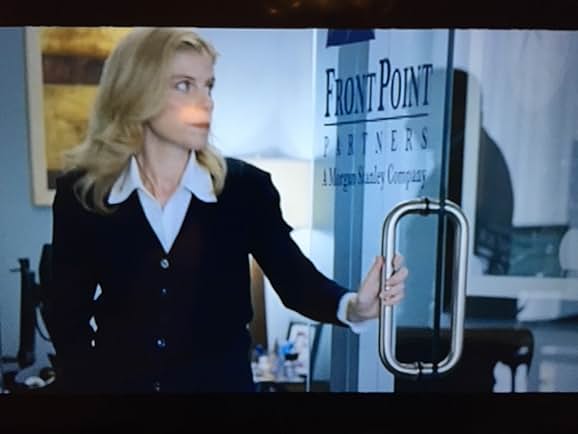
FrontPoint Partners, represented by Mark Baum (Steve Carell), is another key player in the film. Baum, based on the real-life hedge fund manager Steve Eisman, becomes convinced of the impending housing market collapse after being approached by Jared Vennett (Ryan Gosling), based on Greg Lippmann, a trader at Deutsche Bank. Vennett presents Baum with the opportunity to short the housing market. Baum and his team delve deep into the mortgage industry, uncovering widespread fraud and negligence. Their investigation reinforces their belief that the housing market is on the brink of collapse, leading them to invest heavily in CDS.
A scene in "The Big Short" (2015) Photo Credit: Paramount Pictures
Steve Carell as Mark Baum in "The Big Short" (2015) Photo Credit: Paramount Pictures
Steve Eisman, senior portfolio manager of the FrontPoint Financial Services Fund, speaks during the Ira Sohn Investmen Research Conference in New York, U.S., on Wednesday, May 26, 2010. The event is was sponsored by The Ira Sohn Research Conference Foundation which is "dedicated to the treatment and cure of pediatric cancer and other childhood diseases." Photographer: Daniel Acker/Bloomberg
Ryan Gosling as Jared Vennett in "The Big Short" (2015) Photo Credit: Paramount Pictures
Lippmann worked for Deutsche Bank, as global head of asset-backed securities trading, until he left in April 2010, and was succeeded by Pius Sprenger. In February 2010, Lippmann announced that he would be joining a hedge fund started by Fred Brettschneider, who was formerly Deutsche Bank's head of global markets. Lippmann co-founded LibreMax Partners with Brettschneider, and is its Chief Investment Officer and Portfolio Manager. In May 2016, Bloomberg LP reported that Lippmann was working with Promise Financial on a wedding loans business. Photo Credit: Google Images
Deutsche Bank AG, sometimes referred to simply as Deutsche, or internally as DB, is a German multinational investment bank and financial services company headquartered in Frankfurt, Germany, and dual-listed on the Frankfurt Stock Exchange and the New York Stock Exchange. Deutsche Bank was founded in 1870 in Berlin. From 1929 to 1937, following its merger with Disconto-Gesellschaft, it was known as Deutsche Bank und Disconto-Gesellschaft or DeDi-Bank: 580  Other transformative acquisitions have included those of Mendelssohn & Co. in 1938, Morgan Grenfell in 1990, Bankers Trust in 1998, and Deutsche Postbank in 2010. As of 2018, the bank's network spanned 58 countries with a large presence in Europe, the Americas, and Asia. It is a component of the DAX stock market index and is often referred to as the largest German banking institution, with Deutsche Bank holding the majority stake in DWS Group for combined assets of 2.2 trillion euros, rivaling even Sparkassen-Finanzgruppe in terms of combined assets. Deutsche Bank has been designated a global systemically important bank by the Financial Stability Board since 2011. It has been designated as a Significant Institution since the entry into force of European Banking Supervision in late 2014, and as a consequence is directly supervised by the European Central Bank. According to a 2020 article in the New Yorker, Deutsche Bank had long had an "abject" reputation among major banks, as it has been involved in major scandals across various issue areas. Photo Credit: Google Images
Jeremy Strong and Steve Carell in "The Big Short" (2015) Photo Credit: Paramount Pictures
Ryan Gosling and Jeffry Griffin in "The Big Short" (2015) Photo Credit: Paramount Pictures
Jeremy Strong, Rafe Spall, Hamish Linklater, Steve Carell, Jeffry Griffin, and Ryan Gosling in "The Big Short" (2015) Photo Credit: Paramount Pictures
Hamish Linklater and Rafe Spall in "The Big Short" (2015) Photo Credit: Paramount Pictures
Hamish Linklater as Porter Collins in "The Big Short" (2015) Photo Credit: Paramount Pictures

Brownfield Fund

Brownfield Fund, based on the firm Cornwall Capital, represented by Charlie Geller (John Magaro) and Jamie Shipley (Finn Wittrock), symbolizes smaller, more nimble investors who also saw the warning signs. With the help of Ben Rickert (Brad Pitt), a retired banker, they navigate the complex financial landscape to place their bets against the housing market. Their story highlights the accessibility of financial markets and the opportunities available to those who can recognize systemic flaws.

Cornwall Capital is a New York City-based private financial investment corporation. It is best known as one of the few investors to foresee and profit from the subprime mortgage crisis of 2007, as described in the book The Big Short by Michael Lewis.[2][3] Cornwall seeks highly asymmetric investments, in which the potential profit greatly exceeds potential loss. Its strategies including benefiting from market inefficiencies to thematic fundamental trades. From 2003 to 2012, the firm produced an average annual compounded net return of 40 percent (52 percent gross). Photo Credit: Google Images
Finn Wittrock and John Magaro in "The Big Short" (2015) Photo Credit: Paramount Pictures
Brad Pitt as Ben Rickert in "The Big Short" (2015) Photo Credit: Paramount Pictures
Finn Wittrock, John Magaro and Brad Pitt in "The Big Short" (2015) Photo Credit: Paramount Pictures
Finn Wittrock as Jamie Shipley in "The Big Short" (2015) Photo Credit: Paramount Pictures
Finn Wittrock and John Magaro in "The Big Short" (2015) Photo Credit: Paramount Pictures

Breakdown of Events Leading Up to the Crisis


The 2007–2008 financial crisis, or the global financial crisis (GFC), was the most severe worldwide economic crisis since the Great Depression. Predatory lending in the form of subprime mortgages targeting low-income homebuyers, excessive risk-taking by global financial institutions, a continuous buildup of toxic assets within banks, and the bursting of the United States housing bubble culminated in a "perfect storm", which led to the Great Recession. Mortgage-backed securities (MBS) tied to American real estate, as well as a vast web of derivatives linked to those MBS, collapsed in value. Financial institutions worldwide suffered severe damage, reaching a climax with the bankruptcy of Lehman Brothers on September 15, 2008, and a subsequent international banking crisis. The preconditioning for the financial crisis was complex and multi-causal. Almost two decades prior, the U.S. Congress had passed legislation encouraging financing for affordable housing. However, in 1999, parts of the Glass-Steagall legislation, which had been adopted in 1933, were repealed, permitting financial institutions to commingle their commercial (risk-averse) and proprietary trading (risk-taking) operations. Arguably the largest contributor to the conditions necessary for financial collapse was the rapid development in predatory financial products which targeted low-income, low-information homebuyers who largely belonged to racial minorities. This market development went unattended by regulators and thus caught the U.S. government by surprise. After the onset of the crisis, governments deployed massive bail-outs of financial institutions and other palliative monetary and fiscal policies to prevent a collapse of the global financial system. In the U.S., the October 3, $800 billion Emergency Economic Stabilization Act of 2008 failed to slow the economic free-fall, but the similarly-sized American Recovery and Reinvestment Act of 2009, which included a substantial payroll tax credit, saw economic indicators reverse and stabilize less than a month after its February 17 enactment. The crisis sparked the Great Recession which resulted in increases in unemployment and suicide, and decreases in institutional trust and fertility, among other metrics. The recession was a significant precondition for the European debt crisis. In 2010, the Dodd–Frank Wall Street Reform and Consumer Protection Act was enacted in the US as a response to the crisis to "promote the financial stability of the United States". The Basel III capital and liquidity standards were also adopted by countries around the world. Photo Credit: Google Images

The Build-Up

Increased Lending to Subprime Borrowers: Financial institutions, motivated by short-term profits, lowered their lending standards, issuing mortgages to individuals with poor credit histories and limited ability to repay.

In an American Predatory Lending interview, Al Ripley, a Director in the North Carolina Justice Center since 2003, emphasizes how the introduction of ARMs like the 2/28 ARM and 3/27 ARM confused consumers: “They didn’t understand how the documents worked, they didn’t understand how the loans worked, and they were losing their homes because of it. And so, we started to see more and more cases of that.” Investors in the secondary and tertiary mortgage markets also received marketing that downplayed risks. Exhibit C shows an example of an early advertisement targeted at investors that touted the supposed security of investing in adjustable-rate mortgage funds. Photo Credit: predatorylending.duke.edu

Securitization of Mortgages: These risky mortgages were bundled into mortgage-backed securities (MBS) and sold to investors. The assumption was that the diversification of many mortgages would mitigate the risk, but this ignored the underlying poor quality of the loans.

A mortgage-backed security (MBS) is a type of asset-backed security (an "instrument") which is secured by a mortgage or collection of mortgages. The mortgages are aggregated and sold to a group of individuals (a government agency or investment bank) that securitizes, or packages, the loans together into a security that investors can buy. Bonds securitizing mortgages are usually treated as a separate class, termed residential; another class is commercial, depending on whether the underlying asset is mortgages owned by borrowers or assets for commercial purposes ranging from office space to multi-dwelling buildings. The structure of the MBS may be known as "pass-through", where the interest and principal payments from the borrower or homebuyer pass through it to the MBS holder, or it may be more complex, made up of a pool of other MBSs. Other types of MBS include collateralized mortgage obligations (CMOs, often structured as real estate mortgage investment conduits) and collateralized debt obligations (CDOs). A mortgage bond is a bond backed by a pool of mortgages on a real estate asset such as a house. More generally, bonds which are secured by the pledge of specific assets are called mortgage bonds. Mortgage bonds can pay interest in either monthly, quarterly or semiannual periods. The prevalence of mortgage bonds is commonly credited to Mike Vranos. The shares of subprime MBSs issued by various structures, such as CMOs, are not identical but rather issued as tranches (French for "slices"), each with a different level of priority in the debt repayment stream, giving them different levels of risk and reward. Tranches of an MBS—especially the lower-priority, higher-interest tranches—are/were often further repackaged and resold as collateralized debt obligations. These subprime MBSs issued by investment banks were a major issue in the subprime mortgage crisis of 2006–2008. The total face value of an MBS decreases over time, because like mortgages, and unlike bonds, and most other fixed-income securities, the principal in an MBS is not paid back as a single payment to the bond holder at maturity but rather is paid along with the interest in each periodic payment (monthly, quarterly, etc.). This decrease in face value is measured by the MBS's "factor", the percentage of the original "face" that remains to be repaid. In the United States, MBSs may be issued by structures set up by government-sponsored enterprises like Fannie Mae or Freddie Mac, or they can be "private-label", issued by structures set up by investment banks. Photo Credit: Ivestopedia

Credit Rating Agencies: Agencies like Moody’s and Standard & Poor’s rated many of these MBS as high-quality investments, despite their risky nature. These inflated ratings misled investors about the true risk involved.

Moody's Ratings, previously known as Moody's Investors Service, often referred to as Moody's, is the bond credit rating business of Moody's Corporation, representing the company's traditional line of business and its historical name. Moody's Ratings provides international financial research on bonds issued by commercial and government entities. Moody's, along with Standard & Poor's and Fitch Group, is considered one of the Big Three credit rating agencies. It is also included in the Fortune 500 list of 2021. Photo Credit: Google Images
A view of the offices of Standard and Poor's in New York, New York, USA, on 29 April 2010. The company issues credit ratings on the debt of public and private companies, as well as that of countries like Greece, whose sovereign debt was recently lowered to 'junk' status. Photo Credit: EPA/JUSTIN LANE S&P Global Ratings (previously Standard & Poor's and informally known as S&P) is an American credit rating agency (CRA) and a division of S&P Global that publishes financial research and analysis on stocks, bonds, and commodities. S&P is considered the largest of the Big Three credit-rating agencies, which also include Moody's Investors Service and Fitch Ratings. Its head office is located on 55 Water Street in Lower Manhattan, New York City.

Derivatives and Credit Default Swaps: Financial institutions created complex financial instruments, including derivatives and CDS, to bet on the performance of MBS. Often referred to as Collateralization Debt Obligation (CDO). These instruments increased the leverage and interconnectedness of the financial system.

A synthetic CDO is a variation of a CDO (collateralized debt obligation) that generally uses credit default swaps and other derivatives to obtain its investment goals. As such, it is a complex derivative financial security sometimes described as a bet on the performance of other mortgage (or other) products, rather than a real mortgage security. The value and payment stream of a synthetic CDO is derived not from cash assets, like mortgages or credit card payments – as in the case of a regular or "cash" CDO—but from premiums paying for credit default swap "insurance" on the possibility of default of some defined set of "reference" securities—based on cash assets. The insurance-buying "counterparties" may own the "reference" securities and be managing the risk of their default, or may be speculators who've calculated that the securities will default. Synthetics thrived for a brief time because they were cheaper and easier to create than traditional CDOs, whose raw material—mortgages—was beginning to dry up. In 2005, the synthetic CDO market in corporate bonds spread to the mortgage-backed securities market, where the counterparties providing the payment stream were primarily hedge funds or investment banks hedging, or often betting that certain debt the synthetic CDO referenced – usually "tranches" of subprime home mortgages – would default. Synthetic issuance jumped from $15 billion in 2005 to $61 billion in 2006, when synthetics became the dominant form of CDOs in the US, valued "notionally" at $5 trillion by the end of the year according to one estimate. Synthetic CDOs are controversial because of their role in the subprime mortgage crisis. They enabled large wagers to be made on the value of mortgage-related securities, which critics argued may have contributed to lower lending standards and fraud. Synthetic CDOs have been criticized for serving as a way of hiding short position of bets against the subprime mortgages from unsuspecting triple-A seeking investors, and contributing to the 2007-2009 financial crisis by amplifying the subprime mortgage housing bubble. By 2012 the total notional value of synthetics had been reduced to a couple of billion dollars. Photo Credit: Investopedia

The Collapse

  1. Rising Default Rates: As adjustable-rate mortgages reset to higher interest rates, many borrowers could no longer afford their payments, leading to increased defaults.
LOS ANGELES (AP) -- The number of U.S. homes that slipped into some stage of foreclosure in 2007 was 79 percent higher than in the previous year, a real estate tracking company said Tuesday. Many homeowners started to fall behind on mortgage payments in the last three months, setting the stage for more foreclosures this year. About 1.3 million homes received foreclosure-related warnings last year, up from 717,522 in 2006, Irvine-based RealtyTrac Inc. said. Foreclosure filings rose 75 percent from the previous year to 2.2 million. More than 1 percent of all U.S. households were in some phase of the foreclosure process last year, up from about half a percent in 2006, RealtyTrac said. Photo Credit: RealityTrac

2. Falling Home Prices: The housing market began to cool, and home prices started to decline. This was disastrous for borrowers who owed more on their mortgages than their homes were worth (negative equity).

The mortgage market changed significantly during the early 2000s with the growth of subprime mortgage credit, a significant amount of which found its way into excessively risky and predatory products. While predatory loans fed the bubble, the primary driver of this lending was demand from Wall Street investors for mortgages, regardless of their quality, which created a dangerous excess of unregulated mortgage lending. Photo Credit: American Progress.org

3. MBS Value Plummets: As defaults rose, the value of MBS and related financial instruments collapsed. Institutions holding large quantities of these securities faced massive losses.

The TED spread (in red), an indicator of perceived credit risk in the general economy, increased significantly during the financial crisis. The TED spread spiked up in July 2007, remained volatile for a year, then spiked even higher in September 2008, reaching a record 4.65% on October 10, 2008. The 2007–2008 financial crisis, or the global financial crisis (GFC), was the most severe worldwide economic crisis since the Great Depression. Predatory lending in the form of subprime mortgages targeting low-income homebuyers, excessive risk-taking by global financial institutions, a continuous buildup of toxic assets within banks, and the bursting of the United States housing bubble culminated in a "perfect storm", which led to the Great Recession. Photo Credit: Wikipedia Commons

4. Liquidity Crisis: Banks and financial institutions, suddenly aware of the toxic assets on their books, stopped lending to each other, leading to a severe liquidity crisis. This credit crunch crippled the financial system.

The 2007–2008 financial crisis, or the global financial crisis (GFC), was the most severe worldwide economic crisis since the Great Depression. Predatory lending in the form of subprime mortgages targeting low-income homebuyers, excessive risk-taking by global financial institutions, a continuous buildup of toxic assets within banks, and the bursting of the United States housing bubble culminated in a "perfect storm", which led to the Great Recession. Mortgage-backed securities (MBS) tied to American real estate, as well as a vast web of derivatives linked to those MBS, collapsed in value. Financial institutions worldwide suffered severe damage, reaching a climax with the bankruptcy of Lehman Brothers on September 15, 2008, and a subsequent international banking crisis. The preconditioning for the financial crisis was complex and multi-causal. Almost two decades prior, the U.S. Congress had passed legislation encouraging financing for affordable housing. However, in 1999, parts of the Glass-Steagall legislation, which had been adopted in 1933, were repealed, permitting financial institutions to commingle their commercial (risk-averse) and proprietary trading (risk-taking) operations. Arguably the largest contributor to the conditions necessary for financial collapse was the rapid development in predatory financial products which targeted low-income, low-information homebuyers who largely belonged to racial minorities. This market development went unattended by regulators and thus caught the U.S. government by surprise. After the onset of the crisis, governments deployed massive bail-outs of financial institutions and other palliative monetary and fiscal policies to prevent a collapse of the global financial system. In the U.S., the October 3, $800 billion Emergency Economic Stabilization Act of 2008 failed to slow the economic free-fall, but the similarly-sized American Recovery and Reinvestment Act of 2009, which included a substantial payroll tax credit, saw economic indicators reverse and stabilize less than a month after its February 17 enactment. The crisis sparked the Great Recession which resulted in increases in unemployment and suicide, and decreases in institutional trust and fertility, among other metrics. The recession was a significant precondition for the European debt crisis. In 2010, the Dodd–Frank Wall Street Reform and Consumer Protection Act was enacted in the US as a response to the crisis to "promote the financial stability of the United States". The Basel III capital and liquidity standards were also adopted by countries around the world. Photo Credit: Google Images

The Crisis Peaks

  1. Bank Failures: Major financial institutions like Lehman Brothers collapsed. Lehman’s bankruptcy in September 2008 marked a pivotal moment in the crisis, signaling the severity of the financial system’s fragility.
The front page of "The Wall Street Journal" announcing the collapse of Lehman Brothers, which would begin the 2007-08 Financial Crisis and the Great Recession in America. Photo Credit: The Wall Street Journal
Lehman Brothers Inc. was an American global financial services firm founded in 1850. Before filing for bankruptcy in 2008, Lehman was the fourth-largest investment bank in the United States (behind Goldman Sachs, Morgan Stanley, and Merrill Lynch), with about 25,000 employees worldwide. It was doing business in investment banking, equity, fixed-income and derivatives sales and trading (especially U.S. Treasury securities), research, investment management, private equity, and private banking. Lehman was operational for 158 years from its founding in 1850 until 2008. On September 15, 2008, Lehman Brothers filed for Chapter 11 bankruptcy protection following the exodus of most of its clients, drastic declines in its stock price, and the devaluation of assets by credit rating agencies. The collapse was largely due to Lehman's involvement in the subprime mortgage crisis and its exposure to less liquid assets. Lehman's bankruptcy filing was the largest in US history, and is thought to have played a major role in the unfolding of the 2007–2008 financial crisis. The market collapse also gave support to the "too big to fail" doctrine. After Lehman Brothers filed for bankruptcy, global markets immediately plummeted. The following day, major British bank Barclays announced its agreement to purchase, subject to regulatory approval, a significant and controlling interest in Lehman's North American investment-banking and trading divisions, along with its New York headquarters building. On September 20, 2008, a revised version of that agreement was approved by U.S. Bankruptcy Court Judge James M. Peck. The next week, Nomura Holdings announced that it would acquire Lehman Brothers' franchise in the Asia-Pacific region, including Japan, Hong Kong and Australia, as well as Lehman Brothers' investment banking and equities businesses in Europe and the Middle East. The deal became effective on October 13, 2008. Photo Credit: Google Images

2. Stock Market Crash: Global stock markets plummeted as the crisis unfolded, wiping out trillions of dollars in wealth.

The 2007–2008 financial crisis, or the global financial crisis (GFC), was the most severe worldwide economic crisis since the Great Depression. Predatory lending in the form of subprime mortgages targeting low-income homebuyers, excessive risk-taking by global financial institutions, a continuous buildup of toxic assets within banks, and the bursting of the United States housing bubble culminated in a "perfect storm", which led to the Great Recession. Mortgage-backed securities (MBS) tied to American real estate, as well as a vast web of derivatives linked to those MBS, collapsed in value. Financial institutions worldwide suffered severe damage, reaching a climax with the bankruptcy of Lehman Brothers on September 15, 2008, and a subsequent international banking crisis. The preconditioning for the financial crisis was complex and multi-causal. Almost two decades prior, the U.S. Congress had passed legislation encouraging financing for affordable housing. However, in 1999, parts of the Glass-Steagall legislation, which had been adopted in 1933, were repealed, permitting financial institutions to commingle their commercial (risk-averse) and proprietary trading (risk-taking) operations. Arguably the largest contributor to the conditions necessary for financial collapse was the rapid development in predatory financial products which targeted low-income, low-information homebuyers who largely belonged to racial minorities. This market development went unattended by regulators and thus caught the U.S. government by surprise. Photo Credit: Google Images

3. Government Intervention: The U.S. government, recognizing the systemic risk, intervened with a series of bailouts. The Troubled Asset Relief Program (TARP) authorized up to $700 billion to purchase toxic assets and inject capital into banks to stabilize the financial system.

Concerns about the impact of the collapsing housing and credit markets on the larger U.S. economy caused President George W. Bush and the Chairman of the Federal Reserve Ben Bernanke to announce a limited bailout of the U.S. housing market for homeowners who were unable to pay their mortgage debts. Photo Credit: C-SPAN
Concerns about the impact of the collapsing housing and credit markets on the larger U.S. economy caused President George W. Bush and the Chairman of the Federal Reserve Ben Bernanke to announce a limited bailout of the U.S. housing market for homeowners who were unable to pay their mortgage debts. Photo Credit: New York Times
President Bush signs the Emergency Economic Stabilization Act of 2008 in the Oval Office after the House passed the financial bailout bill Friday. Photo Credit: Charles Dharapak / AP

The Aftermath: The Great Recession


A demonstrator from the Occupy Wall Street campaign holds aloft a sign as the march enters a courtyard near the New York Police Department headquarters in New York September 30, 2011. Protesters who have camped out near Wall Street for two weeks gathered on Friday to march to police headquarters over what they viewed as excessive force and unfair treatment of minorities and Muslims.The Occupy Wall Street movement, whose members have vowed to stay through the winter, are protesting issues including the 2008 bank bailouts, foreclosures and high unemployment. More than 500 people were gathered ahead of the start of the planned late afternoon march to One Police Plaza, the center of police operations, in downtown Manhattan. Photo Credit: REUTERS/Lucas Jackson (UNITED STATES - Tags: BUSINESS CIVIL UNREST)

The financial crisis triggered the Great Recession, the most severe economic downturn since the Great Depression. The consequences were far-reaching:

The Great Recession was a period of marked general decline observed in national economies globally, i.e. a recession, that occurred in the late 2000s. The scale and timing of the recession varied from country to country (see map). At the time, the International Monetary Fund (IMF) concluded that it was the most severe economic and financial meltdown since the Great Depression. One result was a serious disruption of normal international relations. The causes of the Great Recession include a combination of vulnerabilities that developed in the financial system, along with a series of triggering events that began with the bursting of the United States housing bubble in 2005–2012. When housing prices fell and homeowners began to abandon their mortgages, the value of mortgage-backed securities held by investment banks declined in 2007–2008, causing several to collapse or be bailed out in September 2008. This 2007–2008 phase was called the subprime mortgage crisis. The combination of banks unable to provide funds to businesses, and homeowners paying down debt rather than borrowing and spending, resulted in the Great Recession that began in the U.S. officially in December 2007 and lasted until June 2009, thus extending over 19 months. As with most other recessions, it appears that no known formal theoretical or empirical model was able to accurately predict the advance of this recession, except for minor signals in the sudden rise of forecast probabilities, which were still well under 50%. The recession was not felt equally around the world; whereas most of the world's developed economies, particularly in North America, South America and Europe, fell into a severe, sustained recession, many more recently developing economies suffered far less impact, particularly China, India and Indonesia, whose economies grew substantially during this period. Similarly, Oceania suffered minimal impact, in part due to its proximity to Asian markets. Photo Credit: The Balance

1. Mass Unemployment: Millions of jobs were lost as companies cut back or went bankrupt. The unemployment rate soared, peaking at 10% in the U.S.

The Great Recession was a period of marked general decline observed in national economies globally, i.e. a recession, that occurred in the late 2000s. The scale and timing of the recession varied from country to country (see map). At the time, the International Monetary Fund (IMF) concluded that it was the most severe economic and financial meltdown since the Great Depression. One result was a serious disruption of normal international relations. The causes of the Great Recession include a combination of vulnerabilities that developed in the financial system, along with a series of triggering events that began with the bursting of the United States housing bubble in 2005–2012. When housing prices fell and homeowners began to abandon their mortgages, the value of mortgage-backed securities held by investment banks declined in 2007–2008, causing several to collapse or be bailed out in September 2008. This 2007–2008 phase was called the subprime mortgage crisis. The combination of banks unable to provide funds to businesses, and homeowners paying down debt rather than borrowing and spending, resulted in the Great Recession that began in the U.S. officially in December 2007 and lasted until June 2009, thus extending over 19 months. As with most other recessions, it appears that no known formal theoretical or empirical model was able to accurately predict the advance of this recession, except for minor signals in the sudden rise of forecast probabilities, which were still well under 50%. The recession was not felt equally around the world; whereas most of the world's developed economies, particularly in North America, South America and Europe, fell into a severe, sustained recession, many more recently developing economies suffered far less impact, particularly China, India and Indonesia, whose economies grew substantially during this period. Similarly, Oceania suffered minimal impact, in part due to its proximity to Asian markets. Photo Credit: Fortune

2. Foreclosures and Homelessness: Millions of Americans lost their homes to foreclosure, leading to widespread homelessness and financial insecurity.

A scene in "The Big Short" (2015) Photo Credit: Paramount Pictures

3. Economic Contraction: The global economy contracted, with GDP falling in many countries. Recovery was slow and uneven, with long-lasting impacts on economic growth and stability.

4. Regulatory Reforms: In response to the crisis, governments worldwide implemented regulatory reforms to prevent a similar collapse. In the U.S., the Dodd-Frank Wall Street Reform and Consumer Protection Act aimed to increase transparency and oversight in the financial industry.

The Dodd–Frank Wall Street Reform and Consumer Protection Act, commonly referred to as Dodd–Frank, is a United States federal law that was enacted on July 21, 2010. The law overhauled financial regulation in the aftermath of the Great Recession, and it made changes affecting all federal financial regulatory agencies and almost every part of the nation's financial services industry. Responding to widespread calls for changes to the financial regulatory system, in June 2009, President Barack Obama introduced a proposal for a "sweeping overhaul of the United States financial regulatory system, a transformation on a scale not seen since the reforms that followed the Great Depression." Legislation based on his proposal was introduced in the United States House of Representatives by Congressman Barney Frank (D-MA) and in the United States Senate by Senator Chris Dodd (D-CT). Most congressional support for Dodd–Frank came from members of the Democratic Party; three Senate Republicans voted for the bill, allowing it to overcome the Senate filibuster. Dodd–Frank reorganized the financial regulatory system, eliminating the Office of Thrift Supervision, assigning new jobs to existing agencies similar to the Federal Deposit Insurance Corporation, and creating new agencies like the Consumer Financial Protection Bureau (CFPB). The CFPB was charged with protecting consumers against abuses related to credit cards, mortgages, and other financial products. The act also created the Financial Stability Oversight Council and the Office of Financial Research to identify threats to the financial stability of the United States of America, and gave the Federal Reserve new powers to regulate systemically important institutions. To handle the liquidation of large companies, the act created the Orderly Liquidation Authority. One provision, the Volcker Rule, restricts banks from making certain kinds of speculative investments. The act also repealed the exemption from regulation for security-based swaps, requiring credit-default swaps and other transactions to be cleared through either exchanges or clearinghouses. Other provisions affect issues such as corporate governance, 1256 Contracts, and credit rating agencies. Dodd–Frank is generally regarded as one of the most significant laws enacted during the presidency of Barack Obama. Studies have found the Dodd–Frank Act has improved financial stability and consumer protection, although there has been debate regarding its economic effects. In 2017, Federal Reserve Chairwoman Janet Yellen stated that "the balance of research suggests that the core reforms we have put in place have substantially boosted resilience without unduly limiting credit availability or economic growth." Some critics argue it failed to provide adequate regulation to the financial industry; others, such as American Action Forum and RealClearPolicy, argued that the law had a negative impact on economic growth and small banks. A partial repeal to the Dodd–Frank Act, leaving in place its central structure, was passed in 2018 with the Economic Growth, Regulatory Relief, and Consumer Protection Act. Photo Credit: Investopedia
President Barack Obama signs the Dodd-Frank Wall Street Reform and Consumer Protection financial overhaul bill at the Ronald Reagan Building in Washington, Wednesday, July 21, 2010. From left to right: House Speaker Nancy Pelosi, D-Calif., Senate Majority Leader Harry Reid, D-Nev., Rep. Mel Watt, D-N.C., Rep. Maxine Waters, D-Calif., Rep. Luis Gutierrez, D-Ill., Sen. Chris Dodd, D-Conn., Rep. Gregory Meeks, D-N.Y., Rep. Barney Frank, D-Mass. Photo Credit: AP Photo/Charles Dharapak

The Big Short: A Cinematic Triumph


The Big Short; directed by Adam McKay; screenplay by Charles Randolph and Adam McKay; based on The Big Short by Michael Lewis; starring Christian Bale, Steve Carell, Ryan Gosling, and Brad Pitt; produced by Brad Pitt, Dede Gardner, Jeremy Kleiner, and Arnon Milchan for Regency Enterprises and Plan B Entertainment and distributed by Paramount Pictures. (2015)

Narrative and Direction

Adam McKay’s direction in The Big Short is both innovative and effective. He employs a range of techniques to make complex financial concepts accessible to the audience. These include breaking the fourth wall, using celebrity cameos to explain technical jargon, and a frenetic editing style that mirrors the chaos of the financial markets. The film features cameo appearances by actress Margot Robbie, late chef Anthony Bourdain, singer-songwriter Selena Gomez, economist Richard Thaler, and others who break the fourth wall to explain concepts such as subprime mortgages and synthetic collateralized debt obligations. Several of the film’s characters directly address the audience, most frequently Gosling’s, who serves as the narrator. This approach not only educates but also entertains, keeping viewers engaged while unpacking the intricacies of the crisis.

Christian Bale and Adam McKay filming "The Big Short" (2015) Photo Credit: Paramount Pictures
Margot Robbie as herself in "The Big Short" (2015) Photo Credit: Paramount Pictures
Anthony Bourdain as himself in "The Big Short" (2015) Photo Credit: Paramount Pictures
Selena Gomez as herself in "The Big Short" (2015) Photo Credit: Paramount Pictures
Richard Thaler as himself in "The Big Short" (2015) Photo Credit: Paramount Pictures
Stanley Wong breaking the fourth wall in "The Big Short" (2015) Photo Credit: Paramount Pictures
Jeremy Strong as Vinny Daniel in "The Big Short" (2015) Photo Credit: Paramount Pictures
Ryan Gosling as Jared Vennett in "The Big Short" (2015) Photo Credit: Paramount Pictures

Performances

The ensemble cast of The Big Short delivers exceptional performances that bring the story to life:

NEW YORK, NY - NOVEMBER 23: (L-R) Actor Byron Mann, Actor Finn Wittrock, Author Michael Lewis, Actor Jeremy Strong, Actor Steve Carrell, director Adam McKay, actor Ryan Gosling, Chairman and CEO of Paramount Pictures Brad Grey, and actor Brad Pitt, and Actor John Magaro attend the premiere of "The Big Short" at Ziegfeld Theatre on November 23, 2015 in New York City. Photo by Kevin Mazur/WireImage

Christian Bale as Michael Burry: Bale’s portrayal of Burry is intense and nuanced, capturing the eccentricity and determination of the hedge fund manager who first identified the impending crisis.

The Big Short; directed by Adam McKay; screenplay by Charles Randolph and Adam McKay; based on The Big Short by Michael Lewis; starring Christian Bale, Steve Carell, Ryan Gosling, and Brad Pitt; produced by Brad Pitt, Dede Gardner, Jeremy Kleiner, and Arnon Milchan for Regency Enterprises and Plan B Entertainment and distributed by Paramount Pictures. (2015)
Christian Bale as Michael Burry in "The Big Short" (2015) Photo Credit: Paramount Pictures

Steve Carell as Mark Baum: Carell’s performance as the morally conflicted and driven Baum provides a human perspective on the crisis. His character’s journey from skepticism to conviction is compelling.

Steve Carell as Mark Baum in "The Big Short" (2015) Photo Credit: Paramount Pictures
Steve Carell and Hamish Linklater in "The Big Short" (2015) Photo Credit: Paramount Pictures
Steve Carell as Mark Baum in "The Big Short" (2015) Photo Credit: Paramount Pictures

Ryan Gosling as Jared Vennett: Gosling’s portrayal of Vennett, a slick and opportunistic banker, adds a layer of cynicism and wit to the film. His character serves as both a guide and a commentator on the unfolding events.

The Big Short; directed by Adam McKay; screenplay by Charles Randolph and Adam McKay; based on The Big Short by Michael Lewis; starring Christian Bale, Steve Carell, Ryan Gosling, and Brad Pitt; produced by Brad Pitt, Dede Gardner, Jeremy Kleiner, and Arnon Milchan for Regency Enterprises and Plan B Entertainment and distributed by Paramount Pictures. (2015)
Ryan Gosling as Jared Vennett in "The Big Short" (2015) Photo Credit: Paramount Pictures
Ryan Gosling and Jeffry Griffin in "The Big Short" (2015) Photo Credit: Paramount Pictures
Ryan Gosling as Jared Vennett in "The Big Short" (2015) Photo Credit: Paramount Pictures
Steve Carell and Ryan Gosling in "The Big Short" (2015) Photo Credit: Paramount Pictures

Brad Pitt as Ben Rickert: Pitt’s performance as Rickert, a retired banker turned reluctant mentor, offers a grounded and almost prophetic view of the crisis. His character’s disillusionment with the financial system adds depth to the narrative.

The Big Short; directed by Adam McKay; screenplay by Charles Randolph and Adam McKay; based on The Big Short by Michael Lewis; starring Christian Bale, Steve Carell, Ryan Gosling, and Brad Pitt; produced by Brad Pitt, Dede Gardner, Jeremy Kleiner, and Arnon Milchan for Regency Enterprises and Plan B Entertainment and distributed by Paramount Pictures. (2015)
Brad Pitt as Ben Rickert in "The Big Short" (2015) Photo Credit: Paramount Pictures
Brad Pitt plays Ben Rickert in The Big Short from Paramount Pictures and Regency Enterprises (2015)
Finn Wittrock, John Magaro and Brad Pitt in "The Big Short" (2015) Photo Credit: Paramount Pictures
Brad Pitt as Ben Rickert in "The Big Short" (2015) Photo Credit: Paramount Pictures

Themes and Messages

The Big Short is rich with themes that resonate deeply:

The Big Short; directed by Adam McKay; screenplay by Charles Randolph and Adam McKay; based on The Big Short by Michael Lewis; starring Christian Bale, Steve Carell, Ryan Gosling, and Brad Pitt; produced by Brad Pitt, Dede Gardner, Jeremy Kleiner, and Arnon Milchan for Regency Enterprises and Plan B Entertainment and distributed by Paramount Pictures. (2015)

Greed and Corruption: The film exposes the greed and corruption that pervaded the financial industry. It illustrates how the relentless pursuit of profit led to reckless lending practices and widespread fraud.

A scene in "The Big Short" (2015) Photo Credit: Paramount Pictures

The Human Cost: While the film focuses on financial mechanisms, it never loses sight of the human cost of the crisis. The collapse of the housing market led to immense suffering, with millions losing their homes, jobs, and financial security.

A scene in "The Big Short" (2015) Photo Credit: Paramount Pictures
Hamish Linklater and Rafe Spall in "The Big Short" (2015) Photo Credit: Paramount Pictures
A scene in "The Big Short" (2015) Photo Credit: Paramount Pictures
John Magaro as Charlie Geller in "The Big Short" (2015) Photo Credit: Paramount Pictures
A scene in "The Big Short" (2015) Photo Credit: Paramount Pictures

Inevitability and Denial: The characters in The Big Short grapple with the inevitability of the market’s collapse and the widespread denial of its possibility. The film underscores how systemic flaws and human hubris can lead to disaster.

Rafe Spall as Danny Moses in "The Big Short" (2015) Photo Credit: Paramount Pictures
Marisa Tomei as Cynthia Baum in "The Big Short" (2015) Photo Credit: Paramount Pictures
John Magaro as Charlie Geller in "The Big Short" (2015) Photo Credit: Paramount Pictures
Jeremy Strong as Vinny Daniel in "The Big Short" (2015) Photo Credit: Paramount Pictures
Hamish Linklater as Porter Collins in "The Big Short" (2015) Photo Credit: Paramount Pictures
Finn Wittrock as Jamie Shipley in "The Big Short" (2015) Photo Credit: Paramount Pictures

Awards and Accolades

The Big Short received critical acclaim and numerous awards, reflecting its impact and excellence:

‘The Big Short’ “We’ve shown the movie to economists and finance people, and they all say the same thing: Not enough has changed,” says Adam McKay (second from right). He was photographed with (from left) Christian Bale, Michael Lewis, Ryan Gosling and Steve Carell on Nov. 13 at Line 204 Studios in Hollywood. PHOTO CREDIT: MILLER MOBLEY

Academy Awards: The film was nominated for five Oscars and won Best Adapted Screenplay. Its nominations included Best Picture, Best Director (Adam McKay), Best Supporting Actor (Christian Bale), and Best Film Editing.

Oscar statuettes sit on display backstage during the show at the 94th Academy Awards at the Dolby Theatre at Ovation Hollywood on Sunday, March 27, 2022. Photo Credit: Robert Gauthier / Los Angeles Times via Getty Images
Screenwriter-director Adam McKay (L) and screenwriter Charles Randolph accept the Best Adapted Screenplay award for 'The Big Short' onstage during the 88th Annual Academy Awards at the Dolby Theatre on February 28, 2016 in Hollywood, California. Photo by Kevin Winter/Getty Images
Screenwriters Adam McKay, left, and Charles Randolph winners of the Best Adapted Screenplay for 'The Big Short,' pose in the press room at the 88th Annual Academy Awards at Hollywood & Highland Center on February 28, 2016 in Hollywood, California. Photo by Dan MacMedan/WireImage
Actor John Krasinski and President of the Academy of Motion Picture Arts and Sciences Cheryl Boone Isaacs announce 'The Big Short' as a nominee for Best Motion Picture of the Year during the 88th Oscars Nominations Announcement at the Academy of Motion Picture Arts and Sciences on January 14, 2016 in Los Angeles, California. Photo by Kevin Winter/Getty Images
Academy Awards Oscar Statue
Actor John Krasinski and President of the Academy of Motion Picture Arts and Sciences Cheryl Boone Isaacs announce Adam McKay as a nominee for Best Directing in the film 'The Big Short' during the 88th Oscars Nominations Announcement at the Academy of Motion Picture Arts and Sciences on January 14, 2016 in Los Angeles, California. Photo by Kevin Winter/Getty Images
Actor John Krasinski and President of the Academy of Motion Picture Arts and Sciences Cheryl Boone Isaacs announce Christian Bale as a nominee for Best Actor in a Supporting Role in the film 'The Big Short' during the 88th Oscars Nominations Announcement at the Academy of Motion Picture Arts and Sciences on January 14, 2016 in Los Angeles, California. Photo by Kevin Winter/Getty Images
Actor John Krasinski and President of the Academy of Motion Picture Arts and Sciences Cheryl Boone Isaacs announce 'The Big Short' as a nominee for Best Film Editing during the 88th Oscars Nominations Announcement at the Academy of Motion Picture Arts and Sciences on January 14, 2016 in Los Angeles, California. Photo by Kevin Winter/Getty Images

BAFTA Awards: It won the BAFTA Award for Best Adapted Screenplay and received nominations for Best Director, Best Supporting Actor (Christian Bale), and Best Editing.

Category: Adapted Screenplay. Citation reader: Angela Bassett. Winner: The Big Short - Adam McKay, Charles Randolph.L-r: Charles Randolph, Angela Bassett, Adam McKay Photo by Stephen Butler/BAFTA via Getty Images
(L-R) US director Adam McKay and writer Charles Randolph pose with their awards for an adapted screenplay for the film 'The Big Short' at the BAFTA British Academy Film Awards at the Royal Opera House in London on February 14, 2016. Photo credit: Ben Stansall/AFP via Getty Images

Golden Globe Awards: The film was nominated for four Golden Globes, including Best Motion Picture – Musical or Comedy, Best Actor (Christian Bale and Steve Carell), and Best Screenplay.

Atmosphere at the 81st Annual Golden Globe Awards Nominations at The Beverly Hilton on December 11, 2023 in Beverly Hills, California. Photo Credit: Michael Buckner/Penske Media via Getty Images
The Hollywood Foreign Press Association's Golden Globe Awards Statues.

Critics’ Choice Movie Awards: Christian Bale won the Critics’ Choice Movie Award for Best Actor in a Comedy, and the film earned the Critics’ Choice Movie Award for Best Comedy.

Actor Christian Bale, winner of Best Actor in a Comedy for "The Big Short," speaks onstage during the 21st Annual Critics' Choice Awards at Barker Hangar on January 17, 2016 in Santa Monica, California. Photo by Lester Cohen/WireImage
Actor Christian Bale accepts Best Actor in a Comedy award for 'The Big Short' onstage during the 21st Annual Critics' Choice Awards at Barker Hangar on January 17, 2016 in Santa Monica, California. Photo by Christopher Polk/Getty Images for The Critics' Choice Awards
Director Adam McKay (R) accepts the Best Comedy award for 'The Big Short' with (L-R) producer Jeremy Kleiner, actors Jeremy Strong, Hamish Linklater, Christian Bale, John Magaro, Finn Wittrock and screenwriter Charles Randolph onstage during the 21st Annual Critics' Choice Awards at Barker Hangar on January 17, 2016 in Santa Monica, California. Photo by Christopher Polk/Getty Images for The Critics' Choice Awards

The Big Short is a cinematic masterpiece that brilliantly combines humor, drama, and a scathing critique of the financial system. Adam McKay’s direction, paired with outstanding performances and innovative storytelling techniques, makes the film both entertaining and enlightening. By demystifying the complexities of the financial crisis and highlighting the human cost of corporate greed, The Big Short serves as a powerful reminder of the consequences of unchecked capitalism. Whether you’re a financial novice or an industry expert, this film is a must-watch for its insightful and engaging portrayal of one of the most significant economic events of our time.

The Big Short; directed by Adam McKay; screenplay by Charles Randolph and Adam McKay; based on The Big Short by Michael Lewis; starring Christian Bale, Steve Carell, Ryan Gosling, and Brad Pitt; produced by Brad Pitt, Dede Gardner, Jeremy Kleiner, and Arnon Milchan for Regency Enterprises and Plan B Entertainment and distributed by Paramount Pictures. (2015)

The Big Short is available now on Hulu…

Share this:

  • Share on X (Opens in new window) X
  • Share on Facebook (Opens in new window) Facebook
  • Share on LinkedIn (Opens in new window) LinkedIn

Like this:

Like Loading…
Pages: 1 2 3 4 5 6 7 8 9 10 11 12 13 14 15 16 17 18 19 20 21 22 23 24 25 26

Archives

  • June 2026
  • May 2026
  • April 2026
  • March 2026
  • February 2026
  • January 2026
  • December 2025
  • November 2025
  • October 2025
  • September 2025
  • August 2025
  • July 2025
  • June 2025
  • May 2025
  • April 2025
  • March 2025
  • February 2025
  • January 2025
  • December 2024
  • November 2024
  • October 2024
  • September 2024
  • August 2024
  • July 2024
  • June 2024
  • May 2024
  • April 2024
  • March 2024
  • February 2024
  • January 2024
  • December 2023
  • November 2023
  • October 2023
  • September 2023
  • August 2023
  • July 2023
  • June 2023
  • May 2023
  • April 2023
  • March 2023
  • February 2023
  • January 2023
  • December 2022
  • November 2022
  • October 2022
  • September 2022
  • August 2022
  • July 2022
  • June 2022
  • May 2022
  • April 2022
  • March 2022

Categories

  • Blog Posts
  • Critics Choice Awards
  • Emmy Awards
  • Featured Blog
  • Golden Globe Awards
  • In Memoriam
  • Oscar History
  • SAG Awards
  • Screen Actors Guild Awards
  • Television
  • The Actor Awards
  • Top Ten List

ABOUT US

PRIVACY POLICY

TERMS & CONDITIONS

DISCLAIMER

All Rights Reserved © Copyright 2021, MoviestoHistory.com By Themespride

Manage Cookie Consent
To provide the best experiences, we use technologies like cookies to store and/or access device information. Consenting to these technologies will allow us to process data such as browsing behavior or unique IDs on this site. Not consenting or withdrawing consent, may adversely affect certain features and functions.
Functional Always active
The technical storage or access is strictly necessary for the legitimate purpose of enabling the use of a specific service explicitly requested by the subscriber or user, or for the sole purpose of carrying out the transmission of a communication over an electronic communications network.
Preferences
The technical storage or access is necessary for the legitimate purpose of storing preferences that are not requested by the subscriber or user.
Statistics
The technical storage or access that is used exclusively for statistical purposes. The technical storage or access that is used exclusively for anonymous statistical purposes. Without a subpoena, voluntary compliance on the part of your Internet Service Provider, or additional records from a third party, information stored or retrieved for this purpose alone cannot usually be used to identify you.
Marketing
The technical storage or access is required to create user profiles to send advertising, or to track the user on a website or across several websites for similar marketing purposes.
  • Manage options
  • Manage services
  • Manage {vendor_count} vendors
  • Read more about these purposes
View preferences
  • {title}
  • {title}
  • {title}

Loading Comments...

    %d