
DECEMBER 2025:

Spectacle, Myth & Memory:
How Michael Bay’s romantic blockbuster reshaped America’s vision of a national tragedy…
Few films occupy a stranger position in the landscape of historical cinema than Michael Bay’s Pearl Harbor (2001) — a movie that is at once sweeping, earnest, bombastic, meticulously engineered, and profoundly unconcerned with narrative or historical nuance. Released in the long shadow of the 1990s mega-blockbuster era, backed by Jerry Bruckheimer and Disney, and marketed as the Titanic of World War II films, Pearl Harbor became less a war drama and more a cultural event. The film arrived with a staggering budget (north of $140 million), a massive promotional campaign, state-of-the-art visual effects, and an ambition to turn one of the darkest days in American history into a grand romantic epic.


But in doing so, Pearl Harbor also became a flashpoint — an example of how Hollywood’s pursuit of spectacle can warp historical memory. Its love triangle, composite characters, streamlined timelines, and emphasis on bombastic action brought a national tragedy into the grammar of blockbuster entertainment.

This blog examines the film’s romanticization vs. historical reality, the actual timeline of December 7, 1941, the composite nature of the main characters, and the ethical consequences of representing real trauma through melodrama. We then explore how Pearl Harbor influenced 21st-century American memory of WWII and evaluate its legacy through a Reel-vs-Real Accuracy Meter.


The High-Budget Romanticization of a National Tragedy
Hollywood’s Post-Titanic Imperative


When Titanic shattered box-office records in 1997, studios became obsessed with replicating its formula:
Big history + big love story + big spectacle = big money.


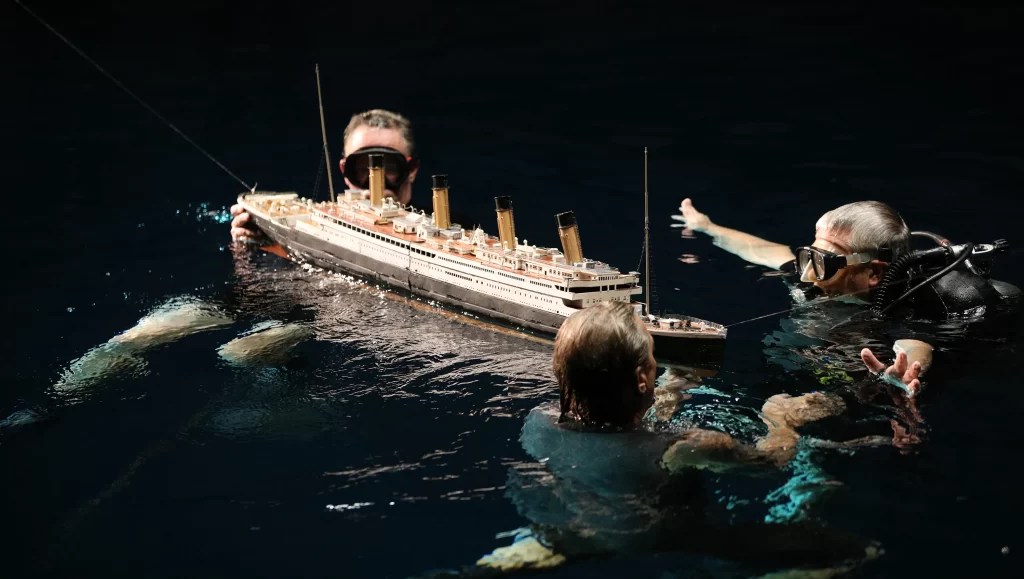
Pearl Harbor is the most literal manifestation of that impulse. Rather than approaching Pearl Harbor as a geopolitical or military subject, the film reframes the attack as the backdrop for a tragic romance among three fictional (or heavily fictionalized) leads:

- Rafe McCawley (Ben Affleck): the daring fighter pilot
- Danny Walker (Josh Hartnett): his loyal best friend
- Evelyn Johnson (Kate Beckinsale): the naval nurse who loves them both


The emotional architecture of the movie is built not on the impending attack, but on this love triangle. As a result, the film’s first hour plays like a glossy period romance — sepia-toned lighting, swing dancing, sunsets, and all — before the war intrudes with explosive fury.


Romanticization vs. Complexity
The film’s cinematic language is that of heroic individualism, not historical inquiry. Characters deliver speeches about destiny, courage, and sacrifice in prose that rarely resembles the lived experience of 1941 military personnel. Nurses speak like magazine heroines; pilots like action figures. The war appears as a test of love rather than a geopolitical catastrophe.

This approach isn’t inherently unethical — fictional stories set during real events can still illuminate truth — but Pearl Harbor often reduces a multilayered historical tragedy to a romantic tableau. Many critics noted that the film treats the attack less as a historical moment and more as an opportunity for visual spectacle, pushing emotional authenticity to the margins.

The Real Timeline of the Attack on Pearl Harbor
One of the film’s most visually impressive accomplishments is also one of its most compressed narrative sequences: the attack on Pearl Harbor, shown in a nearly 40-minute set piece that unfolds like a meticulously composed barrage of explosions, plane dives, and slow-motion devastation.
To evaluate its accuracy, we must first outline the actual historical timeline.
December 7, 1941: What Actually Happened

6:00 a.m. – Japanese strike force launches.

The Imperial Japanese Navy, operating from a carrier task force north of Hawaii, dispatches the first wave of aircraft — bombers, torpedo planes, and fighters.
7:02 a.m. – Radar detection ignored.

Privates Joseph Lockard and George Elliott detect incoming aircraft on the Opana radar station but are told it is likely American B-17s arriving from California.
7:48 a.m. – First wave begins the attack.

The first bombs fall on Wheeler Field and Hickam Field; torpedo planes strike Battleship Row.
8:00–8:10 a.m. – Battleship Row hit hardest.

The USS Arizona explodes after a bomb detonates its forward magazines, killing 1,177 crew members. The Oklahoma capsizes.
8:54 a.m. – Second wave begins.
![The attack on Pearl Harbor[nb 3] was a surprise military strike by the Empire of Japan on the United States Pacific Fleet at its naval base at Pearl Harbor on Oahu, Hawaii, on December 7, 1941. At the time, the U.S. was a neutral country in World War II. The air raid on Pearl Harbor, which was launched from aircraft carriers, resulted in the U.S. declaring war on Japan the next day. The Japanese military leadership referred to the attack as the Hawaii Operation and Operation AI,[nb 4] and as Operation Z during its planning.[14][15][16] The attack on Pearl Harbor was preceded by months of negotiations between the U.S. and Japan over the future of the Pacific. Japanese demands included that the U.S. end its sanctions against Japan, cease aiding China in the Second Sino-Japanese War, and allow Japan to access the resources of the Dutch East Indies. Japan sent out its naval attack group on November 26, 1941, just prior to receiving the Hull note, which stated the U.S. desire that Japan withdraw from China and French Indochina. Isoroku Yamamoto, commander of the Japanese Combined Fleet, planned the attack as a pre-emptive strike on the Pacific Fleet, based at Pearl Harbor since 1940 in order to prevent it from interfering with Japan's planned actions in Southeast Asia. Yamamoto hoped that the strike would enable Japan to make quick territorial gains and negotiate peace. In addition to Pearl Harbor, over seven hours Japan launched coordinated attacks on the U.S.-held Philippines, Guam, and Wake Island; and on the British Empire in Malaya, Singapore, and Hong Kong.[17] The attack force, commanded by Chūichi Nagumo, began its attacks at 7:48 a.m. Hawaiian time (6:18 p.m. GMT) on December 7, 1941.[nb 5] The base was attacked by 353 fighters, level and dive bombers, and torpedo bombers in two waves launched from six aircraft carriers.[18] Of the eight U.S. battleships present, all were damaged and four were sunk. All but Arizona were later raised, and six were returned to service during the war. The Japanese also sank or damaged three cruisers, three destroyers, an anti-aircraft training ship,[nb 6] and a minelayer. More than 180 U.S. aircraft were destroyed.[20] A total of 2,403 Americans were killed and 1,178 others were wounded, while the Japanese lost a total of 29 aircraft, five midget submarines, and 130 men. The three U.S. carriers stationed at Pearl Harbor were at sea at the time, and important base installations, including its oil storage and naval repair facilities, were not attacked. Japan declared war on the U.S. and the British Empire later that day (December 8 in Tokyo), but the declarations were not delivered until the next day. On December 8, both the United Kingdom and U.S. declared war on Japan. On December 11, though they had no formal obligation to do so under the Tripartite Pact with Japan, Germany and Italy each declared war on the United States, which responded with a declaration of war against Germany and Italy. While there were historical precedents for unannounced military action by Japan, the lack of a formal warning and perception that the attack had been unprovoked led U.S. president Franklin D. Roosevelt to famously label December 7, 1941, "a date which will live in infamy". The attack was the deadliest event ever in Hawaii,[21] and the deadliest foreign attack on the U.S. until the September 11 attacks of 2001.](https://i0.wp.com/moviestohistory.com/wp-content/uploads/2025/12/IMG_8392.jpg?resize=525%2C404&ssl=1)
Another assault targets airfields, ships, and infrastructure.
9:45 a.m. – Attack ends.

More than 2,400 Americans are dead; nearly 200 aircraft destroyed; eight battleships damaged or sunk.
Reel vs. Real: What the Film Gets Right
While Pearl Harbor takes dramatic liberties, some elements of the attack are depicted with surprising care:
1. The Japanese Planning and Strategy

The film accurately portrays Admiral Yamamoto’s role in designing the operation, including his reluctance and fear of awakening “a sleeping giant.” The tactical structure of the attack — first wave targeting battleships and airfields, second wave completing damage — is broadly accurate.
2. The Devastation of the Arizona
The film correctly shows the catastrophic magazine explosion, one of the most traumatic moments of the attack.
3. Confusion and Communication Failures
The radar warning that went ignored? That happened.
The lack of readiness? Also historically accurate.
The misinterpretation of incoming aircraft? Exactly as recorded.
4. Heroism of Individual Servicemen


Though the film dramatizes many acts, real heroism that morning was widespread:
- Dorie Miller, a Navy mess attendant, manned a machine gun and received the Navy Cross.
- Pilots George Welch and Kenneth Taylor scrambled their planes and downed Japanese aircraft — the real-life inspiration for the film’s Rafe and Danny.
The film captures the chaos, bravery, and shock of these moments, even if through fictionalized characters.
What the Film Gets Wrong — or Remixes for Drama
Where Pearl Harbor takes liberties, it does so boldly.
1. Rafe and Danny Are Not Real

Though loosely inspired by Welch and Taylor, Rafe and Danny bear almost no resemblance to actual servicemen involved in the attack:

- Welch and Taylor did scramble their fighters despite being off-base.
- They did engage Japanese planes.
- But they were not part of a romantic melodrama, did not fly Spitfires in Britain, and were not entangled in cinematic heroics of the type depicted here.
The film elevates myth over biography, and individual fictional heroism over the collective reality of 1941 military life.
2. Evelyn Is a Composite Nurse Archetype

Evelyn is not based on a single historical figure.
She represents a generalized ideal of wartime femininity — poised, beautiful, competent, and defined primarily through her romantic relationships.
This is Hollywood’s “nurse as narrative vessel” archetype: the woman through whom male heroism is emotionalized.
3. The Love Triangle Overshadows the Attack

The film rearranges chronology to heighten emotional stakes:
- Rafe’s decision to volunteer for the Eagle Squadron? Fiction.
- His supposed death over the English Channel? Fiction.
- Danny and Evelyn’s relationship timed to coincide with the attack? Dramatic invention.
These distortions shift the film’s focus from national tragedy to personal melodrama.
4. The Doolittle Raid Is Dramatized as a Sequel
Pearl Harbor concludes with the 1942 Doolittle Raid — James Doolittle’s bombing mission over Tokyo. While historically important, its role in the film is symbolic rather than explanatory. The raid is presented as an emotional payoff to the attack, turning history into a narrative arc rather than a series of interconnected wartime strategies.
5. Geographic and Tactical Exaggerations
The film’s aircraft maneuvers, flight paths, and timing compress hours of action into minutes.
Explosions are heightened for cinematic clarity.
The dazzle of fireballs often overrides the raw, brutal realism of the actual devastation.
Composite Characters: Rafe, Danny, Evelyn
Rafe McCawley — The Cowboy Ace

Rafe embodies the archetype of the “daredevil American pilot.” His character owes far more to Hollywood tradition than to historical servicemen. The Eagle Squadron subplot — Americans volunteering to fly with the British — is real, but Rafe’s involvement in it is not.
Danny Walker — The Loyal Friend

Danny is constructed as the emotional counterweight to Rafe: grounded where Rafe is impulsive, gentle where Rafe is fiery. As a composite, he draws on traits seen in dozens of WWII fighter pilots but is not traceable to any singular figure.
Evelyn Johnson — The Wartime Angel

Evelyn’s purpose is thematic, not historical:
She gives war a human face, softens the film’s brutality, and amplifies the emotional stakes. Her character is emblematic of how Hollywood uses women to provide moral clarity rather than to explore their actual wartime experiences.
Are Composite Characters Ethical?

Composite characters aren’t inherently unethical. They can reveal emotional truth when used with care.
But in Pearl Harbor, composites become substitutes for real history, not vehicles for interpreting it. The fictionalization is so pervasive that the authentic complexity of 1941 becomes blurred.
Ethical Portrayals of Real Tragedy
The Problem of Aestheticizing Trauma

One of the core ethical critiques of Pearl Harbor is its visual style:
The attack is depicted with painterly slow motion, glimmering sunlight, and precision-engineered explosions. The carnage is undeniably spectacular — perhaps too spectacular.
Many historians and critics argued that the film prettifies the tragedy, smoothing real violence into a digestible — and at times thrilling — action sequence.
Victims Become Background Texture

The attack claimed thousands of lives.
Yet the film treats many of those deaths as spectacle rather than loss. Slow-motion shots of men thrown into the air by explosions, or nurses running through fire-lit chaos, serve as emotional punctuation rather than as human stories.
Hollywood Catharsis vs. Historical Responsibility

By ending with a triumphant depiction of the Doolittle Raid, Pearl Harbor frames the tragedy as a stepping-stone to American resilience and revenge. This reframes December 7 as the beginning of a heroic comeback story, reinforcing a mythic, rather than historical, narrative of World War II.
How the Film Shaped 21st-Century American Memory of WWII
Pearl Harbor arrived in 2001 — just months before another national tragedy would redefine American identity: the attacks of September 11.
The timing meant the film took on unexpected symbolic resonance.

1. The Blockbuster Memory Model

For many Americans born after the 1970s, Pearl Harbor served as their most vivid dramatization of the event. Visual memories of WWII were — at least for a younger audience — filtered through Bay’s aesthetic.
This is not trivial. Historical memory often follows the dominant cinematic portrayal.
2. The Emotional Framing of WWII as a Story of Heroic Innocence

The film’s narrative reinforces a cultural idea of America’s prewar innocence, shattered by a surprise attack, and redeemed through courage. This aligns strongly with post-9/11 patriotic narratives.
3. The Rise of the “Spectacle War Film”
![Directed by Roland Emmerich Written by Wes Tooke Produced by Roland Emmerich Harald Kloser Starring Ed Skrein Patrick Wilson Luke Evans Aaron Eckhart Nick Jonas Etsushi Toyokawa Tadanobu Asano Luke Kleintank Jun Kunimura Darren Criss Keean Johnson Mandy Moore Dennis Quaid Woody Harrelson Cinematography Robby Baumgartner Edited by Adam Wolfe Music by Thomas Wander Harald Kloser Production companies Centropolis Entertainment AGC Studios Ruyi Films Starlight Culture Entertainment Street Entertainment Entertainment One The Mark Gordon Company[1] Bona Film Group Distributed by Lionsgate (United States; under Summit Entertainment) Elevation Pictures (Canada)[2] Huaxia Film Distribution (China)](https://i0.wp.com/moviestohistory.com/wp-content/uploads/2025/12/Midway--691x1024.jpg?ssl=1)

Pearl Harbor helped cement a trend: war movies built not around historical interpretation but around immersive destruction. Later films like Midway (2019) and Hacksaw Ridge (2016) would blend spectacle with historical storytelling, but Bay’s influence — high gloss, emotional simplification — remains unmistakable.
4. Critics vs. Audiences: A Split Legacy

Critically, the film was derided.
Audience reception, however, was far warmer.
For many viewers, Pearl Harbor became an entry point into WWII history — problematic, yes, but culturally potent.
Historians’ Critiques & Pop-Culture Legacy
Historians’ Major Concerns

Professional historians frequently cite:
- Distortion of chronology
- Creation of fictional heroes at the expense of real ones
- Melodramatic framing of real suffering
- Ignoring political and military context
- Imposing modern romantic tropes on 1940s characters
The film rarely engages with Japan’s motivations, U.S. diplomatic missteps, or the broader Pacific theater. It is history flattened into set dressing.

Yet the Film Endures

Despite criticisms, Pearl Harbor remains:
- A cultural touchstone of early-2000s cinema
- A visual introduction to WWII for younger generations
- A conversation starter about representation, remembrance, and responsibility
![The soundtrack to Pearl Harbor on Hollywood Records was nominated for the Golden Globe Award for Best Original Score (Moulin Rouge! won).[80] The original score was composed by Hans Zimmer. The song "There You'll Be" was nominated for the Academy Award and Golden Globe Award for Best Original Song. All tracks are written by Hans Zimmer. No. Title Length 1. "There You'll Be" (performed by Faith Hill) 3:40 2. "Tennessee" 3:40 3. "Brothers" 4:04 4. "...And Then I Kissed Him" 5:37 5. "I Will Come Back" 2:54 6. "Attack" 8:56 7. "December 7th" 5:08 8. "War" 5:15 9. "Heart of a Volunteer" 7:05 Total length: 46:21 Certifications Region Certification Certified units/sales United Kingdom (BPI)[81] Silver 60,000^ United States (RIAA)[82] Gold 500,000^ ^ Shipments figures based on certification alone. See also](https://i0.wp.com/moviestohistory.com/wp-content/uploads/2025/12/ab67616d0000b273088f10626ed0592f4a4a9b72.jpeg?resize=525%2C525&ssl=1)
Its soundtrack, score, and key images remain iconic.

Its love story, while historically irrelevant, found a lasting emotional audience.
It continues to circulate in memes, nostalgia threads, and YouTube retrospectives.
Like many flawed historical films, Pearl Harbor is both damaging and influential — both mythmaking and mythologically powerful.
Accuracy Meter: Reel vs. Real
Overall Accuracy Score: 42%

Breakdown:
| Category | Reel | Real | Notes |
|---|---|---|---|
| Attack chronology | ★★★★☆ | Mostly accurate | Timelines compressed but broadly faithful |
| Character accuracy | ★☆☆☆☆ | Mostly fictional | Rafe, Danny, Evelyn are composites with little basis in reality |
| Military strategy depiction | ★★★☆☆ | Partially accurate | Japanese planning accurate; American response stylized |
| Emotional realism | ★★☆☆☆ | Limited | Romance dominates historical authenticity |
| Ethical responsibility | ★★☆☆☆ | Uneven | Tragedy aestheticized; focus shifted to melodrama |
| Cultural legacy | ★★★★☆ | Significant | Shaped public memory, though not always faithfully |
A Film of Contradictions
Pearl Harbor is a paradox:
A film about tragedy that chooses beauty;
A film about history that chooses myth;
A film about war that chooses romance.
Its ambition is enormous; its execution uneven; its cultural impact undeniable.

For historians and historically minded viewers, the film is a reminder of Hollywood’s power not just to entertain, but to shape memory. It shows how spectacle can obscure complexity, how composite characters can displace real ones, and how national trauma can be rerouted into narrative catharsis.

Yet Pearl Harbor also serves another purpose: it provokes questions. It inspires debate. It invites viewers to seek the truth beyond the screen.
And in that sense — however accidentally — it may be one of the most important history-on-screen case studies of the 21st century.

Pearl Harbor is available now with a subscription to HBO Max...
