Skip to content
CONNECT WITH US
https://moviestohistory.com/wp-content/uploads/2022/03/cropped-d3d0f4de5c874cf7a06b2f50e0bc7820-2-10.png

Movies To History.com

  • Home
  • About
  • Featured Film Blog
    • Film Critiques
    • Film Reviews
    • FIlm Recommendations
    • Video
  • Featured Television Blog
    • Television Critiques:
    • Television Reviews:
    • Television Recommendations:
    • Image
    • Video
  • Blog Posts
  • Contact Us
  • Subscribe
  • Oscar History
  • Top Ten List
Close Button

Television Critiques:

FEBRUARY 2023:

Genre: Crime drama, and Western, Created by Taylor Sheridan, Starring: Helen Mirren, Harrison Ford, Brandon Sklenar, Julia Schlaepfer, Jerome Flynn, Darren Mann, Isabel May, Brian Geraghty, Aminah Nieves, Michelle Randolph, Timothy Dalton, Narrated by Isabel May, with Composers: Brian Tyler, and Breton Vivian, Country of origin: United States, Original language: English, No. of seasons: 1, No. of episodes: 8, Executive producers: Taylor Sheridan, John Linson, Art Linson, David C. Glasser, Ron Burkle, Bob Yari, and Ben Richardson, with Cinematography by Corrin Hodgson, Ben Richardson, and Robert McLachlan, with Editors: Chad Galster, Byron Smith, Christopher Gay, Brooke Rupe, and Todd Desrosiers, Running time: 47–69 minutes, Production companies: 101 Studios, Linson Entertainment, Bosque Ranch Productions, and MTV Entertainment Studios Release, Original network: Paramount+. (2022-)
1923 (2022-)

THE REAL YEAR IN HISTORY…

In 1923, America was undergoing significant changes and progress on various fronts. The Roaring Twenties were in full swing, marked by a booming economy, cultural shifts, and technological advancements. The significance of this year in history is rooted in the continuation of post-World War I transformation and the shaping of modern American society.

The Calendar year of 1923 in scroll form. Phot Credit: Day of the Week.org
This map of the Discoveries and Settlements in Canada and the United States was produced by Rand McNally and Co. as part of its Commercial Atlas of America. These maps are some of our favorite maps because of the large size of each map sheet. The detail shown on each map is exceptional because of the map size. These maps were intended to be used by business for shipping. There is more detail on these maps than any others during this time period. Size: 19.50 x 12.50 inches Condition: Very Good Map Maker: Rand McNally and Company Coloring: Printed Color Year: 1923
A photo of the roaring twenties from Audibile.com and their "Hourly History." Photo Credit: Audible.com
Timeline fo the Roaring 20s: 1922: There are 60 radio stations broadcasting news, weather, and more. 1923: Stock Market begins a six-year bull run. 1925: More than 25% of families own a car. 1926: The Air Commerce Act authorizes commercial airlines. 1928: Stock prices rise to 39%; Fed raises discount rate from 3.5% to 5% to stop speculation. 1929: There are 26 million cars registered and $1 billion spent on roads by the end of the decade. 1929: Number of people flying increases from 6,000 to 173,000 from 1926. 1929: Great Depression begins in August. 1929: Stock Market crashes in October. Photo Credit: The Balance
Construction work underway on the 120 Wall Street building in the Financial District of Lower Manhattan in New York City, New York, circa 1929. Designed by architect Ely Jacques Kahn - of Buchman & Kahn - the 34-storey skyscraper is on the eastern stretch of Wall Street. Photo Credit: Three Lions/Hulton Archive/Getty Images
A vintage postcard featuring hop pickers taking a break in Kent, circa 1922. Photo Credit: Paul Popper/Popperfoto via Getty Images
View of American inventor and Dubilier Condenser & Radio Corporation founder William Dubilier (1888 - 1969) (left) and the company's chief engineer Harry William Houck (1896 - 1989) as they demonstrate the 'Super-Ducon Capacitor' (a component used in radio sets), New York, New York, 1924. Photo Credit: Soibelman Syndicate Collection/Visual Studies Workshop/Getty Images
(Eingeschränkte Rechte für bestimmte redaktionelle Kunden in Deutschland. Limited rights for specific editorial clients in Germany.) Switzerland Genf-Kanton Geneve Geneva: Post-World War I era Commission of the League of Nations discussing the Silesian question; on the table from the left: Wellington Koo (China), Quinones de Leon (Spain), Imperiali (Italy), Bourgeois (France), President Ishii (Japan), the General Secretary of the League, Drummond, and Balfour (both Great Britain), Hymans (Belgium), and Gastao da Cunha (Brazil) - 1921 - Vintage property of ullstein bild Photo Credit: ullstein bild/ullstein bild via Getty Images
Dutch American artist Willem de Kooning (1904 - 1997) (center, with light hair) speaks with author Noel Clad (1923 - 1962) and his wife at the top of a stoop (88 East 10th Street) next door to the Tanager Gallery (the storefront above the 'Bar' sign) on 10th Street, New York, New York, April 5, 1959. Photo Credit: Fred W. McDarrah/MUUS Collection via Getty Images

Economically, the country experienced a period of prosperity, driven by increased industrialization, urbanization, and consumerism. The stock market was on the rise, contributing to the growth of the middle class and the new consumer culture. This economic affluence laid the foundation for the decade’s reputation as a time of excess and opulence.

"Watch Your Step!" political cartoon, Los Angeles Times, Nov. 14, 1925. Photo Credit: Los Angeles Times
What were the key reasons why the 1920s was a period of prosperity during the 1920s? 1. America's natural resources 2. Impact of the First World War 3. growth of mass production 4. Growth of the car industry 5. Consumerism 6. Advertising and hire purchase 7 The economic polices of government Photo Credit: Google Images
People, Factories, pic: circa 1920's, The cigar making floor of a cigar factory at Tampa, Florida, USA. Photo Credit: Popperfoto via Getty Images/Getty Images
Urbanization of the 1920s. Photo Credit: Google Images
A view down Broadway, Los Angeles, California, 1924. Photo Credit: American Stock Archive/Hulton Archive/Getty Images
(Original Caption) Picture shows pioneer, Henry Ford, seated in one of his automobiles made during the early 1900s. Undated image circa 1920s. Photo Credit: Getty Images
A New Orleans, Louisiana advertisement circa 1920s for Ford Cars through the Russell Motor Car Co. Photo Credit: Google Images
What it Took to Get to the Roaring 20s: 1. Stock Market Closes for 4 Months in 1914. 2. World War I from 1914 to 1918. 3. Spanish Flu Pandemic from 1918 to 1919. 4. Post War and Flu Recession from 1918 to 1919. 5. The Depression of 1920 that lasted until 1921 6. From 1922 to 1929 the Dow Rises 500% Photo Credit: Google Images
A party scene from the 1920s from the Hulton-Deutsch Collection/CORBIS. Photo Credit: The Guardian

Culturally, the 1920s saw a rebellion against traditional norms. The Jazz Age emerged, with jazz music becoming wildly popular and symbolizing the spirit of the era. Flapper culture challenged societal expectations for women, promoting a more liberated lifestyle characterized by shorter hemlines, bobbed hair, and a carefree attitude. Literature also flourished with the works of authors like F. Scott Fitzgerald, whose novel The Great Gatsby captured the essence of the times.

(Original Caption) Jazz Band and Flapper. Benny Krueger's band plays on the beach at Brighton Beach in Brooklyn as girl dances on the piano. Photo Credit: Getty Images
A photographic montage from the 1920's showing a jazz saxophonist accompanying a group of charleston dancers. Photo Credit: © Hulton-Deutsch Collection/CORBIS/Corbis via Getty Images
Scene from the first Hollywood film with sound, referred to back then as a "talkie," The Jazz Singer, 1927. Photo Credit: John Springer Collection/CORBIS/Corbis via Getty Images
Although it only had a lifespan of four years, King Oliver's Creole Jazz Band was one of the most influential early jazz bands. Left to right, the members are: Baby Dodds, drums; Honore Dutrey, trombone; King Oliver (seated), lead trumpet; Bill Johnson, banjo; Johnny Dodds, clarinet; Louis Armstrong, second trumpet; and Lil Hardin, piano. Photo Credit: © CORBIS/Corbis via Getty Images
Ma Rainey Georgia Jazz Band poses for a studio group shot by JP Jazz Archive, 1924-25. Photo Credit: Rolling Stone Magazine
Women circa 1920s in Flapper attire. Photo Credit: Google Images
Actress Louise Brooks dressed in Flapper attire. (1927) Photo Credit: Google Images
Flappers dancing while musicians perform during a Charleston dance contest at the Parody Club, New York City, 1926. Photo Credit: History.com
circa 1925: American author F Scott Fitzgerald (1896 - 1940) wearing a tweed suit. Photo Credit: Hulton Archive/Getty Images
The Great Gatsby by F. Scott Fitzgerald. Charles Scribner’s Sons, 1925. Photo Credit: Christie’s

Technologically, 1923 witnessed advancements that would shape the future. Radio broadcasting gained traction, enabling widespread communication and entertainment. The Hollywood film industry continued to grow, solidifying its influence on global pop culture. The first prototype of the television was also demonstrated, foreshadowing its transformative impact on communication and entertainment in the coming decades.

View of engineers ER Cullen (left) and George McElrath at the National Broadcasting Company (NBC) as they test radio broadcast equipment, Washington DC, March 4, 1929. The equipment was to be used in broadcasting of the inauguration of President Herbert Hoover. Photo Credit: Soibelman Syndicate Collection/Visual Studies Workshop/Getty Images
A couple (Joan Pickering and Theums Nell) listening to an early Marconi wireless set, 1923. Photo Credit: E. O. Hoppe/Getty Images
2nd November 1920: The broadcast staff of KDKA Radio reporting on the Harding - Cox election returns in the station, Pittsburgh, Pennsylvania. The station's coverage gave birth to modern broadcasting. The staff included operator William Thomas, announcer L. H. Rosenberg, and telephone line handlers R.S. McClelland and John Frazier. Photo Credit: Hulton Archive/Getty Images
Costumed performers during a radio broadcast of "The Great Divide" at the General Electric owned WGY radio station. Photo Credit: Schenectady Museum; Hall of Electrical History Foundation/CORBIS/Corbis via Getty Images
The Hollywoodland sign in Los Angeles marking the centre of America's film and television industries. It was later changed to read 'Hollywood'. Photo Credit: MPI/Getty Images
American film director Dorothy Arzner (1897 - 1979) and Alfred Gilks, her cinematographer, survey a scene as they stand by a camera on the set of her film, 'Get Your Man'. Arzner is leaning on the camera and holding a combination megaphone and viewfinder. She was Hollywood's only female director of the Thirties. Photo Credit: Hulton Archive/Getty Images
Douglas Fairbanks (1883 - 1939) and Mary Pickford (1892 - 1979) saying farewell to Charlie Chaplin (1889 - 1977) as he departs for England. Photo Credit: Hulton Archive/Getty Images
Directed by William A. Wellman, Written by Titles: Julian Johnson, Screenplay by Hope Loring, and Louis D. Lighton, Story by John Monk Saunders, Produced by Lucien Hubbard, Adolph Zukor, Jesse L. Lasky, B.P. Schulberg, and Otto Hermann Kahn, Starring: Clara Bow, Charles (Buddy) Rogers, Richard Arlen, Gary Cooper, with Cinematography by Harry Perry, and Edited by E. Lloyd Sheldon, and Lucien Hubbard (uncredited), with Music by J.S. Zamecnik (uncredited), Production company: Paramount Famous Lasky Corporation, Distributed by Paramount Famous Lasky Corporation. (1927)
Rear view of a traditional family group (father and mother sitting in armchairs either side of a young girl sitting on a pouffe and a young boy sitting on the floor) all facing a television set in a living room, 1950. Photo Credit: Keystone Features/Hulton Archive/Getty Images

Politically, the aftermath of World War I was still being felt. The U.S. signed the Knox-Porter Resolution, officially ending its state of war with Germany. However, isolationist sentiment prevailed, leading to the United States’ decision to join the League of Nations.

Soldiers in the streets circa 1920s after Knox Porter Resolution. Photo Credit: Google Images
The Knox–Porter Resolution (42 Stat. 105) was a joint resolution of the United States Congress signed by President Warren G. Harding on July 2, 1921, officially ending United States involvement in World War I. The documents were signed on the estate of Joseph Sherman Frelinghuysen, Sr. in Raritan, New Jersey. Photo Credit: Google Images
The League of Nations (French: Société des Nations [sɔsjete de nɑsjɔ̃]) was the first worldwide intergovernmental organisation whose principal mission was to maintain world peace. It was founded on 10 January 1920 by the Paris Peace Conference that ended the First World War. The main organization ceased operations on 20 April 1946 when many of its components were relocated into the new United Nations. The League's primary goals were stated in its Covenant. They included preventing wars through collective security and disarmament and settling international disputes through negotiation and arbitration. Its other concerns included labour conditions, just treatment of native inhabitants, human and drug trafficking, the arms trade, global health, prisoners of war, and protection of minorities in Europe. The Covenant of the League of Nations was signed on 28 June 1919 as Part I of the Treaty of Versailles, and it became effective with the rest of the Treaty on 10 January 1920. The first meeting of the Council of the League took place on 16 January 1920, and the first meeting of the Assembly of the League took place on 15 November 1920. In 1919, U.S. president Woodrow Wilson won the Nobel Peace Prize for his role as the leading architect of the League. Photo Credit: Google Images
UNITED STATES - SEPTEMBER 24: First sitting of the League of Nations Council after the admission of Germany. Left to right (starting with the fifth from the left) Stresemann, Germay; Scialoja, Italy; M. Briand, France; Benes, Czechoslovakia; Sir Drummond, England; Chamberlain, England; Ishii, Japan; and M. de Brouchere, Belguim. Photo Credit: NY Daily News Archive via Getty Images
The New York Times Front Page on November 11, 1918 discussing the League of Nations. Photo Credit: New York Times

In the American West, 1923 was a year characterized by both continuity and change in historical developments. The region continued to grapple with its unique challenges and opportunities, while also being influenced by broader national trends.

"Riding Herd on Way to Highlands" This is an original 1923 sepia rotogravure of a cowboy herding Hereford cattle in the American West. Photo Credit: Google Images

Economically, the West remained closely tied to its traditional industries such as agriculture, mining, and ranching. The agricultural sector faced fluctuating fortunes due to weather conditions and market demands. The demand for minerals and resources led to ongoing mining activities, while the expansion of transportation networks like railroads facilitated the movement of goods to and from the region.

Harris & Ewing, "Farm," between 1915 and 1923. Phot Credit: Google Images
1923 Amazon Dixie Miners Sildex Montana. Photo Credit: Google Images
Near Bognor, 1860. From The Connoisseur Vol LXV [Otto Limited, London, 1923.] Photo Credit: The Print Collector/Getty Images
The Late Snowstorm of May 9-10, 1923 in West Virginia. Photo Credit: google Images
September 21, 1923, 9:00 a.m. --- Colorado River at Lees Ferry. From right bank on line with Klohr's house and gage house. Old "Dugway" or inclined gage shows to left of gage house. Gage height 11.05', discharge 27,000 cfs. Lens 16, time =1/25, camera supported. Photo by G.C. Stevens of the USGS. Photo Credit: 1921-1937 Surface Water Records File, Colorado R. @ Lees Ferry, Laguna Niguel Federal Records Center, Accession No. 57-78-0006, Box 2 of 2 , Location No. MB053635.
UNITED STATES - CIRCA 1924: Harpers Ferry Bridges, one with a Coca Cola sign, traverse the Shenandoah river and lead to a tunnel in the Mountain Photo Credit: Buyenlarge/Getty Images
Steel grain car, Canada, c1920s. Cigarette card produced by the Westminster Tobacco Co Ltd, Canada 2nd series. Photo Credit: The Print Collector/Print Collector/Getty Images

Socially, the West was experiencing its own version of the societal shifts occurring nationwide. While some areas maintained conservative values and ways of life, urban centers in the West were not immune to the cultural changes of the Roaring Twenties. Jazz music and the flapper culture also found their way into Western cities, contributing to the region’s evolving identity.

First-Class Train Cabin circa 1920s. Photo Credit: Google Images
King & Carter Jazzing Orchestra in Houston in 1921. Photo Credit: Google Images

Environmental concerns were also gaining attention in the West during this time. Conservation efforts led by figures like President Theodore Roosevelt were still relevant, as the region’s natural resources faced increasing pressure from industrialization and development.

Teddy Roosevelt with John Muir at Glacier Point, Yosemite. Photo Credit: Library of Congress
Teddy Roosevelt with John Burroughs. Photo Credit: Library of Congress

Additionally, Native American communities in the West were grappling with ongoing challenges related to land rights, cultural preservation, and the impacts of federal policies. Efforts to preserve traditional ways of life were often met with resistance as the push for assimilation persisted. The forced assimilation policy of education and allotment of reservations was forcing Native Americans toward disaster, while the schools’ indigenous children were forced into American culture and religion, with the American Indian Boarding Schools, run by Catholic institutions through contracts with the U.S. government looking to remove them of their cultural signifiers by cutting their hair, having them wear American-style uniforms, forbidding them from speaking their native language and replacing their tribal names with English names, often biblical in nature. 

UNITED STATES - CIRCA 1923: Four Native American Chiefs in Traditional Clothing and Feathered Bonnet Photo Credit: Buyenlarge/Getty Images
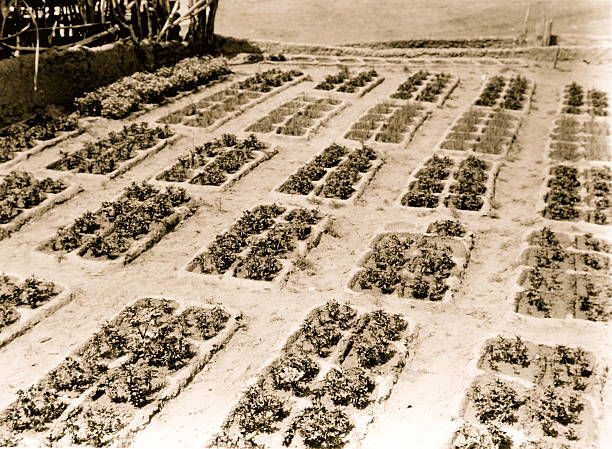
UNITED STATES - CIRCA 1927: Zuni gardens Photo Credit: Buyenlarge/Getty Images
UNITED STATES - CIRCA 1923: Two native American men, one in traditional dress seated in front of a teepee village Photo Credit: Buyenlarge/Getty Images
Federal Policies involving allotments of Reservations in the United States. Photo Credit: Google Images
An Indian child before and after forced assimilation circa 1920s. Photo Credit: Google Images
American Indian Boarding School circa 1920s. Photo Credit: Britanicca

In 1923, America found itself at a crossroads, grappling with various significant events that would shape the nation’s trajectory for years to come. These events included the ongoing Prohibition era, drought conditions, the eventual 1929 stock market crash, and the beginnings of the Great Depression.

Prohibition photo of Jefferson Liquor Company storefront with customers circa 1918, (Probably) 15 North Liberty Street, Baltimore, Maryland.

Photo Credit: Unidentified photographer. Photo provided by:
Maryland Historical Society.
North Dakota Drought circa 1920s. Photo Credit: Google Images
The Brooklyn Daily Eagle front page on October 24, 1929, discussing the 1929 Stock Market Crash that resulted in the Great Depression. Photo Credit: Google Images
Children carry picket signs at a demonstration for the Workers Alliance during the Great Depression. Minnesota Historical Society/CORBIS/Corbis via Getty Images

Prohibition (1920-1933): The Prohibition movement, enacted by the 18th Amendment in 1920, sought to ban the production, sale, and distribution of alcoholic beverages. While intended to reduce societal issues associated with alcohol, such as crime and public health concerns, Prohibition led to unintended consequences. Illegal underground speakeasies flourished, organized crime syndicates grew in power, and law enforcement struggled to enforce the ban effectively.

Prohibition era America circa 1920s. Photo Credit: Popperfoto via Getty Images/Getty Images
The 18th Amendment outlawed the sale, purchase and distribution of alcohol in America. Photo Credit: Google Images
A newspaper announces the passing of the 18th Amendment with a vote of 141 Democrats and 137 Republicans evenly diving the vote for outlawing alcohol in America. Photo Credit: Library of Congress
While bartender prepares a drink the patrons enjoy themselves at this popular unidentified speakeasy, a haven for drinkers during prohibition in the 1920s. Photo Credit: Time Magazine
1932, New York, USA, A picture of American prohibition-time gangster Al Capone who operated from Chicago Photo Credit: Popperfoto via Getty Images/Getty Images
Social History, Drink, Alcohol, pic: 1921, USA, American state troopers unload captured drink/liquor during America's prohibition era  

Photo Credit: Popperfoto via Getty Images/Getty Images

Drought and Agricultural Challenges: The early 1920s witnessed a series of severe droughts that affected large parts of the United States. Particularly devastating was the Dust Bowl, a prolonged drought combined with poor agricultural practices that resulted in massive dust storms and agricultural failures across the Great Plains. These challenges led to economic hardships for farmers, exacerbating the impact of other national issues.

"The Weather of 1925 in the United States" Monthly Weather Review, December 1925. Photo Credit: Google Images
Budreau Farm Harvesting. 1927. From the collection of Foltz Photography Studio, MS 1360. Photo Credit: Georgia Historical Society
A dust storm approaching Rolla, Kansas. Photo Credit: Franklin D. Roosevelt Library Digital Archives
A farmer and his two sons during a dust storm in Cimarron County, Oklahoma. Iconic photo entitled "Dust Bowl Cimarron County, Oklahoma" taken by Arthur Rothstein. Photo Credit: Google Images
Inmates in the Great Plains being used for agricultural and drought challenges during the 1920s. Photo Credit: Google Images

Wall Street Crash of 1929 and the Great Depression: While the stock market crash occurred in 1929, its roots can be traced back to the economic shifts of the 1920s. The Roaring Twenties were characterized by economic prosperity, consumerism, and a booming stock market. However, this period of growth was fueled in part by speculative investments and excessive credit. On October 29, 1929, known as Black Tuesday, the stock market collapsed, leading to a severe and prolonged economic downturn known as the Great Depression.

Inside the New York Stock Exchange on October 59, 1929, Black Tuesday. Photo Credit: Google Images
A title card for "The Roaring Twenties'" Photo Credit: Google Images
An article on "Black Tuesday" by Barbara Silberdick Feinberg about the Stock Market Crash on October 29, 1929. Photo Credit: Google Images
Outside the New York Stock Exchange on October 29, 1929, Black Tuesday. Photo Credit: White/NY Daily News Archive via Getty Images
Messengers from brokerage houses seem unconcerned as they crowd around a hard-to-obtain newspaper after the first Wall Street stock market crash on October 29, 1929. Photo Credit: Eddie Jackson/NY Daily News Archive via Getty Images
An American in 1929 after the Wall Street crash on October 29, 1929 trying to sell their Ford Roadster for money. Photo Credit: Google Images
A view of men gathered in a common sleeping area during the Great Depression in Cincinnati, ca.1930s. Photo Credit: Paul Briol/Cincinnati Museum Center/Getty Images

In conclusion, 1923 marked a pivotal year in American history, reflecting the ongoing societal and cultural shifts of the Roaring Twenties. The era’s economic prosperity, cultural rebellion, technological innovation, and evolving political landscape collectively shaped the modern identity of the United States. The American West in 1923 was experiencing a blend of historical trends—retaining its economic ties to traditional industries while also embracing elements of the changing national culture. The region’s unique challenges, including environmental concerns and Native American issues, continued to shape its historical trajectory during this pivotal time. The year 1923 was a precursor to the economic challenges that would intensify over the next decade. The combination of Prohibition’s social and economic impact, agricultural difficulties exacerbated by drought, and the eventual collapse of the stock market laid the groundwork for the economic devastation that followed. The Great Depression brought about widespread unemployment, poverty, and a long-lasting impact on the American economy and society as a whole.

Genre: Crime drama, and Western, Created by Taylor Sheridan, Starring: Helen Mirren, Harrison Ford, Brandon Sklenar, Julia Schlaepfer, Jerome Flynn, Darren Mann, Isabel May, Brian Geraghty, Aminah Nieves, Michelle Randolph, Timothy Dalton, Narrated by Isabel May, with Composers: Brian Tyler, and Breton Vivian, Country of origin: United States, Original language: English, No. of seasons: 1, No. of episodes: 8, Executive producers: Taylor Sheridan, John Linson, Art Linson, David C. Glasser, Ron Burkle, Bob Yari, and Ben Richardson, with Cinematography by Corrin Hodgson, Ben Richardson, and Robert McLachlan, with Editors: Chad Galster, Byron Smith, Christopher Gay, Brooke Rupe, and Todd Desrosiers, Running time: 47–69 minutes, Production companies: 101 Studios, Linson Entertainment, Bosque Ranch Productions, and MTV Entertainment Studios Release, Original network: Paramount+. (2022-)

1923 is available now to stream on Paramount+…

Share this:

  • Share on X (Opens in new window) X
  • Share on Facebook (Opens in new window) Facebook
  • Share on LinkedIn (Opens in new window) LinkedIn

Like this:

Like Loading…
Pages: 1 2 3 4 5 6 7 8 9 10 11 12 13 14 15 16 17 18

Leave a ReplyCancel reply

Archives

  • May 2026
  • April 2026
  • March 2026
  • February 2026
  • January 2026
  • December 2025
  • November 2025
  • October 2025
  • September 2025
  • August 2025
  • July 2025
  • June 2025
  • May 2025
  • April 2025
  • March 2025
  • February 2025
  • January 2025
  • December 2024
  • November 2024
  • October 2024
  • September 2024
  • August 2024
  • July 2024
  • June 2024
  • May 2024
  • April 2024
  • March 2024
  • February 2024
  • January 2024
  • December 2023
  • November 2023
  • October 2023
  • September 2023
  • August 2023
  • July 2023
  • June 2023
  • May 2023
  • April 2023
  • March 2023
  • February 2023
  • January 2023
  • December 2022
  • November 2022
  • October 2022
  • September 2022
  • August 2022
  • July 2022
  • June 2022
  • May 2022
  • April 2022
  • March 2022

Categories

  • Blog Posts
  • Critics Choice Awards
  • Emmy Awards
  • Featured Blog
  • Golden Globe Awards
  • In Memoriam
  • Oscar History
  • SAG Awards
  • Screen Actors Guild Awards
  • Television
  • The Actor Awards
  • Top Ten List

ABOUT US

PRIVACY POLICY

TERMS & CONDITIONS

DISCLAIMER

All Rights Reserved © Copyright 2021, MoviestoHistory.com By Themespride

Manage Cookie Consent
To provide the best experiences, we use technologies like cookies to store and/or access device information. Consenting to these technologies will allow us to process data such as browsing behavior or unique IDs on this site. Not consenting or withdrawing consent, may adversely affect certain features and functions.
Functional Always active
The technical storage or access is strictly necessary for the legitimate purpose of enabling the use of a specific service explicitly requested by the subscriber or user, or for the sole purpose of carrying out the transmission of a communication over an electronic communications network.
Preferences
The technical storage or access is necessary for the legitimate purpose of storing preferences that are not requested by the subscriber or user.
Statistics
The technical storage or access that is used exclusively for statistical purposes. The technical storage or access that is used exclusively for anonymous statistical purposes. Without a subpoena, voluntary compliance on the part of your Internet Service Provider, or additional records from a third party, information stored or retrieved for this purpose alone cannot usually be used to identify you.
Marketing
The technical storage or access is required to create user profiles to send advertising, or to track the user on a website or across several websites for similar marketing purposes.
  • Manage options
  • Manage services
  • Manage {vendor_count} vendors
  • Read more about these purposes
View preferences
  • {title}
  • {title}
  • {title}

Loading Comments...

    %d