

In American political history, the presidency is often treated as the central axis of power. Yet behind nearly every administration stands another influential figure — one who holds no elected office but frequently shapes the cultural and political tone of the White House.
That figure is the First Lady.

The Showtime anthology drama The First Lady attempted to explore this dynamic by reframing presidential history through the perspectives of three women: Eleanor Roosevelt, Betty Ford, and Michelle Obama.


Created by Aaron Cooley, the series premiered on Showtime on April 17, 2022, and starred Gillian Anderson, Michelle Pfeiffer, and Viola Davis.


The show set out to examine how these women influenced American politics, public life, and social change — often while navigating the constraints of a role historically defined by ceremony rather than authority.


While critics some what praised the performances, production design, and ambition of the series, many noted structural problems with its pacing and narrative complexity. By August 2022, the show was canceled after a single season. Yet despite its short run, The First Lady remains a fascinating attempt to reframe American political history through the experiences of women who shaped it from behind the scenes.
But how accurate is the show’s portrayal of these three figures?
To answer that question, it is necessary to look at the historical record.

The Role of the First Lady in American History
Before examining the individual women portrayed in the series, it is worth understanding how the role of First Lady evolved over time.

The Constitution never defines the position. The title itself did not become common until the mid-19th century. For much of early American history, the president’s spouse functioned primarily as a White House hostess responsible for social events and diplomatic gatherings.
Over time, however, the role became increasingly political.

First Ladies began championing causes, influencing policy discussions, and shaping public messaging for presidential administrations. Some did so quietly through private conversations with their husbands; others embraced a public leadership role.

Among the most transformative figures in this evolution were Eleanor Roosevelt, Betty Ford, and Michelle Obama — the three women whose stories anchor The First Lady.

Eleanor Roosevelt: The First Lady Who Redefined the Role
![Anna Eleanor Roosevelt (/ˈɛlɪnɔːr ˈroʊzəvɛlt/ EL-in-or ROH-zə-velt; October 11, 1884 – November 7, 1962) was an American political figure, diplomat, and activist.[5][6] She was the longest-serving first lady of the United States, during her husband Franklin D. Roosevelt's four terms as president from 1933 to 1945.[5] Through her travels, public engagement, and advocacy, she largely redefined the role. Widowed in 1945, she served as a United States delegate to the United Nations General Assembly from 1945 to 1952, and took a leading role in designing the text and gaining international support for the Universal Declaration of Human Rights. In 1948, she was given a standing ovation by the assembly upon their adoption of the declaration.[7][8] President Harry S. Truman called her the "First Lady of the World" in tribute to her human rights achievements.[9] Roosevelt was a member of the prominent and wealthy Roosevelt and Livingston families and a niece of President Theodore Roosevelt.[8] She had an unhappy childhood, having suffered the deaths of both parents and one of her brothers at a young age. At 15, she attended Allenswood Boarding Academy in London and was deeply influenced by its founder and director Marie Souvestre. Returning to the U.S., she married her fifth cousin once removed, Franklin Delano Roosevelt, in 1905. Between 1906 and 1916 she gave birth to six children, one of whom died in infancy. The Roosevelts' marriage became complicated after Eleanor discovered her husband's affair with her social secretary, Lucy Mercer, in 1918. Due to mediation by her mother-in-law, Sara, the liaison was ended officially.[10] After that, both partners started to keep independent agendas, and Eleanor joined the Women's Trade Union League and became active in the New York state Democratic Party. Roosevelt helped persuade her husband to stay in politics after he was stricken with a paralytic illness in 1921. Following Franklin's election as governor of New York in 1928, and throughout the remainder of Franklin's political career, Roosevelt regularly made public appearances on his behalf; and as first lady, while her husband served as president, she greatly influenced the present scope and future of the role. Roosevelt was, in her time, one of the world's most widely admired and powerful women.[10] Nevertheless, in her early years in the White House she was controversial for her outspokenness, particularly with respect to her promotion of civil rights for African Americans. She was the first presidential spouse to hold regular press conferences, write a daily newspaper column, write a monthly magazine column, host a weekly radio show, and speak at a national party convention. On a few occasions, she publicly disagreed with her husband's policies. She launched an experimental community at Arthurdale, West Virginia, for the families of unemployed miners, later widely regarded as a failure. She advocated for expanded roles for women in the workplace, the civil rights of African Americans and Asian Americans, and the rights of World War II refugees. Following her husband's death in 1945, Roosevelt pressed the United States to join and support the United Nations and became its first delegate to the committee on Human Rights. She served as the first chair of the UN Commission on Human Rights and oversaw the drafting of the Universal Declaration of Human Rights. Later, she chaired the John F. Kennedy administration's Presidential Commission on the Status of Women. By the time of her death, Roosevelt was regarded as "one of the most esteemed women in the world"; The New York Times called her "the object of almost universal respect" in her obituary.[11] In 1999, Roosevelt was ranked ninth in the top ten of Gallup's List of Most Widely Admired People of the 20th Century,[12] and was found to rank as the most admired woman in thirteen different years between 1948 and 1961 in Gallup's annual most admired woman poll.[13] Periodic surveys conducted by the Siena College Research Institute have consistently seen historians assess Roosevelt as the greatest American first lady.](https://i0.wp.com/moviestohistory.com/wp-content/uploads/2026/03/Screenshot-2026-03-22-at-3.36.23-AM-791x1024.png?ssl=1)
![Mrs. Roosevelt came to see for herself the women of Britain at war. The whole Empire heard her broadcast', 1942. From 'Calling All Nations', by T. O. Beachcroft. [The British Broadcasting Corporation, Wembley, The Sun Engraving Co., Ltd., London and Watford, 1942]. Artist Unknown. (Photo by Print Collector/Getty Images)](https://i0.wp.com/moviestohistory.com/wp-content/uploads/2026/03/gettyimages-1094429948-612x612-1.jpg?ssl=1)


Few First Ladies transformed the position more dramatically than Eleanor Roosevelt.
![Anna Eleanor Roosevelt (/ˈɛlɪnɔːr ˈroʊzəvɛlt/ EL-in-or ROH-zə-velt; October 11, 1884 – November 7, 1962) was an American political figure, diplomat, and activist.[5][6] She was the longest-serving first lady of the United States, during her husband Franklin D. Roosevelt's four terms as president from 1933 to 1945.[5] Through her travels, public engagement, and advocacy, she largely redefined the role. Widowed in 1945, she served as a United States delegate to the United Nations General Assembly from 1945 to 1952, and took a leading role in designing the text and gaining international support for the Universal Declaration of Human Rights. In 1948, she was given a standing ovation by the assembly upon their adoption of the declaration.[7][8] President Harry S. Truman called her the "First Lady of the World" in tribute to her human rights achievements.[9] Roosevelt was a member of the prominent and wealthy Roosevelt and Livingston families and a niece of President Theodore Roosevelt.[8] She had an unhappy childhood, having suffered the deaths of both parents and one of her brothers at a young age. At 15, she attended Allenswood Boarding Academy in London and was deeply influenced by its founder and director Marie Souvestre. Returning to the U.S., she married her fifth cousin once removed, Franklin Delano Roosevelt, in 1905. Between 1906 and 1916 she gave birth to six children, one of whom died in infancy. The Roosevelts' marriage became complicated after Eleanor discovered her husband's affair with her social secretary, Lucy Mercer, in 1918. Due to mediation by her mother-in-law, Sara, the liaison was ended officially.[10] After that, both partners started to keep independent agendas, and Eleanor joined the Women's Trade Union League and became active in the New York state Democratic Party. Roosevelt helped persuade her husband to stay in politics after he was stricken with a paralytic illness in 1921. Following Franklin's election as governor of New York in 1928, and throughout the remainder of Franklin's political career, Roosevelt regularly made public appearances on his behalf; and as first lady, while her husband served as president, she greatly influenced the present scope and future of the role. Roosevelt was, in her time, one of the world's most widely admired and powerful women.[10] Nevertheless, in her early years in the White House she was controversial for her outspokenness, particularly with respect to her promotion of civil rights for African Americans. She was the first presidential spouse to hold regular press conferences, write a daily newspaper column, write a monthly magazine column, host a weekly radio show, and speak at a national party convention. On a few occasions, she publicly disagreed with her husband's policies. She launched an experimental community at Arthurdale, West Virginia, for the families of unemployed miners, later widely regarded as a failure. She advocated for expanded roles for women in the workplace, the civil rights of African Americans and Asian Americans, and the rights of World War II refugees. Following her husband's death in 1945, Roosevelt pressed the United States to join and support the United Nations and became its first delegate to the committee on Human Rights. She served as the first chair of the UN Commission on Human Rights and oversaw the drafting of the Universal Declaration of Human Rights. Later, she chaired the John F. Kennedy administration's Presidential Commission on the Status of Women. By the time of her death, Roosevelt was regarded as "one of the most esteemed women in the world"; The New York Times called her "the object of almost universal respect" in her obituary.[11] In 1999, Roosevelt was ranked ninth in the top ten of Gallup's List of Most Widely Admired People of the 20th Century,[12] and was found to rank as the most admired woman in thirteen different years between 1948 and 1961 in Gallup's annual most admired woman poll.[13] Periodic surveys conducted by the Siena College Research Institute have consistently seen historians assess Roosevelt as the greatest American first lady.](https://i0.wp.com/moviestohistory.com/wp-content/uploads/2026/03/Eleanor-Roosevelt.jpg?resize=525%2C685&ssl=1)
When her husband, Franklin D. Roosevelt, assumed the presidency in 1933 during the depths of the Great Depression, the United States faced unprecedented economic hardship and social upheaval.


Rather than confining herself to ceremonial duties, Eleanor Roosevelt became one of the most politically active First Ladies in American history.

She held regular press conferences, wrote a widely read newspaper column titled My Day, and traveled extensively across the country to observe the impact of New Deal policies firsthand. In doing so, she often acted as the eyes and ears of the administration.


The series captures this activist spirit reasonably well. It portrays Roosevelt as deeply engaged with social justice issues, particularly civil rights and labor conditions.
Historically, this depiction is accurate.


Eleanor Roosevelt became a powerful advocate for African American civil rights at a time when many national politicians avoided the subject. She famously resigned from the Daughters of the American Revolution after the organization refused to allow singer Marian Anderson to perform at Constitution Hall in 1939. Roosevelt instead helped arrange Anderson’s historic concert at the Lincoln Memorial.

![The National Society Daughters of the American Revolution (often abbreviated as DAR or NSDAR) is a federally chartered lineage-based membership service organization for women who are directly descended from a patriot of the American Revolution.[1] A non-profit and non-political group, the organization promotes historical preservation, education and patriotism. Its membership is limited to direct lineal descendants of soldiers or others of the American Revolution era who aided the revolution and its subsequent war. Applicants must be at least 18 years of age. DAR has over 190,000 current members[2] in the United States and other countries.[3] The organization's motto was originally "Home and Country" until the twentieth century, when it was changed to "God, Home, and Country".](https://i0.wp.com/moviestohistory.com/wp-content/uploads/2026/03/Daughters-of-the-American-Revolution.jpg?ssl=1)


After leaving the White House in 1945, Roosevelt’s influence did not diminish. She played a central role in the creation of the Universal Declaration of Human Rights while serving as a delegate to the United Nations.

If The First Lady occasionally simplifies her personal life and political struggles for narrative clarity, it nevertheless captures the most essential truth about Eleanor Roosevelt: she fundamentally reshaped the expectations placed on the president’s spouse.

Betty Ford: Honesty, Advocacy, and Cultural Change


Where Eleanor Roosevelt expanded the political role of the First Lady, Betty Ford transformed the cultural expectations surrounding it.
![Elizabeth Anne Ford (née Bloomer; formerly Warren;[2] April 8, 1918 – July 8, 2011) was First Lady of the United States from 1974 to 1977, as the wife of President Gerald Ford. As first lady, she was active in social policy, and set a precedent as a politically active presidential spouse. She was also Second Lady of the United States from 1973 to 1974, when her husband was vice president. Throughout her husband's time in the office of the presidency, she maintained high approval ratings, and was considered to be an influential first lady. Ford was noted for raising breast cancer awareness following her 1974 mastectomy. In addition, she was a passionate supporter of the Equal Rights Amendment (ERA). As a supporter of abortion rights, and a leader in the women's rights movement, she gained fame as one of the most candid first ladies in history, commenting on the hot-button issues of the time, such as feminism, equal pay, the Equal Rights Amendment, sex, drugs, and abortion. Surveys of historians conducted by the Siena College Research Institute have shown that historians regard Ford to be among the best and most courageous American first ladies. Following her years in the White House, Ford continued to lobby for the ERA, and remained active in the feminist movement. Soon after leaving office, she raised awareness of addiction when she sought help for, and publicly disclosed, her long-running struggle with alcoholism and substance abuse. After recovering, she founded and served as the first board chair of the Betty Ford Center, which provides treatment services for people with substance use disorders. Ford also became involved in causes related to HIV/AIDS. For years after leaving the White House, Ford continued to enjoy great influence and popularity, continuing to rank in the top ten of Gallup's annual most admired woman poll every year through 1991. Ford was awarded the Presidential Medal of Freedom by George H. W. Bush in 1991. She was also awarded the Congressional Gold Medal as a co-recipient with President Ford in 1998.](https://i0.wp.com/moviestohistory.com/wp-content/uploads/2026/03/Elizabeth-Ford.jpg?resize=525%2C650&ssl=1)
When Gerald Ford assumed office in 1974 following the resignation of Richard Nixon during the Watergate scandal, the country was deeply divided and distrustful of government institutions.


Betty Ford quickly emerged as one of the most popular figures in the administration.
Unlike many political spouses of the era, she spoke openly about controversial social issues. She supported the Equal Rights Amendment, defended reproductive rights, and discussed topics rarely addressed publicly by prominent women in the 1970s.


Perhaps most famously, Ford publicly discussed her breast cancer diagnosis in 1974. Her openness about the illness led thousands of women across the United States to seek medical screenings — a phenomenon sometimes referred to as the “Betty Ford Blip.”


The series highlights these moments effectively, particularly Ford’s advocacy and her struggles with addiction.


In 1982, after leaving the White House, Betty Ford co-founded the Betty Ford Center in California, which became one of the most influential addiction treatment facilities in the United States.


Her legacy rests not only on political activism but also on cultural honesty. At a time when many public figures guarded their private struggles, Betty Ford’s transparency helped reshape national conversations about health, addiction, and women’s autonomy.

Michelle Obama: Modern Influence and Global Visibility
![Michelle LaVaughn Robinson Obama[1] (née Robinson; born January 17, 1964) is an American attorney and author who served as First Lady of the United States from 2009 to 2017 as the wife of Barack Obama, the 44th president of the United States. Born in Chicago and raised on the South Side of the city, Obama is a graduate of Princeton University and Harvard Law School. In her early legal career, she worked at the law firm Sidley Austin where she met her future husband. She subsequently worked in nonprofits and as the associate dean of student services at the University of Chicago. Later, she served as vice president for community and external affairs of the University of Chicago Medical Center. Michelle married Barack in 1992, and they have two daughters. Obama campaigned for her husband's 2008 and 2012 presidential campaigns. She was the first African-American woman to serve as first lady. As first lady, Obama worked as an advocate for poverty awareness, education, nutrition, physical activity, and healthy eating. She has written four books, including her New York Times best-selling memoir Becoming (2018) and The Light We Carry (2022). After leaving office, Obama ranked first in the Gallup poll for the most admired woman in the United States for three straight years. She holds significant cultural influence and continues to advocate for voter participation in elections. She has also pivoted to launching successful media ventures.](https://i0.wp.com/moviestohistory.com/wp-content/uploads/2026/03/Michelle-Obama-705x1024.jpg?ssl=1)


The final figure portrayed in The First Lady represents a modern evolution of the role.
When Barack Obama entered the White House in 2009, Michelle Obama quickly became one of the most visible First Ladies in modern American history.
![Michelle LaVaughn Robinson Obama[1] (née Robinson; born January 17, 1964) is an American attorney and author who served as First Lady of the United States from 2009 to 2017 as the wife of Barack Obama, the 44th president of the United States. Born in Chicago and raised on the South Side of the city, Obama is a graduate of Princeton University and Harvard Law School. In her early legal career, she worked at the law firm Sidley Austin where she met her future husband. She subsequently worked in nonprofits and as the associate dean of student services at the University of Chicago. Later, she served as vice president for community and external affairs of the University of Chicago Medical Center. Michelle married Barack in 1992, and they have two daughters. Obama campaigned for her husband's 2008 and 2012 presidential campaigns. She was the first African-American woman to serve as first lady. As first lady, Obama worked as an advocate for poverty awareness, education, nutrition, physical activity, and healthy eating. She has written four books, including her New York Times best-selling memoir Becoming (2018) and The Light We Carry (2022). After leaving office, Obama ranked first in the Gallup poll for the most admired woman in the United States for three straight years. She holds significant cultural influence and continues to advocate for voter participation in elections. She has also pivoted to launching successful media ventures.](https://i0.wp.com/moviestohistory.com/wp-content/uploads/2026/03/Screen-Shot-2022-09-07-at-1.21.55-PM-885x1024-1.png?resize=525%2C607&ssl=1)


Her initiatives focused on public health, education, and military family support.
The most widely recognized of these programs was the Let’s Move! campaign, which sought to address childhood obesity by promoting healthier diets and increased physical activity.

She also launched the Reach Higher initiative to encourage students to pursue higher education and vocational training.

Unlike many earlier First Ladies, Michelle Obama operated in a fully digital media environment. Social media platforms allowed her messaging to reach millions of people instantly, dramatically expanding the influence of the position.

The series emphasizes the pressures she faced as the first African American First Lady and the intense scrutiny directed at her family during the Obama presidency.


While some critics argued that the show occasionally struggled to balance personal narrative with political context, its portrayal of Michelle Obama captures the broader reality of her influence: she helped redefine the public image of the First Lady for the 21st century.

Where The First Lady Struggled as Television
Despite its compelling subject matter and strong performances, The First Lady faced structural challenges that ultimately undermined its reception.

The anthology format — interweaving three separate timelines — created narrative fragmentation. Each episode attempted to balance the lives of Eleanor Roosevelt, Betty Ford, and Michelle Obama simultaneously, often preventing any single storyline from developing fully.

Critics also pointed to pacing issues. Major historical events were sometimes rushed or condensed, while smaller character moments received extended screen time.
Yet these flaws reflect a broader challenge inherent in historical television: the difficulty of condensing decades of complex political and personal history into a limited number of episodes.


Accuracy Meter: The First Lady (2022)


Overall, the series captures the spirit and historical significance of these women even when the narrative structure struggles to deliver a cohesive story.

Why the Series Was Canceled
Showtime canceled The First Lady in August 2022 after one season.

Several factors contributed to the decision:
- Mixed critical reviews
- Modest viewership numbers
- The structural challenges of the anthology format

Despite the cancellation, the series later reached new audiences when it premiered on PBS stations through American Public Television syndication in October 2024.
For many viewers, the show served as an introduction to the remarkable histories of these three women.

Why First Ladies Matter More Than We Realize
American history often focuses on presidents, wars, and legislation.

Yet the stories of Eleanor Roosevelt, Betty Ford, and Michelle Obama demonstrate that political influence frequently operates outside formal institutions.
![Anna Eleanor Roosevelt (/ˈɛlɪnɔːr ˈroʊzəvɛlt/ EL-in-or ROH-zə-velt; October 11, 1884 – November 7, 1962) was an American political figure, diplomat, and activist.[5][6] She was the longest-serving first lady of the United States, during her husband Franklin D. Roosevelt's four terms as president from 1933 to 1945.[5] Through her travels, public engagement, and advocacy, she largely redefined the role. Widowed in 1945, she served as a United States delegate to the United Nations General Assembly from 1945 to 1952, and took a leading role in designing the text and gaining international support for the Universal Declaration of Human Rights. In 1948, she was given a standing ovation by the assembly upon their adoption of the declaration.[7][8] President Harry S. Truman called her the "First Lady of the World" in tribute to her human rights achievements.[9] Roosevelt was a member of the prominent and wealthy Roosevelt and Livingston families and a niece of President Theodore Roosevelt.[8] She had an unhappy childhood, having suffered the deaths of both parents and one of her brothers at a young age. At 15, she attended Allenswood Boarding Academy in London and was deeply influenced by its founder and director Marie Souvestre. Returning to the U.S., she married her fifth cousin once removed, Franklin Delano Roosevelt, in 1905. Between 1906 and 1916 she gave birth to six children, one of whom died in infancy. The Roosevelts' marriage became complicated after Eleanor discovered her husband's affair with her social secretary, Lucy Mercer, in 1918. Due to mediation by her mother-in-law, Sara, the liaison was ended officially.[10] After that, both partners started to keep independent agendas, and Eleanor joined the Women's Trade Union League and became active in the New York state Democratic Party. Roosevelt helped persuade her husband to stay in politics after he was stricken with a paralytic illness in 1921. Following Franklin's election as governor of New York in 1928, and throughout the remainder of Franklin's political career, Roosevelt regularly made public appearances on his behalf; and as first lady, while her husband served as president, she greatly influenced the present scope and future of the role. Roosevelt was, in her time, one of the world's most widely admired and powerful women.[10] Nevertheless, in her early years in the White House she was controversial for her outspokenness, particularly with respect to her promotion of civil rights for African Americans. She was the first presidential spouse to hold regular press conferences, write a daily newspaper column, write a monthly magazine column, host a weekly radio show, and speak at a national party convention. On a few occasions, she publicly disagreed with her husband's policies. She launched an experimental community at Arthurdale, West Virginia, for the families of unemployed miners, later widely regarded as a failure. She advocated for expanded roles for women in the workplace, the civil rights of African Americans and Asian Americans, and the rights of World War II refugees. Following her husband's death in 1945, Roosevelt pressed the United States to join and support the United Nations and became its first delegate to the committee on Human Rights. She served as the first chair of the UN Commission on Human Rights and oversaw the drafting of the Universal Declaration of Human Rights. Later, she chaired the John F. Kennedy administration's Presidential Commission on the Status of Women. By the time of her death, Roosevelt was regarded as "one of the most esteemed women in the world"; The New York Times called her "the object of almost universal respect" in her obituary.[11] In 1999, Roosevelt was ranked ninth in the top ten of Gallup's List of Most Widely Admired People of the 20th Century,[12] and was found to rank as the most admired woman in thirteen different years between 1948 and 1961 in Gallup's annual most admired woman poll.[13] Periodic surveys conducted by the Siena College Research Institute have consistently seen historians assess Roosevelt as the greatest American first lady.](https://i0.wp.com/moviestohistory.com/wp-content/uploads/2026/03/Eleanor-Roosevelt.jpg-799x1024.webp?ssl=1)
![Elizabeth Anne Ford (née Bloomer; formerly Warren;[2] April 8, 1918 – July 8, 2011) was First Lady of the United States from 1974 to 1977, as the wife of President Gerald Ford. As first lady, she was active in social policy, and set a precedent as a politically active presidential spouse. She was also Second Lady of the United States from 1973 to 1974, when her husband was vice president. Throughout her husband's time in the office of the presidency, she maintained high approval ratings, and was considered to be an influential first lady. Ford was noted for raising breast cancer awareness following her 1974 mastectomy. In addition, she was a passionate supporter of the Equal Rights Amendment (ERA). As a supporter of abortion rights, and a leader in the women's rights movement, she gained fame as one of the most candid first ladies in history, commenting on the hot-button issues of the time, such as feminism, equal pay, the Equal Rights Amendment, sex, drugs, and abortion. Surveys of historians conducted by the Siena College Research Institute have shown that historians regard Ford to be among the best and most courageous American first ladies. Following her years in the White House, Ford continued to lobby for the ERA, and remained active in the feminist movement. Soon after leaving office, she raised awareness of addiction when she sought help for, and publicly disclosed, her long-running struggle with alcoholism and substance abuse. After recovering, she founded and served as the first board chair of the Betty Ford Center, which provides treatment services for people with substance use disorders. Ford also became involved in causes related to HIV/AIDS. For years after leaving the White House, Ford continued to enjoy great influence and popularity, continuing to rank in the top ten of Gallup's annual most admired woman poll every year through 1991. Ford was awarded the Presidential Medal of Freedom by George H. W. Bush in 1991. She was also awarded the Congressional Gold Medal as a co-recipient with President Ford in 1998.](https://i0.wp.com/moviestohistory.com/wp-content/uploads/2026/03/betty-ford-631.jpg-1024x1024.webp?ssl=1)
![Michelle LaVaughn Robinson Obama[1] (née Robinson; born January 17, 1964) is an American attorney and author who served as First Lady of the United States from 2009 to 2017 as the wife of Barack Obama, the 44th president of the United States. Born in Chicago and raised on the South Side of the city, Obama is a graduate of Princeton University and Harvard Law School. In her early legal career, she worked at the law firm Sidley Austin where she met her future husband. She subsequently worked in nonprofits and as the associate dean of student services at the University of Chicago. Later, she served as vice president for community and external affairs of the University of Chicago Medical Center. Michelle married Barack in 1992, and they have two daughters. Obama campaigned for her husband's 2008 and 2012 presidential campaigns. She was the first African-American woman to serve as first lady. As first lady, Obama worked as an advocate for poverty awareness, education, nutrition, physical activity, and healthy eating. She has written four books, including her New York Times best-selling memoir Becoming (2018) and The Light We Carry (2022). After leaving office, Obama ranked first in the Gallup poll for the most admired woman in the United States for three straight years. She holds significant cultural influence and continues to advocate for voter participation in elections. She has also pivoted to launching successful media ventures.](https://i0.wp.com/moviestohistory.com/wp-content/uploads/2026/03/MichelleObamaLead-1b4aa09adc1a400689d3db448f50eda5-702x1024.jpg?ssl=1)
Through activism, advocacy, and cultural leadership, these women reshaped public expectations for what a First Lady could accomplish.
![Anna Eleanor Roosevelt (/ˈɛlɪnɔːr ˈroʊzəvɛlt/ EL-in-or ROH-zə-velt; October 11, 1884 – November 7, 1962) was an American political figure, diplomat, and activist.[5][6] She was the longest-serving first lady of the United States, during her husband Franklin D. Roosevelt's four terms as president from 1933 to 1945.[5] Through her travels, public engagement, and advocacy, she largely redefined the role. Widowed in 1945, she served as a United States delegate to the United Nations General Assembly from 1945 to 1952, and took a leading role in designing the text and gaining international support for the Universal Declaration of Human Rights. In 1948, she was given a standing ovation by the assembly upon their adoption of the declaration.[7][8] President Harry S. Truman called her the "First Lady of the World" in tribute to her human rights achievements.[9] Roosevelt was a member of the prominent and wealthy Roosevelt and Livingston families and a niece of President Theodore Roosevelt.[8] She had an unhappy childhood, having suffered the deaths of both parents and one of her brothers at a young age. At 15, she attended Allenswood Boarding Academy in London and was deeply influenced by its founder and director Marie Souvestre. Returning to the U.S., she married her fifth cousin once removed, Franklin Delano Roosevelt, in 1905. Between 1906 and 1916 she gave birth to six children, one of whom died in infancy. The Roosevelts' marriage became complicated after Eleanor discovered her husband's affair with her social secretary, Lucy Mercer, in 1918. Due to mediation by her mother-in-law, Sara, the liaison was ended officially.[10] After that, both partners started to keep independent agendas, and Eleanor joined the Women's Trade Union League and became active in the New York state Democratic Party. Roosevelt helped persuade her husband to stay in politics after he was stricken with a paralytic illness in 1921. Following Franklin's election as governor of New York in 1928, and throughout the remainder of Franklin's political career, Roosevelt regularly made public appearances on his behalf; and as first lady, while her husband served as president, she greatly influenced the present scope and future of the role. Roosevelt was, in her time, one of the world's most widely admired and powerful women.[10] Nevertheless, in her early years in the White House she was controversial for her outspokenness, particularly with respect to her promotion of civil rights for African Americans. She was the first presidential spouse to hold regular press conferences, write a daily newspaper column, write a monthly magazine column, host a weekly radio show, and speak at a national party convention. On a few occasions, she publicly disagreed with her husband's policies. She launched an experimental community at Arthurdale, West Virginia, for the families of unemployed miners, later widely regarded as a failure. She advocated for expanded roles for women in the workplace, the civil rights of African Americans and Asian Americans, and the rights of World War II refugees. Following her husband's death in 1945, Roosevelt pressed the United States to join and support the United Nations and became its first delegate to the committee on Human Rights. She served as the first chair of the UN Commission on Human Rights and oversaw the drafting of the Universal Declaration of Human Rights. Later, she chaired the John F. Kennedy administration's Presidential Commission on the Status of Women. By the time of her death, Roosevelt was regarded as "one of the most esteemed women in the world"; The New York Times called her "the object of almost universal respect" in her obituary.[11] In 1999, Roosevelt was ranked ninth in the top ten of Gallup's List of Most Widely Admired People of the 20th Century,[12] and was found to rank as the most admired woman in thirteen different years between 1948 and 1961 in Gallup's annual most admired woman poll.[13] Periodic surveys conducted by the Siena College Research Institute have consistently seen historians assess Roosevelt as the greatest American first lady.](https://i0.wp.com/moviestohistory.com/wp-content/uploads/2026/03/sub-buzz-5491-1650202797-12.jpg-805x1024.webp?ssl=1)
![Elizabeth Anne Ford (née Bloomer; formerly Warren;[2] April 8, 1918 – July 8, 2011) was First Lady of the United States from 1974 to 1977, as the wife of President Gerald Ford. As first lady, she was active in social policy, and set a precedent as a politically active presidential spouse. She was also Second Lady of the United States from 1973 to 1974, when her husband was vice president. Throughout her husband's time in the office of the presidency, she maintained high approval ratings, and was considered to be an influential first lady. Ford was noted for raising breast cancer awareness following her 1974 mastectomy. In addition, she was a passionate supporter of the Equal Rights Amendment (ERA). As a supporter of abortion rights, and a leader in the women's rights movement, she gained fame as one of the most candid first ladies in history, commenting on the hot-button issues of the time, such as feminism, equal pay, the Equal Rights Amendment, sex, drugs, and abortion. Surveys of historians conducted by the Siena College Research Institute have shown that historians regard Ford to be among the best and most courageous American first ladies. Following her years in the White House, Ford continued to lobby for the ERA, and remained active in the feminist movement. Soon after leaving office, she raised awareness of addiction when she sought help for, and publicly disclosed, her long-running struggle with alcoholism and substance abuse. After recovering, she founded and served as the first board chair of the Betty Ford Center, which provides treatment services for people with substance use disorders. Ford also became involved in causes related to HIV/AIDS. For years after leaving the White House, Ford continued to enjoy great influence and popularity, continuing to rank in the top ten of Gallup's annual most admired woman poll every year through 1991. Ford was awarded the Presidential Medal of Freedom by George H. W. Bush in 1991. She was also awarded the Congressional Gold Medal as a co-recipient with President Ford in 1998.](https://i0.wp.com/moviestohistory.com/wp-content/uploads/2026/03/Betty-Ford-Cover-Image.jpg?ssl=1)
![Michelle LaVaughn Robinson Obama[1] (née Robinson; born January 17, 1964) is an American attorney and author who served as First Lady of the United States from 2009 to 2017 as the wife of Barack Obama, the 44th president of the United States. Born in Chicago and raised on the South Side of the city, Obama is a graduate of Princeton University and Harvard Law School. In her early legal career, she worked at the law firm Sidley Austin where she met her future husband. She subsequently worked in nonprofits and as the associate dean of student services at the University of Chicago. Later, she served as vice president for community and external affairs of the University of Chicago Medical Center. Michelle married Barack in 1992, and they have two daughters. Obama campaigned for her husband's 2008 and 2012 presidential campaigns. She was the first African-American woman to serve as first lady. As first lady, Obama worked as an advocate for poverty awareness, education, nutrition, physical activity, and healthy eating. She has written four books, including her New York Times best-selling memoir Becoming (2018) and The Light We Carry (2022). After leaving office, Obama ranked first in the Gallup poll for the most admired woman in the United States for three straight years. She holds significant cultural influence and continues to advocate for voter participation in elections. She has also pivoted to launching successful media ventures.](https://i0.wp.com/moviestohistory.com/wp-content/uploads/2026/03/GettyImages-113825976.jpg-1024x576.webp?ssl=1)
The First Lady may not have fully succeeded as a television series, but its central premise remains powerful: sometimes the most important political figures are the ones history once placed in the background.

The First Lady is available now with a subscription to Paramount+ with Showtime…

Discover more from Movies To History.com
Subscribe to get the latest posts sent to your email.
Related Posts
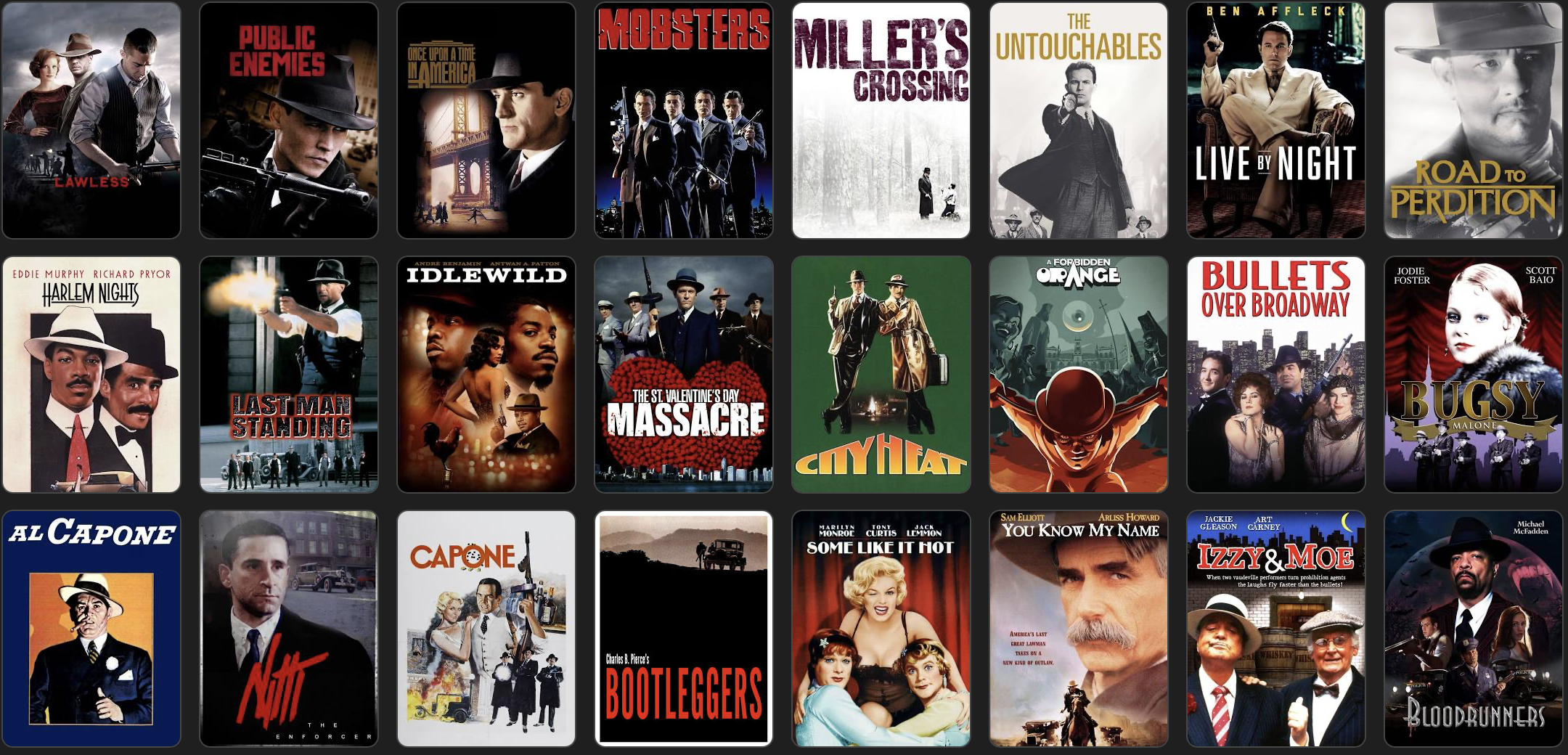
My Top Ten Prohibition Movies:
To commemorate the Featured Television Blog for the month of June, Boardwalk Empire, I have gathered My Top Ten Prohibition Movies! If you're looking for the best movies featuring Prohibition, you've come to the right…

The 95th Academy Awards: The 2023 Nominees:
The Academy of Motion Pictures Arts and Sciences announced their nominations for the 2022 film year with a live streaming announcement held this morning and hosted by Academy Award winner Riz Ahmed and M3GAN's Allison…
![The 31st Critics' Choice Awards were presented on January 4, 2026, at the Barker Hangar at the Santa Monica Airport in Santa Monica, California, honoring the finest achievements of filmmaking and television programming in 2025.[1][2][3] The ceremony was broadcast on E! and USA Network, and was hosted by comedian Chelsea Handler for the fourth consecutive year.[1][4][5][6] Nominations for both the film and television categories were revealed on cable's E! and USA Network's channels. In addition, the announcement of the nominations were streamed on criticschoice.com, as well as the CCA, E!, E! Online and the USA Network's YouTube channels; the nominations were also unveiled on the CCA's social media channels. The livestream was hosted by television personalities Keltie Knight and Erin Lim Rhodes.[5][7][8] Ryan Coogler's period supernatural horror film Sinners led the film nominations with seventeen, followed by Paul Thomas Anderson's action thriller One Battle After Another with fourteen. For the television categories, Netflix limited series Adolescence led the nominations with six, followed by the romantic comedy series Nobody Wants This with five.](https://moviestohistory.com/wp-content/uploads/2026/01/chelseahandler_cca31-1024x683-1.jpg)
31st Annual Critics’ Choice Awards: The 2026 Winners:
Critical Newness... Chelsea Handler returned to Santa Monica's Barker Hanger for the fourth consecutive year to host the annual ceremony sponsored by the Critics’ Choice Association for the 31st Annual Critics’ Choice Awards. The Critics…