

Film at Lincoln Center – Paul Thomas Anderson, Leonardo DiCaprio, Teyana Taylor & More on One Battle After Another
Few contemporary filmmakers inspire the kind of cinematic anticipation that surrounds Paul Thomas Anderson. Over the course of a career defined by sprawling character studies, political undercurrents, and ambitious visual storytelling, Anderson has become one of the most celebrated auteurs in modern American cinema. With One Battle After Another, the director once again steps into volatile territory — blending black comedy, political paranoia, and generational unrest into a film that has already sparked intense critical and cultural conversation. Adapted in part from Vineland by Thomas Pynchon, the film continues Anderson’s fascination with fractured American institutions, disillusionment, and the ghosts of political idealism.


In this special conversation presented by Film at Lincoln Center following a 70mm screening at the historic Walter Reade Theater, Anderson is joined by an extraordinary ensemble cast including Leonardo DiCaprio, Sean Penn, Benicio del Toro, Teyana Taylor, Regina Hall, and Chase Infiniti to discuss the making of the film, the collaborative creative process behind its performances, and the thematic anxieties driving the story. The discussion also highlights Anderson’s long-standing relationship with Film at Lincoln Center and the New York Film Festival, where many of his most acclaimed works — including Boogie Nights, Punch-Drunk Love, Inherent Vice, and Junun — have premiered or been celebrated over the years.


![Film at Lincoln Center (FLC), previously known as the Film Society of Lincoln Center (FSLC) until 2019,[1] is a nonprofit organization based in New York City. Founded in 1969 by three Lincoln Center executives—William F. May, Martin E. Segal and Schuyler G. Chapin[2]—the organization presents film festivals, retrospectives, new releases, restorations, and talks.[3] Film at Lincoln Center is one of the eleven resident organizations at the Lincoln Center for the Performing Arts.](https://i0.wp.com/moviestohistory.com/wp-content/uploads/2026/05/Screenshot-2026-05-11-at-11.44.00-PM-1024x476.png?ssl=1)
![The New York Film Festival (NYFF) is a film festival held every fall in New York City, presented by Film at Lincoln Center. Founded in 1963 by Richard Roud and Amos Vogel with the support of Lincoln Center president William Schuman, NYFF is one of the longest-running and most prestigious film festivals in the United States.[1] It is a non-competitive festival centered on a "Main Slate" of typically 20–30 feature films, with additional sections for experimental cinema and new restorations. Dennis Lim is the Artistic Director for NYFF.[2] Kent Jones was the festival director from 2013 to 2019.](https://i0.wp.com/moviestohistory.com/wp-content/uploads/2026/05/New_York_Film_Festival-Photo-www.filmlinc.org_.jpg?ssl=1)


![Directed by Paul Thomas Anderson Screenplay by Paul Thomas Anderson Based on Inherent Vice by Thomas Pynchon Produced by JoAnne Sellar Daniel Lupi Paul Thomas Anderson Starring Joaquin Phoenix Josh Brolin Owen Wilson Katherine Waterston Reese Witherspoon Benicio del Toro Martin Short Jena Malone Joanna Newsom Cinematography Robert Elswit Edited by Leslie Jones Music by Jonny Greenwood Production companies IAC Films[1] RatPac-Dune Entertainment[1] Ghoulardi Film Company[1] Distributed by Warner Bros. Pictures[1]](https://i0.wp.com/moviestohistory.com/wp-content/uploads/2026/04/Inherent_Vice_film_poster-691x1024.webp?ssl=1)
![Directed by Paul Thomas Anderson Edited by Andy Jurgensen Music by Shye Ben Tzur Jonny Greenwood The Rajasthan Express Production company Ghoulardi Film Company[1] Distributed by MUBI Amazon Prime Video iTunes Store](https://i0.wp.com/moviestohistory.com/wp-content/uploads/2026/05/junun_poster_1-691x1024.jpg?ssl=1)
For MoviesToHistory.com, this interview offers more than a behind-the-scenes look at one of 2025’s most discussed films. It provides insight into how contemporary filmmakers reinterpret political history, revolutionary movements, and American cultural memory through fiction. As One Battle After Another continues to generate debate about media, ideology, and cinematic storytelling, this conversation captures the creative minds behind the film reflecting on its ambitions, its relevance, and the complicated America at the center of its narrative.


You can watch the full interview with Anderson and the cast of One Battle After Another below:


Discover more from Movies To History.com
Subscribe to get the latest posts sent to your email.
Related Posts

Behind the Scenes Facts of ‘Secretariat’ (2010) – What the Movie Didn’t Show You:
When Secretariat galloped onto movie screens in 2010, audiences were swept up in the awe-inspiring true story of the 1973 Triple Crown winner and the woman behind his rise to greatness, Penny Chenery. While the…
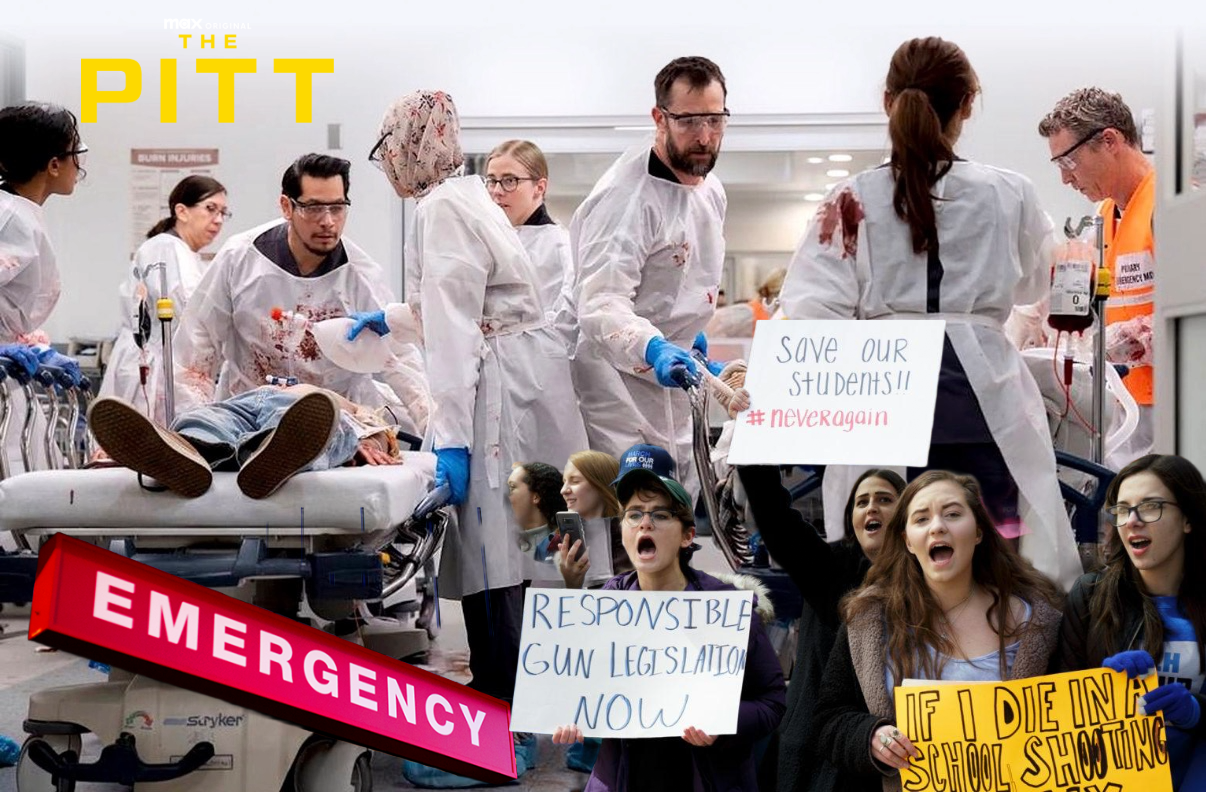
The Pitt “6:00 P.M.” Breakdown: Mass Casualty Events, Gun Violence, and the Reality ERs Face –
When Television Stops Feeling Like Fiction There is a moment in The Pitt’s episode “6:00 P.M.” when the emergency department stops functioning like a workplace and begins operating like a battlefield. The shift is not marked…

Ethics on Trial: How Filmmakers Navigate Truth, Trauma, and Responsibility in True Crime Cinema –
I. The True Crime Boom and Its Moral Crossroads True crime has never been more popular — or more polarizing. From streaming docuseries to Oscar contenders, the genre dominates contemporary storytelling. But the explosion of…