

Long before she was portrayed on screen by Diane Lane, Penny Chenery was already a legend. Her role in Secretariat‘s legacy isn’t just that of an owner; she was a fierce businesswoman who reshaped the image of women in American horse racing.


![Penny Chenery with Secretariat and Ron Turcotte after winning the Belmont Chenery's life changed when her mother died suddenly and her father became ill in late 1967. He entered New Rochelle Hospital in April 1968 and remained there until his death in January 1973. Due to Mr. Chenery's advancing senility, Meadow Stable, the Chenery thoroughbred breeding and racing operation in Virginia, had been neglected in the mid-1960s and was no longer profitable. Chenery's siblings wanted to sell the operation since their father could no longer manage it. Chenery, however, hoped to fulfill her father's dream of winning the Kentucky Derby. The board of Meadow Stable elected her president and in 1968, she began the long process of cutting costs, repairing facilities and returning the stable to profitability. In 1969, she fired long-time trainer Casey Hayes. On the advice of longtime family friend and business associate Bull Hancock of Claiborne Farm, Chenery hired Roger Laurin to train and manage the Meadow Stable horses. With Laurin's help, the stable began to produce a few stakes winning horses in 1969 and 1970. However, in May 1971, Roger Laurin left the Meadow to train for the much vaunted Phipps family stables, so Chenery turned to his father, Lucien Laurin, as a temporary substitute. However, Laurin Sr. decided to stay on when the Meadow's homebred Riva Ridge brought in over $500,000 in purses in the fall of 1971. In May, 1972 Riva Ridge won the Kentucky Derby and in June Belmont Stakes, thus fulfilling Mr. Chenery's lifelong dream of producing a great horse. That same year, another Meadow colt, the two-year-old Secretariat had such a dominant fall season that he became American Horse of the Year which was a rare honor for a two-year-old. The following year, Secretariat captured the imagination of racing fans worldwide when he became the first Triple Crown winner in 25 years, setting records that still stand in all three races and winning the Belmont by an unheard-of 31 lengths. Both horses were inducted into the National Museum of Racing and Hall of Fame.[4] When Chenery's father died in January 1973, his estate owed such a large tax bill that it could only be satisfied by syndicating the breeding rights to Secretariat and Riva Ridge to a consortium of breeders. Chenery made headlines by successfully syndicating Secretariat for $6.08 million and Riva Ridge for $5 million. Eventually the Meadow in Doswell, Virginia, also was sold to settle the estate. Chenery moved many of the remaining horses to Long Island, N.Y. and continued racing. Although Penny Chenery gets the credit for managing Secretariat's racing career, Christopher Chenery was the genius behind the matching of Somethingroyal and Bold Ruler to produce Secretariat. In 1965 he set up the deal by which two Meadow mares would be bred annually to top sire Bold Ruler, owned by Ogden Phipps. Each year the owners would flip for the right to choose among the foals. The Meadow sent their best mare Somethingroyal to Bold Ruler several times and had already produced a stakes winner, Syrian Sea, a full sister to Secretariat. In 1969, Penny Chenery who by then managed Meadow Stable, lost the coin toss. This gave her the right to first choice of the foals in 1970, but that year there was only one foal: Secretariat. After Secretariat, Chenery continued to breed and race horses under the Meadow silks with her greatest success coming in Saratoga Dew, who became the first New York-bred horse ever to win an Eclipse Award when the filly was voted the 1992 American Champion Three-Year-Old Filly.](https://i0.wp.com/moviestohistory.com/wp-content/uploads/2025/05/Chenery-Secretartat--630x1024.jpg?ssl=1)
This blog post profiles Penny Chenery as she was in real life: a daughter who stepped into a crisis, a negotiator who faced down billionaires, and a woman who redefined the sport’s gender norms.
![Helen Bates "Penny" Chenery (January 27, 1922 – September 16, 2017) (married names: Penny Tweedy until 1974 and later Penny Ringquist until 1980) was an American sportswoman who bred and owned Secretariat, the 1973 winner of the Triple Crown. The youngest of three children, she graduated from The Madeira School in 1939 and earned a Bachelor of Arts from Smith College, then studied at the Columbia Business School, where she met her future husband, John Tweedy, Sr., a Columbia Law School graduate.[3] In March 2011, Randolph-Macon College in Ashland, Virginia, awarded Chenery an Honorary Doctor of Laws degree.](https://i0.wp.com/moviestohistory.com/wp-content/uploads/2025/05/Penny-Chenery-1-2.jpg?ssl=1)


Early Challenges
After her father’s illness, Chenery took over Meadow Stable at a time when women were rarely seen in racetrack boardrooms. She had no formal business training and faced skepticism at every turn. Yet she quickly proved herself a shrewd operator, surrounding herself with smart advisors and building alliances.


The Secretariat Deal
Perhaps her most pivotal move was the syndication of Secretariat. With stud fees predicted to be record-breaking, Chenery organized a pre-racing career syndication worth over $6 million. It was a risky move that ensured Meadow Stable’s solvency and her control over Secretariat’s legacy.


Championing Women in Sports
Later in life, Chenery became an outspoken advocate for women in sports leadership, earning awards and honors that recognized her not just as a horse owner, but as a cultural force. Her story resonates far beyond the racetrack.


Verdict: Penny Chenery wasn’t just part of history — she helped change it.

Secretariat is available now with a subscription to Disney+…

Related Posts
![Medgar Wiley Evers (/ˈmɛdɡər/; July 2, 1925 – June 12, 1963) was an American civil rights activist who was the NAACP's first field secretary in Mississippi. A United States Army veteran who served in World War II, he was engaged in efforts to overturn racial segregation at the University of Mississippi, end the segregation of public facilities, and expand opportunities for African Americans, including the enforcement of voting rights prior to his assassination. After college, Evers became active in the civil rights movement in the 1950s. Following the 1954 ruling of the United States Supreme Court in Brown v. Board of Education that segregated public schools were unconstitutional, he challenged the segregation of the state-supported public University of Mississippi. Evers applied to law school there, as the state had no public law school for African Americans. He also worked for voting rights, economic opportunity, access to public facilities, and other changes in the segregated society. In 1963, Evers was awarded the NAACP Spingarn Medal. On June 12, 1963, Evers was murdered at his home in Jackson, Mississippi, now the Medgar and Myrlie Evers Home National Monument, by Byron De La Beckwith,[1] a member of the White Citizens' Council in Jackson. Only hours earlier, Evers was listening to President John F Kennedy’s Speech Report to the American People on Civil Rights. Evers' murder and the resulting trials inspired civil rights protests. His life and death have inspired numerous works of art, music, and film. Although all-white juries failed to reach verdicts in the first two trials of De La Beckwith in the 1960s, he was convicted in 1994 based on new evidence. Evers' widow, Myrlie, became a noted activist in her own right, and served as national chair of the NAACP. In 1969, after passage of civil rights legislation and the Voting Rights Act of 1965, Medgar's older brother, Charles, was elected as mayor of Fayette, Mississippi. He was the first African American to be elected mayor of a Mississippi city in the post-Reconstruction era.](https://moviestohistory.com/wp-content/uploads/2026/02/medgar-evers.jpeg.webp)
Justice Delayed: Medgar Evers, Mississippi, and the 30-Year Fight for Accountability:
In the early hours of June 12, 1963, a single rifle shot tore through the humid air of Jackson, Mississippi — and through the fragile promise of American democracy. Medgar Evers, the NAACP’s first field secretary…
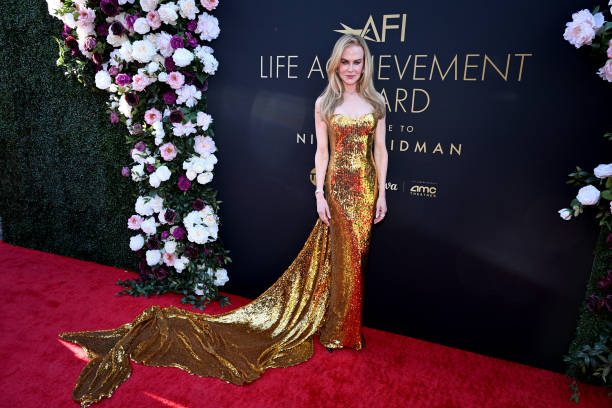
Nicole Kidman – AFI Life Achievement Award:
The American Film Institute (AFI) presented the 49th AFI Life Achievement Award to Nicole Kidman on April 27, 2024, at a Gala Tribute in Hollywood. AFI will premiere the tribute special titled, The 49th AFI…

How 2001 Became the Year WWII Returned to the Screen:
A War That Never Truly Left World War II never disappeared from American culture — but in 2001, it returned with unusual force, scale, and emotional urgency. Within a single year, audiences were confronted with two…