

In 2016, War Dogs exploded onto the screen with the swagger of a buddy comedy and the smirk of a dark political satire. Directed by Todd Phillips and starring Jonah Hill and Miles Teller, the film follows two twentysomething friends — Efraim Diveroli and David Packouz — as they stumble their way into a $300 million Pentagon arms deal during the height of the Iraq and Afghanistan wars. It’s outrageous. It’s funny. It’s also true.


But beneath the Hollywood style and sharp one-liners lies a much darker reality — one that exposes how military outsourcing, greed, and loopholes in U.S. defense contracting created a playground for private arms dealers.

This blog dives into the real story behind War Dogs: what the film got right, what it changed (or ignored), and how the characters at the center of it all left a permanent mark on the global arms trade.

The Real Story Behind the Film
The story of War Dogs isn’t just “inspired by true events” — it’s pulled almost directly from one of the most jaw-dropping military scandals of the 21st century. Efraim Diveroli was just 21 years old when his company, AEY Inc., landed a $300 million contract from the U.S. Department of Defense to supply weapons to the Afghan National Army (ANA).


His business partner, David Packouz, had little background in arms dealing. He was a massage therapist and occasional entrepreneur who found himself suddenly embedded in one of the Pentagon’s most sensitive procurement pipelines. The duo sourced munitions from Eastern Europe, skirted international restrictions, and eventually ran afoul of a decades-old U.S. ban on Chinese-made ammunition.
![David Mordechai Packouz (/pækhaʊs/ born February 17, 1982) is an American former arms dealer, musician and inventor. Packouz joined Efraim Diveroli on the 17th of September 2005, in Diveroli's arms company AEY Inc. By the end of 2006, the company had won 149 contracts worth around $10.5 million.[1] In early 2007, AEY secured a nearly $300 million U.S. government contract to supply the Afghan Army with 100 million rounds of AK-47 ammunition, aviation rockets and other munitions.[2][3] The ammunition that AEY had secured in Albania to fulfill the contract had originally come from China, violating the terms of AEY's contract with the US Army, which bans Chinese ammunition. Packouz was aware that the products were prohibited and would not be accepted, and was instrumental in the covering up of the origins of the ammunition.[4][5] As a result of the publicity surrounding the contract and the age of the arms dealers – Packouz was 25 and Diveroli was 21 when AEY landed the ammunition deal – the United States Army began a review of its contracting procedures.[6] Packouz was sentenced to seven months of house arrest for conspiracy to defraud the United States.[4] He is the central subject of the 2016 Todd Phillips dramedy film War Dogs. Packouz himself has a cameo role in the film as a guitarist and singer at an elderly home. Packouz later co-founded War Dogs Academy, an online school that teaches how to start a government contracting business. [7] Packouz went on to invent a guitar pedal drum machine, the BeatBuddy, and is currently the CEO of music technology company Singular Sound](https://i0.wp.com/moviestohistory.com/wp-content/uploads/2025/07/David-Packouz-2-1024x768.webp?ssl=1)
![David Mordechai Packouz (/pækhaʊs/ born February 17, 1982) is an American former arms dealer, musician and inventor. Packouz joined Efraim Diveroli on the 17th of September 2005, in Diveroli's arms company AEY Inc. By the end of 2006, the company had won 149 contracts worth around $10.5 million.[1] In early 2007, AEY secured a nearly $300 million U.S. government contract to supply the Afghan Army with 100 million rounds of AK-47 ammunition, aviation rockets and other munitions.[2][3] The ammunition that AEY had secured in Albania to fulfill the contract had originally come from China, violating the terms of AEY's contract with the US Army, which bans Chinese ammunition. Packouz was aware that the products were prohibited and would not be accepted, and was instrumental in the covering up of the origins of the ammunition.[4][5] As a result of the publicity surrounding the contract and the age of the arms dealers – Packouz was 25 and Diveroli was 21 when AEY landed the ammunition deal – the United States Army began a review of its contracting procedures.[6] Packouz was sentenced to seven months of house arrest for conspiracy to defraud the United States.[4] He is the central subject of the 2016 Todd Phillips dramedy film War Dogs. Packouz himself has a cameo role in the film as a guitarist and singer at an elderly home. Packouz later co-founded War Dogs Academy, an online school that teaches how to start a government contracting business. [7] Packouz went on to invent a guitar pedal drum machine, the BeatBuddy, and is currently the CEO of music technology company Singular Sound](https://i0.wp.com/moviestohistory.com/wp-content/uploads/2025/07/David-Packouz-1024x948.jpg?ssl=1)

AEY Inc. operated as a shell of professionalism. With no warehouse, no compliance staff, and barely any legitimate infrastructure, the company won the contract thanks to an overwhelmed and under-regulated Pentagon procurement system that was desperate to deliver supplies quickly to America’s allies in the war on terror.

What started as a rags-to-riches arms fairytale soon turned into a federal indictment and a symbol of everything wrong with privatized warfare.
![Efraim Diveroli (born December 20, 1985)[3] is an American former arms dealer, convicted fraudster, and author.[4] Diveroli controlled AEY, Inc., a company that secured significant contracts as a major weapons contractor for the U.S. Department of Defense. AEY was suspended by the U.S. government due to contractual violations. AEY had supplied Chinese ammunition to Afghanistan, attempting to conceal its origin by repackaging it as Albanian. Although this did not violate the American arms embargo against China, because the ammo was manufactured pre 1989, it was a violation of their contract with the government which said no Chinese ammo at all. Concealing its origin then became an act of fraud.[5][6][7] This incident prompted the United States Army to initiate a review of its contracting procedures.[6] Efraim Diveroli, at the age of 21, and his partner, David Packouz, at 25, gained notoriety for their involvement in the high-profile ammunition deal. Subsequently, Diveroli was sentenced to four years in federal prison.[8] Diveroli's story became the focal point of the 2016 Todd Phillips film, War Dogs,[9] in which Jonah Hill portrayed Diveroli, and Miles Teller portrayed Packouz. Additionally, a memoir co-authored by Diveroli and Matthew Cox was published in 2016.](https://i0.wp.com/moviestohistory.com/wp-content/uploads/2025/07/Efrim.jpeg?ssl=1)
![David Mordechai Packouz (/pækhaʊs/ born February 17, 1982) is an American former arms dealer, musician and inventor. Packouz joined Efraim Diveroli on the 17th of September 2005, in Diveroli's arms company AEY Inc. By the end of 2006, the company had won 149 contracts worth around $10.5 million.[1] In early 2007, AEY secured a nearly $300 million U.S. government contract to supply the Afghan Army with 100 million rounds of AK-47 ammunition, aviation rockets and other munitions.[2][3] The ammunition that AEY had secured in Albania to fulfill the contract had originally come from China, violating the terms of AEY's contract with the US Army, which bans Chinese ammunition. Packouz was aware that the products were prohibited and would not be accepted, and was instrumental in the covering up of the origins of the ammunition.[4][5] As a result of the publicity surrounding the contract and the age of the arms dealers – Packouz was 25 and Diveroli was 21 when AEY landed the ammunition deal – the United States Army began a review of its contracting procedures.[6] Packouz was sentenced to seven months of house arrest for conspiracy to defraud the United States.[4] He is the central subject of the 2016 Todd Phillips dramedy film War Dogs. Packouz himself has a cameo role in the film as a guitarist and singer at an elderly home. Packouz later co-founded War Dogs Academy, an online school that teaches how to start a government contracting business. [7] Packouz went on to invent a guitar pedal drum machine, the BeatBuddy, and is currently the CEO of music technology company Singular Sound](https://i0.wp.com/moviestohistory.com/wp-content/uploads/2025/07/David.jpg?ssl=1)
What War Dogs Got Right
For all its humor and cinematic style, War Dogs gets a surprising amount right.

The tone of cynical capitalism? Spot on. The film nails the reckless, profit-first attitude that governed many defense contractors during the height of the Iraq and Afghanistan conflicts. Hill’s performance as Diveroli channels the cocky, shameless energy of a young man who believes — correctly — that there are no real rules when you’re profiting off war.

The film also accurately depicts how Diveroli and Packouz exploited a bloated and bureaucratic contracting system. The real-life AEY Inc. benefited from the Pentagon’s reliance on online bid boards like FedBizOpps, which allowed inexperienced but legally eligible companies to underbid major players.


The infamous Albania-China arms scandal — the crux of the film’s third act — was real. AEY attempted to conceal the Chinese origin of decades-old ammunition by repackaging it in cardboard boxes to circumvent the U.S. ban. It was a clear-cut case of fraud — and yet, their ability to even get that far was a symptom of deeper systemic failure.

What War Dogs Got Wrong (or Left Out)
Still, War Dogs makes several key changes that alter the public’s understanding of what really happened.

First, the characters are exaggerated. Hill’s Diveroli is more volatile and cartoonish than the real Efraim, whose menace was subtler and more manipulative. Packouz is portrayed as a naive, reluctant participant, which downplays his active role in the business — even though he later cooperated with federal prosecutors.


![Efraim Diveroli (born December 20, 1985)[3] is an American former arms dealer, convicted fraudster, and author.[4] Diveroli controlled AEY, Inc., a company that secured significant contracts as a major weapons contractor for the U.S. Department of Defense. AEY was suspended by the U.S. government due to contractual violations. AEY had supplied Chinese ammunition to Afghanistan, attempting to conceal its origin by repackaging it as Albanian. Although this did not violate the American arms embargo against China, because the ammo was manufactured pre 1989, it was a violation of their contract with the government which said no Chinese ammo at all. Concealing its origin then became an act of fraud.[5][6][7] This incident prompted the United States Army to initiate a review of its contracting procedures.[6] Efraim Diveroli, at the age of 21, and his partner, David Packouz, at 25, gained notoriety for their involvement in the high-profile ammunition deal. Subsequently, Diveroli was sentenced to four years in federal prison.[8] Diveroli's story became the focal point of the 2016 Todd Phillips film, War Dogs,[9] in which Jonah Hill portrayed Diveroli, and Miles Teller portrayed Packouz. Additionally, a memoir co-authored by Diveroli and Matthew Cox was published in 2016.](https://i0.wp.com/moviestohistory.com/wp-content/uploads/2025/07/Efraim-Diveroli.jpg?ssl=1)
![David Mordechai Packouz (/pækhaʊs/ born February 17, 1982) is an American former arms dealer, musician and inventor. Packouz joined Efraim Diveroli on the 17th of September 2005, in Diveroli's arms company AEY Inc. By the end of 2006, the company had won 149 contracts worth around $10.5 million.[1] In early 2007, AEY secured a nearly $300 million U.S. government contract to supply the Afghan Army with 100 million rounds of AK-47 ammunition, aviation rockets and other munitions.[2][3] The ammunition that AEY had secured in Albania to fulfill the contract had originally come from China, violating the terms of AEY's contract with the US Army, which bans Chinese ammunition. Packouz was aware that the products were prohibited and would not be accepted, and was instrumental in the covering up of the origins of the ammunition.[4][5] As a result of the publicity surrounding the contract and the age of the arms dealers – Packouz was 25 and Diveroli was 21 when AEY landed the ammunition deal – the United States Army began a review of its contracting procedures.[6] Packouz was sentenced to seven months of house arrest for conspiracy to defraud the United States.[4] He is the central subject of the 2016 Todd Phillips dramedy film War Dogs. Packouz himself has a cameo role in the film as a guitarist and singer at an elderly home. Packouz later co-founded War Dogs Academy, an online school that teaches how to start a government contracting business. [7] Packouz went on to invent a guitar pedal drum machine, the BeatBuddy, and is currently the CEO of music technology company Singular Sound](https://i0.wp.com/moviestohistory.com/wp-content/uploads/2025/07/David-Packouz-1.jpg?ssl=1)
Second, the legal consequences are simplified. In real life, Diveroli was sentenced to four years in federal prison. Packouz received house arrest. The film ends ambiguously, avoiding the broader implications of their crimes and the slap-on-the-wrist consequences that followed.
Third — and most critically— the film doesn’t go deep enough into the ethical issues at play. While War Dogs critiques the absurdity of privatized warfare, it never fully addresses the human cost: the instability of arming foreign forces with questionable equipment, or the long-term damage caused by unchecked profiteering.

Arms Dealing and U.S. Foreign Policy
What the AEY story reveals is a deeper truth about U.S. foreign policy in the 2000s: privatization wasn’t just a tool — it was a philosophy.

The Department of Defense, stretched thin by simultaneous wars, increasingly turned to private contractors to supply everything from meals to munitions. With speed prioritized over scrutiny, companies like AEY thrived in the gray zones of legality.

Diveroli and Packouz were anomalies only in age — not in method. Their peers were better dressed and better connected, but not necessarily more ethical.

Films like Lord of War (2005) and The Kingdom (2007) also tackle the military-industrial complex, but War Dogs stands out for presenting it as a comedy — an approach that’s both effective and risky. Laughing at the absurdity of war capitalism is cathartic, but it can also obscure the harm done in real life.
![Directed by Andrew Niccol Written by Andrew Niccol Produced by Andreas Grosch Norm Golightly Andrew Niccol Chris Roberts Christopher Eberts Nicolas Cage Philippe Rousselet Starring Nicolas Cage Jared Leto Bridget Moynahan Ian Holm Ethan Hawke Cinematography Amir Mokri Edited by Zach Staenberg Music by Antonio Pinto Production companies Entertainment Manufacturing Company Saturn Films Ascendant Pictures VIP 3 Medienfonds Distributed by Lions Gate Films (United States) 20th Century Fox (Germany, via Metro Goldwyn Mayer)[1] Momentum Pictures (International; via Arclight Films)](https://i0.wp.com/moviestohistory.com/wp-content/uploads/2025/07/Lord-of-War.jpg?ssl=1)


![The Afghan National Army Commandos (formerly ANA Commando Brigade;[5] ANA Commando Battalion and Afghan National Army Commando Corps[4]) was a commando (special operations capable) force of the Afghan National Army. During the Taliban insurgency, the commandos comprised 7% of the Afghan National Security Forces but conducted 70% to 80% of the fighting.[6] The structure of the unit was based on the U.S. Army's 75th Ranger Regiment.[7] Upon the fall of Kabul and the collapse of both the ANA and Islamic Republic of Afghanistan in August 2021, the Commando Corps was dissolved but subsequently restored by the Islamic Emirate of Afghanistan. After the fall of Kabul the new regime claimed it reactivated the unit with a new flag and a new emblem, but it is unknown if any of the previous units personnel or training got transferred.](https://i0.wp.com/moviestohistory.com/wp-content/uploads/2025/07/Afghan-National-Army.jpg?ssl=1)

Where Are They Now?
Efraim Diveroli served 4 years in prison and later self-published a memoir titled Once a Gun Runner. He’s also been involved in ongoing legal battles, including with Warner Bros. over rights to his story, claiming the studio used his life without proper authorization.

David Packouz turned to music, becoming a producer and even developing a portable guitar effects system. He also appeared briefly in the film adaptation — as a hotel musician.

AEY Inc. is defunct, but its legacy lives on as a case study in how little oversight once existed in military contracting. The scandal prompted greater scrutiny of small-arms deals, but loopholes in U.S. defense procurement remain.

Conclusion
So is War Dogs satire… or glorification?

The answer may depend on the viewer. The film shines when it skewers the absurdity of privatized war and the hubris of unchecked capitalism. But it pulls its punches when it comes to the consequences — legal, moral, and geopolitical.

Still, War Dogs does something few films dare: it exposes the real mechanics of modern war profiteering using characters who could’ve walked out of a college frat house. That alone makes it worth watching — and worth examining closely.

Because the next time a contractor wins a massive military deal, you might want to ask: who’s really getting rich… and what are they selling?

📖 Read More Historical Breakdowns Like This:
➡️ Visit MoviesToHistory.com for weekly deep dives into the true stories behind film and television.


War Dogs is available now for rent on all streaming platforms…
Related Posts
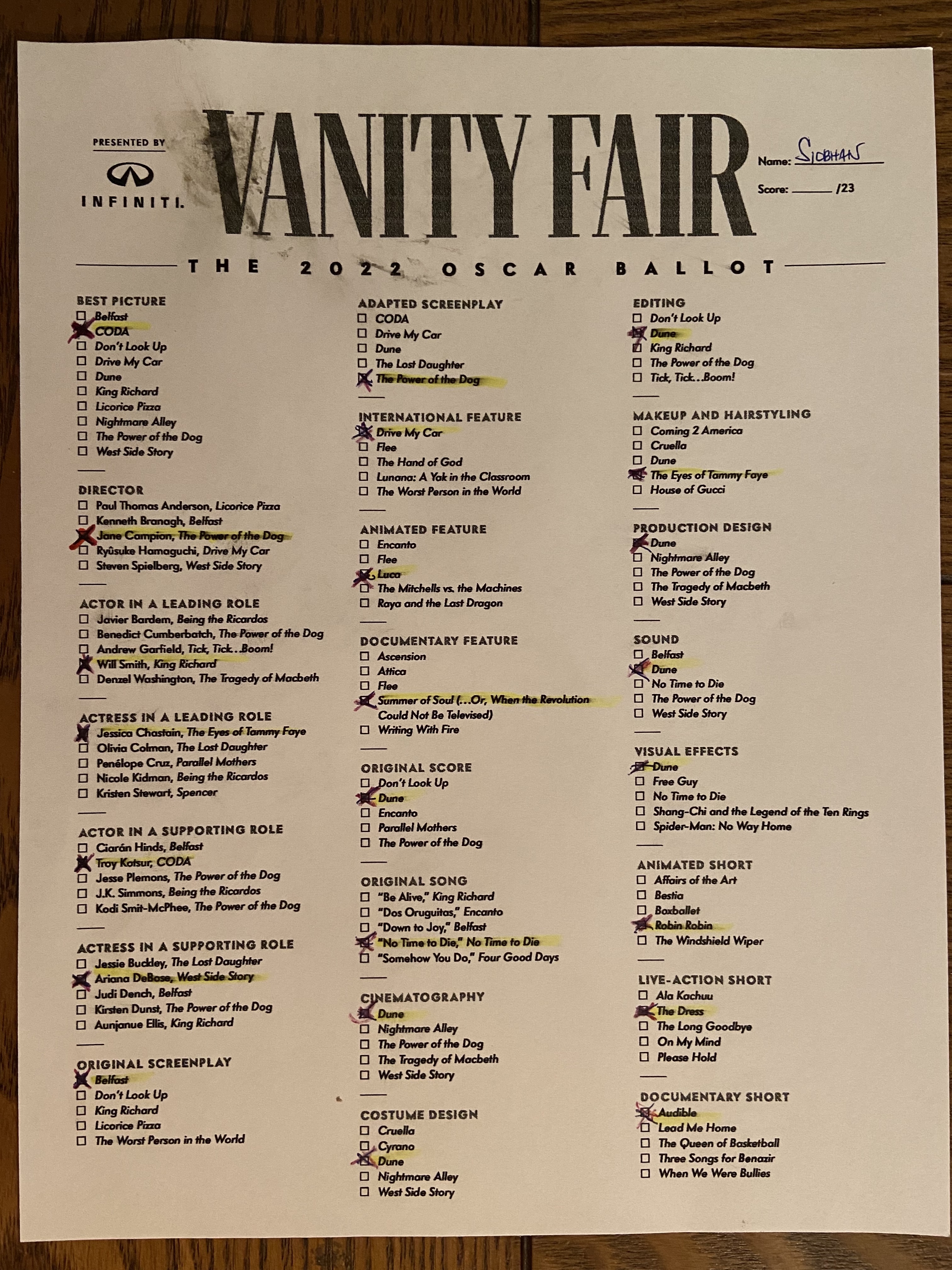
The 2022 Oscar Ballot:
And the Oscar Goes To Vanity Fair's Printable 2022 Oscar Ballot.. Here are my personal picks for the nominations for the Academy Awards on March 27,2022 @ 8:00 PM EST! The 2022 Printable Oscar Ballot…

‘Boardwalk Empire’ – Interview:
🎙 Web Extra Spotlight: Steve Buscemi on Boardwalk Empire... As part of CBS Sunday Morning's extended interview with Steve Buscemi during the final season of Boardwalk Empire, this web exclusive features Buscemi in conversation with correspondent Tracy Smith. Known…

‘Secretariat’ – Interview:
Popcorn with Peter Travers - Diane Lane on Secretariat... On Oct 8, 2010, Rolling Stone movie critic Peter Travers interviewed Diane Lane for the 2010 film Secretariat, where she portrayed the real woman Penny Chenery,…