0 Comments


When The First Lady premiered in April 2022, it arrived with all the hallmarks of prestige television: a high-profile network in Showtime, an ambitious historical premise, and a trio of commanding performances from Viola Davis, Michelle Pfeiffer, and Gillian Anderson. On paper, the series had all the ingredients necessary for critical acclaim and long-term cultural impact. It promised a reframing of American political history—not through presidents, but through the women who shaped administrations from behind the scenes. It positioned itself squarely within the lineage of politically engaged prestige dramas that audiences had come to expect in the post-West Wing and post-Crown era. And yet, despite its undeniable strengths—particularly its performances—the series faltered. By August 2022, The First Lady was canceled after just one season. The question is not simply why it failed, but how a series with such apparent advantages could not sustain narrative or audience momentum.

When The First Lady premiered in April 2022, it arrived with all the hallmarks of prestige television: a high-profile network in Showtime, an ambitious historical premise, and a trio of commanding performances from Viola DavisMichelle Pfeiffer, and Gillian Anderson.

On paper, the series had all the ingredients necessary for critical acclaim and long-term cultural impact. It promised a reframing of American political history — not through presidents, but through the women who shaped administrations from behind the scenes. It positioned itself squarely within the lineage of politically engaged prestige dramas that audiences had come to expect in the post-West Wing and post-Crown era.

And yet, despite its undeniable strengths — particularly its performances — the series faltered. By August 2022The First Lady was canceled after just one season.

to the decision: Mixed critical reviews Modest viewership numbers The structural challenges of the anthology format Despite the cancellation, the series later reached new audiences when it premiered on PBS stations through American Public Television syndication in October 2024. For many viewers, the show served as an introduction to the remarkable histories of these three women.

The question is not simply why it failed, but how a series with such apparent advantages could not sustain narrative or audience momentum.

The question is not simply why it failed, but how a series with such apparent advantages could not sustain narrative or audience momentum.

Acting vs. Writing: A Fundamental Imbalance


The most widely acknowledged strength of The First Lady lies in its performances.

Viola Davis brings emotional gravity and interiority to Michelle Obama, while Michelle Pfeiffer delivers a nuanced, psychologically layered portrayal of Betty Ford. Gillian Anderson, already experienced in playing political figures, approaches Eleanor Roosevelt with a measured restraint that reflects the character’s complexity.

Viola Davis as First Lady Michelle Obama in a scene from the Limited Series, "The First Lady" (2022) Photo Credit: Ramona Rosales/SHOWTIME
Michelle Pfeiffer as First Lady Betty Ford in a scene from the Limited Series, "The First Lady" (2022) Photo Credit: Ramona Rosales/SHOWTIME
Gillian Anderson as First Lady Eleanor Roosevelt in a scene from the Limited Series, "The First Lady" (2022) Photo Credit: Ramona Rosales/SHOWTIME

However, the writing fails to match this caliber.

The scripts often reduce these historically significant figures to thematic vessels rather than fully realized narrative agents. Dialogue leans toward exposition rather than organic development, frequently telling the audience what these women represent instead of allowing their actions to demonstrate it.

This creates a dissonance: the actors are performing at a level of psychological realism that the writing does not structurally support. The result is a series where individual scenes may resonate emotionally, but the overall narrative lacks cohesion and cumulative power.

The anthology format — interweaving three separate timelines — created narrative fragmentation. Each episode attempted to balance the lives of Eleanor Roosevelt, Betty Ford, and Michelle Obama simultaneously, often preventing any single storyline from developing fully.

In effect, the performances elevate the material — but cannot compensate for its foundational weaknesses.

Among the most transformative figures in this evolution were Eleanor Roosevelt, Betty Ford, and Michelle Obama — the three women whose stories anchor The First Lady.

Narrative Pacing Issues: Fragmentation Over Momentum


Pacing is one of the most persistent structural problems across the series.

Each episode attempts to juggle three timelines — Eleanor Roosevelt, Betty Ford, and Michelle Obama — while also advancing distinct narrative arcs within each.

(L to R) Michelle Pfeiffer, Viola Davis, and Gillian Anderson as Betty Ford, Michelle Obama, and Eleanor Roosevelt in Showtime's "The First Lady" (2022) Photo Credit: SHOWTIME ENTERTAINMENT

This results in:

  • Abrupt tonal shifts between storylines
  • Limited time for narrative buildup within each arc
  • Emotional beats that feel rushed or underdeveloped
Genre: Anthology, Biographical drama, Created by Aaron Cooley, Directed by Susanne Bier, Starring: Viola Davis, Michelle Pfeiffer, Gillian Anderson, O. T. Fagbenle, Dakota Fanning, Lily Rabe, Regina Taylor, Kiefer Sutherland, Aaron Eckhart, with Music by Geoff Zanelli, Opening theme: "This Land Is Your Land" by Sharon Jones & the Dap-Kings, Country of origin: United States, Original language: English, No. of seasons: 1, No. of episodes: 10, Executive producers: Jeff Gaspin, Brad Kaplan, Aaron Cooley, Pavlina Hatoupis, Alyson Feltesm, Viola Davis, Julius Tennon, Andrew Wang, Cathy Schulman, Susanne Bier, with Cinematography by Amir Mokri, Editors: Sam Williams, Matthew Cannings, Lindsey Woodward, Nicolas Chaudeurge, Running time: 55–57 minutes, Production companies: Welle Entertainment, Pathless Woods Productions Inc., Lionsgate Television, Original Network: Showtime. (2022)

Rather than allowing tension to accumulate, the series repeatedly interrupts itself. Just as one storyline begins to establish narrative stakes, the episode cuts to another era, forcing the audience to recalibrate.

(L to R) Michelle Pfeiffer, Viola Davis, and Gillian Anderson as Betty Ford, Michelle Obama, and Eleanor Roosevelt in Showtime's "The First Lady" (2022) Photo Credit: SHOWTIME ENTERTAINMENT

This fragmentation prevents sustained engagement. Unlike successful multi-threaded narratives, which build thematic resonance through intercutting, The First Lady often feels like three partially developed shows competing for attention within a single runtime.

(L to R) Michelle Pfeiffer, Viola Davis, and Gillian Anderson as Betty Ford, Michelle Obama, and Eleanor Roosevelt in Showtime's "The First Lady" (2022) Photo Credit: SHOWTIME ENTERTAINMENT

The pacing issue is not simply about speed — it is about rhythm. And here, the rhythm is inconsistent, preventing narrative immersion.

Genre: Anthology, Biographical drama, Created by Aaron Cooley, Directed by Susanne Bier, Starring: Viola Davis, Michelle Pfeiffer, Gillian Anderson, O. T. Fagbenle, Dakota Fanning, Lily Rabe, Regina Taylor, Kiefer Sutherland, Aaron Eckhart, with Music by Geoff Zanelli, Opening theme: "This Land Is Your Land" by Sharon Jones & the Dap-Kings, Country of origin: United States, Original language: English, No. of seasons: 1, No. of episodes: 10, Executive producers: Jeff Gaspin, Brad Kaplan, Aaron Cooley, Pavlina Hatoupis, Alyson Feltesm, Viola Davis, Julius Tennon, Andrew Wang, Cathy Schulman, Susanne Bier, with Cinematography by Amir Mokri, Editors: Sam Williams, Matthew Cannings, Lindsey Woodward, Nicolas Chaudeurge, Running time: 55–57 minutes, Production companies: Welle Entertainment, Pathless Woods Productions Inc., Lionsgate Television, Original Network: Showtime. (2022)

Structural Problems with the Three-Story Format


The core structural conceit — interweaving three First Ladies across different historical periods — is conceptually compelling. However, execution reveals significant limitations.

Anthology-adjacent storytelling typically requires one of two approaches:

  1. Discrete narratives with clear boundaries (e.g., separate seasons or episodes)
  2. Interconnected narratives with strong thematic parallels and narrative symmetry

The First Lady attempts the second approach but does not fully achieve it.

Two is better than one. So say your kidneys, Noah’s ark, buy-one-get-one sales, and anyone who has ever searched for earplugs in the middle of the night. But is it always? (Giving Readers What They Need) Once I figure out a new story to write, I consider the best ways to present it to the reader. For my books, that means including more than one narrative—maybe more than two. My recently released thriller The Family Bones has—*deep breath*—four narratives, if we’re counting the journal entries written by someone close to my family of psychopaths, the Eriksens; the newspaper articles which document the crimes committed by the more socially deviant Eriksens; a true crime podcaster’s perspective; and my heroine who is studying psychology in graduate school. Although a work of fiction, and thereby open to limitless possibilities, The Family Bones is a story told through these points of view for very specific reasons.

While thematic links exist — public scrutiny, political partnership, personal sacrifice — they are often superficial rather than deeply integrated into the storytelling structure. The transitions between timelines rarely create meaningful dialogue between the narratives.

Instead of reinforcing each other, the three stories dilute one another.

Kiefer Sutherland and Gillian Anderson in a scene from the Limited Series, "The First Lady" (2022) Photo Credit: Showtime
Aaron Eckhart, Dakota Fanning, and Michelle Pfeiffer in a scene from the Limited Series, "The First Lady" (2022) Photo Credit: Showtime
Viola Davis and O-T Fagbenle in a scene from the Limited Series, "The First Lady" (2022) Photo Credit: Showtime

Moreover, the unequal narrative weight given to each First Lady exacerbates the issue. Some arcs feel more developed than others, leading to an imbalance that undermines the ensemble concept.

The structure, rather than enhancing the series’ ambition, becomes its primary limitation.

Audience Expectations for Political Dramas


By 2022, audiences had developed a sophisticated understanding of political television.

By 2022, audiences had developed a sophisticated understanding of political television. Series like The West Wing, House of Cards, and The Crown established clear expectations: Strong narrative throughlines High-stakes political conflict Character-driven storytelling grounded in institutional dynamics

Series like The West WingHouse of Cards, and The Crown established clear expectations:

  • Strong narrative throughlines
  • High-stakes political conflict
  • Character-driven storytelling grounded in institutional dynamics

The First Lady diverges from these conventions by prioritizing domestic and personal perspectives over political mechanics. While this is a deliberate and potentially valuable shift, the series struggles to recalibrate audience expectations accordingly.

Viewers anticipating political intrigue instead encounter fragmented biographical storytelling. At the same time, audiences seeking intimate character studies find those arcs underdeveloped due to structural constraints.

The series exists in a liminal space — neither fully political drama nor fully character-driven biography — and this ambiguity weakens its audience positioning.

(L to R) Michelle Pfeiffer, Viola Davis, and Gillian Anderson as Betty Ford, Michelle Obama, and Eleanor Roosevelt in Showtime's "The First Lady" (2022) Photo Credit: SHOWTIME ENTERTAINMENT

Showtime’s Cancellation Decision: Strategic and Structural Factors


The cancellation of The First Lady after one season reflects both creative and industrial considerations.

When The First Lady premiered in April 2022, it arrived with all the hallmarks of prestige television: a high-profile network in Showtime, an ambitious historical premise, and a trio of commanding performances from Viola Davis, Michelle Pfeiffer, and Gillian Anderson. On paper, the series had all the ingredients necessary for critical acclaim and long-term cultural impact. It promised a reframing of American political history—not through presidents, but through the women who shaped administrations from behind the scenes. It positioned itself squarely within the lineage of politically engaged prestige dramas that audiences had come to expect in the post-West Wing and post-Crown era. And yet, despite its undeniable strengths—particularly its performances—the series faltered. By August 2022, The First Lady was canceled after just one season. The question is not simply why it failed, but how a series with such apparent advantages could not sustain narrative or audience momentum.

From a network perspective, prestige television must justify its production costs through:

  • Sustained viewership
  • Critical acclaim
  • Awards potential
  • Cultural conversation
Showtime has elected against moving forward with a second season of its anthology series “The First Lady.” The decision comes a little over six weeks after the series aired its Season 1 finale on the network. “Showtime can confirm that the anthology series ‘The First Lady’ will not be moving forward with another season,” a Showtime spokesperson told Variety. “We would like to applaud the artistry and commitment of our showrunner Cathy Schulman, director Susanne Bier, their fellow executive producers, our amazing cast, led by executive producer Viola Davis, Michelle Pfeiffer and Gillian Anderson, and our studio partner Lionsgate for their dedicated work in telling the unique stories of three remarkable leaders.”

While The First Lady generated initial interest, it did not maintain sufficient momentum in these areas. Mixed critical reception — particularly regarding writing and structure — limited its awards viability, while audience engagement declined over time.

Michelle Pfeiffer as First Lady Betty Ford in a scene from the Limited Series, "The First Lady" (2022) Photo Credit: Showtime

Additionally, anthology-style series without strong narrative hooks often struggle to retain viewers across episodes. Without a compelling serialized arc, audience investment becomes episodic rather than cumulative.

Showtime’s decision, therefore, can be understood as a response to both performance metrics and the series’ inability to solidify a clear identity within the competitive prestige TV landscape.

Genre: Anthology, Biographical drama, Created by Aaron Cooley, Directed by Susanne Bier, Starring: Viola Davis, Michelle Pfeiffer, Gillian Anderson, O. T. Fagbenle, Dakota Fanning, Lily Rabe, Regina Taylor, Kiefer Sutherland, Aaron Eckhart, with Music by Geoff Zanelli, Opening theme: "This Land Is Your Land" by Sharon Jones & the Dap-Kings, Country of origin: United States, Original language: English, No. of seasons: 1, No. of episodes: 10, Executive producers: Jeff Gaspin, Brad Kaplan, Aaron Cooley, Pavlina Hatoupis, Alyson Feltesm, Viola Davis, Julius Tennon, Andrew Wang, Cathy Schulman, Susanne Bier, with Cinematography by Amir Mokri, Editors: Sam Williams, Matthew Cannings, Lindsey Woodward, Nicolas Chaudeurge, Running time: 55–57 minutes, Production companies: Welle Entertainment, Pathless Woods Productions Inc., Lionsgate Television, Original Network: Showtime. (2022)

Prestige TV Expectations


Prestige television is not defined solely by production value or casting — it is defined by narrative discipline.

Prestige television is not defined solely by production value or casting — it is defined by narrative discipline.

Audiences expect:

  • Structural coherence
  • Thematic depth supported by storytelling mechanics
  • Character arcs that evolve meaningfully over time
Prestige television is not defined solely by production value or casting — it is defined by narrative discipline.

The First Lady meets the aesthetic criteria of prestige TV but falls short in its narrative execution. The gap between ambition and structure becomes increasingly visible as the series progresses.

In this sense, the show exemplifies a broader challenge within prestige television: the assumption that concept and casting can compensate for structural weaknesses.

They cannot.

The First Lady meets the aesthetic criteria of prestige TV but falls short in its narrative execution. The gap between ambition and structure becomes increasingly visible as the series progresses. In this sense, the show exemplifies a broader challenge within prestige television: the assumption that concept and casting can compensate for structural weaknesses. They cannot.

Anthology Structure Problems


Think of a story structure as the skeleton that holds your narrative together. It ensures your ideas flow logically and hit the right emotional beats at the right time.

Anthology storytelling introduces inherent risks:

  • Fragmentation of narrative focus
  • Uneven character development
  • Difficulty sustaining emotional investment

Successful anthology series mitigate these risks through either strong thematic cohesion or clear narrative segmentation.

The First Lady achieves neither consistently.

By attempting to merge three biographical narratives into a single episodic structure, the series sacrifices depth for breadth. Each story is given insufficient space to fully develop, while the connections between them remain underexplored.

The result is a hybrid structure that lacks the strengths of either traditional serialized storytelling or anthology design.

By attempting to merge three biographical narratives into a single episodic structure, the series sacrifices depth for breadth. Each story is given insufficient space to fully develop, while the connections between them remain underexplored. The result is a hybrid structure that lacks the strengths of either traditional serialized storytelling or anthology design.

Balancing Biography with Drama


Perhaps the most significant challenge facing The First Lady is its attempt to balance historical biography with dramatic storytelling.

Biographical narratives require:

  • Contextual grounding
  • Attention to historical detail
  • Respect for real-life complexity
Gillian Anderson, Regan Ciccarelli, and Cailee Spaeny in a scene from the Limited Series, "The First Lady" (2022) Photo Credit: Showtime

Dramatic narratives require:

  • Conflict escalation
  • Narrative compression
  • Emotional payoff

The series struggles to reconcile these competing demands.

Aaron Eckhart, and Michelle Pfeiffer in a scene from the Limited Series, "The First Lady" (2022) Photo Credit: Showtime

In many instances, historical events are condensed without sufficient dramatic framing, while personal moments are emphasized without adequate narrative buildup. This creates a tension between authenticity and storytelling that is never fully resolved.

The result is a series that feels both overextended and underdeveloped — caught between documentation and dramatization.

Viola Davis, and Donna Lynne Champlin in a scene from the Limited Series, "The First Lady" (2022) Photo Credit: Showtime

Ambition Without Structural Precision


The First Lady is not a failure of performance or intent — it is a failure of execution.

Its ambition is evident. Its casting is exemplary. Its thematic focus is culturally significant.

When The First Lady premiered in April 2022, it arrived with all the hallmarks of prestige television: a high-profile network in Showtime, an ambitious historical premise, and a trio of commanding performances from Viola Davis, Michelle Pfeiffer, and Gillian Anderson. On paper, the series had all the ingredients necessary for critical acclaim and long-term cultural impact. It promised a reframing of American political history—not through presidents, but through the women who shaped administrations from behind the scenes. It positioned itself squarely within the lineage of politically engaged prestige dramas that audiences had come to expect in the post-West Wing and post-Crown era. And yet, despite its undeniable strengths—particularly its performances—the series faltered. By August 2022, The First Lady was canceled after just one season. The question is not simply why it failed, but how a series with such apparent advantages could not sustain narrative or audience momentum.

But television, particularly at the level of prestige drama, is a structural medium. Narrative architecture determines whether a series can sustain engagement, build momentum, and achieve lasting impact.

In the case of The First Lady, the architecture does not hold.

Among the most transformative figures in this evolution were Eleanor Roosevelt, Betty Ford, and Michelle Obama — the three women whose stories anchor The First Lady.

The performances endure as individual achievements. The concept remains compelling. But the series itself serves as a case study in how even the most promising projects can falter when structure, pacing, and narrative clarity are not aligned.

Genre: Anthology, Biographical drama, Created by Aaron Cooley, Directed by Susanne Bier, Starring: Viola Davis, Michelle Pfeiffer, Gillian Anderson, O. T. Fagbenle, Dakota Fanning, Lily Rabe, Regina Taylor, Kiefer Sutherland, Aaron Eckhart, with Music by Geoff Zanelli, Opening theme: "This Land Is Your Land" by Sharon Jones & the Dap-Kings, Country of origin: United States, Original language: English, No. of seasons: 1, No. of episodes: 10, Executive producers: Jeff Gaspin, Brad Kaplan, Aaron Cooley, Pavlina Hatoupis, Alyson Feltesm, Viola Davis, Julius Tennon, Andrew Wang, Cathy Schulman, Susanne Bier, with Cinematography by Amir Mokri, Editors: Sam Williams, Matthew Cannings, Lindsey Woodward, Nicolas Chaudeurge, Running time: 55–57 minutes, Production companies: Welle Entertainment, Pathless Woods Productions Inc., Lionsgate Television, Original Network: Showtime. (2022)

The First Lady is available now with a subscription to Paramount+ with Showtime

https://moviestohistory.com/wp-content/uploads/2022/03/cropped-d3d0f4de5c874cf7a06b2f50e0bc7820-2-10.png
Connecting Movies To Reel Life…

Discover more from Movies To History.com

Subscribe to get the latest posts sent to your email.

Related Posts

The Top Ten List

My Top Ten Biographical Drama Movies:

Welcome to The Top Ten List! To commemorate the Featured Film Blog of the month for November, Spotlight, I have gathered My Top Ten Biographical Drama Movies! If you're looking for the best film in…

Top Ten HBO Series

My Top Ten HBO Series:

To commemorate the Featured Television Blog for the month of December, Band of Brothers, I have gathered My Top Ten HBO Series! If you're looking for the best series from HBO, you've come to the…
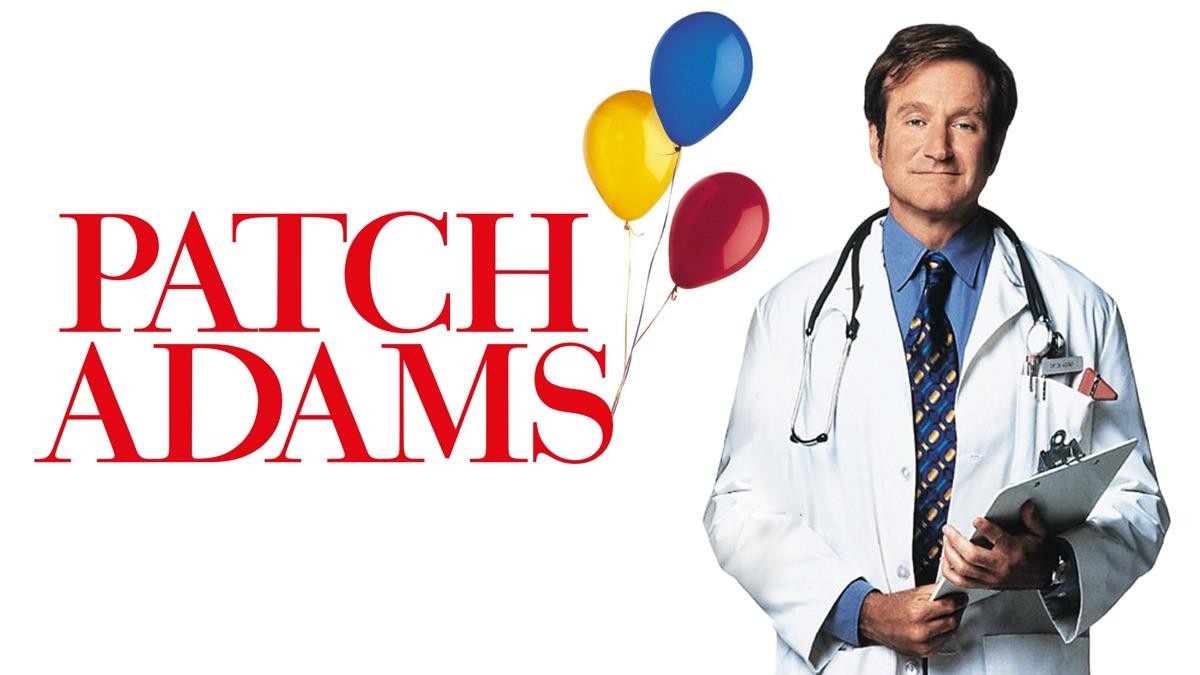
Directed by Tom Shadyac, Screenplay by Steve Oedekerk, Based on "Gesundheit: Good Health Is a Laughing Matter" by Patch Adams and Maureen Mylander, Produced by Mike Farrell, Barry Kemp, Marvin Minoff, Charles Newirth, and Marsha Garces Williams, Starring: Robin Williams, Monica Potter, Philip Seymour Hoffman, Bob Gunton, Daniel London, Peter Coyote, with Cinematography by Phedon Papamichael Jr., and Edited by Don Zimmerman, with Music by Marc Shaiman, Production companies: Blue Wolf, Bungalow 78 Productions, and Farrell/Minoff, and Distributed by Universal Pictures (1998)

‘Patch Adams’ – Official Trailer:

The Clown of the Care Circus... Patch Adams is a 1998 biographical comedy-drama film directed by Tom Shadyac and starring Robin Williams in the lead role, Monica Potter, Philip Seymour Hoffman, Bob Gunton, Daniel London, and Peter Coyote. Set in the late 1960s/early 1970s, it is loosely…