

Freedom Was Not a Single Moment—It Was a Long, Uneven Journey
When audiences watch 12 Years a Slave, they witness one man’s extraordinary struggle to reclaim the freedom that was stolen from him. Solomon Northup’s (Chiwetel_Ejiofor) kidnapping in 1841 and eventual rescue twelve years later offer one of the most personal and devastating portrayals of American slavery ever committed to film.
Yet the story also raises an important historical question.
![Directed by Steve McQueen Screenplay by John Ridley Based on Twelve Years a Slave by Solomon Northup Produced by Brad Pitt Dede Gardner Jeremy Kleiner Bill Pohlad Steve McQueen Arnon Milchan Anthony Katagas Starring Chiwetel Ejiofor Michael Fassbender Benedict Cumberbatch Paul Dano Paul Giamatti Lupita Nyong'o Sarah Paulson Brad Pitt Alfre Woodard Cinematography Sean Bobbitt Edited by Joe Walker Music by Hans Zimmer Production companies Regency Enterprises[1] River Road Entertainment[1] Plan B Entertainment[1] Film4[1] Distributed by Fox Searchlight Pictures (United States and Canada)[1] Entertainment One (United Kingdom)[2] Summit Entertainment (International)[3][2]](https://i0.wp.com/moviestohistory.com/wp-content/uploads/2025/07/12-Years-a-Slave--690x1024.jpg?ssl=1)


If Solomon regained his freedom in 1853, why did millions of other enslaved Americans remain in bondage until years later? And even after President Abraham Lincoln signed the Emancipation Proclamation in 1863, why were hundreds of thousands of enslaved people still forced to labor without knowing they had been declared free?
The answer reveals one of the greatest misconceptions in American history.
Slavery did not end in a single day.


It ended gradually, unevenly, violently, and only after years of war, political struggle, military occupation, and continued resistance by enslaved people themselves. Juneteenth—the celebration of June 19, 1865—commemorates one of the final chapters of that struggle, when Union troops arrived in Galveston, Texas, and announced that slavery had ended under federal authority.

Understanding Juneteenth through the lens of 12 Years a Slave transforms the film from the story of one man’s survival into a broader lesson about America’s unfinished journey toward freedom.

![Directed by Steve McQueen Screenplay by John Ridley Based on Twelve Years a Slave by Solomon Northup Produced by Brad Pitt Dede Gardner Jeremy Kleiner Bill Pohlad Steve McQueen Arnon Milchan Anthony Katagas Starring Chiwetel Ejiofor Michael Fassbender Benedict Cumberbatch Paul Dano Paul Giamatti Lupita Nyong'o Sarah Paulson Brad Pitt Alfre Woodard Cinematography Sean Bobbitt Edited by Joe Walker Music by Hans Zimmer Production companies Regency Enterprises[1] River Road Entertainment[1] Plan B Entertainment[1] Film4[1] Distributed by Fox Searchlight Pictures (United States and Canada)[1] Entertainment One (United Kingdom)[2] Summit Entertainment (International)[3][2]](https://i0.wp.com/moviestohistory.com/wp-content/uploads/2025/07/12-Years-a-Slave-.jpg?resize=525%2C779&ssl=1)
It reminds viewers that emancipation was not simply proclaimed from Washington, D.C.; it had to be enforced on plantations, defended by soldiers, embraced by formerly enslaved communities, and remembered by future generations.

The road from Solomon Northup’s rescue to Juneteenth spans only twelve years, but it encompasses a Civil War, the destruction of slavery as an institution, and the beginning of a new fight for equality that would continue well into the twentieth century—and beyond.
![Directed by Steve McQueen Screenplay by John Ridley Based on Twelve Years a Slave by Solomon Northup Produced by Brad Pitt Dede Gardner Jeremy Kleiner Bill Pohlad Steve McQueen Arnon Milchan Anthony Katagas Starring Chiwetel Ejiofor Michael Fassbender Benedict Cumberbatch Paul Dano Paul Giamatti Lupita Nyong'o Sarah Paulson Brad Pitt Alfre Woodard Cinematography Sean Bobbitt Edited by Joe Walker Music by Hans Zimmer Production companies Regency Enterprises[1] River Road Entertainment[1] Plan B Entertainment[1] Film4[1] Distributed by Fox Searchlight Pictures (United States and Canada)[1] Entertainment One (United Kingdom)[2] Summit Entertainment (International)[3][2]](https://i0.wp.com/moviestohistory.com/wp-content/uploads/2026/06/12-years-banner.jpg?resize=525%2C213&ssl=1)
Solomon Northup and America Before the Civil War
When Solomon Northup was lured to Washington in 1841 under false promises of employment, the United States stood on the edge of crisis. The nation had expanded rapidly across the continent, but each new territory reopened a bitter political argument: would slavery be permitted there?

Northern and Southern politicians fought over compromises designed to preserve the Union, while abolitionists warned that the country could not survive permanently divided between free and slave states.
For free Black Americans like Northup, legal freedom offered only limited protection.
![Frederick Douglass (born Frederick Augustus Washington Bailey, c. February 14, 1818[a] – February 20, 1895) was an American social reformer, abolitionist, orator, writer, and statesman. He was the most important leader of the movement for African-American civil rights in the 19th century. After escaping from slavery in Maryland in 1838, Douglass became a national leader of the abolitionist movement in Massachusetts and New York and gained fame for his oratory[5] and incisive antislavery writings. Accordingly, he was described by abolitionists in his time as a living counterexample to claims by supporters of slavery that enslaved people lacked the intellectual capacity to function as independent American citizens.[6] Northerners at the time found it hard to believe that such a great orator had once been enslaved. It was in response to this disbelief that Douglass wrote his first autobiography.[7] Douglass wrote three autobiographies, describing his experiences as an enslaved person in his Narrative of the Life of Frederick Douglass, an American Slave (1845), which became a bestseller and was influential in promoting the cause of abolition, as was his second book, My Bondage and My Freedom (1855). Following the Civil War, Douglass was an active campaigner for the rights of freed slaves and wrote his last autobiography, Life and Times of Frederick Douglass. First published in 1881 and revised in 1892, three years before his death, the book covers his life up to those dates. Douglass also actively supported women's suffrage, and he held several public offices. Without his knowledge or consent, Douglass became the first African American nominated for vice president of the United States, as the running mate of Victoria Woodhull on the Equal Rights Party ticket.[8] Douglass believed in making alliances across racial and ideological divides, as well as in the anti-slavery interpretation of the U.S. Constitution, after he had broken with William Lloyd Garrison.[9] When radical abolitionists, under the motto "No Union with Slaveholders", criticized Douglass's willingness to engage in dialogue with slave owners, he replied: "I would unite with anybody to do right and with nobody to do wrong."](https://i0.wp.com/moviestohistory.com/wp-content/uploads/2026/06/Frederick_Douglass_circa_1879_cropped.jpg?ssl=1)
![Solomon Northup (July 10, c. 1807/1808 — unknown; after 1857) was an American abolitionist and the primary author of the memoir Twelve Years a Slave. A free-born American of mixed race from New York, he was the son of a freed slave and a free woman of color. Northup was a professional violinist, farmer, and landowner in Washington County, New York. In 1841, he was offered a traveling musician's job and went to Washington, D.C. (where slavery was legal); there, he was drugged and kidnapped into slavery. He was shipped to New Orleans on April 24, 1841 by James H. Birch aboard the Brig Orleans from Richmond, VA. Northup was purchased by a planter and held as a slave for nearly twelve years in the Red River region of Louisiana; mostly in Avoyelles Parish. He remained enslaved until he met Samuel Bass, a Canadian working on his plantation who helped get word to New York, where state law provided aid to free New York citizens who had been kidnapped and sold into slavery. His family and friends enlisted the aid of the governor of New York, Washington Hunt, and Northup regained his freedom on January 3, 1853.[1] The slave trader in Washington, D.C., James H. Birch, was arrested and tried, but acquitted because District of Columbia law at the time prohibited Northup as a black man from testifying against white people. Later, in New York State, his northern kidnappers were located and charged, but the case was tied up in court for two years because of jurisdictional challenges and finally dropped when Washington, D.C. was found to have jurisdiction. The D.C. government did not pursue the case. Those who had kidnapped and enslaved Northup received no punishment. In his first year of freedom, Northup wrote and published a memoir, Twelve Years a Slave (1853). He lectured on behalf of the abolitionist movement, giving more than two dozen speeches throughout the Northeast about his experiences, to build momentum against slavery. He largely disappeared from the historical record after 1857, although a letter later reported him alive in early 1863;[2] some commentators thought he had been kidnapped again, but historians believe it unlikely, as he would have been considered too old to bring a good price.[3] The details of his death have never been documented.[4] Northup's memoir was adapted and produced as the 1984 television film Solomon Northup's Odyssey and the 2013 feature film 12 Years a Slave. The latter won three Academy Awards, including Best Picture, at the 86th Academy Awards.](https://i0.wp.com/moviestohistory.com/wp-content/uploads/2026/06/Solomon-Northup-for-web.jpg?ssl=1)
Although born free in New York and respected as a skilled violinist and family man, Northup discovered how fragile liberty could be in a nation where slave catchers, corrupt officials, and human traffickers operated with near impunity.
His kidnapping was not an isolated crime.


Historians estimate that countless free Black Americans were illegally abducted throughout the antebellum period and sold into slavery in the Deep South, where proving one’s identity became nearly impossible once stripped of documents, family connections, and legal representation.
Steve McQueen’s adaptation captures this vulnerability with remarkable authenticity.

The film’s opening act demonstrates how quickly ordinary life could be erased. Solomon awakens in chains, his protests dismissed, his identity denied, and his citizenship rendered meaningless by a legal system built to protect slaveholders rather than justice.

His experience reflects a broader truth about slavery: the institution relied not only on forced labor but also on violence, deception, and the systematic destruction of personal identity.
The America depicted in 12 Years a Slave was already morally fractured long before the Civil War began.
![Directed by Steve McQueen Screenplay by John Ridley Based on Twelve Years a Slave by Solomon Northup Produced by Brad Pitt Dede Gardner Jeremy Kleiner Bill Pohlad Steve McQueen Arnon Milchan Anthony Katagas Starring Chiwetel Ejiofor Michael Fassbender Benedict Cumberbatch Paul Dano Paul Giamatti Lupita Nyong'o Sarah Paulson Brad Pitt Alfre Woodard Cinematography Sean Bobbitt Edited by Joe Walker Music by Hans Zimmer Production companies Regency Enterprises[1] River Road Entertainment[1] Plan B Entertainment[1] Film4[1] Distributed by Fox Searchlight Pictures (United States and Canada)[1] Entertainment One (United Kingdom)[2] Summit Entertainment (International)[3][2]](https://i0.wp.com/moviestohistory.com/wp-content/uploads/2026/06/MV5BMzM2YjJjOWUtYTVlNi00YzM5LTgyNGItZjAzNmI2NmQ2MzExXkEyXkFqcGc%40._V1_QL75_UX1050_.jpg?resize=525%2C219&ssl=1)
Why the Emancipation Proclamation Did Not Immediately End Slavery
One of the most persistent myths in American history is that Abraham Lincoln ended slavery with a single signature on January 1, 1863.
In reality, the Emancipation Proclamation was both revolutionary and limited.

Rather than abolishing slavery everywhere in the United States, the proclamation declared freedom only for enslaved people living in territories that remained in rebellion against the Union.

Border states such as Kentucky, Delaware, Maryland, and Missouri—where slavery was still legal but whose governments remained loyal to the Union—were exempt. Likewise, Confederate territory already occupied by Union forces was also excluded. This distinction often surprises modern audiences.

The proclamation was primarily a wartime military measure authorized under Lincoln’s powers as commander in chief. Its purpose was to weaken the Confederacy’s economy, encourage enslaved people to flee plantations, and prevent European governments from supporting the Southern rebellion.

Its effectiveness depended entirely upon the advance of Union armies. Where federal troops could enforce emancipation, slavery began to collapse. Where Confederate authority remained intact, enslaved people continued to labor under bondage despite Lincoln’s declaration.
In practical terms, freedom traveled at the pace of the Union Army. For many enslaved families, liberation arrived months—or even years—after January 1, 1863.

Some plantation owners deliberately concealed news of emancipation, hoping to harvest another crop or preserve their labor force as long as possible. Others fled westward with enslaved people as Union forces approached, extending bondage into regions beyond immediate federal control.

The proclamation therefore represented the beginning of slavery’s legal destruction rather than its immediate end. Its true significance lay in changing the purpose of the Civil War itself.
What had begun as a conflict to preserve the Union became a war explicitly linked to human freedom.

The enlistment of nearly 180,000 Black soldiers into the United States Colored Troops further transformed the struggle. Formerly enslaved men and free Black volunteers fought directly for the destruction of slavery, proving that emancipation would not simply be granted from above but won through sacrifice and military victory.


The Civil War and the Destruction of Slavery
Between 1861 and 1865, the Civil War evolved into the deadliest conflict in American history. Entire communities were devastated, hundreds of thousands of soldiers perished, and the Southern plantation economy collapsed under the combined pressures of military invasion, economic disruption, and mass self-emancipation.
Enslaved people themselves played a crucial role in dismantling slavery.

As Union armies advanced across the South, thousands fled plantations seeking refuge behind federal lines. Military commanders increasingly recognized these refugees not merely as displaced civilians but as individuals whose labor and intelligence could aid the Union cause.

Every successful escape weakened Confederate agriculture while strengthening the Union war effort. This process gradually transformed emancipation from a presidential policy into a lived reality across occupied regions. Nevertheless, large portions of the Confederacy remained beyond Union control until the war’s final months.
![Harriet "Moses" Tubman (born Araminta Ross, c. March 1822[1] – March 10, 1913) was an American abolitionist and social activist.[2][3] After escaping slavery, Tubman made some 13 missions to rescue approximately 70 enslaved people, including her family and friends,[4] using the network of antislavery activists and safe houses known collectively as the Underground Railroad. During the American Civil War, she served as an armed scout and spy for the Union Army. In her later years, Tubman was an activist in the movement for women's suffrage. Born into slavery in Dorchester County, Maryland, Tubman was beaten and whipped by enslavers as a child. Early in life, she suffered a traumatic head wound when an irate overseer threw a heavy metal weight, intending to hit another enslaved person, but hit her instead. The injury caused dizziness, pain, and spells of hypersomnia, which occurred throughout her life. After her injury, Tubman began experiencing strange visions and vivid dreams, which she ascribed to premonitions from God. These experiences, combined with her Methodist upbringing, led her to become devoutly religious. In 1849 Tubman escaped to Philadelphia, only to return to Maryland to rescue her family soon after. Slowly, one group at a time, she brought relatives with her out of the state, guiding dozens of other enslaved people to freedom. Tubman (or "Moses", as she was called) traveled by night and in extreme secrecy, and she later said she "never lost a passenger".[5] After the Fugitive Slave Act of 1850 was passed, she helped guide escapees farther north into British North America (Canada) and helped newly freed people find work. Tubman met John Brown in 1858 and helped him plan and recruit supporters for his 1859 raid on Harpers Ferry. When the Civil War began, Tubman worked for the Union Army, first as a cook and nurse and then as an armed scout and spy. For her guidance of the raid at Combahee Ferry, which liberated more than 700 enslaved people, she is widely credited as the first woman to lead an armed military operation in the United States. After the war, she retired to the family home on property she had purchased in 1859 in Auburn, New York, where she cared for her aging parents. She was active in the women's suffrage movement until illness overtook her and she was admitted to a home for elderly African Americans, which she had helped establish years earlier. Tubman is commonly viewed as an icon of courage and freedom.](https://i0.wp.com/moviestohistory.com/wp-content/uploads/2026/06/Portrait_of_Harriet_Tubman_LOC_38899564300.jpg?resize=250%2C392&ssl=1)
Texas, isolated geographically and spared much of the fighting, became a destination for slaveholders relocating both themselves and the people they enslaved. Many believed the state’s distance from major battlefields would allow slavery to survive regardless of developments elsewhere.

Ironically, this migration ensured that Texas contained one of the largest remaining enslaved populations when Confederate resistance finally collapsed in 1865.
The stage was set for one of the most significant moments in American history: Juneteenth.


June 19, 1865: The Day Freedom Finally Reached Texas
On June 19, 1865, nearly two and a half years after President Abraham Lincoln issued the Emancipation Proclamation, Union Major General Gordon Granger stepped ashore in Galveston, Texas, accompanied by approximately 2,000 federal troops.


The Civil War had effectively ended. Confederate General Robert E. Lee had surrendered at Appomattox Court House more than two months earlier, and federal authority was now being restored across the former Confederate states.


One of Granger’s first official acts was to issue General Order No. 3, a brief but transformative declaration that forever altered American history.

The order announced:
“The people of Texas are informed that, in accordance with a proclamation from the Executive of the United States, all slaves are free.”

Those simple words represented far more than a military announcement. They signaled the collapse of an economic system that had existed in North America for more than two centuries and affirmed that the federal government would enforce emancipation by military authority if necessary.

For thousands of enslaved Texans, June 19 marked the first time they learned that freedom had legally belonged to them for months—or even years. Celebrations erupted almost immediately. Some people prayed. Others embraced family members they feared they would never see again.

Many simply walked away from plantations carrying little more than hope for a different future. Yet joy existed alongside uncertainty. Freedom meant liberation from ownership, but it did not guarantee land, employment, education, housing, or protection from racial violence.
The end of slavery was not the end of struggle. It was the beginning of an entirely new chapter.

Understanding General Order No. 3
General Order No. 3 remains one of the most significant military proclamations in American history. After declaring that all enslaved people were free, the order continued by stating that the relationship between former masters and enslaved people would become one of employer and hired laborer. It encouraged newly freed individuals to remain at their current residences and work for wages rather than gather at military posts. This language reflected the enormous challenge facing federal authorities.

Millions of formerly enslaved people had been denied education, property ownership, legal rights, and economic opportunity. The government feared widespread displacement and humanitarian crisis while simultaneously attempting to rebuild the South after four years of devastating war.

For formerly enslaved communities, however, freedom meant much more than a labor contract. It meant the right to marry legally.
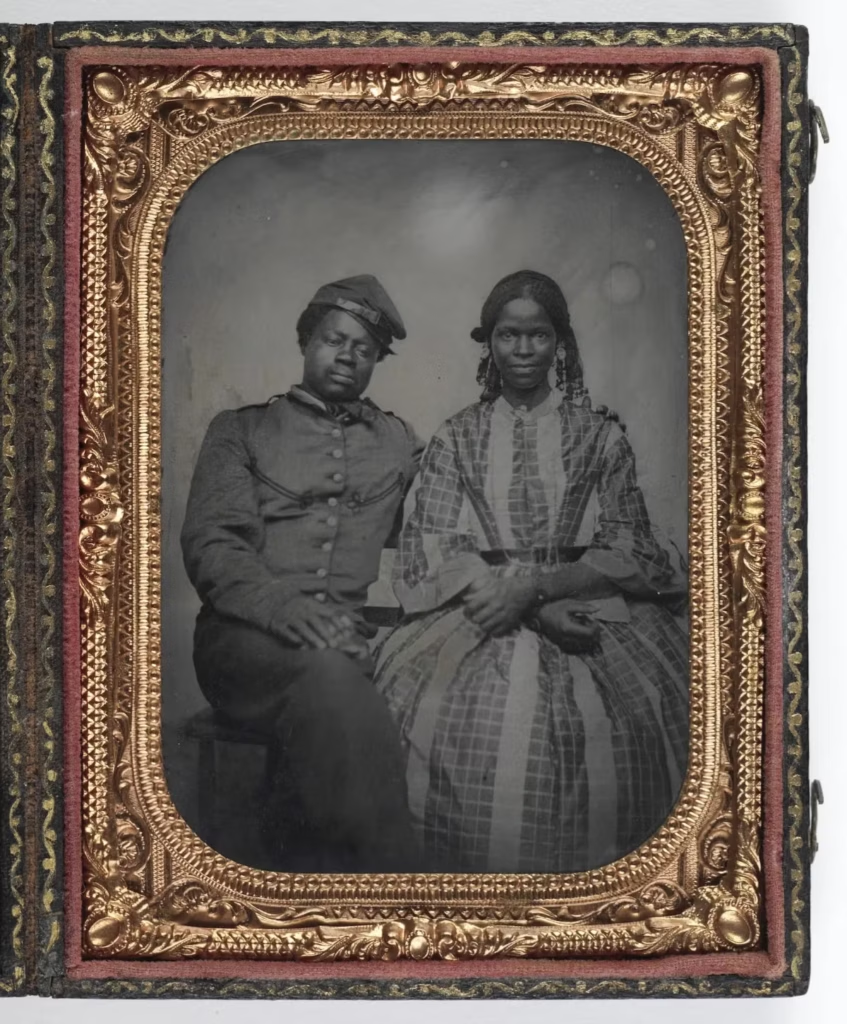
It meant the possibility of reuniting families separated by slave auctions. It meant choosing one’s own employer, learning to read, worshiping without surveillance, traveling without passes, and exercising basic human autonomy.

These were rights that generations had been denied. General Order No. 3 therefore became both a legal document and a symbol of long-delayed justice. Its annual remembrance would evolve into one of the oldest continuously celebrated African American holidays.

Why Did Enslaved People in Texas Learn of Freedom Last?
One of the defining questions surrounding Juneteenth is why emancipation arrived so late in Texas.
Several factors contributed to this delay.

Geographic Isolation

Texas sat on the western edge of the Confederacy and experienced relatively little large-scale military occupation compared with states farther east. Union forces simply lacked the manpower to occupy every region simultaneously while fighting a massive war. Without federal troops to enforce emancipation, the proclamation remained largely symbolic in areas still controlled by Confederate authorities.
The Movement of Slaveholders

As Union armies advanced through Mississippi, Louisiana, Arkansas, and other Confederate states, many slaveholders moved westward into Texas. They brought enslaved men, women, and children with them, believing Texas would remain insulated from Union victory. Ironically, this migration increased the state’s enslaved population during the final years of the Civil War. Rather than shrinking, slavery expanded in Texas even as it collapsed elsewhere.
Deliberate Suppression of Information

Historical evidence suggests that many slaveholders intentionally withheld news of emancipation. Every additional day of forced labor meant another harvested crop and another season of economic production. Some plantation owners ignored federal announcements entirely until confronted by Union soldiers. Others spread misinformation or insisted that freedom had not yet become official. This deliberate concealment delayed liberation for countless families.
Limited Communication

Modern Americans often underestimate how slowly information traveled in the nineteenth century. Without radio, television, internet, or widespread newspapers in rural communities, official government announcements depended upon physical transportation. News moved by horseback, ship, telegraph where available, and word of mouth. In isolated regions, even honest communication could take weeks or months. Combined with resistance from slaveholders, these logistical challenges made delayed emancipation almost inevitable.
What 12 Years a Slave Helps Us Understand About Juneteenth
Although Steve McQueen’s film concludes more than a decade before Juneteenth, it provides essential context for understanding why June 19 remains so important. The film shows slavery not as an abstract political issue but as an everyday system of violence maintained through fear, legal authority, and economic exploitation.

Viewers witness families torn apart. Children are sold. Names are erased. Identity itself becomes subject to ownership.

When Solomon Northup regains his freedom, audiences experience relief because they understand what freedom means after watching twelve years of unimaginable suffering. Juneteenth extends that emotional understanding from one individual to millions.

It represents the moment when countless people experienced what Solomon experienced in 1853: the restoration of personhood. The celebration therefore honors not simply legal emancipation but the recovery of humanity. It acknowledges the resilience of those who survived slavery while recognizing the immense suffering that preceded liberation.
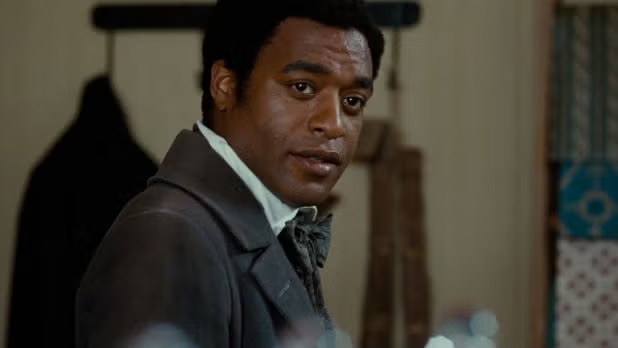
In this sense, 12 Years a Slave functions as an educational companion to Juneteenth. The film illustrates what was lost under slavery, making the meaning of freedom far more tangible.
![Directed by Steve McQueen Screenplay by John Ridley Based on Twelve Years a Slave by Solomon Northup Produced by Brad Pitt Dede Gardner Jeremy Kleiner Bill Pohlad Steve McQueen Arnon Milchan Anthony Katagas Starring Chiwetel Ejiofor Michael Fassbender Benedict Cumberbatch Paul Dano Paul Giamatti Lupita Nyong'o Sarah Paulson Brad Pitt Alfre Woodard Cinematography Sean Bobbitt Edited by Joe Walker Music by Hans Zimmer Production companies Regency Enterprises[1] River Road Entertainment[1] Plan B Entertainment[1] Film4[1] Distributed by Fox Searchlight Pictures (United States and Canada)[1] Entertainment One (United Kingdom)[2] Summit Entertainment (International)[3][2]](https://i0.wp.com/moviestohistory.com/wp-content/uploads/2026/06/12yearsaslave_coverart_1600x686_67e18248.jpeg?resize=525%2C225&ssl=1)
Reconstruction: Freedom Meets New Challenges
The arrival of emancipation did not create equality overnight. Instead, it inaugurated one of the most contested periods in American history. Reconstruction sought to rebuild the South while integrating millions of newly freed people into civic life. Congress established the Freedmen’s Bureau to assist formerly enslaved communities with education, legal representation, healthcare, and labor contracts.

Schools emerged across the South as literacy became a symbol of independence. Churches became centers of political organization and mutual aid. Families spent years searching for relatives separated by the domestic slave trade. Marriage ceremonies legitimized relationships that slavery had refused to recognize.
Yet progress encountered fierce resistance.

Former Confederates organized violent campaigns to preserve white supremacy. Black Codes attempted to restrict labor mobility and civil rights. Paramilitary organizations used intimidation and murder to suppress Black political participation.
The promise of Reconstruction remained incomplete.

Many historians describe Reconstruction as America’s first great experiment in multiracial democracy—and one that was undermined long before its goals could be fully realized. Understanding Juneteenth therefore requires acknowledging both triumph and tragedy.
Freedom arrived, but justice remained elusive.

The Evolution of Juneteenth Celebrations
Despite political setbacks, formerly enslaved Texans ensured that June 19 would never be forgotten. Early celebrations centered around churches, family reunions, music, prayer services, and communal meals. Communities pooled resources to purchase land specifically dedicated to Juneteenth festivities when segregation prevented access to public parks. These “Emancipation Parks” became powerful symbols of self-determination and collective memory.

By the early twentieth century, Juneteenth celebrations had spread throughout the Southwest as African Americans migrated in search of employment. The Great Migration carried the tradition into cities such as Chicago, Los Angeles, Oakland, and beyond.

Although public recognition fluctuated during periods of war and economic hardship, families continued passing the holiday from generation to generation. During the Civil Rights Movement, Juneteenth acquired renewed significance as activists linked emancipation to ongoing struggles for voting rights, equal protection under the law, and educational opportunity.

The holiday increasingly represented not only the end of slavery but also the continuing pursuit of racial justice. Today, Juneteenth celebrations include historical reenactments, educational programs, concerts, festivals, museum exhibits, parades, and public discussions across the United States. The holiday has become an opportunity to reflect on both historical achievement and contemporary responsibility.

From Community Tradition to Federal Holiday
For decades, activists worked to secure broader national recognition for Juneteenth. Among the most influential advocates was educator and activist Opal Lee, often called the “Grandmother of Juneteenth.”

Her cross-country walks and tireless campaigning brought renewed public attention to the holiday’s historical importance. Following nationwide conversations about race and history in 2020, bipartisan support grew rapidly in Congress.

On June 17, 2021, President Joe Biden signed legislation establishing Juneteenth National Independence Day as the eleventh federal holiday in the United States. The designation acknowledged what African American communities had celebrated for more than 150 years: freedom delayed is still worth commemorating. Opal Lee was present at the White House for the signing ceremony.
Federal recognition did not create Juneteenth. It affirmed a tradition already deeply rooted in American history.


Why This History Still Matters
12 Years a Slave reminds audiences that slavery was not simply an institution of forced labor but a system designed to erase identity, family, and hope. Juneteenth reminds us that liberation required persistence, sacrifice, and federal enforcement. Together, they tell a larger American story. Freedom was never inevitable. It had to be demanded, defended, and remembered.
The journey from Solomon Northup’s kidnapping in 1841 to Juneteenth in 1865 illustrates that emancipation unfolded over decades rather than moments. Even after legal freedom arrived, the struggle for equality continued through Reconstruction, the Civil Rights Movement, and into the present day.

For MoviesToHistory.com, that is perhaps the most valuable lesson historical films can teach. They connect individual lives to national events. They transform dates into human experiences. And they encourage audiences not merely to watch history but to understand it.


Every Juneteenth celebration honors the millions whose names history never recorded, whose stories resemble Solomon Northup’s in ways both seen and unseen, and whose resilience helped redefine the meaning of American freedom. Their journey is not merely part of the past.
It remains part of the nation’s ongoing conversation about justice, memory, and the unfinished work of liberty.
![Directed by Steve McQueen Screenplay by John Ridley Based on Twelve Years a Slave by Solomon Northup Produced by Brad Pitt Dede Gardner Jeremy Kleiner Bill Pohlad Steve McQueen Arnon Milchan Anthony Katagas Starring Chiwetel Ejiofor Michael Fassbender Benedict Cumberbatch Paul Dano Paul Giamatti Lupita Nyong'o Sarah Paulson Brad Pitt Alfre Woodard Cinematography Sean Bobbitt Edited by Joe Walker Music by Hans Zimmer Production companies Regency Enterprises[1] River Road Entertainment[1] Plan B Entertainment[1] Film4[1] Distributed by Fox Searchlight Pictures (United States and Canada)[1] Entertainment One (United Kingdom)[2] Summit Entertainment (International)[3][2]](https://i0.wp.com/moviestohistory.com/wp-content/uploads/2026/06/IMG_1285.jpg?resize=525%2C296&ssl=1)
12 Years a Slave is available now with a subscription to Hulu…

Discover more from Movies To History.com
Subscribe to get the latest posts sent to your email.
Related Posts
‘Death By Lightning’ (2025) – Official Trailer:
If Lightning Strikes... The assassination of President James A. Garfield is one of the most consequential — and often overlooked — moments in American political history. Now, that story arrives on screen in the gripping historical drama Death…
‘Hotel Rwanda’ – Interview:
DON CHEADLE ON "MOVIE TALK"... In part of a 2021 interview with the YouTube channel Retrospective Show's Movie Talk, acclaimed actor Don Cheadle sat down with journalist Peter Bart to discuss his roles in two iconic films, the 2004 film, Hotel Rwanda, and the 2001 film, Ocean's Eleven. The conversation began with Hotel…
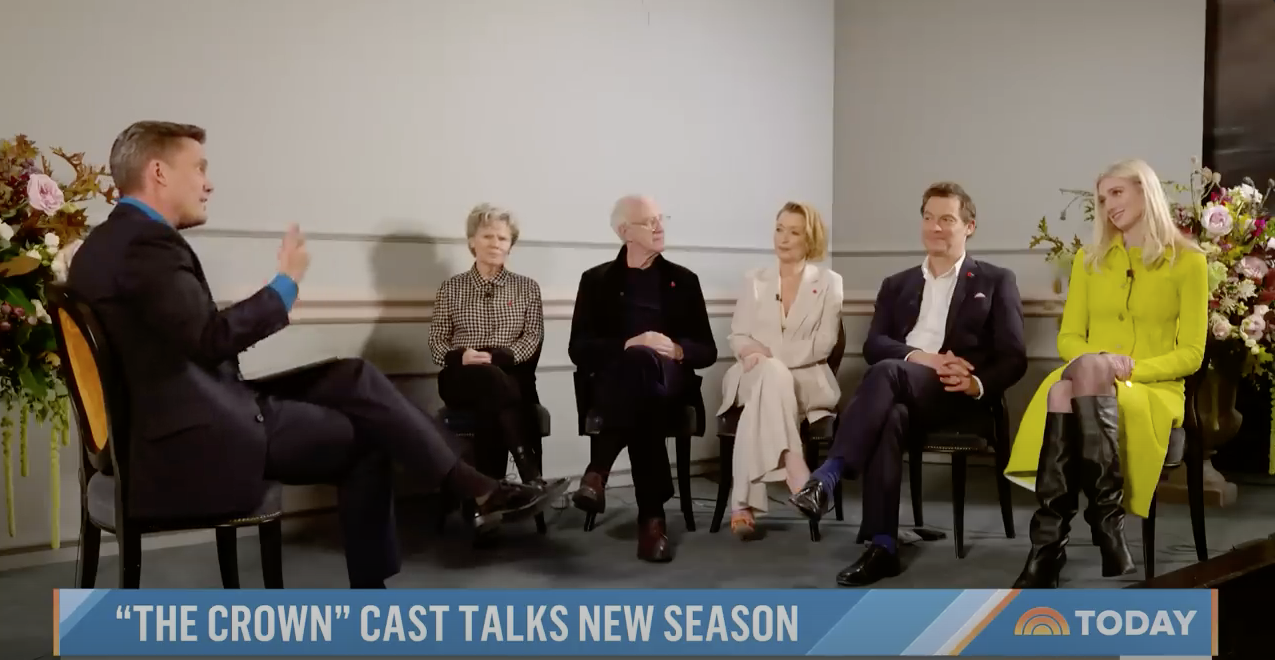
‘The Crown’ – Interview:
The Crown Cast Talks New Season... In this TODAY Show interview that occurred on November 9, 2022, Imelda Staunton, Jonathan Pryce, Lesley Manville, Dominic West, and Elizabeth Debicki talk to TODAY’s Keir Simmons about season…