

Political scandal has always been fertile ground for cinema. Whistleblowers — those who risk careers, reputations, and even freedom to expose secrets — remain some of the most compelling figures on screen. From Deep Throat in Watergate to Edward Snowden in the digital age, Hollywood has dramatized the tension between truth, loyalty, and power.

In this post, we’ll explore how whistleblowers have been portrayed in film and television through five defining works: All the President’s Men (1976), The Post (2017), White House Plumbers (2023), Snowden (2016), and The Fifth Estate (2013). Together, they reveal how each era grapples with secrecy and accountability.


![Directed by Oliver Stone Screenplay by Kieran Fitzgerald Oliver Stone Based on The Snowden Files by Luke Harding Time of the Octopus by Anatoly Kucherena Produced by Moritz Borman Eric Kopeloff Philip Schulz-Deyle Fernando Sulichin Starring Joseph Gordon-Levitt Shailene Woodley Melissa Leo Zachary Quinto Tom Wilkinson Scott Eastwood Logan Marshall-Green Timothy Olyphant Ben Schnetzer LaKeith Lee Stanfield Rhys Ifans Nicolas Cage Cinematography Anthony Dod Mantle Edited by Alex Marquez Lee Percy Music by Craig Armstrong Production companies Endgame Entertainment Vendian Entertainment KrautPack Entertainment Distributed by Open Road Films (United States) Universum Film/Walt Disney Studios Motion Pictures Germany (Germany)[1] Pathé Distribution (France)[2]](https://i0.wp.com/moviestohistory.com/wp-content/uploads/2025/07/Snowden-656x1024.jpg?ssl=1)
![Directed by Bill Condon Screenplay by Josh Singer Based on Inside WikiLeaks by Daniel Domscheit-Berg WikiLeaks by David Leigh and Luke Harding Produced by Steve Golin Bard Dorros Michael Sugar Starring Benedict Cumberbatch Daniel Brühl Anthony Mackie David Thewlis Alicia Vikander Stanley Tucci Laura Linney Cinematography Tobias A. Schliessler Edited by Virginia Katz Music by Carter Burwell Production companies DreamWorks Pictures Reliance Entertainment Participant Media Anonymous Content Distributed by Walt Disney Studios Motion Pictures[a] (North America and select international territories) Reliance Distribution (India)[1] Mister Smith Entertainment (International)](https://i0.wp.com/moviestohistory.com/wp-content/uploads/2025/08/The-Fifth-Estate-.jpg?ssl=1)
Whistleblowing on Screen: A Cultural Mirror
Whistleblowers are controversial figures. To some, they are patriots protecting democracy by exposing corruption or lies. To others, they are traitors undermining institutions and endangering national security. Films about them inevitably inherit this tension. The way these stories are told — whether reverent, skeptical, or ambiguous — reveals how society at that moment views government, media, and the balance between secrecy and transparency.


All the President’s Men (1976): Whistleblowing as Heroism
Few films define the whistleblower narrative more than Alan J. Pakula’s All the President’s Men. The story of Washington Post reporters Bob Woodward and Carl Bernstein investigating the Watergate break-in captures the iconic image of “Deep Throat” (later revealed as FBI Associate Director Mark Felt).


Here, the whistleblower is portrayed as shadowy but vital — a courageous insider who risks everything to reveal truth to the press. The film lionizes journalism as democracy’s watchdog, framing the act of leaking as a moral duty against corruption. Released just two years after Nixon’s resignation, it resonated with an audience still reeling from the scandal.
Cinematically, the dimly lit garage scenes and methodical pacing symbolize secrecy and danger. More broadly, the film set the tone for whistleblowing as heroic, aligning it with public service and accountability.

👉 Related read: Boardwalk vs. History: What Really Happened in Atlantic City

The Post (2017): Courage in Publishing
Steven Spielberg’s The Post revisits an earlier scandal: the Pentagon Papers, leaked by Daniel Ellsberg. The classified documents revealed decades of U.S. government deception about the Vietnam War.


Unlike All the President’s Men, this story is less about the leaker himself and more about the press’s responsibility. Katharine Graham (Meryl Streep) and Ben Bradlee (Tom Hanks) grapple with whether to publish the documents at risk of government reprisal. The film emphasizes whistleblowing as a collective act: the bravery of the insider who leaks, but equally, the courage of those who amplify the truth in the face of power.
By focusing on Graham’s evolution from hesitant socialite to decisive publisher, the film also reframes the whistleblower story around themes of gender, leadership, and the moral imperative of the free press. Released during the Trump administration, it drew clear parallels to ongoing debates about press freedom and political secrecy.

👉 Related read: The Real Kay Graham: Publisher, Trailblazer, Icon

White House Plumbers (2023): Whistleblowers by Accident
HBO’s satirical miniseries White House Plumbers takes a different approach, exploring Watergate not from the perspective of the press or leakers but from the perpetrators — E. Howard Hunt (Woody Harrelson) and G. Gordon Liddy (Justin Theroux).


Here, whistleblowing isn’t an act of conscience but the byproduct of incompetence. The botched burglary and cover-up are portrayed as almost farcical, undercutting the mythic quality of All the President’s Men. By showing how power unravels itself through hubris and paranoia, the series indirectly highlights the importance of those who expose corruption.
Rather than a heroic whistleblower, the series suggests that sometimes truth emerges less from brave insiders than from the inevitable collapse of corruption under its own weight.

👉 Related read: White House Plumbers vs. History – The True Story Behind the Watergate Break-In

Snowden (2016): The Digital Age Whistleblower
Oliver Stone’s Snowden dramatizes the story of Edward Snowden, the former NSA contractor who leaked classified documents about mass surveillance programs. Here the whistleblower is the protagonist — an ordinary man drawn into extraordinary decisions.


Stone portrays Snowden as principled, conflicted, and heroic, emphasizing the personal costs of his decision: exile, strained relationships, permanent separation from his home country. The film leans toward sympathetic portrayal, aligning Snowden with the whistleblower tradition of Ellsberg and Felt.
Cinematically, it emphasizes technology’s power and opacity — servers, screens, code — contrasting the analog secrecy of Watergate with the digital surveillance state. Released amid debates about privacy, terrorism, and government overreach, it reflected the anxieties of the 21st century, when secrets could be copied with a keystroke.

👉 Related read: Legacy of Leaks: From the Pentagon Papers to Snowden:

The Fifth Estate (2013): WikiLeaks and Ambiguity
If Snowden casts its whistleblower in heroic light, The Fifth Estate takes a more ambiguous view of Julian Assange and WikiLeaks. The film depicts the rise of the organization, its radical transparency, and the fallout from the publication of classified diplomatic cables.


Unlike All the President’s Men or The Post, where truth is clearly virtuous, this film wrestles with the darker side of whistleblowing: recklessness, ego, and unintended consequences. Assange is portrayed as both visionary and manipulative, raising questions about the ethics of radical transparency.
Its mixed critical reception reflected the unsettled place WikiLeaks occupied in public opinion — praised by some as a champion of truth, vilified by others as a danger to security and diplomacy.

👉 Related read: The Real War Dogs: Arms Dealers, Scandals & Global Supply Chains:

Why These Stories Endure
Taken together, these films reveal an evolution:
- 1970s–1980s: Whistleblowers framed as patriots, protecting democracy (All the President’s Men).

- 2010s: A return to that ideal, but complicated by debates over gender, press freedom, and accountability (The Post).

- 2010s–2020s: A shift toward ambiguity, showing whistleblowers as complex, flawed, or even dangerous (The Fifth Estate, Snowden).
![Directed by Bill Condon Screenplay by Josh Singer Based on Inside WikiLeaks by Daniel Domscheit-Berg WikiLeaks by David Leigh and Luke Harding Produced by Steve Golin Bard Dorros Michael Sugar Starring Benedict Cumberbatch Daniel Brühl Anthony Mackie David Thewlis Alicia Vikander Stanley Tucci Laura Linney Cinematography Tobias A. Schliessler Edited by Virginia Katz Music by Carter Burwell Production companies DreamWorks Pictures Reliance Entertainment Participant Media Anonymous Content Distributed by Walt Disney Studios Motion Pictures[a] (North America and select international territories) Reliance Distribution (India)[1] Mister Smith Entertainment (International)](https://i0.wp.com/moviestohistory.com/wp-content/uploads/2025/08/The-Fifth-Estate-.jpg?resize=525%2C779&ssl=1)
![Directed by Oliver Stone Screenplay by Kieran Fitzgerald Oliver Stone Based on The Snowden Files by Luke Harding Time of the Octopus by Anatoly Kucherena Produced by Moritz Borman Eric Kopeloff Philip Schulz-Deyle Fernando Sulichin Starring Joseph Gordon-Levitt Shailene Woodley Melissa Leo Zachary Quinto Tom Wilkinson Scott Eastwood Logan Marshall-Green Timothy Olyphant Ben Schnetzer LaKeith Lee Stanfield Rhys Ifans Nicolas Cage Cinematography Anthony Dod Mantle Edited by Alex Marquez Lee Percy Music by Craig Armstrong Production companies Endgame Entertainment Vendian Entertainment KrautPack Entertainment Distributed by Open Road Films (United States) Universum Film/Walt Disney Studios Motion Pictures Germany (Germany)[1] Pathé Distribution (France)[2]](https://i0.wp.com/moviestohistory.com/wp-content/uploads/2025/07/Snowden.jpg?resize=525%2C820&ssl=1)
- Recent depictions: A satirical angle that shows corruption imploding without heroes (White House Plumbers).

What unites them is the tension between secrecy and accountability, and the enduring question: when does loyalty to truth outweigh loyalty to institutions?

The Cinema of Secrets
Whistleblower films serve as cultural barometers. They show us not just what was leaked, but how society at that moment wanted to see the leaker. Hero, villain, martyr, egotist — the whistleblower is never simple.

As governments and corporations grow more opaque and technology makes secrecy both harder and more fragile, these stories will continue to resonate. Whether in a dimly lit parking garage or on an encrypted server, the figure of the whistleblower reminds us of the high stakes of truth in a democracy.

Cinema ensures their legacy endures — not only as historical fact, but as ongoing debates about the balance of power, secrecy, and the courage to speak out.

👉 Explore more on MoviesToHistory.com


White House Plumbers is available now with a subscription to HBO Max…
Discover more from Movies To History.com
Subscribe to get the latest posts sent to your email.
Related Posts
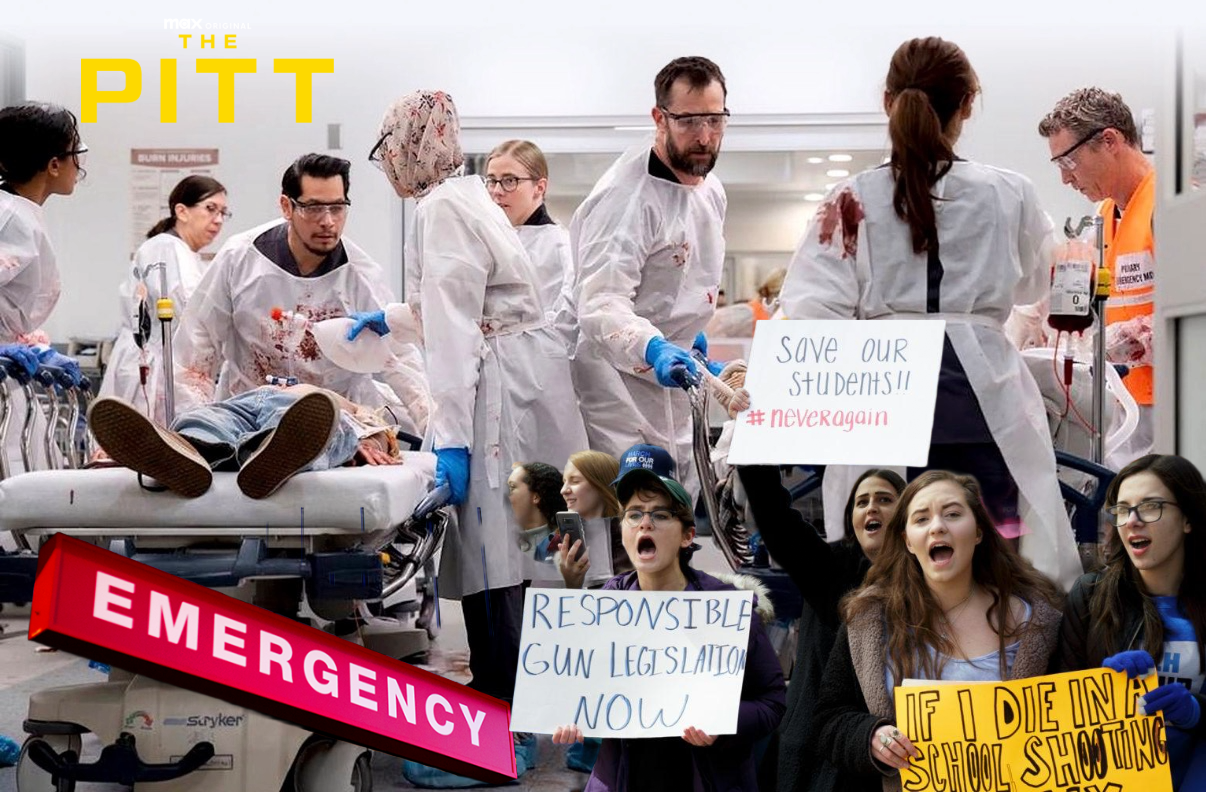
The Pitt “6:00 P.M.” Breakdown: Mass Casualty Events, Gun Violence, and the Reality ERs Face –
When Television Stops Feeling Like Fiction There is a moment in The Pitt’s episode “6:00 P.M.” when the emergency department stops functioning like a workplace and begins operating like a battlefield. The shift is not marked…

My Top Ten At Sea Movies:
To commemorate the Featured Film Blog of the month for February, The Perfect Storm, I have gathered My Top Ten At Sea Movies! If you're looking for the best film to watch featuring the cast…
‘No Time to Die’ – Official Trailer –
In 2022, James Bond 007© celebrates its 60th Anniversary of the first James Bond film, Dr. No, and to commemorate that celebration my Featured Blog for October is the newest film and Daniel Craig's final…