

America’s Last Royal Romance
Few modern American couples have been mythologized quite like John F. Kennedy Jr. and Carolyn Bessette-Kennedy. Long before celebrity culture became fully digitized through Instagram and TikTok, the pair existed at the intersection of politics, fashion, tabloid obsession, and inherited national mythology. Their relationship unfolded during a transitional moment in American media history — a period when paparazzi culture exploded, cable news blurred into entertainment, and the Kennedy family remained deeply embedded in the public imagination.


FX’s Love Story: John F. Kennedy Jr. & Carolyn Bessette attempts to reconstruct that relationship as both intimate romance and cultural tragedy. Like many prestige dramatizations inspired by real people, the series balances historical detail with emotional interpretation. It presents a version of the couple that feels cinematic, glamorous, and mournful, but not always historically complete.

The central tension of the series — and of the real story itself — is the conflict between public mythology and private humanity. Who were these people when cameras were not following them? How much of their identity was constructed by tabloids, magazines, political nostalgia, and America’s obsession with Camelot? And how accurately can television reconstruct lives that were already heavily fictionalized in real time?

This launch-week deep dive examines the real history behind the series, comparing the dramatized version of events with documented history, cultural context, and the broader media environment of the 1990s.


Who Was John F. Kennedy Jr. Beyond the Myth?
The Child America Watched Grow Up
For many Americans, John F. Kennedy Jr. was never simply a private citizen. From infancy, he represented continuity after national trauma.

The image of the three-year-old saluting his father’s coffin during the funeral procession of John F. Kennedy became one of the defining photographs of twentieth-century American political memory. That moment effectively transformed him into a symbolic national figure before he was old enough to understand the role imposed upon him.


The series correctly portrays how impossible it was for Kennedy Jr. to separate himself from his father’s legacy. Yet dramatizations often simplify this burden into romantic melancholy. The reality was considerably more complicated.


John Jr. spent much of his adult life attempting to create an identity outside presidential mythology. Friends and colleagues frequently described him as personable, funny, and self-aware about his celebrity status, but also deeply frustrated by the expectations attached to his name.

Unlike many political heirs, he did not immediately pursue elected office. Instead, he explored law, journalism, publishing, fitness culture, and philanthropy. His public image often emphasized charisma rather than ideological ambition.


The Pressure of Camelot
The series captures the emotional shadow of Camelot, but it occasionally underplays how politically loaded the Kennedy name remained during the 1990s.
The Kennedy family represented more than nostalgia. By the 1990s, they symbolized:
- Liberal American idealism
- Political glamour
- Catholic upward mobility
- Dynastic tragedy
- Media fascination with generational succession


There was constant speculation that Kennedy Jr. would eventually run for office. Journalists treated his future candidacy as inevitable even when he publicly resisted political ambitions.

This created a strange contradiction:
- America wanted him to become his father.
- John Jr. seemed determined not to become a replica of him.

That internal tension forms one of the most historically accurate emotional threads in the series.

George Magazine and Reinvention
One of the show’s strongest historical foundations is its depiction of George magazine.

Founded in 1995, George attempted to merge politics with celebrity culture in ways that now feel remarkably predictive of modern media. The publication treated politicians like cultural icons and framed public life through entertainment aesthetics.
Today, that concept feels ordinary. In the 1990s, it was revolutionary.


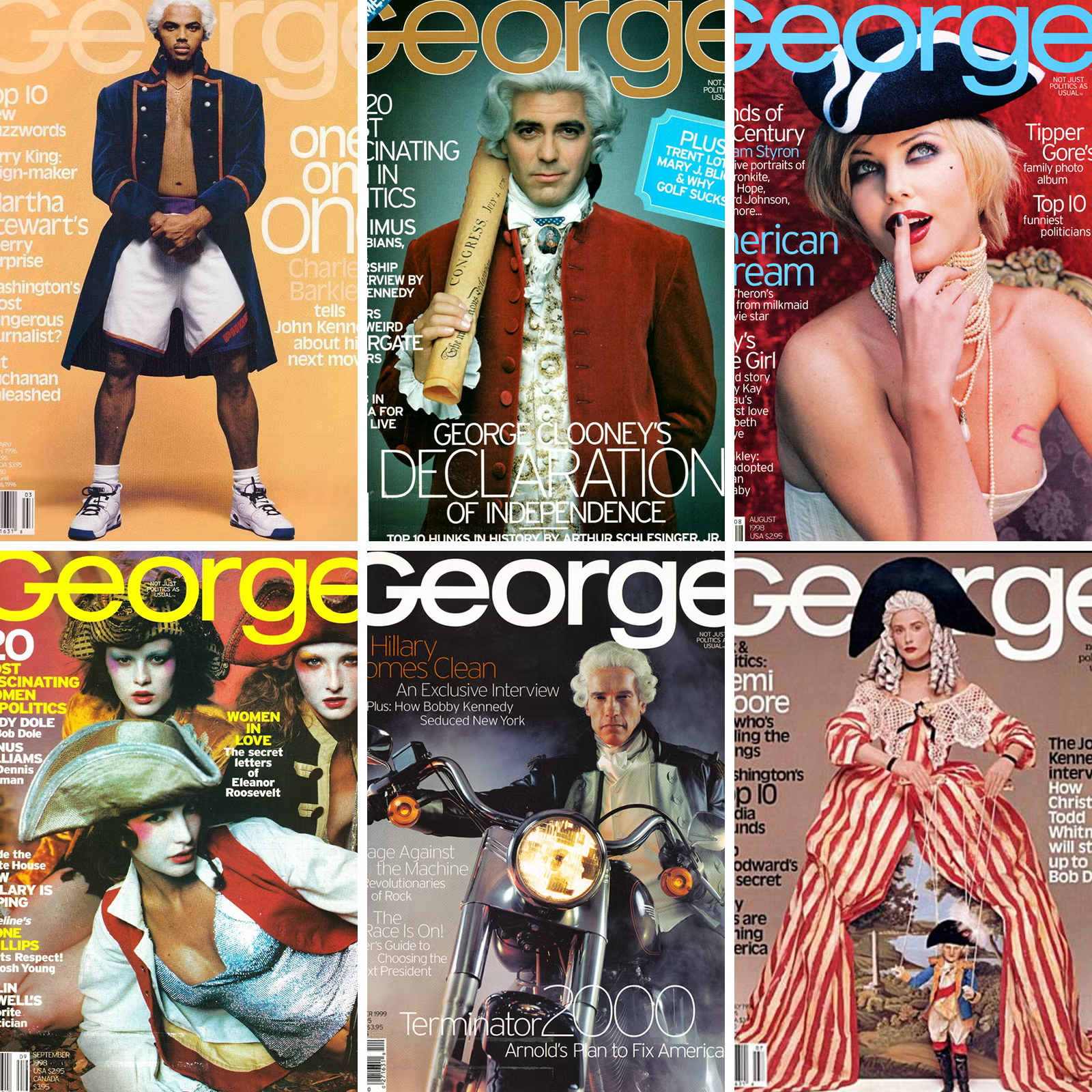
The series correctly portrays Kennedy Jr. as creatively ambitious and eager to modernize political journalism. However, dramatizations sometimes exaggerate the magazine’s influence while minimizing its business struggles.


In reality:
- George received enormous media attention at launch.
- Kennedy’s celebrity drove circulation.
- Editorially, it struggled to define a consistent identity.
- Financial sustainability became increasingly difficult.
The magazine reflected Kennedy Jr.’s broader challenge: translating symbolic fame into substantive professional achievement.


Public Persona vs. Private Complexity
Television often portrays Kennedy Jr. as effortlessly charming and emotionally composed. Historical accounts suggest someone more conflicted.
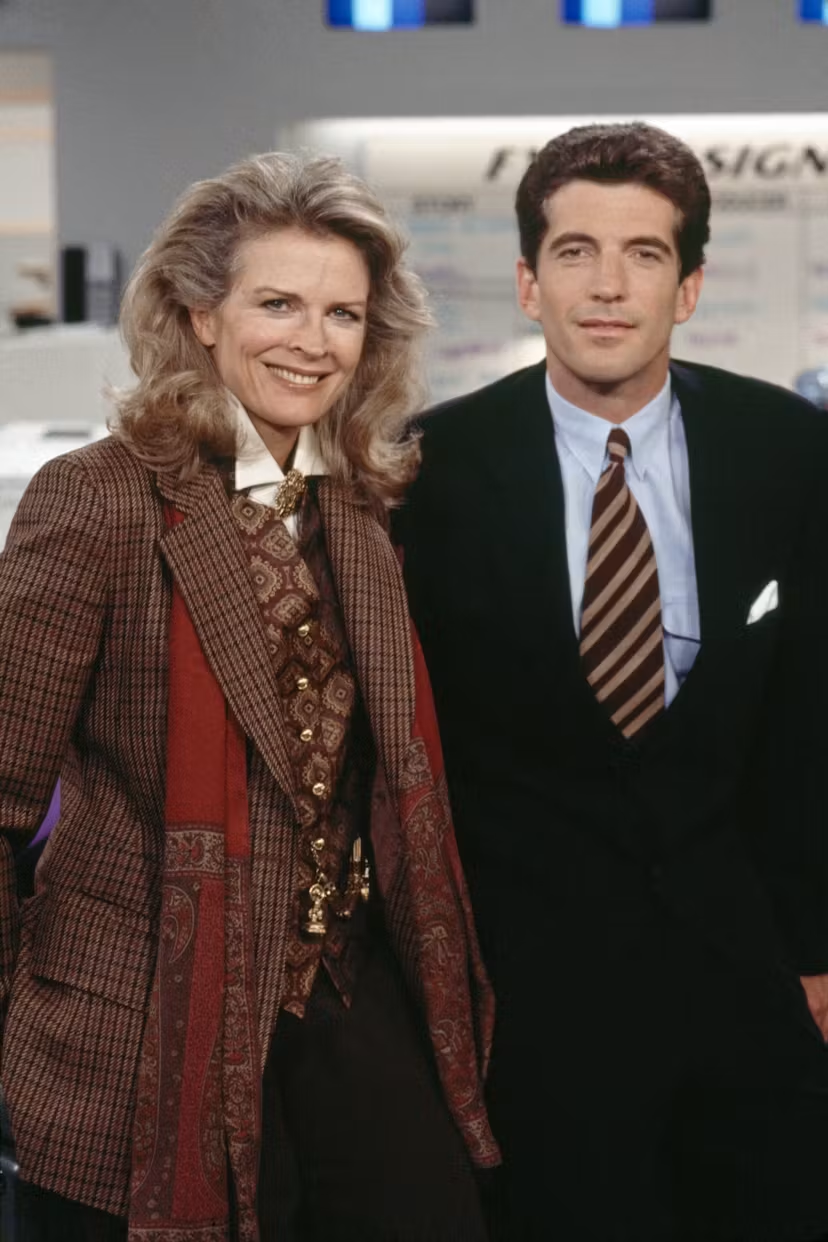
Friends described him as:
- Intensely loyal
- Competitive
- Sometimes impulsive
- Occasionally insecure about professional legitimacy
- Protective of his privacy despite living publicly
The series occasionally drifts into idealization, smoothing over contradictions that made him more human.
That is one of the recurring issues with dramatizing iconic figures: audiences frequently resist portrayals that disrupt mythology.


Who Was Carolyn Bessette-Kennedy Before Camelot?
More Than “The Kennedy Wife”
One of the most important historical corrections the series attempts is restoring Carolyn Bessette-Kennedy’s individuality.

For decades, media narratives often reduced her to:
- Fashion icon
- Reluctant celebrity
- Tragic widow figure
- Accessory to the Kennedy dynasty


In reality, Carolyn Bessette had already built a sophisticated professional identity before meeting Kennedy Jr.

Born in New York and raised partly in Connecticut, she developed a reputation for intelligence, composure, and sharp interpersonal skills. After college, she entered the fashion industry and eventually worked for Calvin Klein as a publicist.
The series accurately reflects how influential the fashion world was in shaping her public identity.


The Minimalist Icon of the 1990s
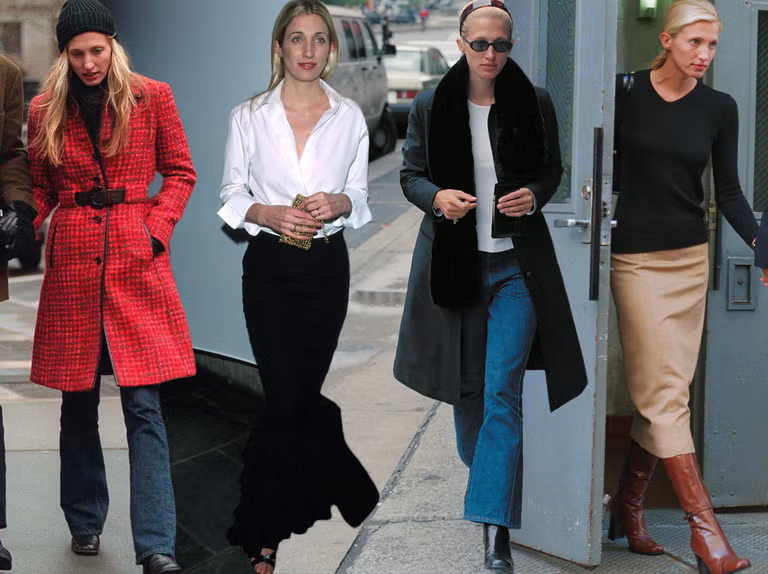
Carolyn became emblematic of 1990s minimalist fashion culture:
- Neutral palettes
- Slip dresses
- Clean silhouettes
- Understated luxury
- Controlled public presentation
Unlike many celebrity spouses of later decades, she did not actively seek publicity. Ironically, that reluctance intensified media fascination.


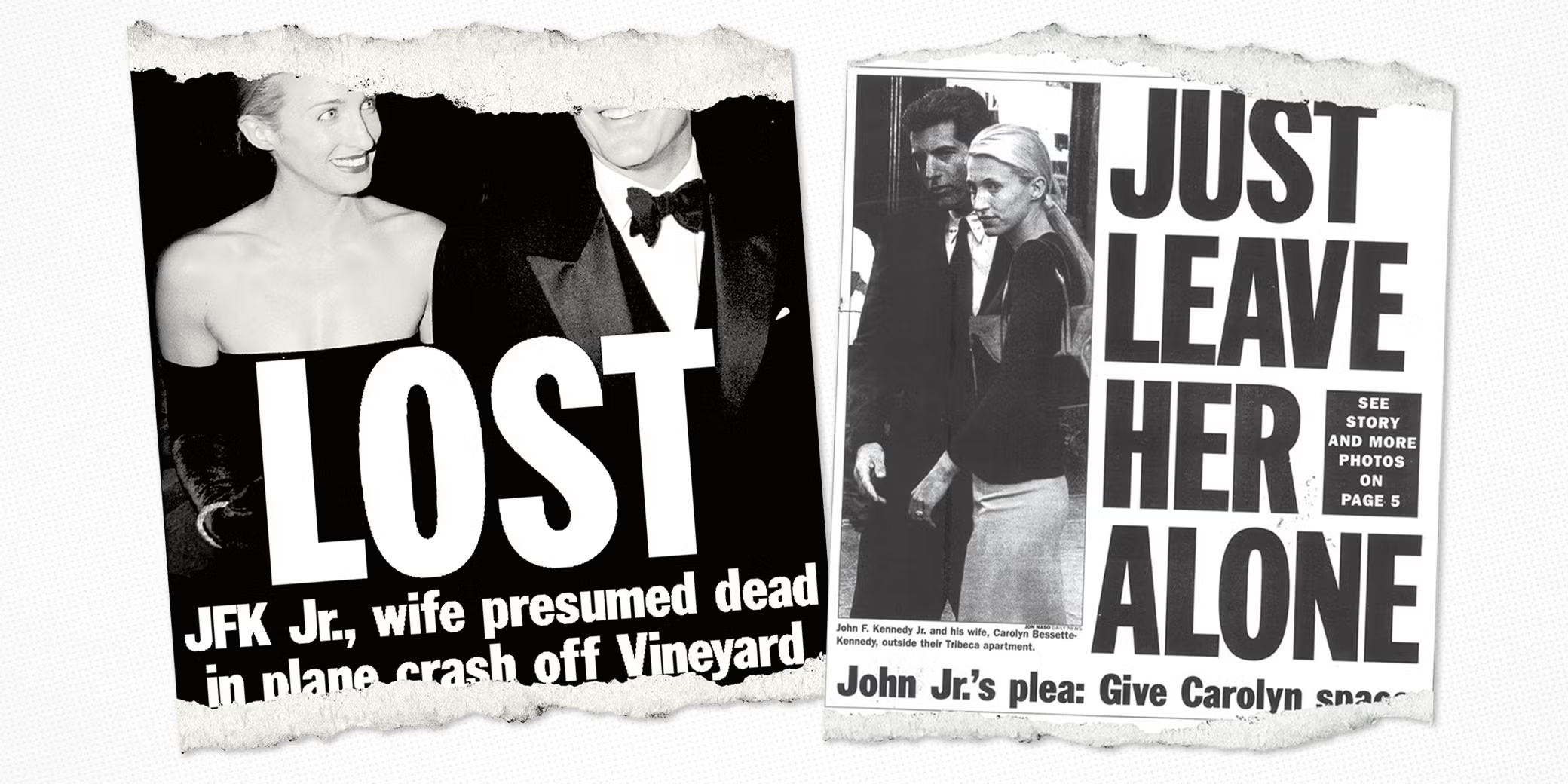
The show effectively demonstrates how her visual image became commodified by tabloids and magazines. Paparazzi culture transformed ordinary moments — shopping, walking, leaving apartments — into spectacle.


Her influence on fashion remains significant today because her style represented a transitional cultural moment:
- The decline of 1980s excess
- The rise of minimalist celebrity aesthetics
- Fashion as identity branding

Media Harassment and Psychological Pressure
One area where the series becomes especially historically important is its depiction of paparazzi aggression.

By the mid-1990s:
- Tabloid competition intensified dramatically.
- Celebrity photography became more invasive.
- 24-hour news cycles increased demand for constant content.

This environment became even more extreme after the death of Princess Diana in 1997, another figure consumed by media obsession.


Carolyn reportedly struggled with the relentless surveillance surrounding her relationship. Friends frequently described her discomfort with fame and loss of anonymity.

The show captures this pressure emotionally, though real-life circumstances may have been even harsher than dramatized.

Timeline vs. Series Structure
How the Series Reshapes Time
Like most prestige historical dramas, the series compresses chronology for emotional coherence.

This creates several common dramatization techniques:
- Narrative compression
- Composite conversations
- Emotional foreshadowing
- Simplified interpersonal conflicts
The relationship between Kennedy Jr. and Bessette unfolded over several years, but the series structures events in ways designed to heighten inevitability and tragedy. This approach is dramatically effective but historically selective.

The Courtship
The real relationship reportedly began in the early-to-mid 1990s after meeting through fashion and social circles connected to New York media culture.

The show emphasizes instant emotional chemistry, but real relationships evolve through less cinematic rhythms:
- Scheduling conflicts
- Media pressure
- Career stress
- Family tensions
- Public scrutiny

Historical reporting suggests the relationship was passionate but also periodically strained.
The series occasionally softens those tensions in favor of romantic framing.


Marriage and Privacy
The secret 1996 wedding is one of the most famous moments in the couple’s public story.
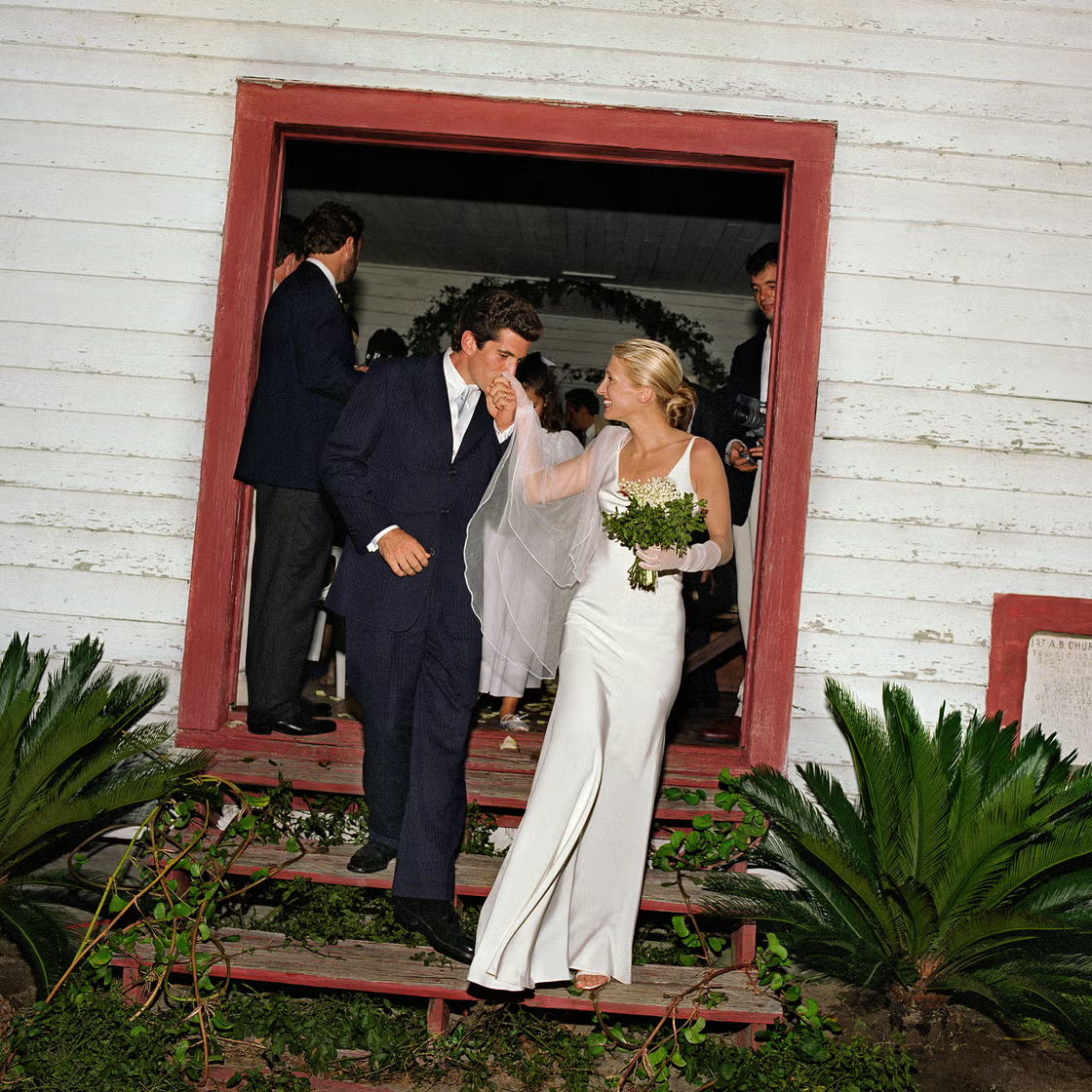
The ceremony on Cumberland Island, Georgia, became legendary partly because it temporarily defeated the tabloid machine. For a brief moment, they successfully controlled their own narrative.

The series presents this event as fairy-tale triumph. Historically, it also reflected:
- Extreme distrust of media
- Security concerns
- Desire for autonomy
- Anxiety about public intrusion
Their ability to keep the wedding secret became almost as culturally important as the wedding itself.

The Final Years
The later years of the marriage are often portrayed through tragic hindsight.


Many dramatizations unintentionally reshape ordinary marital tensions into symbolic warnings of impending catastrophe.
Historical reality is usually less narratively neat.

Accounts from friends and journalists suggest:
- The marriage experienced stress.
- Media pressure remained intense.
- Professional frustrations affected both partners.
- They also remained deeply connected and protective of one another.
The challenge for dramatizations is avoiding retrospective fatalism — the tendency to portray every disagreement as foreshadowing tragedy.

What the Show Omits
1. The Media Frenzy Culture of the 1990s
This is arguably the series’ largest historical omission.

You cannot fully understand Kennedy Jr. and Bessette-Kennedy without understanding the media ecosystem surrounding them.

The 1990s marked a turning point in celebrity culture:
- Paparazzi agencies expanded aggressively.
- Cable television intensified competition.
- Tabloid magazines exploded commercially.
- Early internet gossip culture emerged.
This was the decade of:
- TMZ-style preconditions
- Tabloid wars
- Endless airport-photo culture
- Celebrity commodification
The couple existed inside a machine designed to monetize intimacy.

The series portrays paparazzi as intrusive individuals. Historically, the issue was systemic:
- Entire industries depended on constant celebrity access.
- Public appetite rewarded invasive coverage.
- Editors prioritized emotional spectacle over privacy.
In many ways, John Jr. and Carolyn were prototypes for twenty-first century celebrity surveillance culture.

2. The Political Legacy Shadow
The show also underplays how politically symbolic Kennedy Jr. remained.

Even when he avoided politics directly, the public projected political meaning onto him.

Every appearance triggered speculation:
- Would he run for Senate?
- Could he become president?
- Was Camelot returning?
The burden of inherited mythology shaped his identity more deeply than the series sometimes acknowledges.


This political dimension also affected Carolyn. She was not simply marrying a celebrity. She was entering America’s most mythologized political family.
That distinction matters historically.

3. Carolyn’s Interior Life
While the series attempts to humanize Carolyn, historical documentation of her internal emotional world remains limited.

This creates a common issue in biographical dramatization:
- Writers fill emotional gaps through interpretation.
Some scenes therefore reflect speculation more than documented fact.
The challenge becomes ethical:
How much emotional interiority should dramatizations invent for real people who cannot clarify their own perspective?

4. The Economics of Fame
Another overlooked element is how celebrity itself functioned economically.
By the late 1990s:
- Publicity was monetized constantly.
- Fashion branding relied on celebrity visibility.
- Tabloids competed for exclusives.
- Television increasingly blurred journalism and entertainment.
Kennedy Jr. and Carolyn became profitable symbols. The series addresses emotional costs more than structural incentives.
Historically, both dimensions mattered.


The Ethics of Romanticizing Real Tragedy
One of the most significant questions surrounding the series is whether it romanticizes a real-life tragedy.

This debate echoes broader conversations about:
- Celebrity biopics
- Prestige true-crime dramatizations
- Historical adaptation ethics
- Trauma as entertainment
The deaths of Kennedy Jr., Carolyn Bessette-Kennedy, and Lauren Bessette in the 1999 plane crash remain emotionally charged for many Americans.


Dramatizations risk transforming grief into aesthetic mythology.
The series walks a delicate line:
- It critiques media obsession.
- It also benefits from renewed fascination with the couple.
That contradiction is central to modern prestige television.


Why the Story Still Fascinates America
The continued cultural obsession with Kennedy Jr. and Carolyn reveals several broader American fixations:
- Political dynasties
- Youthful tragedy
- Glamour
- Celebrity intimacy
- Nostalgia for pre-digital fame
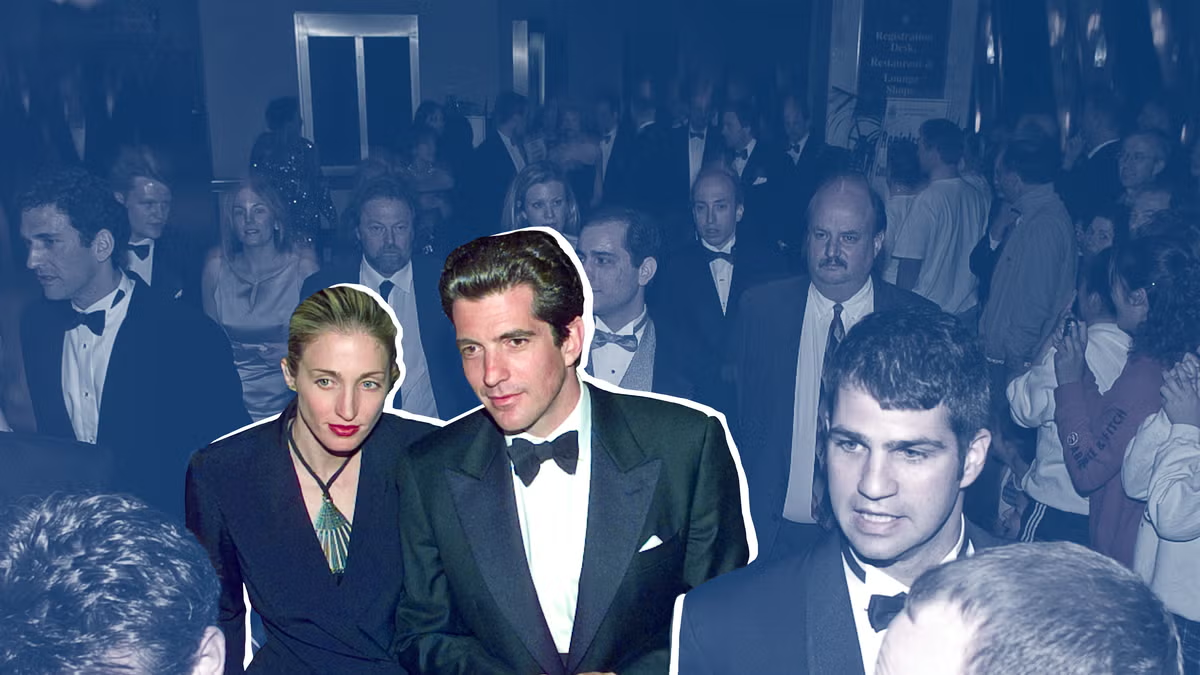
They are often remembered as “the last great American royal couple.”

That phrase itself reflects mythology more than historical reality. Yet myths persist because they fulfill emotional and cultural needs.
The series succeeds most when it interrogates those myths instead of simply reproducing them.

Final Take: FX’s Love Story: John F. Kennedy Jr. & Carolyn Bessette
FX’s Love Story: John F. Kennedy Jr. & Carolyn Bessette is less a documentary reconstruction than an interpretation of cultural memory.

Its strengths include:
- Strong atmospheric recreation
- Effective performances
- Exploration of media intrusion
- Humanization of Carolyn Bessette-Kennedy
Its weaknesses include:
- Occasional mythologizing
- Limited political context
- Underdeveloped exploration of 1990s media economics
- Romantic framing that sometimes simplifies emotional complexity
Historically, the series is most accurate when depicting pressure rather than precise events.

The real story of John Jr. and Carolyn was never simply a romance. It was a collision between celebrity culture, political mythology, fashion branding, and media commodification during a transformative period in American public life.
That complexity is what makes their story historically compelling — and why dramatizations continue returning to it decades later.

Accuracy Meter: FX’s Love Story: John F. Kennedy Jr. & Carolyn Bessette
Historical Context — 6/10
The series captures broad emotional realities but omits significant political and media-history context.
Character Depth — 7/10
Carolyn receives more nuance than many earlier portrayals, though both leads remain partially mythologized.
Cultural Insight — 5/10
The show gestures toward 1990s tabloid culture without fully interrogating its structural impact.
Dramatic License — 8/10
Chronology, emotional framing, and interpersonal dynamics are frequently reshaped for narrative effect.

Love Story: John F. Kennedy Jr. & Carolyn Bessette is available now with a subscription to Hulu…

Discover more from Movies To History.com
Subscribe to get the latest posts sent to your email.
Related Posts

My Top Ten Political TV Series:
To commemorate my Featured TV Blog of the month, Gaslit, here are My Top Ten Political TV Series! All of the selected series have been chosen for their political theme, enjoy the list and watch…

From Tulsa to Masks: How ‘Watchmen’ Rewrites American Racial History –
When Watchmen premiered on HBO in 2019, it did something rare in mainstream American television: it opened not with spectacle, but with atrocity. The first images audiences saw were not masked vigilantes or alternate-history geopolitics, but the burning of…

‘Where the Crawdads Sing’ – Interview:
Reese Witherspoon and Delia Owens on "Where the Crawdads Sing"... In this interview from July 10, 2022, which aired on CBS Sunday Morning, producer Reese Witherspoon and author Delia Owens discuss bringing the New York…