

The Spectacle America Couldn’t Look Away From
In the late nineteenth and early twentieth centuries, crowds packed amusement piers and traveling exhibitions to witness one of the strangest forms of entertainment in American history: horses diving from towering platforms into deep pools of water. Audiences gasped as beautiful horses galloped up steep ramps before plunging forty to sixty feet into tanks below, often with a female rider balanced on their backs. The spectacle seemed equal parts daring athletic feat, carnival illusion, and circus performance. To many Americans, diving horses represented courage, innovation, and wholesome family entertainment. To others, even at the time, they symbolized the darker side of spectacle culture—an industry willing to push animals and performers into dangerous situations for profit.

The diving horse act occupies a peculiar place in American cultural memory because it exists at the intersection of nostalgia and ethical discomfort. Vintage photographs from places like Atlantic City’s Steel Pier often present the attraction as charming Americana: smiling riders, cheering audiences, and postcard-perfect boardwalk scenery. Yet beneath the glamour was a complicated reality involving animal training, injury risks, financial exploitation, and shifting public attitudes about entertainment and animal welfare.


Modern audiences encountering diving horses today frequently react with disbelief. The very concept sounds surreal, almost fictional, as though it belongs more comfortably in mythology or cinema than in real history. This disconnect is one reason the story continues to fascinate filmmakers and historians alike. The 1991 Disney film Wild Hearts Can’t Be Broken introduced a new generation to the phenomenon through a dramatized version of the life of Sonora Webster Carver, one of the most famous diving horse riders in history. The film framed the act as inspirational—a story of perseverance, courage, and determination during the Great Depression. What it downplayed, however, were the larger ethical questions surrounding the attraction itself.


The debate over diving horses mirrors broader discussions about entertainment industries built around animals. Throughout modern history, public tastes have evolved dramatically regarding circuses, marine parks, rodeos, racing industries, and film productions involving animals. Activities once considered harmless entertainment are now scrutinized through ethical frameworks emphasizing consent, cruelty, labor exploitation, and psychological trauma. Diving horses therefore become more than a quirky historical curiosity; they become a case study in how societies normalize spectacle while overlooking its hidden costs.


This debate is especially relevant when compared to modern depictions of horse-centered entertainment in film and television. Productions such as Secretariat and Luck similarly romanticized horse culture while sparking discussions about animal welfare behind the scenes. In particular, Luck became infamous after multiple horse deaths during production led to the series’ cancellation. The parallels between diving horses and contemporary entertainment reveal a recurring historical pattern: audiences celebrate spectacle first and question ethical consequences later.


The story of diving horses is therefore not merely about whether the act was cruel or misunderstood. It is about how entertainment industries operate, how public memory softens uncomfortable truths, and how nostalgia often obscures exploitation. Understanding the origins of diving horse acts, the ambitions of their creator William “Doc” Carver, the realities faced by riders and animals, and the evolution of public attitudes allows us to confront a larger cultural question: when does spectacle become exploitation?

The Origins of Diving Horse Acts
The origins of diving horse performances are deeply tied to the rise of American popular entertainment during the Gilded Age and Progressive Era. By the late nineteenth century, the United States was experiencing rapid urbanization, industrial growth, and the expansion of leisure culture. Traveling shows, carnivals, vaudeville theaters, and amusement parks became central to public life. Americans increasingly sought thrilling spectacles that could provide escapism from industrial labor and economic uncertainty. In this environment, novelty became currency.


The diving horse act reportedly originated from an accident witnessed by William “Doc” Carver in the 1880s. According to popular legend, Carver observed a horse diving or falling into water from a bridge crossing in Nebraska. Whether the story is entirely true remains debated by historians, but the myth itself became central to the attraction’s marketing. Like many showmen of the era, Carver understood the importance of storytelling in selling entertainment.


Carver initially built his reputation as a sharpshooter and traveling performer associated with Wild West exhibitions. These shows capitalized on romanticized depictions of frontier life, cowboys, Native Americans, and marksmanship. Audiences were drawn to dramatized versions of American expansionism and rugged individualism. Carver’s entertainment philosophy emerged directly from this tradition: performances had to appear dangerous, exotic, and extraordinary.

The diving horse attraction evolved naturally within this environment. Unlike traditional horse racing or rodeo events, diving horses combined theatricality with shock value. Elevated towers transformed ordinary equestrian performance into something seemingly impossible. The visual spectacle alone guaranteed audience attention.

Early acts involved horses diving without riders, but the attraction soon evolved to include female performers who rode the horses into the water. This addition dramatically increased audience fascination because it introduced human vulnerability into the act. The female riders became symbols of daring femininity at a time when women were rarely associated with dangerous public performances.

The attraction eventually found its most famous home at the Steel Pier in Atlantic City. During the early twentieth century, Atlantic City represented one of America’s premier entertainment destinations. The boardwalk culture thrived on excess, spectacle, and sensory overload. Diving horses fit perfectly within the environment of sideshows, orchestras, dance halls, and novelty attractions.

The popularity of diving horses reflected broader cultural values of the period. Americans admired displays of bravery, physical endurance, and mastery over nature. Industrial-era audiences often viewed animals less as sentient beings and more as components of labor or entertainment systems. Ethical concerns regarding animal treatment existed but lacked the widespread influence they would gain later in the twentieth century.

Importantly, diving horses emerged before modern regulations concerning animal performance and workplace safety. There were few legal protections governing entertainment industries involving animals or stunt performers. Spectacle often depended upon risk, and risk itself became part of the attraction’s appeal.

By the 1920s and 1930s, diving horses had become iconic entertainment. Postcards, newspaper advertisements, and tourism campaigns promoted the act as a must-see attraction. Riders such as Sonora Webster Carver achieved celebrity status. Yet even at the height of the act’s popularity, criticism existed. Some observers questioned whether forcing horses to perform dives constituted cruelty, while others worried about the physical dangers to riders.


These tensions foreshadowed debates that would become increasingly prominent throughout the twentieth century. The diving horse act was never simply about entertainment. It represented an evolving relationship between spectatorship, risk, commerce, and morality.

William “Doc” Carver and the Business of Spectacle
To understand diving horses fully, one must understand William “Doc” Carver himself. Carver embodied the entrepreneurial showmanship that defined much of American entertainment culture at the turn of the century. He was not merely an inventor of attractions; he was a master marketer who understood how to transform danger into profitable spectacle.

Born in 1861, Carver cultivated an image that blurred fact and fiction. Much like Buffalo Bill Cody, Carver recognized that audiences desired mythology as much as reality. His public persona emphasized frontier adventure, sharpshooting expertise, and larger-than-life bravado. Whether every claim about his past was true mattered less than whether audiences believed the performance.


This blending of myth and commerce became central to diving horse marketing. Advertisements framed the act as astonishing, unprecedented, and miraculous. Posters emphasized height, speed, danger, and elegance simultaneously. Carver understood that audiences wanted to witness apparent impossibility.


The diving horse act also reflected the commercialization of risk. Modern entertainment industries continue to profit from danger, whether through action films, extreme sports, or reality television. Carver recognized early that audiences are drawn to spectacles appearing to flirt with catastrophe. The tension between safety and perceived danger became essential to the attraction’s success.


Importantly, Carver’s shows relied heavily on carefully crafted illusions of control. Audiences needed to believe the performers and horses were disciplined professionals capable of managing extraordinary feats. Yet behind the scenes, maintaining that illusion required extensive training and repetition.

Carver’s business model also depended on emotional contradiction. The horses needed to appear both powerful and obedient. The female riders needed to appear graceful yet fearless. This balance created a uniquely compelling visual narrative: beauty confronting danger.

The use of women riders was particularly significant. In many ways, diving horse performers challenged traditional gender norms. Women performing dangerous public stunts contradicted prevailing expectations of femininity during the early twentieth century. Riders became celebrities precisely because they embodied courage traditionally associated with men.

At the same time, however, these women were often commodified by the entertainment industry. Their performances were marketed not only as daring but also as visually attractive. Publicity materials frequently emphasized glamour alongside bravery. This duality reflected broader tensions in entertainment culture, where female performers were celebrated while simultaneously objectified.
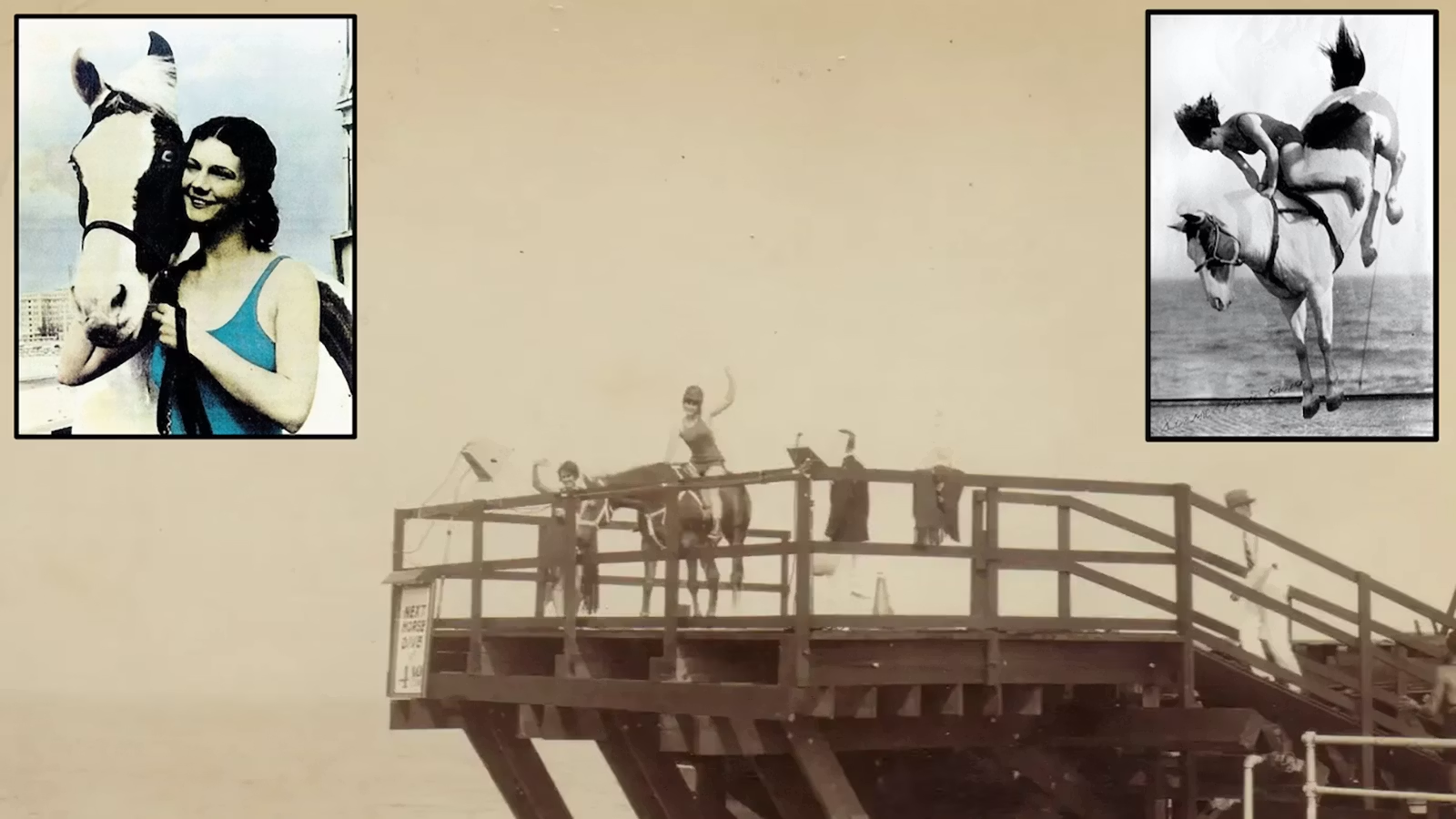
Carver’s empire ultimately depended on repetition. Diving horse acts occurred multiple times daily for years. This industrialization of spectacle transformed living beings—both animals and humans—into components of a commercial machine. Such systems often prioritize profitability over welfare, a pattern repeated throughout entertainment history.
The economic pressures surrounding attractions like diving horses are crucial to understanding their ethical implications. Spectacle businesses survive by continually attracting audiences. Once danger becomes normalized, performances must escalate or maintain intensity to remain profitable. This dynamic often encourages risk-taking and ethical compromise.
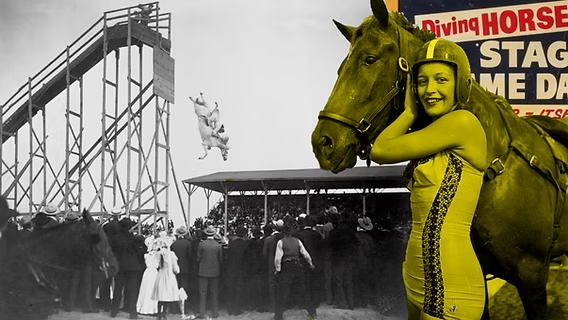
Carver’s success therefore reveals something broader about American entertainment culture. Audiences rewarded increasingly sensational attractions, while showmen responded by pushing boundaries further. Diving horses emerged not simply because one man had an unusual idea, but because a rapidly commercializing entertainment industry incentivized spectacle above all else.


Sonora Webster Carver and the Human Cost of Performance
No individual is more closely associated with diving horses than Sonora Webster Carver, whose life inspired Wild Hearts Can’t Be Broken. Her story remains central to public memory of the attraction because it embodies themes of perseverance and tragedy simultaneously.


Born in rural Georgia, Sonora joined the diving horse act during the Great Depression, a time when economic desperation forced many Americans into dangerous labor. For young women with limited financial opportunities, performance work could provide rare independence and income.


The reality behind such opportunities, however, was complicated. Diving horse performers endured intense physical demands. Riders repeatedly climbed towering platforms, mounted moving horses, and plunged into tanks below. Even under ideal conditions, the act carried significant risk.


Sonora famously lost her eyesight after a dive in 1931 when her eyes struck the water with devastating force. Remarkably, she continued performing despite her blindness. This aspect of her story became the emotional core of Disney’s film adaptation, framing her persistence as inspirational triumph.


Yet modern audiences often interpret the story differently. Sonora’s blindness raises difficult questions about labor exploitation and entertainment ethics. Was her continued performance evidence of courage, economic necessity, coercion, or all three simultaneously?

The romanticization of dangerous labor is a recurring feature of entertainment narratives. Audiences frequently celebrate perseverance while ignoring structural pressures forcing individuals into hazardous work. Sonora’s story illustrates this tension clearly. Her determination is undeniably extraordinary, but the conditions requiring such determination deserve scrutiny.

The film adaptation softens many of these complexities. Like many inspirational dramas, Wild Hearts Can’t Be Broken prioritizes emotional uplift over systemic critique. The horses appear willing participants, the performances appear magical, and the broader ethical implications receive limited attention.

This selective framing reflects how historical memory operates. Popular culture often preserves emotionally satisfying narratives while minimizing uncomfortable realities. Sonora becomes remembered primarily as a courageous heroine rather than as a worker navigating an exploitative entertainment system.

Nevertheless, her story remains compelling precisely because it contains contradictions. She reportedly loved the horses and the work itself. Former performers often defended the attraction, insisting the animals were well cared for and performed voluntarily. Such testimonies complicate simplistic moral judgments.

However, affection between trainers and animals does not automatically eliminate ethical concerns. Many exploitative systems throughout history have involved genuine emotional bonds between humans and animals. The central question becomes whether affection justifies systems built upon risk and commodification.


Sonora’s life therefore represents the human side of spectacle culture. Behind every performance marketed as thrilling entertainment are workers whose livelihoods depend upon maintaining the illusion of effortless danger.

Animal Welfare Concerns and Ethical Debate
The most enduring controversy surrounding diving horses involves animal welfare. Critics have long questioned whether forcing horses to dive from elevated platforms constitutes cruelty, regardless of whether the animals appeared physically unharmed.

Supporters historically argued that horses were trained gradually and did not suffer injury. Riders and trainers often insisted the animals willingly participated and showed no fear. Some accounts describe horses becoming restless or eager before performances, which defenders interpreted as evidence of comfort with the act.

Modern animal welfare advocates challenge these interpretations. Contemporary understanding of animal psychology emphasizes that compliance does not necessarily indicate consent or emotional well-being. Animals conditioned through repetition may perform behaviors regardless of fear or stress.

Horses are particularly sensitive prey animals whose instincts prioritize stability and environmental awareness. Diving from elevated platforms contradicts natural equine behavior. Critics therefore argue that the act likely caused significant psychological stress, even if severe physical injuries were uncommon.

The broader historical context is also important. Early twentieth-century entertainment industries frequently subjected animals to conditions now considered unacceptable. Circuses, zoos, marine parks, and film productions often prioritized spectacle over welfare standards.


Public attitudes toward animal cruelty evolved significantly during the twentieth century. Organizations advocating for animal rights gained influence, scientific understanding of animal cognition expanded, and audiences became increasingly uncomfortable with exploitative performances.

This shift contributed to the decline of diving horse attractions. By the mid-twentieth century, cultural tastes were changing. Activities once viewed as harmless entertainment increasingly appeared archaic or cruel.

The decline also reflected changing ideas about spectacle itself. Modern audiences tend to value authenticity and ethical transparency more than earlier generations. Spectacles built upon visible animal risk became harder to defend publicly.

Importantly, ethical concerns about diving horses are not isolated historical debates. Similar controversies continue surrounding horse racing, rodeos, marine mammal shows, and film productions involving animals.


The HBO series Luck provides a particularly revealing comparison. Created by David Milch and starring Dustin Hoffman, the series attempted to portray horse racing with realism and dramatic intensity. However, multiple horse deaths during production sparked widespread outrage and ultimately led HBO to cancel the series.


The controversy surrounding Luck demonstrated how modern audiences increasingly reject entertainment perceived to endanger animals unnecessarily. Even though horse racing itself remains legal and culturally accepted in many contexts, the deaths during production transformed public perception of the show.


Similarly, films like Secretariat often emphasize inspirational narratives while minimizing broader ethical questions surrounding racing industries. Horse-centered entertainment frequently relies on emotional attachment to animals while simultaneously profiting from systems placing those animals at risk.


Diving horses therefore belong within a longer continuum of entertainment industries built around animal spectacle. The central ethical tension remains remarkably consistent across generations: audiences admire beauty, athleticism, and danger while resisting acknowledgment of the costs required to produce those spectacles.

Public Perception vs. Historical Reality
One of the most fascinating aspects of diving horse history is the gap between public memory and historical reality. Nostalgia has softened the image of the attraction considerably. Vintage photographs, nostalgic documentaries, and films often portray diving horses as whimsical Americana rather than controversial entertainment.

This selective memory reflects broader patterns in historical storytelling. Societies frequently romanticize past entertainment forms while overlooking exploitation embedded within them. Amusement parks, circuses, and Wild West shows are often remembered through aesthetics rather than ethics.

Atlantic City’s boardwalk culture especially benefits from nostalgic mythmaking. The image of the Steel Pier evokes old-fashioned glamour, family vacations, and carefree leisure. Diving horses become symbols of a lost entertainment era rather than subjects of moral controversy.

Cinema has contributed heavily to this romanticization. Wild Hearts Can’t Be Broken frames the attraction primarily through emotional resilience and personal triumph. Disney’s adaptation emphasizes inspirational storytelling, encouraging audiences to root for the performers and horses alike.


Yet historical reality was far more complicated. Diving horse acts existed within exploitative entertainment economies shaped by economic inequality, weak labor protections, and limited animal welfare standards. Performers risked injury repeatedly for public amusement, while horses were transformed into commercial attractions.

This tension between nostalgia and reality mirrors debates surrounding many historical entertainment forms. Modern audiences often consume sanitized versions of the past because they provide emotional comfort. Confronting exploitation complicates those narratives.

The persistence of diving horse nostalgia also reflects how spectacle culture operates psychologically. Audiences prefer stories emphasizing wonder over stories emphasizing ethical ambiguity. The idea of brave riders and graceful horses feels emotionally satisfying; the reality of commercialized risk feels uncomfortable.

Historical interpretation therefore requires resisting simplistic binaries. Diving horses were neither purely monstrous cruelty nor harmless entertainment. They existed within cultural systems that normalized practices many people now find troubling.

Understanding that complexity matters because similar dynamics continue today. Modern entertainment industries still rely heavily on spectacle, emotional manipulation, and selective storytelling. Whether discussing racing industries, reality television, or stunt-heavy filmmaking, audiences continue negotiating the boundary between admiration and exploitation.


![Directed by Christopher McQuarrie Written by Christopher McQuarrie Erik Jendresen Based on Mission: Impossible by Bruce Geller Produced by Tom Cruise Christopher McQuarrie Starring Tom Cruise Hayley Atwell Ving Rhames Simon Pegg Henry Czerny Angela Bassett Cinematography Fraser Taggart Edited by Eddie Hamilton Music by Max Aruj Alfie Godfrey[a] Production companies Paramount Pictures[1] Skydance[1] TC Productions[1] Distributed by Paramount Pictures](https://i0.wp.com/moviestohistory.com/wp-content/uploads/2026/01/MV5BZGQ5NGEyYTItMjNiMi00Y2EwLTkzOWItMjc5YjJiMjMyNTI0XkEyXkFqcGc@._V1_-691x1024.jpg?ssl=1)


The diving horse debate ultimately forces historians and viewers alike to confront difficult questions about spectatorship itself. Why are humans drawn to dangerous performances? At what point does fascination become complicity? And how does nostalgia reshape moral judgment over time?

Spectacle, Exploitation, and the Legacy of Diving Horses
The legacy of diving horses extends far beyond a single boardwalk attraction. The act represents an enduring tension at the heart of entertainment culture: the human desire for spectacle often conflicts with ethical responsibility.

William “Doc” Carver understood something fundamental about audiences. People crave experiences appearing extraordinary, dangerous, and emotionally intense. Diving horses succeeded because they transformed ordinary animals and performers into symbols of impossible bravery.
Yet spectacle rarely exists without cost. Behind the glamorous imagery were economic pressures, physical dangers, and ethical compromises. Riders risked catastrophic injury. Horses were conditioned into unnatural performances. Audiences consumed danger as entertainment while remaining largely insulated from its consequences.

The cultural afterlife of diving horses demonstrates how historical memory selectively preserves emotional narratives. Films like Wild Hearts Can’t Be Broken frame the story through perseverance and inspiration, while ethical controversies often fade into the background. Nostalgia smooths over discomfort.


At the same time, modern audiences increasingly revisit historical entertainment through critical lenses. Concerns about animal welfare, labor exploitation, and spectacle culture have transformed how many people interpret attractions once considered harmless fun.

The parallels to modern horse-centered entertainment remain striking. Whether discussing Secretariat, Luck, or real-world racing industries, similar debates continue regarding the relationship between admiration and exploitation. Spectacle still depends upon risk, and audiences still struggle to reconcile emotional attachment with ethical scrutiny.
Ultimately, diving horses occupy a morally ambiguous place in American history. They were products of their time, shaped by cultural norms vastly different from those of the present. Condemning the past without understanding its context risks oversimplification. Romanticizing it without acknowledging harm risks dishonesty.
![After the breakup of his show Carver put together a smaller show, which featured trained animals and shooting exhibitions. His biographer wrote that Carver added the diving horse act to the show in Kansas City, Missouri, in August 1894.[4] Carver told several versions of a story describing an exciting escape from bandits, which inspired the diving horse act, but those who remembered him in Nebraska said he got the idea after plunging on horseback off a bank into a deep hole in Medicine Creek.[7] Over the next few years the other acts were eliminated, and the diving horse exhibition became Carver's primary endeavor. Included in the touring company were his son, Al, who helped train and take care of the horses, and his daughter, Lorena, said to be the first rider. By the time his future daughter-in-law, Sonora Webster, joined the show in 1924, Carver had two diving teams on the road, each performing in a different city.[](https://i0.wp.com/moviestohistory.com/wp-content/uploads/2026/05/4f3abade34479-image.jpg?resize=401%2C322&ssl=1)
The most useful historical approach lies somewhere between those extremes. Diving horses were simultaneously astonishing entertainment and ethically troubling spectacle. They reflected both creativity and exploitation, wonder and danger, admiration and commodification.
That contradiction is precisely why the story endures.

The question “Entertainment, exploitation, or both?” has no simple answer because spectacle itself often depends upon contradiction. Audiences want to feel awe without confronting the systems producing it. Diving horses force us to confront that tension directly.
And perhaps that is their most enduring legacy.

Wild Hearts Can’t Be Broken is available now with a subscription to Disney+…

Discover more from Movies To History.com
Subscribe to get the latest posts sent to your email.
Related Posts

The Real Nucky Johnson vs. Nucky Thompson: What ‘Boardwalk Empire’ Got Right (and What It Didn’t):
HBO’s Boardwalk Empire delivered a lavish, violent, and gritty portrait of Prohibition-era Atlantic City through the eyes of Nucky Thompson, played by Steve Buscemi. But what many fans may not realize is that Thompson is…
The Forgotten Assassination: Who Killed James Garfield — and Why It Matters:
The assassination of James A. Garfield is one of the most consequential yet strangely overlooked events in American political history. When people discuss presidential assassinations, the names that typically dominate the conversation are Abraham Lincoln, John F. Kennedy, and…

‘Halston’ – Interview:
In Conversation…Ewan McGregor... The actor who rose to fame with Trainspotting and wielded a light saber as Obi-Wan Kenobi, is now starring as a '70s icon, fashion designer Halston, in a new Netflix series. Correspondent…