

Week 3 – Women in Power Series, MoviesToHistory.com
When The Post (2017) hit theaters, many audiences discovered Kay Graham through Meryl Streep’s powerful portrayal. But the real Katherine Graham was even more formidable than fiction allowed. A woman who began her career doubting her own authority became one of the most influential publishers in American history — ushering in a new era for journalism, gender roles, and truth in power.


📰 From Heiress to Reluctant Executive
Katherine Meyer Graham was born into privilege, the daughter of Eugene Meyer, the financier and Federal Reserve Chairman who bought The Washington Post in 1933. But despite her proximity to power, she never expected to inherit it. That role initially went to her husband, Phil Graham, who took over as publisher. Only after his tragic death by suicide in 1963 did Kay reluctantly step into the spotlight.


Her transition was anything but smooth. She was mocked, underestimated, and routinely second-guessed by the male editors and board members who assumed she was a placeholder. Yet slowly, she grew into the role — and redefined it.


📵 Standing Up for Truth: The Pentagon Papers
Kay Graham’s defining moment came in 1971 when The New York Times began publishing excerpts from the Pentagon Papers — a classified government report revealing the U.S. government had lied about the Vietnam War for decades. When a court injunction temporarily stopped the Times from printing, The Washington Post had a decision to make.


![On June 18, 1971, The Washington Post began publishing its own series of articles based upon the Pentagon Papers;[11] Ellsberg had given portions to The Washington Post reporter and former RAND Corporation colleague Ben Bagdikian in a Boston-area motel earlier that week.[54] Bagdikian flew with the portions to Washington and physically presented them to executive editor Ben Bradlee at the latter's house in the Georgetown neighborhood; Bradlee set up a team of writers, lawyers and editors to hide out in his house and organize the portions.[55] Bagdikian later met with Mike Gravel in front of the Mayflower Hotel on June 26[42] to give him copies.[47][43][44][45][46] On June 18, Assistant U.S. Attorney General William Rehnquist asked The Washington Post to cease publication. After the paper refused, Rehnquist sought an injunction in U.S. district court. Judge Murray Gurfein declined to issue such an injunction, writing that "[t]he security of the Nation is not at the ramparts alone. Security also lies in the value of our free institutions. A cantankerous press, an obstinate press, a ubiquitous press must be suffered by those in authority to preserve the even greater values of freedom of expression and the right of the people to know."[56] The government appealed that decision, and on June 26 the Supreme Court agreed to hear it jointly with The New York Times case.[53] Fifteen other newspapers received copies of the study and began publishing it.[11] According to Ellsberg in 2017 and 2021, 19 newspapers in total eventually drew on the Papers for their investigative work;[57][35] the Post's then-court reporter Sanford J. Ungar wrote in his May 1972 book The Papers and The Papers that aside from the Times and the Post, The Boston Globe and the St. Louis Post-Dispatch had also been brought to court by the Nixon administration over coverage of the Papers.](https://i0.wp.com/moviestohistory.com/wp-content/uploads/2025/06/The-Washington-Post-Pentagon-Papers-1024x576.webp?ssl=1)
Her editors were ready. Ben Bradlee wanted to go to press. But it was Graham, as publisher and final authority, who had the most to lose. Publishing the Pentagon Papers could mean criminal charges, loss of investor support, and possibly the collapse of the company. She had been advised not to risk it.
She did it anyway.

In a tense late-night meeting with her lawyers and executives, Kay Graham made the call: The Post would publish. That act of courage placed her at the center of the First Amendment fight of the century — and ultimately helped reaffirm the constitutional right of the press to expose government wrongdoing.


💥 Watergate and Beyond
The Pentagon Papers were only the beginning. Two years later, it was The Washington Post — under Graham’s leadership — that broke open the Watergate scandal. Her protection of reporters Bob Woodward and Carl Bernstein gave them the latitude to follow the story, even as the Nixon White House attacked the press.


Graham weathered threats, political smears, and even personal danger to preserve journalistic independence. As the scandal unraveled and President Nixon resigned, it was clear: the press had won, and Kay Graham had become a guardian of American democracy.


👩⚖️ More Than a Publisher — A Trailblazer for Women in Power
At a time when women were rarely allowed into the boardroom, Kay Graham led The Washington Post Company for more than two decades. She became the first female CEO of a Fortune 500 company, a mentor to generations of journalists, and a visible force in redefining women’s leadership.


In 1998, her memoir Personal History won the Pulitzer Prize. In it, she was candid about her insecurities, her struggles with imposter syndrome, and the immense pressure of guiding a national institution as a woman in a man’s world. That honesty only reinforced her legacy.


🎥 The Post vs. Real Life: A Story Worth Repeating
Steven Spielberg’s The Post portrays Kay Graham’s courage in the Pentagon Papers case, but it barely scratches the surface. The film condenses years of her growth and struggle into a single newsroom decision — but that’s only one moment in a life of extraordinary impact.
Graham didn’t just rise to power. She remade it.


📍 Legacy: Why Kay Graham Still Matters
In an era of media distrust, political polarization, and renewed threats to press freedom, Kay Graham’s story resonates more than ever. She didn’t ask to lead. But when history knocked, she answered.


Today, her name stands beside those of the greatest press defenders in American history. She proved that integrity, intellect, and courage could not only survive in the halls of power — they could prevail.

Want more real stories behind the reel?
🔗 Explore the full feature at MoviesToHistory.com
📚 Read this week’s companion post: Why Kay Graham Changed Journalism Forever
🎥 Reel & Quote Cards: Now on Instagram, Threads, Facebook & more.

The Post is available now to rent on all streaming platforms…

Related Posts
My Top Ten Elephant Movies:
To commemorate the Featured Film Blog of the month for November, Operation Dumbo Drop, I have gathered My Top Ten Elephant Movies! If you're looking for the best film to watch featuring elephants, you came…
![The 83rd Golden Globe Awards is an upcoming annual awards ceremony honoring excellence in film and American television productions in 2025. The winners will be revealed during the live telecast, airing on CBS and streaming on Paramount+ on January 11, 2026, at the Beverly Hilton.[1] Nikki Glaser will return to host for the second consecutive year.[2][3][4] The nominations were announced on December 8, 2025, by actors Skye P. Marshall and Marlon Wayans.[1][5][6][7] For the first time, the Globes will honor podcasts with the inaugural Best Podcast category.[8][9][10] One Battle After Another, with a leading 9 nominations, became the 6th film in Golden Globes history to receive five acting nominations and at least one acting bid across the four acting categories, regardless of genre.[11] Sentimental Value received the second-most in film with 8 nominations, followed by Sinners with 7.[7] Additionally, The White Lotus led the television nominations with 6, followed by Adolescence with 5](https://moviestohistory.com/wp-content/uploads/2026/01/The-83rd-Golden-Globe-Awards-scaled.webp)
The 83rd Golden Globe Awards – The 2026 Winners:
One Globe After Another... One Battle After Another battled it out for the award for Best Motion Picture - Musical or Comedy at the 83rd Golden Globe Awards, which were handed out Sunday night. The…
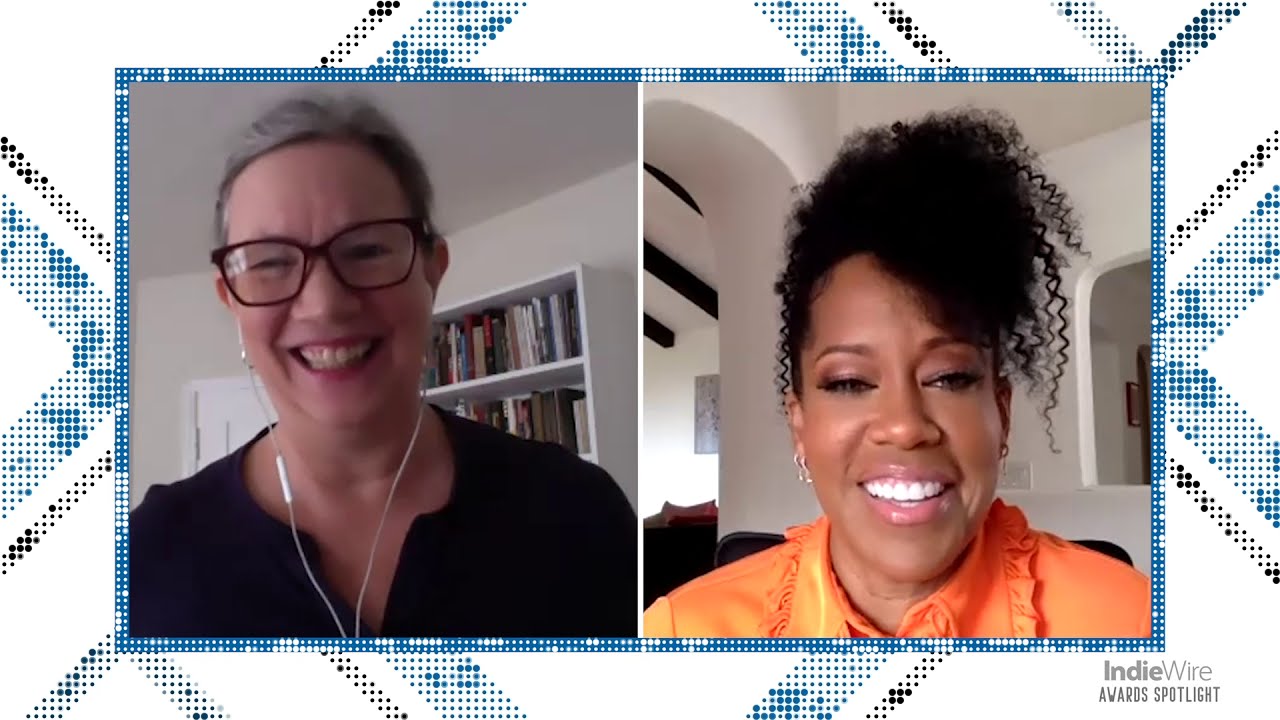
‘One Night in Miami… – Interview:
How Regina King Made Her Directorial Debut with One Night in Miami... The following is a write up from Indiewire for Anne Thompson's interview with Regina King about her directorial debut, the Amazon Studios' 2020…