

A True Story of Blame, Bombs, and the Cost of Getting It Wrong…
The Manhunt anthology series began as an ambitious dramatization of real-life criminal investigations that shaped modern American law enforcement. Created by Andrew Sodroski, Jim Clemente, and Tony Gittelson, the series first gained attention in 2017 with Manhunt: Unabomber, a tense retelling of the FBI’s pursuit of Ted Kaczynski that blended procedural intensity with psychological insight. But it was the show’s second installment, Manhunt: Deadly Games (2020), that transformed the anthology from a gripping procedural into a searing social commentary.


Premiering on February 3, 2020, Manhunt: Deadly Games revisits the devastating 1996 Centennial Olympic Park bombing in Atlanta, Georgia — a domestic terrorist attack that shocked the nation and forever altered the lives of those caught in its aftermath. At its heart is the story of Richard Jewell, the security guard who discovered the bomb and saved countless lives, only to be falsely accused of planting it. What followed was one of the most infamous cases of media and law enforcement misjudgment in modern history — a story of heroism turned to humiliation, truth buried beneath sensational headlines, and an investigation that would ultimately lead to the real bomber, Eric Rudolph.


The second installment stars Cameron Britton as Richard Jewell, and Jack Huston as Eric Rudolph, with the ensemble cast of Judith Light, Carla Gugino, Gethin Anthony, Kelly Jenrette, Arliss Howard, and Brad William Henke.


Created with meticulous attention to both the procedural and the personal, Deadly Games explores how institutional failure, public pressure, and flawed narratives can destroy reputations long before the facts are known. The series captures the tense intersection of law enforcement, media frenzy, and political ambition — revealing how, in the race to find a culprit, justice itself can become the first casualty.

With riveting performances and a deeply researched script, Manhunt: Deadly Games stands not just as a historical dramatization, but as a cautionary tale about truth, trust, and the peril of jumping to conclusions in a society addicted to outrage.
The Real Case: Centennial Park and the Atlanta Bombings
In the summer of 1996, the world’s eyes turned to Atlanta, Georgia, as the city hosted the Centennial Olympic Games — an event meant to symbolize peace, unity, and American resilience. But in the early hours of July 27, that optimism was shattered. A homemade pipe bomb, hidden beneath a park bench in Centennial Olympic Park, exploded amid a crowd of concertgoers, killing one woman and injuring more than a hundred others. The blast was followed by a chilling truth: the attack was not an isolated act of chaos, but the beginning of a domestic terror campaign that would haunt the American South for years.


At the center of this story stood Richard Jewell, a 33-year-old security guard who spotted the suspicious backpack and immediately alerted law enforcement, helping to evacuate much of the crowd before the device detonated. Initially hailed as a hero, Jewell’s life was upended just days later when leaks from the FBI and local media outlets suggested he was the prime suspect. Without formal charges, he was thrust into a public spectacle — his face plastered across newspapers, his home raided on live television, his reputation dismantled in real time.


The truth would take years to surface. The real perpetrator, Eric Robert Rudolph, a militant anti-government extremist, would go on to commit three more bombings — at a lesbian nightclub and two abortion clinics — before disappearing into the Appalachian wilderness. It wasn’t until 2003 that he was captured and later pleaded guilty, receiving multiple life sentences without parole.

For Jewell, however, vindication came too late to undo the damage. Though cleared of all suspicion, he spent the rest of his life grappling with the psychological scars left by the ordeal. His story became a symbol of how a rush to judgment — fueled by media sensationalism and investigative tunnel vision — can destroy innocent lives.

Manhunt: Deadly Games revisits these events with unflinching realism, reconstructing not just the manhunt for Rudolph, but the moral reckoning that followed. It’s a dramatization that forces viewers to confront how easily truth can be distorted when public narrative overtakes evidence — and how the line between hero and suspect can vanish in the blink of a headline.


Manhunt: Deadly Games is the Featured Television Blog of the month for November, for its theme of Extremism, Manhunts & Media Responsibility, you can expect a detailed critique of the series where we look at Richard Jewell, Eric Rudolph & the Media, there is also a recommendation that includes a look at Manhunt, Media & Misidentification. There is also a detailed review of how manhunts really work. For the interview,produced by Retro Report, we have Richard Jewell: The Wrong Man. There is also a Top Ten List, and for Manhunt: Deadly Games, My Top Ten Olympic Games Movies. Last but not least, the Featured Television Blog of the month includes an Official Trailer for the featured series!
You can watch the Official Trailer for Manhunt: Deadly Games Below:

Manhunt: Deadly Games is available now on Spectrum Television…

Discover more from Movies To History.com
Subscribe to get the latest posts sent to your email.
Related Posts

My Top Ten Journalism Movies:
Welcome to The Top Ten List! To commemorate the Featured Film Blog for the month of January, The Insider, I have gathered My Top Ten Journalism Movies! If you're looking for the best journalism film,…
My Top Ten C.I.A. Movies:
Welcome to The Top Ten List! To commemorate the Featured Film Blog for the month of May, Argo, I have gathered My Top Ten C.I.A. Movies! If you're looking for the best C.I.A. film, you…
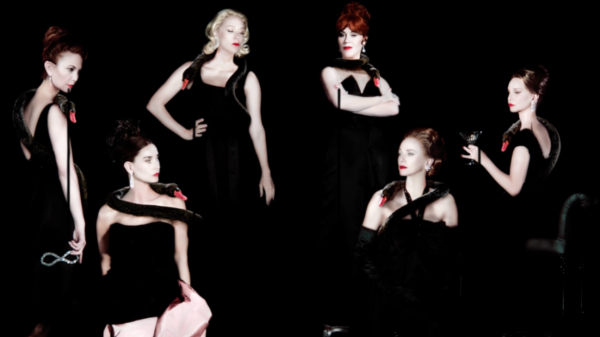
‘Feud: Capote vs. The Swans’ – Official Trailer:
Truman Capote's Swan Song... Feud is an anthology drama television series created by Ryan Murphy, Jaffe Cohen, and Michael Zam, which premiered on FX on March 5, 2017. Conceived as an anthology series, the second season of the anthology series, titled Feud:…