

Power Behind the Presidency — Reframing the First Lady
On April 10, 2022, CBS Sunday Morning offered audiences a rare, reflective conversation with three of Hollywood’s most accomplished actors — Michelle Pfeiffer, Viola Davis, and Gillian Anderson — as they prepared to step into the lives of three of the most consequential women in modern American history. Their discussion centered on The First Lady, Showtime’s ambitious anthology drama that shifts the historical lens away from presidents and toward the women operating within — and often reshaping — the corridors of power.


Portraying Betty Ford, Michelle Obama, and Eleanor Roosevelt respectively, the actors confront a central challenge of historical dramatization: how to reconcile public mythology with private truth. The interview positions The First Lady not simply as a biographical series, but as a corrective — an attempt to restore narrative agency to women historically relegated to the margins of political storytelling.

Summary: Performance, Power, and the Politics of Visibility
The interview reveals a shared methodological rigor among Pfeiffer, Davis, and Anderson, each emphasizing research-driven performance as foundational to their portrayals. Pfeiffer approached Betty Ford through emotional accessibility, focusing on her candor around addiction and personal vulnerability. Davis underscored the difficulty of embodying Michelle Obama, a figure still actively shaping public discourse, noting the scrutiny that comes with portraying a living icon. Anderson, meanwhile, leaned into Eleanor Roosevelt’s intellectual and moral evolution, capturing a woman whose influence extended far beyond ceremonial expectations.


![Michelle LaVaughn Robinson Obama[1] (née Robinson; born January 17, 1964) is an American attorney and author who served as First Lady of the United States from 2009 to 2017 as the wife of Barack Obama, the 44th president of the United States. Born in Chicago and raised on the South Side of the city, Obama is a graduate of Princeton University and Harvard Law School. In her early legal career, she worked at the law firm Sidley Austin where she met her future husband. She subsequently worked in nonprofits and as the associate dean of student services at the University of Chicago. Later, she served as vice president for community and external affairs of the University of Chicago Medical Center. Michelle married Barack in 1992, and they have two daughters. Obama campaigned for her husband's 2008 and 2012 presidential campaigns. She was the first African-American woman to serve as first lady. As first lady, Obama worked as an advocate for poverty awareness, education, nutrition, physical activity, and healthy eating. She has written four books, including her New York Times best-selling memoir Becoming (2018) and The Light We Carry (2022). After leaving office, Obama ranked first in the Gallup poll for the most admired woman in the United States for three straight years. She holds significant cultural influence and continues to advocate for voter participation in elections. She has also pivoted to launching successful media ventures.](https://i0.wp.com/moviestohistory.com/wp-content/uploads/2026/03/Michelle-Obama-705x1024.jpg?ssl=1)


![Anna Eleanor Roosevelt (/ˈɛlɪnɔːr ˈroʊzəvɛlt/ EL-in-or ROH-zə-velt; October 11, 1884 – November 7, 1962) was an American political figure, diplomat, and activist.[5][6] She was the longest-serving first lady of the United States, during her husband Franklin D. Roosevelt's four terms as president from 1933 to 1945.[5] Through her travels, public engagement, and advocacy, she largely redefined the role. Widowed in 1945, she served as a United States delegate to the United Nations General Assembly from 1945 to 1952, and took a leading role in designing the text and gaining international support for the Universal Declaration of Human Rights. In 1948, she was given a standing ovation by the assembly upon their adoption of the declaration.[7][8] President Harry S. Truman called her the "First Lady of the World" in tribute to her human rights achievements.[9] Roosevelt was a member of the prominent and wealthy Roosevelt and Livingston families and a niece of President Theodore Roosevelt.[8] She had an unhappy childhood, having suffered the deaths of both parents and one of her brothers at a young age. At 15, she attended Allenswood Boarding Academy in London and was deeply influenced by its founder and director Marie Souvestre. Returning to the U.S., she married her fifth cousin once removed, Franklin Delano Roosevelt, in 1905. Between 1906 and 1916 she gave birth to six children, one of whom died in infancy. The Roosevelts' marriage became complicated after Eleanor discovered her husband's affair with her social secretary, Lucy Mercer, in 1918. Due to mediation by her mother-in-law, Sara, the liaison was ended officially.[10] After that, both partners started to keep independent agendas, and Eleanor joined the Women's Trade Union League and became active in the New York state Democratic Party. Roosevelt helped persuade her husband to stay in politics after he was stricken with a paralytic illness in 1921. Following Franklin's election as governor of New York in 1928, and throughout the remainder of Franklin's political career, Roosevelt regularly made public appearances on his behalf; and as first lady, while her husband served as president, she greatly influenced the present scope and future of the role. Roosevelt was, in her time, one of the world's most widely admired and powerful women.[10] Nevertheless, in her early years in the White House she was controversial for her outspokenness, particularly with respect to her promotion of civil rights for African Americans. She was the first presidential spouse to hold regular press conferences, write a daily newspaper column, write a monthly magazine column, host a weekly radio show, and speak at a national party convention. On a few occasions, she publicly disagreed with her husband's policies. She launched an experimental community at Arthurdale, West Virginia, for the families of unemployed miners, later widely regarded as a failure. She advocated for expanded roles for women in the workplace, the civil rights of African Americans and Asian Americans, and the rights of World War II refugees. Following her husband's death in 1945, Roosevelt pressed the United States to join and support the United Nations and became its first delegate to the committee on Human Rights. She served as the first chair of the UN Commission on Human Rights and oversaw the drafting of the Universal Declaration of Human Rights. Later, she chaired the John F. Kennedy administration's Presidential Commission on the Status of Women. By the time of her death, Roosevelt was regarded as "one of the most esteemed women in the world"; The New York Times called her "the object of almost universal respect" in her obituary.[11] In 1999, Roosevelt was ranked ninth in the top ten of Gallup's List of Most Widely Admired People of the 20th Century,[12] and was found to rank as the most admired woman in thirteen different years between 1948 and 1961 in Gallup's annual most admired woman poll.[13] Periodic surveys conducted by the Siena College Research Institute have consistently seen historians assess Roosevelt as the greatest American first lady.](https://i0.wp.com/moviestohistory.com/wp-content/uploads/2026/03/Screenshot-2026-03-22-at-3.36.23-AM-791x1024.png?ssl=1)
A recurring theme throughout the discussion is the inherent tension in dramatizing real lives. Each actor acknowledged the dual burden of historical fidelity and narrative cohesion. The series, they noted, necessarily employs dramatic license — compressing timelines, amplifying interpersonal dynamics, and constructing moments that may not be strictly documented but aim to convey a broader emotional or psychological truth.

Equally central is the question of voice — who has it, how it is constrained, and how it is ultimately asserted. The interview frames The First Lady as a study in women navigating institutional power structures that were not designed for them. Whether through Eleanor Roosevelt’s political activism, Betty Ford’s public confrontation of taboo subjects, or Michelle Obama’s redefinition of modern First Lady visibility, the series highlights how each woman carved out influence in spaces that often sought to limit them.


Importantly, the actors collectively describe the series as a rare opportunity within the industry: a platform for complex, multi-dimensional female roles that resist simplification. Rather than presenting these women as symbolic extensions of their husbands, The First Lady foregrounds their emotional lives, policy impact, and cultural legacy. It also emphasizes the intimacy of the first family — not as spectacle, but as a site of pressure, negotiation, and identity formation.


For viewers — and for historically minded audiences — the interview underscores a critical takeaway: The First Lady operates at the intersection of history and interpretation. It is both a dramatized narrative and a cultural intervention, inviting audiences to reconsider how political history is told, and whose stories are centered within it.

You can watch the The First Lady CBS Sunday Morning Interview Below:

The First Lady is available now with a subscription to Paramount+ with Showtime…

Discover more from Movies To History.com
Subscribe to get the latest posts sent to your email.
Related Posts

My Top Ten Women in History Movies:
March, designated as Women’s History Month, offers an opportunity not just to celebrate the achievements of women across history, but to interrogate how those stories are told — and who gets to tell them. At MoviesToHistory.com,…
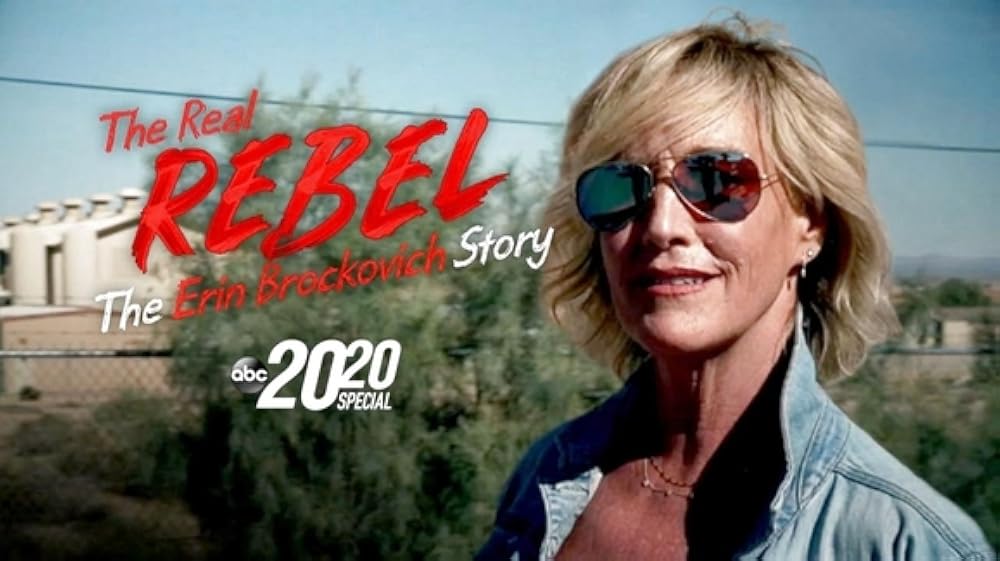
‘Erin Brockovich’ – Interview:
The Real Rebel: The Erin Brockovich Story... The story of Hinkley, California inspired the 2000 film Erin Brockovich directed by Steven Soderbergh and shot the real Erin Brockovich to stardom, and she has continued to…
My Top Ten Biographical Sports Dramas:
Welcome to The Top Ten List! To commemorate the Featured Film Blog of the month for December, Air, I have gathered My Top Ten Biographical Drama Movies! If you're looking for the best film in…