

The assassination of James A. Garfield is one of the most consequential yet strangely overlooked events in American political history. When people discuss presidential assassinations, the names that typically dominate the conversation are Abraham Lincoln, John F. Kennedy, and sometimes William McKinley. Garfield’s assassination, however, rarely receives the same attention despite its enormous impact on American government reform.


![James Abram Garfield (November 19, 1831 – September 19, 1881) was the 20th president of the United States, serving from March 1881 until his death in September that year after being shot in July . A preacher, lawyer, and Civil War general, Garfield served nine terms in the United States House of Representatives and is the only sitting member of the House to be elected president. Before he ran for president, the Ohio General Assembly had elected him to the U.S. Senate, a position he declined upon becoming president-elect. Garfield was born into poverty in a log cabin and grew up in northeast Ohio. After graduating from Williams College in 1856, he studied law and became an attorney. Garfield was a preacher in the Restoration Movement and president of the Western Reserve Eclectic Institute, affiliated with the Disciples.[a] He was elected as a Republican member of the Ohio State Senate in 1859, serving until 1861. Garfield opposed Confederate secession, was a major general in the Union Army during the American Civil War, and fought in the battles of Middle Creek, Shiloh, and Chickamauga. He was elected to Congress in 1862 to represent Ohio's 19th district. Throughout his congressional service, Garfield firmly supported the gold standard and gained a reputation as a skilled orator. He initially agreed with Radical Republican views on Reconstruction but later favored a Moderate Republican–aligned approach to civil rights enforcement for freedmen. Garfield's aptitude for mathematics extended to his own proof of the Pythagorean theorem, published in 1876, and his advocacy of using statistics to inform government policy. At the 1880 Republican National Convention, delegates chose Garfield, who had not sought the White House, as a compromise presidential nominee on the 36th ballot. In the 1880 presidential election, he conducted a low-key front porch campaign and narrowly defeated the Democratic nominee, Winfield Scott Hancock. Garfield's accomplishments as president included his assertion of presidential authority against senatorial courtesy in executive appointments, a purge of corruption in the Post Office, and his appointment of a Supreme Court justice. He advocated for agricultural technology, an educated electorate, and civil rights for African Americans. He also proposed substantial civil service reforms, which were passed by Congress in 1883 as the Pendleton Civil Service Reform Act and signed into law by his successor, Chester A. Arthur. Garfield was a member of the intraparty "Half-Breed" faction that used the powers of the presidency to defy the powerful "Stalwart" Senator Roscoe Conkling from New York. He did this by appointing Blaine faction leader William H. Robertson to the lucrative post of Collector of the Port of New York. The ensuing political battle resulted in Robertson's confirmation and the resignations of Conkling and Thomas C. Platt from the Senate. On July 2, 1881, Garfield was shot by Charles J. Guiteau, a deluded office seeker. He died on September 19 from infections related to the wounds and was succeeded by Vice President Chester A. Arthur. Due to Garfield's brief term in office and lack of major changes during his tenure, historians tend to rank him as a below-average president or omit his name entirely from rankings, though some view Garfield's potential favorably, praising him for anti-corruption and pro-civil rights stances.[2]](https://i0.wp.com/moviestohistory.com/wp-content/uploads/2026/02/James_Abram_Garfield_photo_portrait_seated.jpg?ssl=1)

Yet Garfield’s death in 1881 reshaped the federal government, accelerated civil service reform, and exposed dangerous flaws in both American politics and nineteenth-century medicine. The man who shot him, Charles J. Guiteau, was not merely a disgruntled citizen but a product of a deeply corrupt political system that rewarded loyalty with government jobs.


More disturbingly, Garfield did not die immediately from the gunshot wound. Instead, he lingered for 79 agonizing days, his condition worsened by doctors whose treatments likely doomed him. In this sense, Garfield’s assassination is not simply a story of political violence — it is also a story of delusion, entitlement, and medical catastrophe.
![The front page of the Las Vegas Daily Gazette, July 3, 1881, announcing the shooting of U.S. Pres. James A. Garfield: “Garfield! Garfield Shot Twice by a Disappointed Office Seeker.” Las Vegas Daily Gazette. [Las Vegas, N.M.], 03 July 1881. Chronicling America: Historic American Newspapers, Library of Congress.](https://i0.wp.com/moviestohistory.com/wp-content/uploads/2026/03/page-shooting-Pres-Las-Vegas-Daily-Gazette-July-3-1881.jpg.webp?resize=525%2C325&ssl=1)

Understanding what happened to Garfield helps illuminate how America transitioned from patronage politics toward a more professional civil service system.

Garfield’s Presidency: Reform, Not Stagnation
![James Abram Garfield (November 19, 1831 – September 19, 1881) was the 20th president of the United States, serving from March 1881 until his death in September that year after being shot in July. A preacher, lawyer, and Civil War general, Garfield served nine terms in the United States House of Representatives and is the only sitting member of the House to be elected president. Before he ran for president, the Ohio General Assembly had elected him to the U.S. Senate, a position he declined upon becoming president-elect. Garfield was born into poverty in a log cabin and grew up in northeast Ohio. After graduating from Williams College in 1856, he studied law and became an attorney. Garfield was a preacher in the Restoration Movement and president of the Western Reserve Eclectic Institute, affiliated with the Disciples.[a] He was elected as a Republican member of the Ohio State Senate in 1859, serving until 1861. Garfield opposed Confederate secession, was a major general in the Union Army during the American Civil War, and fought in the battles of Middle Creek, Shiloh, and Chickamauga. He was elected to Congress in 1862 to represent Ohio's 19th district. Throughout his congressional service, Garfield firmly supported the gold standard and gained a reputation as a skilled orator. He initially agreed with Radical Republican views on Reconstruction but later favored a Moderate Republican–aligned approach to civil rights enforcement for freedmen. Garfield's aptitude for mathematics extended to his own proof of the Pythagorean theorem, published in 1876, and his advocacy of using statistics to inform government policy. At the 1880 Republican National Convention, delegates chose Garfield, who had not sought the White House, as a compromise presidential nominee on the 36th ballot. In the 1880 presidential election, he conducted a low-key front porch campaign and narrowly defeated the Democratic nominee, Winfield Scott Hancock. Garfield's accomplishments as president included his assertion of presidential authority against senatorial courtesy in executive appointments, a purge of corruption in the Post Office, and his appointment of a Supreme Court justice. He advocated for agricultural technology, an educated electorate, and civil rights for African Americans. He also proposed substantial civil service reforms, which were passed by Congress in 1883 as the Pendleton Civil Service Reform Act and signed into law by his successor, Chester A. Arthur. Garfield was a member of the intraparty "Half-Breed" faction that used the powers of the presidency to defy the powerful "Stalwart" Senator Roscoe Conkling from New York. He did this by appointing Blaine faction leader William H. Robertson to the lucrative post of Collector of the Port of New York. The ensuing political battle resulted in Robertson's confirmation and the resignations of Conkling and Thomas C. Platt from the Senate. On July 2, 1881, Garfield was shot by Charles J. Guiteau, a deluded office seeker. He died on September 19 from infections related to the wounds and was succeeded by Vice President Chester A. Arthur. Due to Garfield's brief term in office and lack of major changes during his tenure, historians tend to rank him as a below-average president or omit his name entirely from rankings, though some view Garfield's potential favorably, praising him for anti-corruption and pro-civil rights stances.[2]](https://i0.wp.com/moviestohistory.com/wp-content/uploads/2026/03/Screenshot-2026-03-06-at-9.07.26-PM-677x1024.png?ssl=1)

![James Abram Garfield (November 19, 1831 – September 19, 1881) was the 20th president of the United States, serving from March 1881 until his death in September that year after being shot in July. A preacher, lawyer, and Civil War general, Garfield served nine terms in the United States House of Representatives and is the only sitting member of the House to be elected president. Before he ran for president, the Ohio General Assembly had elected him to the U.S. Senate, a position he declined upon becoming president-elect. Garfield was born into poverty in a log cabin and grew up in northeast Ohio. After graduating from Williams College in 1856, he studied law and became an attorney. Garfield was a preacher in the Restoration Movement and president of the Western Reserve Eclectic Institute, affiliated with the Disciples.[a] He was elected as a Republican member of the Ohio State Senate in 1859, serving until 1861. Garfield opposed Confederate secession, was a major general in the Union Army during the American Civil War, and fought in the battles of Middle Creek, Shiloh, and Chickamauga. He was elected to Congress in 1862 to represent Ohio's 19th district. Throughout his congressional service, Garfield firmly supported the gold standard and gained a reputation as a skilled orator. He initially agreed with Radical Republican views on Reconstruction but later favored a Moderate Republican–aligned approach to civil rights enforcement for freedmen. Garfield's aptitude for mathematics extended to his own proof of the Pythagorean theorem, published in 1876, and his advocacy of using statistics to inform government policy. At the 1880 Republican National Convention, delegates chose Garfield, who had not sought the White House, as a compromise presidential nominee on the 36th ballot. In the 1880 presidential election, he conducted a low-key front porch campaign and narrowly defeated the Democratic nominee, Winfield Scott Hancock. Garfield's accomplishments as president included his assertion of presidential authority against senatorial courtesy in executive appointments, a purge of corruption in the Post Office, and his appointment of a Supreme Court justice. He advocated for agricultural technology, an educated electorate, and civil rights for African Americans. He also proposed substantial civil service reforms, which were passed by Congress in 1883 as the Pendleton Civil Service Reform Act and signed into law by his successor, Chester A. Arthur. Garfield was a member of the intraparty "Half-Breed" faction that used the powers of the presidency to defy the powerful "Stalwart" Senator Roscoe Conkling from New York. He did this by appointing Blaine faction leader William H. Robertson to the lucrative post of Collector of the Port of New York. The ensuing political battle resulted in Robertson's confirmation and the resignations of Conkling and Thomas C. Platt from the Senate. On July 2, 1881, Garfield was shot by Charles J. Guiteau, a deluded office seeker. He died on September 19 from infections related to the wounds and was succeeded by Vice President Chester A. Arthur. Due to Garfield's brief term in office and lack of major changes during his tenure, historians tend to rank him as a below-average president or omit his name entirely from rankings, though some view Garfield's potential favorably, praising him for anti-corruption and pro-civil rights stances.[2]](https://i0.wp.com/moviestohistory.com/wp-content/uploads/2026/03/Screenshot-2026-03-06-at-9.07.40-PM-773x1024.png?ssl=1)


When James Garfield assumed the presidency in March 1881, the United States was still grappling with the political aftermath of the Civil War and Reconstruction. Garfield was not a career politician in the traditional sense. His background was remarkably diverse: he had been a teacher, a college president, a Union general during the Civil War, and a longtime member of Congress.


Garfield entered office at a time when American politics was dominated by factionalism within the Republican Party. Two major factions — the Stalwarts and the Half-Breeds — fought bitterly over control of federal patronage jobs. These jobs were distributed through what was known as the spoils system, a practice that rewarded political supporters with government positions regardless of merit.
![The Stalwarts were a faction of the Republican Party that existed briefly in the United States during Reconstruction and the Gilded Age during the 1870s and 1880s. Led by U.S. senator Roscoe Conkling—also known as "Lord Roscoe"—Stalwarts were sometimes called Conklingites. Other notable Stalwarts included Benjamin Wade,[13] Charles J. Folger,[5] George C. Gorham,[14] Chester A. Arthur, Thomas C. Platt, and Leonidas C. Houk.[8] The faction favored Ulysses S. Grant, the eighteenth president of the United States (1869–1877), running for a third term in the 1880 United States presidential election. The designation of "Stalwart" to describe the faction was coined by James G. Blaine,[15] who would later lead the rival "Half-Breed" faction during the Garfield administration.[16] Blaine and his political organization formed an informal coalition with the Stalwarts during the presidency of Rutherford B. Hayes,[17][18] supporting patronage and advocating on behalf of Southern blacks. The Maine Senator also frequently joined Stalwarts in voting against nominations of reformers by President Hayes who received the support of Democrats and staunch Half-Breed Republicans.[19][20][21] Blaine applied the term to commend Conkling's faction as devoted loyalists to the Republican Party's principles.[15] Stalwarts were the traditional "Old Guard" Republicans,[22] who advocated for the civil rights of African-Americans and opposed Rutherford B. Hayes's efforts to enact civil service reform. They were pitted against the "Half-Breeds" (classically liberal moderates) for control of the Republican Party. The most prominent issue between Stalwarts and Half-Breeds was patronage. The Half-Breeds worked to enact moderate civil service reform, and finally helped pass the Pendleton Civil Service Reform Act. This was signed by Arthur, who became President after the assassination of James A. Garfield, a Half-Breed.[23] Stalwarts favored traditional machine politics.[24]](https://i0.wp.com/moviestohistory.com/wp-content/uploads/2026/03/Stalwarts-1024x631.webp?ssl=1)

![The "Half-Breeds" were a political faction of the United States Republican Party in the late 19th century. The Half-Breeds were a comparably moderate group, and were the opponents of the Stalwarts, the other main faction of the Republican Party. The main issue that divided the Stalwarts and the Half-Breeds was political patronage. The Stalwarts were in favor of political machines and spoils system-style patronage, while the Half-Breeds, later led by Maine senator James G. Blaine,[6] were in favor of civil service reform and a merit system. The epithet "Half-Breed" was invented in derision by the Stalwarts to denote those whom they perceived as being "only half Republican".[7] The Blaine faction in the context of the Hayes era is commonly attributed as the congressional Half-Breeds, although this is erroneous. Blaine's political organization during this time formed an informal coalition with the Stalwarts in opposition towards aspects of the Hayes administration,[8] a notion affirmed by the writings of Richard E. Welch Jr. In spite of the faction's broad advocacy of civil service reform in their decries of corruption, several members were known to have engaged in illicit practices for personal or partisan benefits. Congressman and Senator Henry L. Dawes was revealed as a stockholder for Crédit Mobilier amidst the scandal;[9][10] George F. Edmunds of Vermont was later suspected by Richard F. Pettigrew of being "distinctly dishonest" and a "senatorial bribe-taker."](https://i0.wp.com/moviestohistory.com/wp-content/uploads/2026/03/Half-Breeds.webp?ssl=1)


Garfield attempted to chart a middle path between these factions while also challenging the entrenched patronage culture. His reformist instincts were particularly visible in a conflict over the powerful New York Customs House, which controlled a significant portion of federal patronage jobs.
![Location: New York, New York Design & Construction: 1899-1907 [1899-1907 Irish-1999; 1899 Christen-2001] Architect: Cass Gilbert The design of the U.S. Custom House is Beaux-Arts. Its inspiration is derived from the Paris Opera House, the most important Beaux-Arts building of the period. It also fits squarely with the American Renaissance, which began with the 1893 Columbian Exposition and continued until World War I. The exterior ornament is lavish. Daniel Chester French sculpted the groups of the "Four Continents," but the interior decoration was added decades later and was not to the artistic level that Gilbert envisaged. Gunwald Aus was the engineer for the project. The selection of Gilbert as architect for the project caused even more controversy and furor than his selection as architect for the Minnesota State Capitol. The controversy began within the architectural profession and quickly spilled over in to the political arena. At the center of the storm was the manner in which the competition was designed. In 1893, Congress passed the Tarnsey Act. It allowed for a program by which architects in the private sector be given an opportunity to compete for the design of public buildings. The American Institute of Architects, which had supported the measure for nearly two decades, was delighted with its passage; however, politics became an obstacle to its implementation. It was not until the McKinley administration took office in 1897 and Lyman J. Gage was named Secretary of the Treasury that the act was implemented.[1] The U.S. Custom House was the first major competition under the Tarnsey Act. Twenty firms competed, and each of the firms was allowed to suggest two jury members. Both Gilbert's selections (Thomas R. Kimbell and Frank Miles Day) made the jury. The third member of the jury was James Knox Taylor, Gilbert's former partner. Taylor was Supervising Architect of the Treasury, a position that Gilbert assisted him to obtain two years earlier. The jury ranked seven firms in four classes. Carrere & Hastings and Gilbert were ranked together in the first class. Taylor voted during the process that selected the seven finalists, but he abstained from voting after the finalists were chosen. The competition essentially ended in a draw. Carrere & Hastings urged Gilbert join in proposing a new competition with an enlarged jury to judge the two finalists. They also suggested joining forces to build the project. Gilbert rejected both proposals. He didn't want to join forces because he wanted the project for himself, and he argued against a new jury because it would give politicians an opportunity to condemn the process, which could be the first step in throwing out the competition, not a rare experience for Gilbert. The jury, after requesting that the finalists further develop their designs and after meeting jointly and separately with the finalists, selected Gilbert. Gilbert's attorney, George C. Squires, must have been quite busy in the few weeks he worked on the Custom House competition, for he sent Gilbert a bill that was in excess of $5,000.[2] Today the building is owned by the federal General Services Administration and houses the National Museum of the American Indian, Smithsonian Institution, and the U.S. Bankruptcy Court. . Notes After the Tarnsey Act was implemented, it ran almost concurrently with Taylor's administration of the supervising architect's office. Taylor resigned in June 1912, notifying Gilbert in a May letter that after the "Roosevelt raid," his allies were gone. The Tarnsey Act was repealed in August. Taylor went to MIT. He later headed the architecture department for a short time until he was replaced by Ralph Adams Cram in 1914. During his period at MIT, he served on the AIA's Committee on Conservation of Natural Resources with Gilbert and Glenn Brown. George Squires to CG, December 30,1899, Box: 16, Fldr.: Ill, MNHS-CGP.](https://i0.wp.com/moviestohistory.com/wp-content/uploads/2026/03/us-custom-house1.jpg?resize=525%2C318&ssl=1)
Garfield nominated William H. Robertson to lead the customs office in New York, angering powerful political boss Roscoe Conkling, who had long controlled those appointments. The conflict escalated into a dramatic political showdown that forced Conkling to resign from the Senate in protest.
![William Henry Robertson (October 10, 1823 – December 6, 1898), also known as W. H. Robertson,[1] was an American lawyer and politician from New York. Robertson was known to have allied with the GOP Half-Breed faction,[2][3] which as a whole supported moderate civil service reform[4] and emphasized the issues of protectionist tariffs as well as industry.](https://i0.wp.com/moviestohistory.com/wp-content/uploads/2026/03/WilliamHRobertson.jpg?ssl=1)
This confrontation revealed Garfield’s willingness to challenge the patronage machine. In other words, Garfield’s presidency was not one of passive stewardship — it was one that threatened entrenched political interests.

Ironically, it was precisely this patronage culture that would contribute to the circumstances surrounding his assassination.

Charles Guiteau: Delusion vs. Intent


The man who shot President Garfield, Charles Guiteau, was not a political conspirator or revolutionary. Instead, he was an unstable and deeply delusional individual who believed he deserved a diplomatic appointment for helping Garfield win the presidency.

Guiteau had spent years drifting between failed careers. He had attempted to become a lawyer, a preacher, and a political activist, but none of these pursuits succeeded. At one point he joined the utopian religious community led by John Humphrey Noyes, though he was eventually expelled for disruptive behavior.


In the 1880 presidential campaign, Guiteau wrote a speech titled “Garfield vs. Hancock.” Though he delivered it only a handful of times, he convinced himself that it had been instrumental in Garfield’s victory over Democratic candidate Winfield Scott Hancock.


Because of this imagined contribution, Guiteau believed Garfield owed him a diplomatic post — specifically the position of U.S. consul in Paris.


For months, Guiteau visited the State Department and the White House repeatedly, demanding the appointment. Officials, including Secretary of State James G. Blaine, eventually dismissed him outright. Blaine reportedly told him never to return.


Guiteau interpreted this rejection not as a bureaucratic dismissal but as a betrayal of divine destiny. He convinced himself that God had ordered him to remove Garfield from office.

On July 2, 1881, Guiteau approached Garfield at the Baltimore and Potomac Railroad Station in Washington, D.C. As the president prepared to depart for a summer vacation, Guiteau fired two shots from a revolver. One bullet grazed Garfield’s arm. The other lodged deep in his back.
Garfield did not die that day. But the ordeal that followed would prove fatal.


The Spoils System and Political Entitlement
![In politics and government, a spoils system (also known as a patronage system) is a practice in which a political party, after winning an election, gives government jobs to its supporters, friends (cronyism), and relatives (nepotism) as a reward for working toward victory, and as an incentive to keep working for the party. It contrasts with a merit system, where offices are awarded or promoted based on a measure of merit, independent of political activity. The term was used particularly in the politics of the United States, where the federal government operated on a spoils system until the Pendleton Act was passed in 1883, following a civil service reform movement. Thereafter, the spoils system was largely replaced by a nonpartisan merit-based system at the federal level of the United States. The term was derived from the phrase "to the victor belong the spoils" by New York Senator William L. Marcy,[1][2] referring to the victory of Andrew Jackson in the election of 1828, with the term "spoils" meaning goods or benefits taken from the loser in a competition, election, or military victory.[3] Similar spoils systems are common in other nations that traditionally have been based on tribal organization, family or kinship groups, and localism in general.](https://i0.wp.com/moviestohistory.com/wp-content/uploads/2026/03/Screenshot-2026-03-07-at-12.08.26-AM-921x1024.png?ssl=1)
![In politics and government, a spoils system (also known as a patronage system) is a practice in which a political party, after winning an election, gives government jobs to its supporters, friends (cronyism), and relatives (nepotism) as a reward for working toward victory, and as an incentive to keep working for the party. It contrasts with a merit system, where offices are awarded or promoted based on a measure of merit, independent of political activity. The term was used particularly in the politics of the United States, where the federal government operated on a spoils system until the Pendleton Act was passed in 1883, following a civil service reform movement. Thereafter, the spoils system was largely replaced by a nonpartisan merit-based system at the federal level of the United States. The term was derived from the phrase "to the victor belong the spoils" by New York Senator William L. Marcy,[1][2] referring to the victory of Andrew Jackson in the election of 1828, with the term "spoils" meaning goods or benefits taken from the loser in a competition, election, or military victory.[3] Similar spoils systems are common in other nations that traditionally have been based on tribal organization, family or kinship groups, and localism in general.](https://i0.wp.com/moviestohistory.com/wp-content/uploads/2026/03/Screenshot-2026-03-07-at-12.08.49-AM-1024x680.png?ssl=1)
![In politics and government, a spoils system (also known as a patronage system) is a practice in which a political party, after winning an election, gives government jobs to its supporters, friends (cronyism), and relatives (nepotism) as a reward for working toward victory, and as an incentive to keep working for the party. It contrasts with a merit system, where offices are awarded or promoted based on a measure of merit, independent of political activity. The term was used particularly in the politics of the United States, where the federal government operated on a spoils system until the Pendleton Act was passed in 1883, following a civil service reform movement. Thereafter, the spoils system was largely replaced by a nonpartisan merit-based system at the federal level of the United States. The term was derived from the phrase "to the victor belong the spoils" by New York Senator William L. Marcy,[1][2] referring to the victory of Andrew Jackson in the election of 1828, with the term "spoils" meaning goods or benefits taken from the loser in a competition, election, or military victory.[3] Similar spoils systems are common in other nations that traditionally have been based on tribal organization, family or kinship groups, and localism in general.](https://i0.wp.com/moviestohistory.com/wp-content/uploads/2026/03/Screenshot-2026-03-07-at-12.08.36-AM-785x1024.png?ssl=1)
![In politics and government, a spoils system (also known as a patronage system) is a practice in which a political party, after winning an election, gives government jobs to its supporters, friends (cronyism), and relatives (nepotism) as a reward for working toward victory, and as an incentive to keep working for the party. It contrasts with a merit system, where offices are awarded or promoted based on a measure of merit, independent of political activity. The term was used particularly in the politics of the United States, where the federal government operated on a spoils system until the Pendleton Act was passed in 1883, following a civil service reform movement. Thereafter, the spoils system was largely replaced by a nonpartisan merit-based system at the federal level of the United States. The term was derived from the phrase "to the victor belong the spoils" by New York Senator William L. Marcy,[1][2] referring to the victory of Andrew Jackson in the election of 1828, with the term "spoils" meaning goods or benefits taken from the loser in a competition, election, or military victory.[3] Similar spoils systems are common in other nations that traditionally have been based on tribal organization, family or kinship groups, and localism in general.](https://i0.wp.com/moviestohistory.com/wp-content/uploads/2026/03/Screenshot-2026-03-07-at-12.08.59-AM-942x1024.png?ssl=1)
![In politics and government, a spoils system (also known as a patronage system) is a practice in which a political party, after winning an election, gives government jobs to its supporters, friends (cronyism), and relatives (nepotism) as a reward for working toward victory, and as an incentive to keep working for the party. It contrasts with a merit system, where offices are awarded or promoted based on a measure of merit, independent of political activity. The term was used particularly in the politics of the United States, where the federal government operated on a spoils system until the Pendleton Act was passed in 1883, following a civil service reform movement. Thereafter, the spoils system was largely replaced by a nonpartisan merit-based system at the federal level of the United States. The term was derived from the phrase "to the victor belong the spoils" by New York Senator William L. Marcy,[1][2] referring to the victory of Andrew Jackson in the election of 1828, with the term "spoils" meaning goods or benefits taken from the loser in a competition, election, or military victory.[3] Similar spoils systems are common in other nations that traditionally have been based on tribal organization, family or kinship groups, and localism in general.](https://i0.wp.com/moviestohistory.com/wp-content/uploads/2026/03/spoils-system.jpg?ssl=1)
To understand Guiteau’s motives, it is essential to understand the political culture of the Gilded Age.

The spoils system — popularized during the presidency of Andrew Jackson—treated government positions as rewards for political loyalty. Campaign supporters expected appointments as compensation for their efforts.


By the late nineteenth century, this system had created an environment where thousands of job seekers flooded Washington after every election. Guiteau was not unique in believing he deserved a government position. What made him unusual was the extremity of his entitlement.
In his mind, Garfield’s refusal to grant him a diplomatic post was not merely disappointing — it was unjust. He interpreted political patronage as a personal right rather than a privilege.

In court, Guiteau famously insisted:
“I did not kill the President. The doctors killed him.”

This statement, though self-serving, reflected an unsettling truth. Garfield might have survived the attack if not for what happened next.

How Medical Malpractice Prolonged Garfield’s Death
After the shooting, Garfield was treated by a team of physicians led by Willard Bliss. Unfortunately, nineteenth-century medical practices — and Bliss’s stubborn leadership — likely turned a survivable wound into a fatal one. The bullet lodged behind Garfield’s pancreas but did not immediately threaten vital organs. Modern medical analysis suggests that the wound itself was not necessarily fatal.
The real danger came from infection.
![Doctor Willard Bliss[a] (August 18, 1825 – February 21, 1889) was an American physician and pseudo-expert in ballistic trauma, who treated President of the United States James A. Garfield after his shooting in July 1881 until his death two and a half months later.](https://i0.wp.com/moviestohistory.com/wp-content/uploads/2026/03/Willard-Bliss.jpg?resize=525%2C627&ssl=1)


Doctors repeatedly inserted unsterilized fingers and instruments into Garfield’s wound while attempting to locate the bullet. This occurred at a time when the germ theory of disease — pioneered by Louis Pasteur and Joseph Lister — was gaining acceptance in Europe but had not yet been widely adopted in the United States.
As a result, Garfield developed severe infections that spread throughout his body.
![Louis Pasteur (/ˈluːi pæˈstɜːr/, French: [lwi pastœʁ] ⓘ; 27 December 1822 – 28 September 1895) was a French chemist, pharmacist, and microbiologist renowned for his discoveries of the principles of vaccination, microbial fermentation, and pasteurization, the last of which was named after him. His research in chemistry led to remarkable breakthroughs in the understanding of the causes and preventions of diseases, which laid down the foundations of hygiene, public health and much of modern medicine.[3] Pasteur's works are credited with saving millions of lives through the developments of vaccines for rabies and anthrax. He is regarded as one of the founders of modern bacteriology and has been honored as the "father of bacteriology"[4] and the "father of microbiology"[5][6] (together with Robert Koch;[7][8] the latter epithet also attributed to Antonie van Leeuwenhoek).[9] Pasteur was responsible for disproving the doctrine of spontaneous generation. Under the auspices of the French Academy of Sciences, his experiment demonstrated that in sterilized and sealed flasks, nothing ever developed; conversely, in sterilized but open flasks, microorganisms could grow.[10] For this experiment, the academy awarded him the Alhumbert Prize carrying 2,500 francs in 1862. Pasteur is also regarded as one of the fathers of the germ theory of diseases, which was a minor medical concept at the time.[11] His many experiments showed that diseases could be prevented by killing or stopping germs, thereby directly supporting the germ theory and its application in clinical medicine. He is best known to the general public for his invention of the technique of treating milk and wine to stop bacterial contamination, a process now called pasteurization. Pasteur also made significant discoveries in chemistry, most notably on the molecular basis for the asymmetry of certain crystals and racemization. Early in his career, his investigation of sodium ammonium tartrate initiated the field of optical isomerism. This work had a profound effect on structural chemistry, with eventual implications for many areas including medicinal chemistry. He was the director of the Pasteur Institute, established in 1887, until his death, and his body was interred in a vault beneath the institute. Although Pasteur made groundbreaking experiments, his reputation became associated with various controversies. Historical reassessment of his notebook revealed that he practiced deception to overcome his rivals.](https://i0.wp.com/moviestohistory.com/wp-content/uploads/2026/03/Louis_Pasteur_foto_av_Paul_Nadar_Crisco_edit.jpg?resize=525%2C724&ssl=1)

![Joseph Lister, 1st Baron Lister, OM, PC, FRS, FRCSE, FRCPGlas, FRCS (5 April 1827 – 10 February 1912[1]) was an English surgeon, medical scientist, experimental pathologist and pioneer of antiseptic surgery[2] and preventive healthcare.[1] Lister revolutionised the craft of surgery by the use of close anatomical observation, in the same manner that John Hunter revolutionised the science of surgery.[3] From a technical viewpoint, Lister was not an exceptional surgeon,[2] but his research into bacteriology and infection in wounds revolutionised surgery throughout the world.[4] Lister's contributions were four-fold. Firstly, as a surgeon at the Glasgow Royal Infirmary, he introduced carbolic acid (modern-day phenol) as a steriliser for surgical instruments, patients' skins, sutures, surgeons' hands, and wards, promoting the principle of antiseptics. Secondly, he researched the role of inflammation and tissue perfusion in the healing of wounds. Thirdly, he advanced diagnostic science by analysing specimens using microscopes. Fourthly, he devised strategies to increase the chances of survival after surgery. His most important contribution, however, was recognising that putrefaction in wounds is caused by germs, in connection to Louis Pasteur's then-novel germ theory of fermentation.[a][6] Lister's work led to a reduction in post-operative infections and made surgery safer for patients, leading to him being distinguished as the "father of modern surgery".](https://i0.wp.com/moviestohistory.com/wp-content/uploads/2026/03/250px-Joseph_Lister_1902.jpg?resize=250%2C337&ssl=1)

In a desperate attempt to locate the bullet, inventor Alexander Graham Bell constructed an early metal detector. Unfortunately, the device failed to locate the bullet, partly because Garfield lay on a mattress with metal springs that interfered with the signal.


![Alexander Graham Bell and assistant use an electrical detector to find a bullet in the torso of ailing US President James Garfield, 1881, c1882, (1938). In 1881, after President Garfield had Iain for several weeks with an unlocated bullet in his torso, young Mr. Bell increased his renown by making an electrical detector which he and an assistant were permitted to apply to the sufering Executive. From Adventures of America 1857-1900, by John A. Kouwenhoven [Harper & Brothers Publishers, New York and London, 1938]. Artist W Shinkle. (Photo by The Print Collector/Getty Images)](https://i0.wp.com/moviestohistory.com/wp-content/uploads/2026/03/gettyimages-654304040-612x612-1.jpg?ssl=1)
Over the following weeks, Garfield endured fever, extreme weight loss, and repeated surgical interventions. By September 1881, his body was weakened beyond recovery. He died on September 19, 1881, seventy-nine days after the shooting. Guiteau’s claim that doctors had killed the president was not entirely wrong.
Modern historians and physicians widely agree that Garfield likely would have survived if treated with sterile techniques.


Why Garfield’s Assassination Still Matters
Garfield’s death shocked the nation and triggered a long-delayed political reckoning.

The tragedy helped galvanize support for civil service reform, culminating in the Pendleton Civil Service Reform Act, which established merit-based hiring for many federal jobs. The law significantly reduced the influence of patronage politics.

Garfield’s assassination also exposed how dangerous the spoils system had become. Political entitlement had produced an environment where unstable individuals believed they were owed positions of power.


Finally, Garfield’s death remains a cautionary tale about the evolution of modern medicine. The case is frequently cited in medical history as an example of how pre-antiseptic practices could turn survivable injuries into fatal infections.

In the end, Garfield’s assassination represents a convergence of three forces:
- Political corruption
- Personal delusion
- Medical incompetence
Together, they produced one of the most tragic — and preventable — presidential deaths in American history. Garfield’s presidency lasted only 200 days, but the reforms that followed reshaped the federal government for generations.


His assassination may be forgotten by many Americans today, but its consequences continue to shape the way government works.

Death by Lightning is available now with a subscription to Netflix…

Discover more from Movies To History.com
Subscribe to get the latest posts sent to your email.
Related Posts
![The 97th Academy Awards ceremony, presented by the Academy of Motion Picture Arts and Sciences (AMPAS), will take place on March 2, 2025, at the Dolby Theatre in Hollywood, Los Angeles. During the gala, the AMPAS will present Academy Awards (commonly referred to as Oscars) in 23 categories, honoring films released in 2024. The ceremony will be televised in the United States by ABC and simultaneously live-streamed on Hulu, the first Academy Awards ceremony to be broadcast as such.[1][2][3] Comedian and podcaster Conan O'Brien is set to host the show for the first time, with Raj Kapoor and Katy Mullan returning as executive producers.[4][5][6] Emilia Pérez received the most nominations with 13, followed by The Brutalist and Wicked with 10 each.](https://moviestohistory.com/wp-content/uploads/2025/03/97th-Oscars-Header-.webp)
The 97th Academy Awards: The 2025 Winners:
Oscar's Golden Boy... The Academy of Motion Pictures Arts and Sciences (AMPAS) held the Oscars ceremony for the 2024 film year on Sunday, March 02, 2025, at the Dolby Theater in Los Angeles, and it…

My Top Ten Ben Affleck Movies:
To commemorate the Featured Film Blog of the month for December, Pearl Harbor, I have gathered My Top Ten Ben Affleck Movies! If you're looking for the best Ben Affleck film to watch, you came…
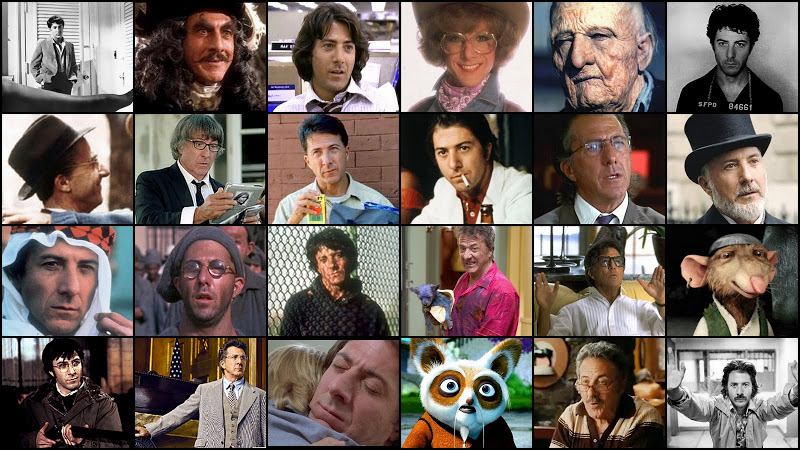
My Top Ten Dustin Hoffman Movies:
To commemorate the Featured Television Blog for the month of May, Luck, I have gathered My Top Ten Dustin Hoffman Movies! If you're looking for the best movies featuring Dustin Hoffman, you've come to the…