

America’s Royal Family
Long before social media transformed ordinary lives into public performances, the Kennedy family occupied a unique place in American culture. They were not monarchs, yet they were treated as royalty. They held no hereditary titles, yet generations of Americans followed their triumphs and tragedies with a devotion normally reserved for kings and queens.
Few members of the family embodied this contradiction more than John F. Kennedy Jr.


The son of a slain president, JFK Jr. entered public life before he could walk. Millions watched him salute his father’s coffin in 1963. Decades later, those same Americans followed his education, romances, career decisions, and marriage with almost equal fascination. By the 1990s, he had become one of the most recognizable men in the world.


FX’s Love Story: John F. Kennedy Jr. & Carolyn Bessette explores what that visibility meant for both Kennedy and his wife Carolyn Bessette-Kennedy. While the series presents a romantic narrative, it also reveals a darker reality: the extraordinary burden of living under constant public observation.


Like the members of Britain’s royal family depicted in The Crown, John and Carolyn struggled to maintain personal autonomy while carrying the weight of a national myth. Their story raises enduring questions about celebrity culture, media ethics, and whether any individual can truly possess a private life when the public believes it owns them.


The Crown and the Kennedy Myth
One of the most revealing ways to understand JFK Jr.’s life is through comparison with The Crown.


The British royal family inherits public attention through constitutional tradition. The Kennedys inherited a similar status through collective memory.


Following the assassinations of President John F. Kennedy and Senator Robert F. Kennedy, the family became symbols of lost national possibility. Americans projected hopes, grief, nostalgia, and political aspirations onto surviving family members.
For JFK Jr., this meant growing up inside a narrative he never chose.


Like Prince Charles and Princess Diana, he found himself judged not only for his actions but for what he represented. Every career decision became symbolic. Every relationship became national news. Every public appearance carried expectations that extended far beyond ordinary celebrity.


The result was a paradox. Americans celebrated Kennedy as a relatable and approachable public figure while simultaneously denying him the privacy afforded to ordinary citizens.
The series highlights this contradiction repeatedly. Kennedy seeks normalcy but remains trapped by symbolism.

The Reluctant Prince of America
By the 1990s, journalists routinely described JFK Jr. using royal terminology.
He was called America’s prince.
The nickname reflected more than his appearance or charisma. It reflected the role Americans had assigned him.


Following his father’s assassination, Kennedy became the living embodiment of the nation’s unfinished story. Public fascination followed him through childhood, adolescence, and adulthood.


Unlike movie stars who achieve fame through performance, Kennedy inherited visibility.
He did not seek celebrity. Celebrity sought him.

This distinction is crucial because inherited fame creates unique psychological pressures. Individuals born into public fascination often struggle to separate their authentic identities from public expectations.


The series portrays Kennedy wrestling with this challenge throughout his adult life.
Should he enter politics? Should he avoid politics? Should he embrace the Kennedy legacy? Should he create his own?
These questions followed him continuously.
Every choice was measured against the impossible standard established by his father.


Carolyn Bessette and the Cost of Visibility
If Kennedy inherited public scrutiny, Carolyn Bessette entered it voluntarily—but without fully understanding its intensity.

Before meeting JFK Jr., Bessette enjoyed relative anonymity. She worked successfully in fashion and maintained a largely private existence.
Marriage changed everything.
Almost overnight, she became one of the most photographed women in America.


The media fascination surrounding Bessette reflected several intersecting trends:
- Celebrity journalism
- Fashion culture
- Kennedy mythology
- Gendered media expectations
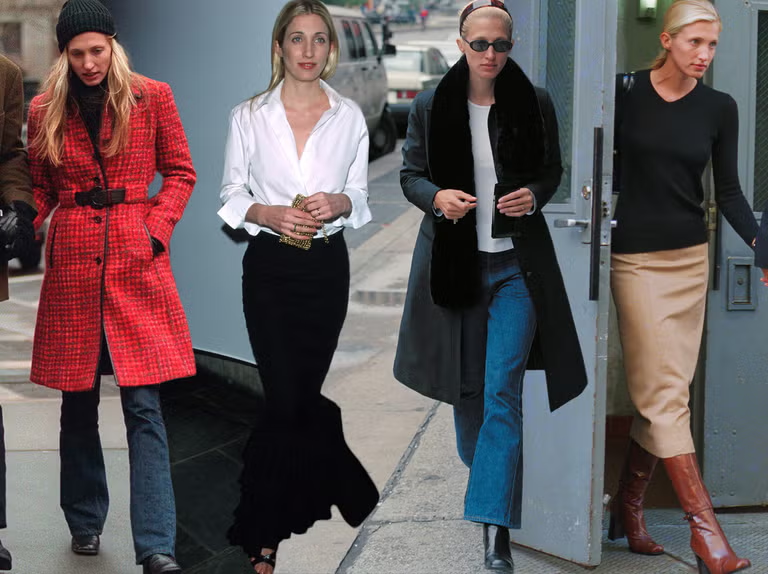
Photographers followed her through New York City. Tabloids analyzed her clothing. Magazines scrutinized her marriage. Rumors became headlines.

Ordinary moments became public spectacles. The series captures how overwhelming this transition became.

Unlike contemporary celebrities who often cultivate visibility through social media, Bessette belonged to a generation caught between privacy and modern celebrity culture. She had little ability to control her own narrative.
Others controlled it for her.

The Media Ecosystem of the 1990s
To understand John and Carolyn’s experience, it is necessary to understand the media landscape of the decade.
The 1990s represented a transitional moment between traditional journalism and the digital age.

Several forces converged:
The Expansion of Tabloid Culture
Publications increasingly competed for celebrity exclusives. Sensationalism became profitable. Personal lives became commodities.

24-Hour News
Cable news required constant content. Celebrity stories helped fill airtime. Public figures became permanent subjects of discussion.

Early Internet Culture
Though social media did not yet exist, online gossip forums and digital news outlets began accelerating the speed of information. Stories traveled faster than ever before.

Paparazzi Competition
Photographers faced growing financial incentives to capture exclusive images. The result was increasingly aggressive behavior toward celebrities. Together, these developments created conditions that made privacy extraordinarily difficult for public figures.
John and Carolyn found themselves at the center of this transformation.

Public Ownership and Celebrity Culture
One of the most fascinating themes explored by the series is the idea of public ownership. Many Americans felt emotionally connected to JFK Jr. Some viewed him almost as extended family. Others saw him as a living connection to Camelot.
These feelings were understandable. Yet they also created problems.
The stronger the emotional attachment, the more entitled the public sometimes felt to access personal details.

Questions emerged:
- Did Americans have a right to know about his relationships?
- Did photographers have a right to document his daily life?
- Did celebrity status eliminate expectations of privacy?
The media frequently answered yes. John and Carolyn frequently answered no. Their conflict reflected a broader cultural debate that continues today.

Marriage Under Surveillance
Few marriages have unfolded under such intense observation. The fascination surrounding John and Carolyn extended beyond ordinary celebrity coverage.
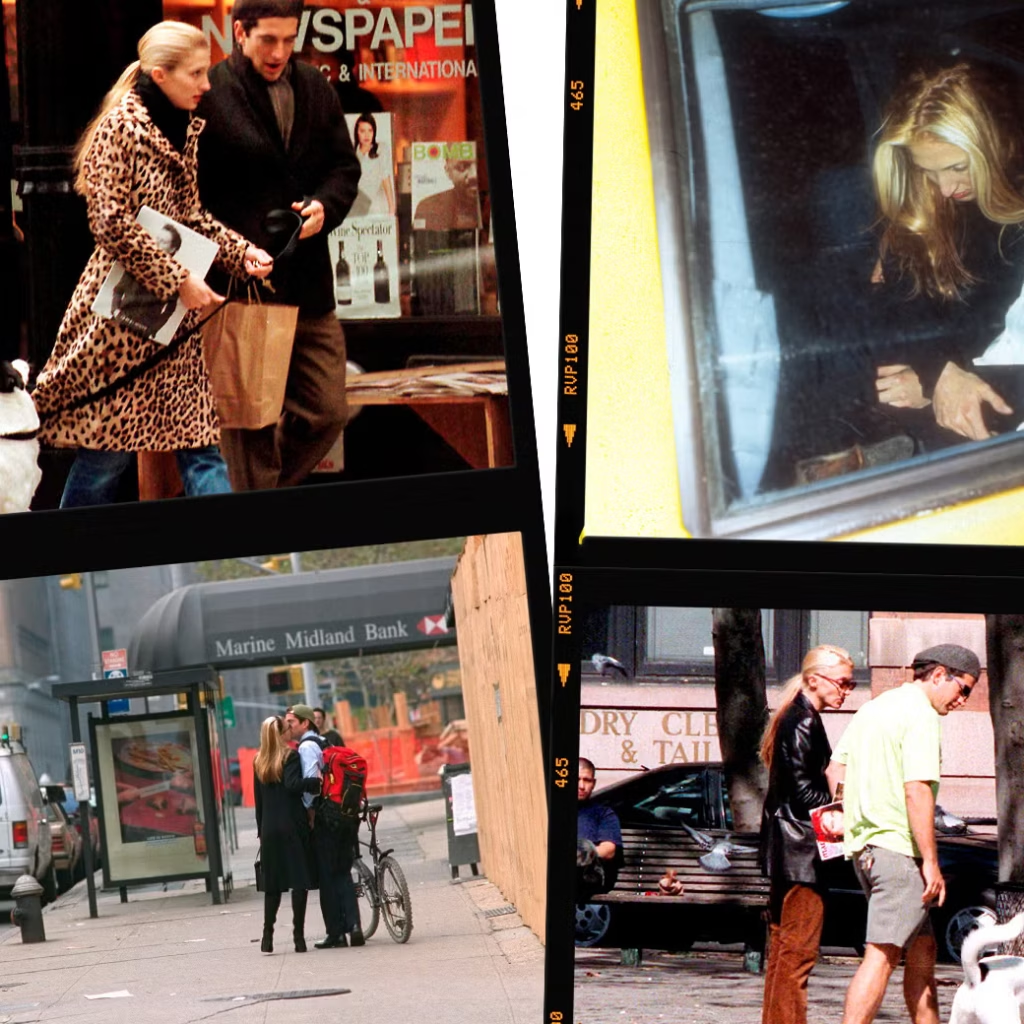
Reporters sought evidence of:
- Happiness
- Conflict
- Pregnancy
- Separation
- Infidelity
- Political ambitions

Every appearance generated speculation. Every absence generated speculation. Every photograph generated speculation.
The result was a marriage conducted before an audience. The series suggests that this constant scrutiny created enormous pressure.
Whether media attention directly damaged the relationship remains impossible to prove, but it unquestionably shaped the environment in which the marriage existed.

Why Americans Could Not Look Away
The enduring fascination with JFK Jr. reveals important truths about American culture.

He represented multiple narratives simultaneously:
- Political legacy
- National nostalgia
- Personal resilience
- Celebrity glamour
- Unfulfilled potential

People did not simply follow Kennedy because he was famous. They followed him because he symbolized something larger than himself. This symbolic role made genuine privacy nearly impossible.
His life became part of the nation’s collective story. His choices became public conversations. His future became a matter of public interest.
That level of symbolic importance carries immense emotional weight.

Lessons for the Social Media Age
The story of John and Carolyn feels remarkably modern.

Today’s celebrities face many of the same challenges:
- Constant visibility
- Public speculation
- Online harassment
- Narrative manipulation
- Erosion of privacy
The difference is scale.

Modern technology has accelerated these dynamics dramatically. What tabloids accomplished in days, social media accomplishes in minutes.

The questions raised by Love Story therefore remain highly relevant.
How much access should the public have to private lives? What responsibilities do journalists have toward public figures? Can anyone maintain authentic relationships under constant observation?
These questions continue to shape contemporary culture.

Final Take: The Tragedy of Being Public Property
At its core, Love Story: John F. Kennedy Jr. & Carolyn Bessette is not merely a romance.
It is a story about visibility. It is a story about fame.

It is a story about what happens when an entire nation feels emotionally invested in the lives of two people.

Like the royal figures depicted in The Crown, John and Carolyn lived inside a gilded cage—surrounded by privilege, admiration, and opportunity, yet constrained by expectations they could never fully escape.

JFK Jr. may have been America’s reluctant prince, but that title came with costs that were largely invisible to the public that bestowed it.

The series ultimately reminds viewers that fame is rarely free. Behind every public image exists a private person struggling to preserve some measure of autonomy, dignity, and identity.

For John F. Kennedy Jr. and Carolyn Bessette-Kennedy, that struggle became the defining challenge of their lives—and perhaps the most enduring lesson of their story.


Love Story: John F. Kennedy Jr. & Carolyn Bessette is available now with a subscription to Hulu…

Discover more from Movies To History.com
Subscribe to get the latest posts sent to your email.
Related Posts
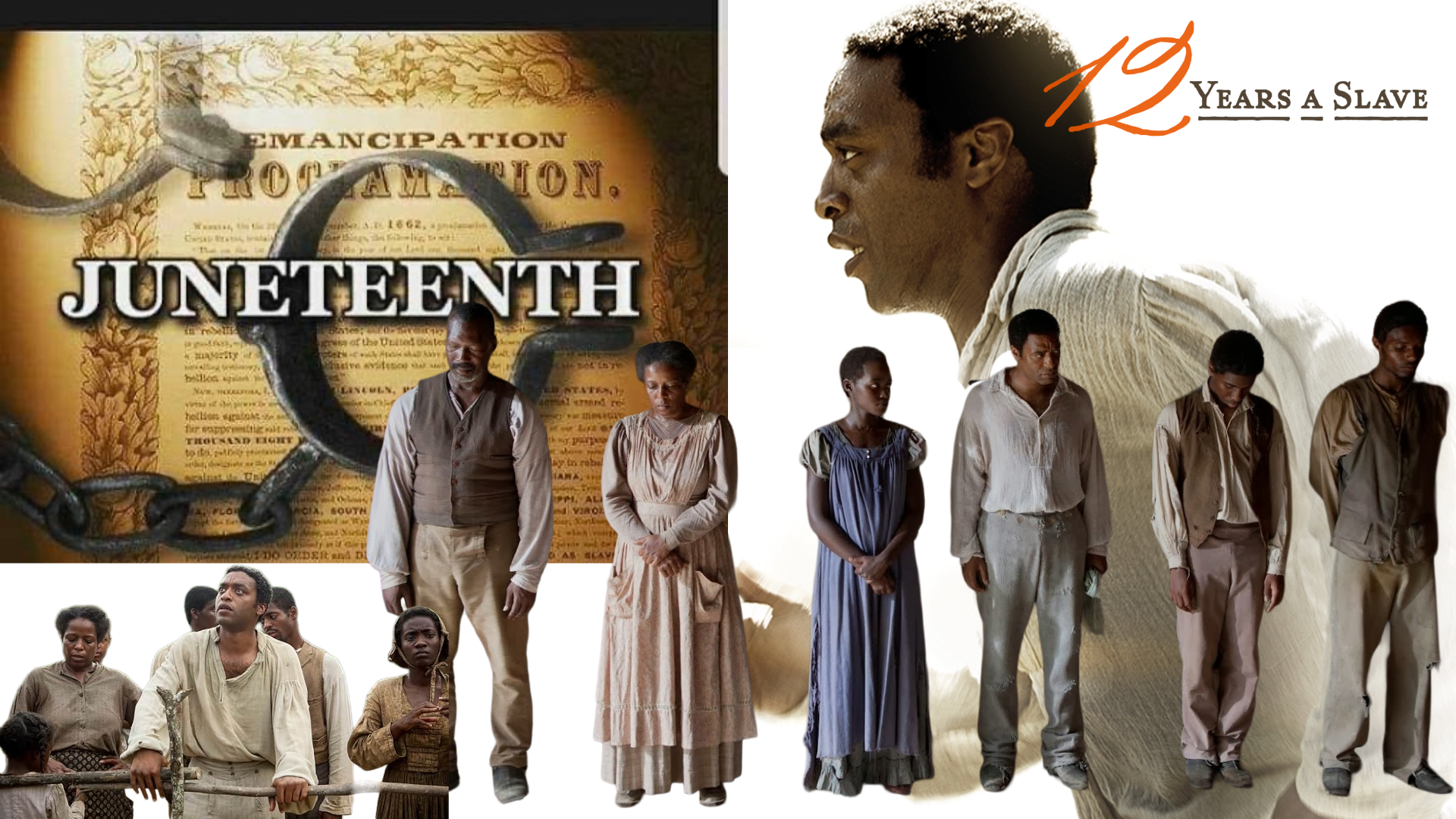
Juneteenth and the Long Road to Freedom: What ’12 Years a Slave’ Teaches About Emancipation:
Freedom Was Not a Single Moment—It Was a Long, Uneven Journey When audiences watch 12 Years a Slave, they witness one man’s extraordinary struggle to reclaim the freedom that was stolen from him. Solomon Northup’s (Chiwetel_Ejiofor)…

‘One Night in Miami… – Interview:
How Regina King Made Her Directorial Debut with One Night in Miami... The following is a write up from Indiewire for Anne Thompson's interview with Regina King about her directorial debut, the Amazon Studios' 2020…

‘Operation Dumbo Drop’ – Official Trailer:
An Elephant War Pact.... Operation Dumbo Drop is a 1995 American action comedy war film directed by Simon Wincer. The screenplay was written by Gene Quintano and Jim Kouf, based on a true story by United States Army major Jim Morris. The film stars Danny Glover and Ray Liotta as Green…